
Summary and Key Points: Boeing built a stealth aircraft with its own money, out of parts taken from other airplanes, and flew it 38 times at Area 51 before anyone outside the program knew it existed. The YF-118G Bird of Prey cost roughly $67,000,000 — Boeing’s own, not the Pentagon’s — and the savings came from refusing to build anything it could buy. The landing gear was adapted from Beech King Air and Queen Air light aircraft. The engine was a single commercial Pratt & Whitney JT15D-5C business jet turbofan. The ejection seat came out of a Harrier. One test pilot joked that the clock came from a retail store. It cruised at 300 miles an hour and topped out at 20,000 feet, slower than a C-130 Hercules, and that was entirely the point.
-19FortyFive visited the YF-118G back last summer and took the photos below for your viewing pleasure.
The YF-118G Bird of Prey Explained
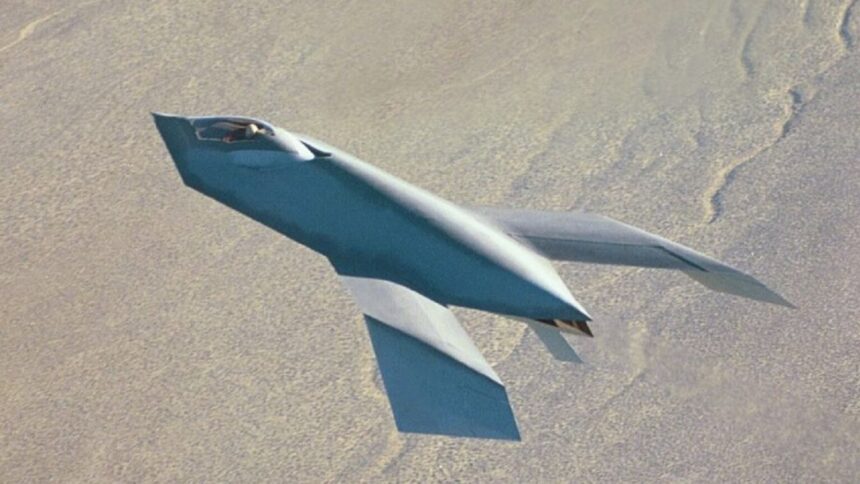
The YF-118G “Bird of Prey” was arguably one of the most unique, best-looking aircraft ever built. If you think it resembled a sci-fi spacecraft from Hollywood, you would not be wrong.
The aircraft was named after the Klingon Bird of Prey from the Star Trek franchise, due to its outward appearance that mimicked the Star Trek spacecraft. The aircraft minimized radar cross-section with its blended-wing-body configuration, shielded engine intake, and “gapless” control surfaces.
McDonald Douglas’ Phantom Works designed the Bird of Prey, which Boeing built in the 1990s. This aircraft was developed at Area 51.
What Was The Purpose of the Cheap Stealth Aircraft?
The YF-118G Bird of Prey was designed and built as a highly strategic private-venture technology demonstrator developed by McDonnell Douglas (later Boeing) Phantom Works between 1992 and 1999.
Its primary purpose was to pioneer rapid, low-cost manufacturing and design techniques for future stealth aircraft, rather than to serve as an operational fighter.
It was never intended for operational service, but to test the limits of stealth technology at a low cost. Boeing transitioned from a paper design to building the aircraft using off-the-shelf parts for less than $67 million. That’s less than the cost of a single F-35 stealth fighter.
YF-118G. Image taken by Harry J. Kazianis for 19FortyFive.
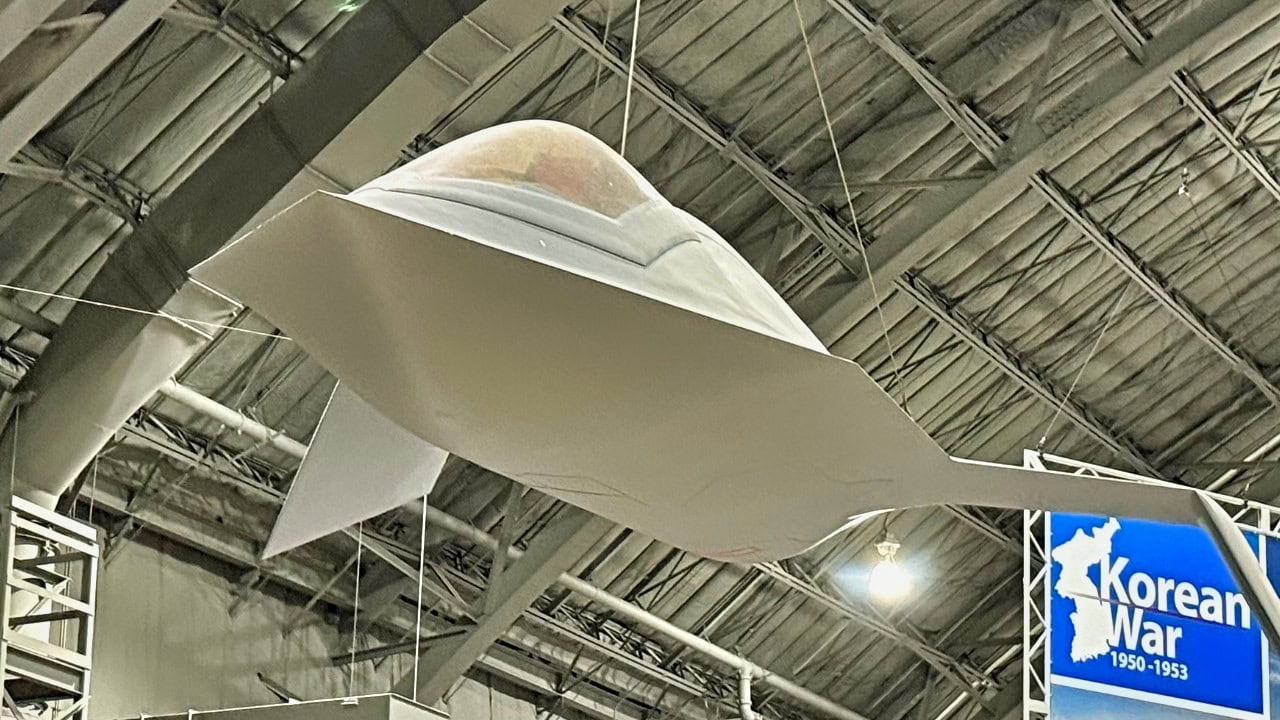
YF-118G. Image taken by Harry J. Kazianis for 19FortyFive.
The program was a huge success, and the lessons learned paved the way for future stealth aircraft, such as the X-32, the F-22, and the F-35, as well as the X-45 unmanned combat drone, which forever changed aircraft design.
Why did Boeing fund this project with approximately $67 million of its own money?
Boeing wanted to prove that advanced, all-aspect stealth aircraft could be designed and built at a fraction of the cost of traditional programs like the B-2 Spirit. To achieve this, they utilized rapid prototyping. The team used “virtual reality” computer-aided design to speed up development.
Unique Blend of Spare Parts:
In an incredible show of resourcefulness and frugality, Boeing saved a boatload of money by building the Bird of Prey out of spare parts.
To expedite development and minimize expenses, the aircraft utilized existing, non-specialized components.
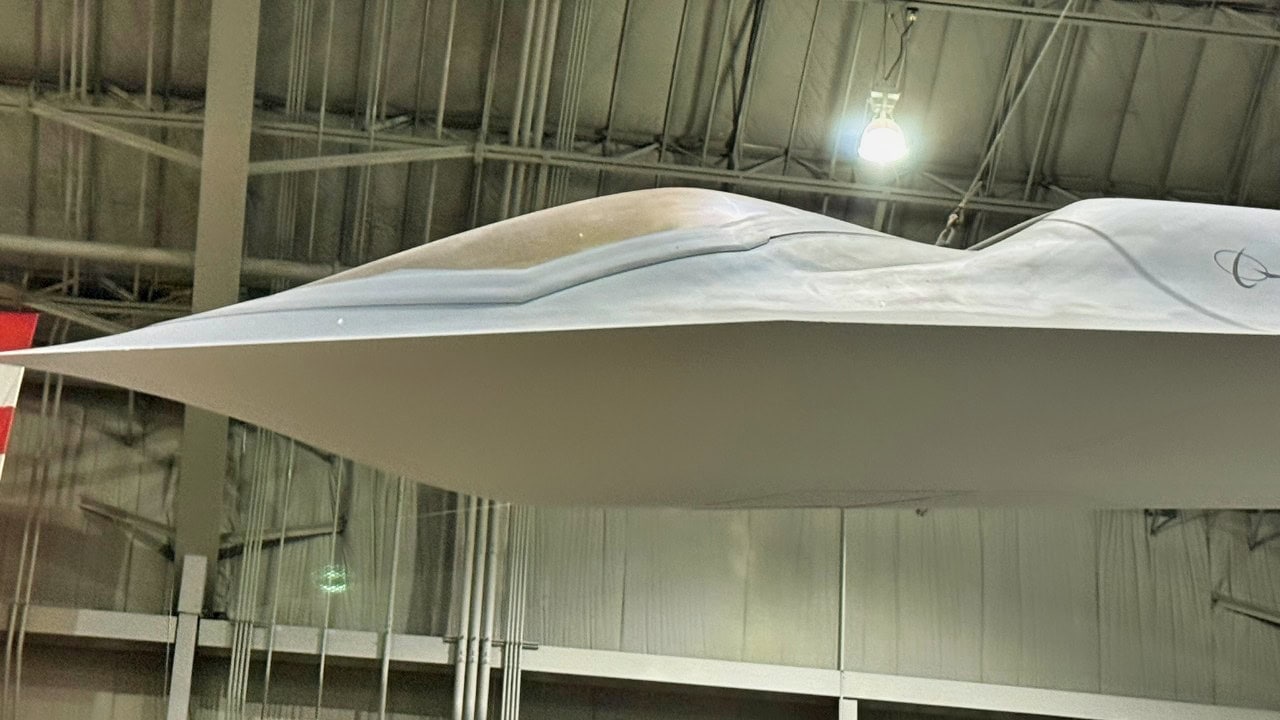
YF-118G. Image taken by Harry J. Kazianis for 19FortyFive.
YF-118G. Image taken by Harry J. Kazianis for 19FortyFive.
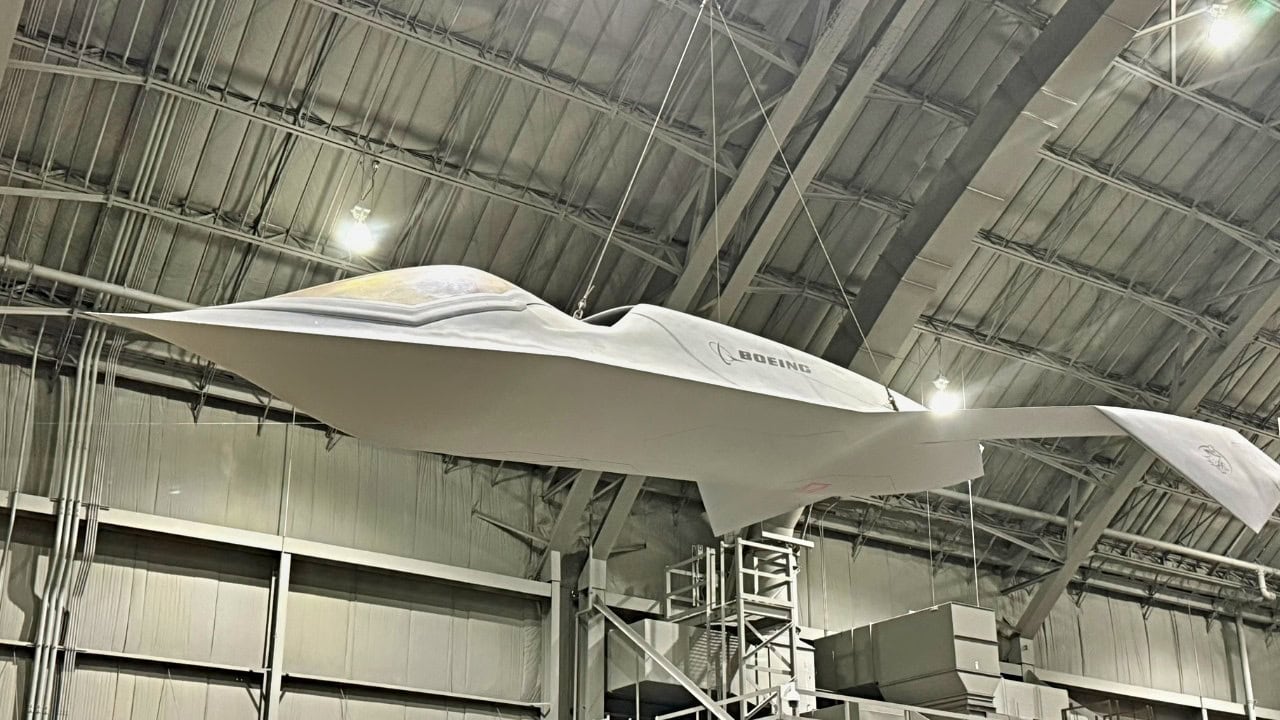
YF-118G. Image taken by Harry J. Kazianis for 19FortyFive.
Examples include the landing gear, which was adapted from a Beech King Air and Queen Air aircraft; a single commercial Pratt & Whitney JT15D-5C turbofan engine; an ejection seat from a Harrier; and cockpit controls from various existing tactical aircraft.
One test pilot even joked that the clock was from a retail store.
The Bird Of Prey Was A Game Changer:
The Boeing YF-118G Bird of Prey was a revolutionary experimental aircraft developed as a platform to explore and refine stealth technology.
This single prototype demonstrated that Boeing could rapidly bring an effective stealth platform to the prototyping phase, helping the United States and NATO maintain a qualitative technical edge over peer and near-peer adversaries.
The most significant contribution this incredibly unique aircraft has made to America’s defense apparatus was in its boldness and subsequent success.
The body was constructed from a single piece of composite material, which eliminated the ridges and seams of traditional aircraft that create radar reflections.
The Engine Was Small:
The Bird of Prey was powered by a Pratt & Whitney JT15D-5C engine; it was far from a performance giant in terms of speed and altitude. Its cruising speed was just 300 miles per hour; the stealthy aircraft was slower than a C-130 Hercules, and its maximum operational ceiling was 20,000 feet. But the designers weren’t looking for a hot rod, but for near invisibility on radar.
When the United States started producing the F-117 Nighthawk in 1983, it was far from as fast as the existing fighters of the day. But the Nighthawk wasn’t a fighter, but a nearly invisible attack aircraft.
US-made F-15s and F-16s had a radar cross-section of 82 square feet, the F-117 carried a radar cross-section of only slightly more than a tenth of an inch (0.11 inches).
The radar cross-section (RCS) was estimated to be as small as a mosquito. Engineers also placed the powerplant deep within the fuselage to minimize its infrared signature. They carefully designed the paint shading to visually mask the actual fuselage shapes in daylight.
How Boeing Kept It Under Wraps:
The Bird of Prey was a further development of stealth technology for future designs. But because it was located at the secret US site known as Area 51, it was well-suited to keeping the aircraft’s development a secret.
The Air Force ran the program in complete secrecy from 1992 to 1999, with the first flight taking place in 1996. The Pentagon acknowledged the existence of the Bird of Prey in 2002, but only after much of its stealth technology had been incorporated into other aircraft, such as the X-32 Joint Strike Fighter (the future F-35) and the X-45A Unmanned Combat Air Vehicle.
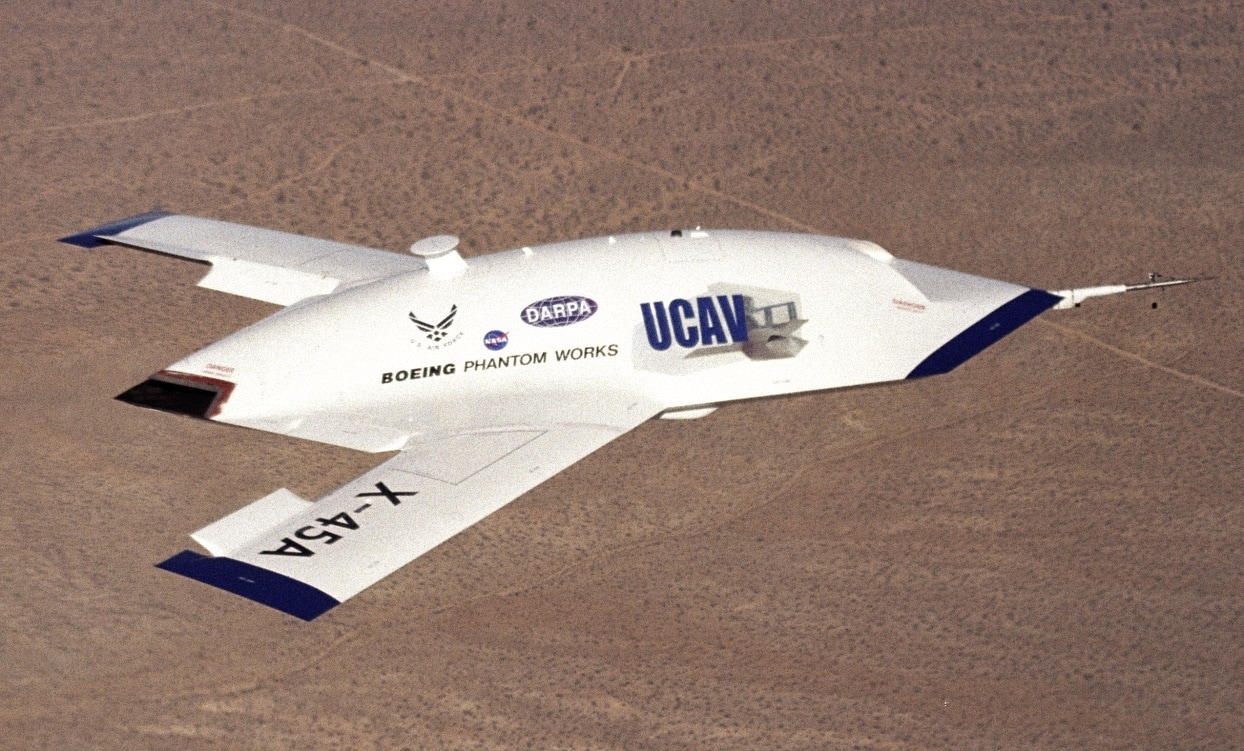
Image: Creative Commons.
The aircraft made only 38 test flights between 1996 and 1999, limiting the opportunities to observe it. But the company did a great job of keeping the aircraft’s secrecy under wraps.
“In its 38 flights, the Bird of Prey tested ways to make aircraft less observable to the eye and to radar,” the U.S. Air Force said. “It also validated new ways to design and build aircraft using large single-piece composite structures, “virtual reality,” computerized design and assembly, and disposable tooling.
Stealthy Airframe and Spare Parts:
Ultimately, the entire program reportedly cost $67 million, less than the cost of two new 737s at that time.
The Boeing design team used single-piece composite structures and disposable tooling. In the final specification, the aircraft measured 47 feet in length, with a wingspan of 23 feet, and a curb weight of approximately 7,400 pounds.
After the Bird of Prey completed 38 test flights between 1996 and 1999, the program was successful enough to survive McDonnell Douglas’s acquisition by Boeing in 1997.
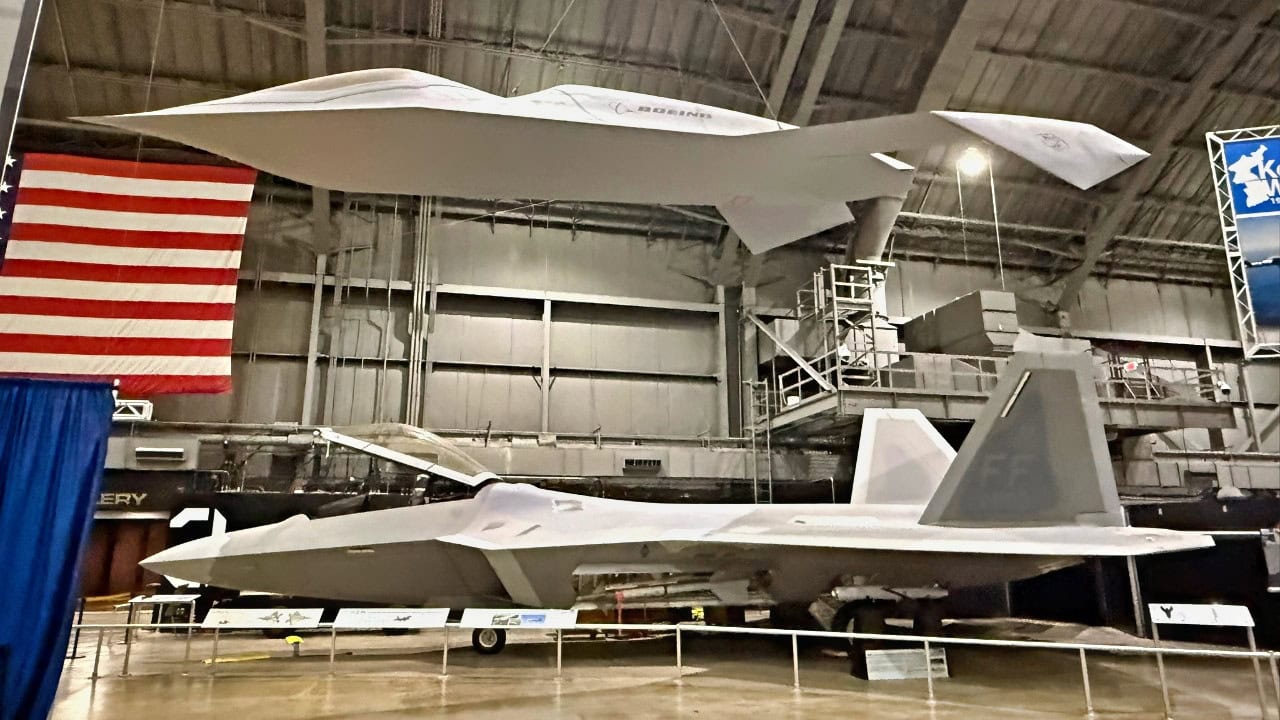
The program was publicly unveiled in late 2002, and the aircraft was given to the National Museum of the United States Air Force in Dayton, Ohio, where it remains on display today. In fact, many of the photos we took of the YF-118G were taken at that very museum.
Fun fact: the YF-118G is suspended right above the F-22 at that very museum.
About the Author: Steve Balestrieri
Steve Balestrieri is a National Security Columnist. He served as a US Army Special Forces NCO and Warrant Officer. In addition to writing on defense, he covers the NFL for PatsFans.com and is a member of the Pro Football Writers of America (PFWA). His work was regularly featured in many military publications.