
Check your dog’s gums first. Dry, tacky gums and slow capillary refill—press a finger to the gum and watch how fast color returns—are the clearest early signs of dehydration. Tented skin on the neck that doesn’t snap back confirms it. Pull your dog from the field immediately and get water into it. Dehydration and heatstroke can kill a hunting dog fast.
- Check gums first: dry and tacky instead of pink and moist signals dehydration.
- Press a finger to the gum. Slow color return confirms a dehydration problem.
- Pull up neck skin. If it doesn’t snap back immediately, your dog needs help now.
- Overweight, out-of-shape dogs are most vulnerable. Shorten hunts and build condition gradually.
- Dogs always want to keep going. It’s your job to watch for symptoms and pull the dog.
Dehydration and heatstroke kill hunting dogs every year. During late-summer training sessions and as early dove, goose, and upland seasons open in sweltering September, it’s important to not only know how to tell if a dog is dehydrated or overheated, but how to prevent both, how to recognize the symptoms, and what to do if either affect your dog.
Overweight and out-of-shape dogs are the most vulnerable to hot weather. Ideally you started a conditioning program in the summer to get your dog ready, gradually ramping up to get it into shape. You’ve adjusted its food and stopped your kids from giving it table scraps, so it’s at a good weight. If are going into the season with a dog that’s overweight and out of shape, be realistic about how long it can hunt and plan on ending the hunt early. It may take a few short hunts to work an out-of-shape dog into condition.
Dehydration and overheating go together. Dehydrated dogs are at risk of overheating, and dehydration, often, but not always, occurs in the kind of warm weather where dogs overheat. So, here’s how to tell if a dog is dehydrated or overheated what you need to know to keep your dog safe in the heat.
What is Dehydration in Dogs?
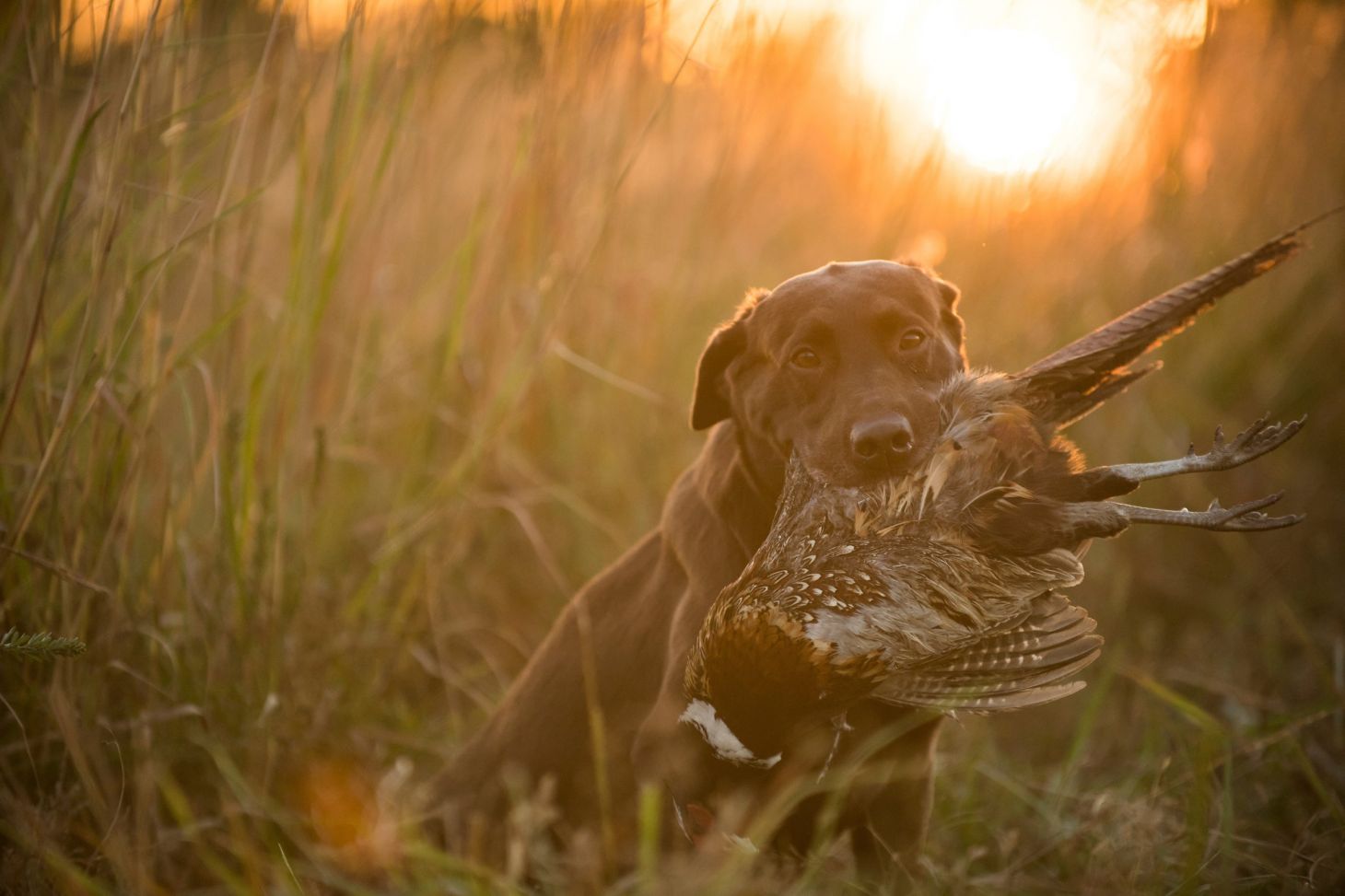
Keep a close eye on pup in unseasonably warm weather. John Hafner Photography
Dehydration occurs when dogs have a liquid deficit. When their bodies lose more fluid than they take in, they can become dehydrated. A dog can become dehydrated at any time of year, but it happens much more frequently in hot weather as dogs pant excessively to cool down. Once dehydration reaches dangerous levels, a dog can suffer electrolyte imbalances that prevent its muscles and internal organs from functioning normally. In the most severe cases, dehydration results in death. Remember always that your hunt isn’t as important as your dog’s well-being. Dogs always want to keep going, so it’s up to you to watch for signs that all is not right. You may have to cut your hunt short to keep your dog healthy.
How to Tell If a Dog Is Dehydrated
The best way to deal with dehydration in dogs is with prevention, and we’ll get to that in bit. But despite your best efforts, your dog may still become dehydrated. Be aware of the signs. If your dog exhibits any of these symptoms, it might be dehydrated:
-
It seems woozy or disoriented
-
It wobbles as it walks
-
Its heart seems to be racing (normal pulse rate for dogs is between 60 and 140 beats per minute, and the larger the dog, the slower its pulse)
If you see any of the above, do the following to further diagnose the problem:
-
Push its lips up to see its gums. If the gums are dry and tacky instead of pink and damp, that’s sign that your dog needs help.
-
Press your finger into the gum for a second. The spot will turn white under the pressure, but when you lift your finger, the color should come back right away. If the color returns very slowly, it’s a sign of dehydration.
-
Check for “tented” skin. If you pull up on the skin of the neck, and it doesn’t snap back, that loss of elasticity is a sign that all isn’t right.
Most of the time, a good, long break and small amounts of water at a time are enough to get your dog feeling good again. Pedialyte, which you can usually find among the diapers and baby powder at the grocery store, contains electrolytes that can speed a dog’s recovery. Pedialyte is fine for dogs. Gatorade and sports drinks are not. You can also feed ice chips to a dehydrated dog. If dehydration has gotten to the point where the dog can’t keep water down, you need to get to a vet quickly. The vet can rehydrate the dog intravenously.
How to Prevent Dehydration in Dogs
The best way to deal with dehydration is through prevention. Be sure your dog has a drink before you leave. Some dogs, like mine, just don’t drink much. To make Zeke tank up before a hunt, I have to add some bone broth to the water in his bowl, and he eagerly drinks it all.
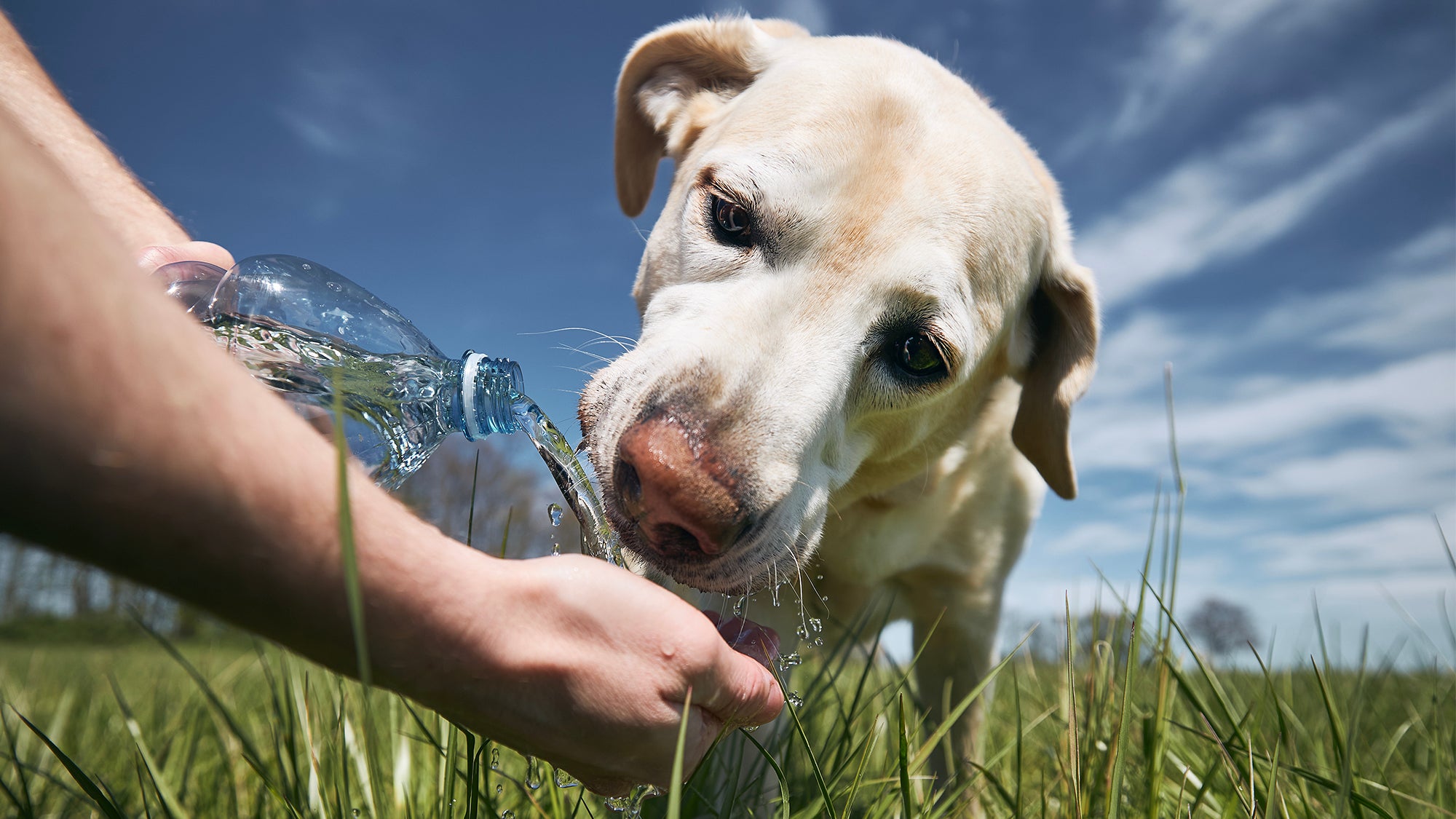
Always carry water with you in the field. I usually have a bottle of water for me and at least one for the dog in my game bag. You may have to teach your dog to drink from a bottle. If you hunt near a pond or creek, take breaks to let the dog get in the water, cool off, and drink. Bring a water bowl in the truck and give the dog a drink after the hunt. You can also feed your dog immediately after (feeding before is not a good idea) and add enough water to the food to make a slurry so the dog gets a drink while it’s eating.
How to Prevent and Treat Heatstroke in Dogs
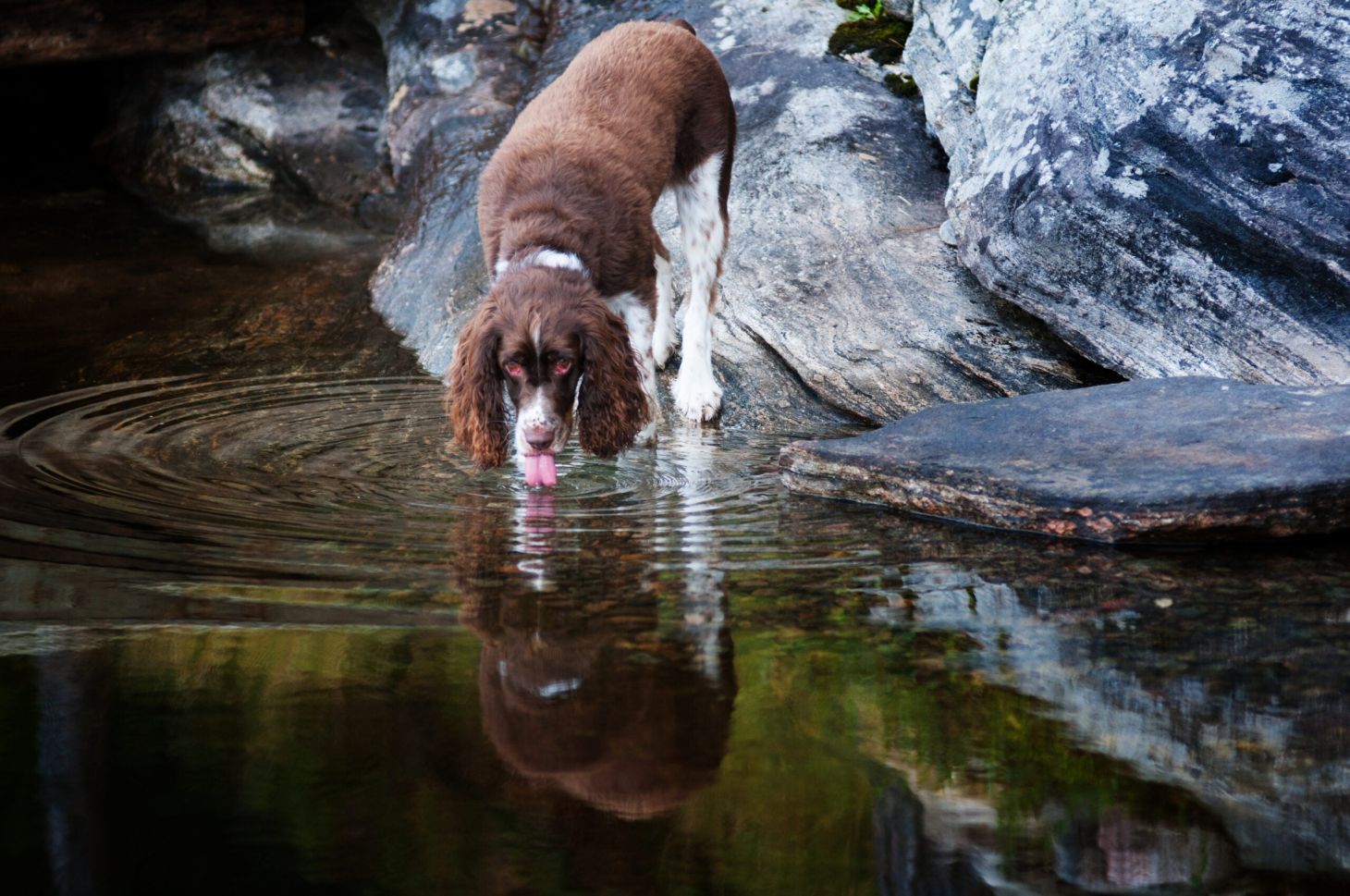
If you’re hunting near a pond or creek, take a minute to let you dog drink and cool off. sianc / Adobe Stock
Dehydration is dangerous enough, but heat stroke is even more serious. The two often go together. Heat stroke or overheating (hyperthermia is the medical term) occurs when a dog’s body temperature gets extremely high. A dog’s temperature ranges from 99 to 102.5 degrees. Once it passes 102.5, that’s a sign of overheating.
Panting is a dog’s main means of cooling down. They pant the way we sweat. Dogs actually do sweat slightly from the bottoms of their feet, although it’s not as important a means of heat regulation as panting. Also, when a dog needs to cool down, blood vessels in the ears and the dog’s face expand, so overheated blood comes closer to the surface where it can cool. That’s why dogs have big, floppy ears. If a dog gets so overheated that its cooling mechanisms can’t keep up and its temperature rises, it’s at risk of heatstroke. Always, you’re much better off avoiding heat stroke than treating it.
Again, start every hunt with a hydrated dog. Take breaks in hot weather, and get your dog into shade and water if possible. Even a puddle allows a dog to stand in water deep enough to cool its feet, which is important. If you can get the dog into a creek or stock tank where it can get wet all over, so much the better.
Signs of heat stroke are very similar to dehydration: dry, even blue, gums; grogginess; and excessive panting. If your dog is very distressed, leash it and walk it, or better, carry it out of the field. Once you get it someplace cool—like the cab of your truck with the AC on—cool the dog with tepid, not cold, water, either spraying it or giving the dog a sponge bath.
Your first aid kit should include a digital thermometer. Take the dog’s temperature rectally. Anything over 103 degrees is cause for concern. You can take the temperature every few minutes, as it will drop fairly quickly if you’re taking appropriate steps. Stop when the reading hits 103 so you don’t over-cool the dog. Then take it to the vet. Likewise, if you can’t get the temperature to come down, you need to get to the emergency vet right away.
Finally, remember that the most dangerous place your dog can be on a hot day is inside a locked vehicle. Skip the post hunt breakfast at the cafe on a hot day and go straight home for your dog’s sake.
content_hunting-dogs

EXCITING NEWS
Membership Now Includes

Recommended Products
Read the full article here