
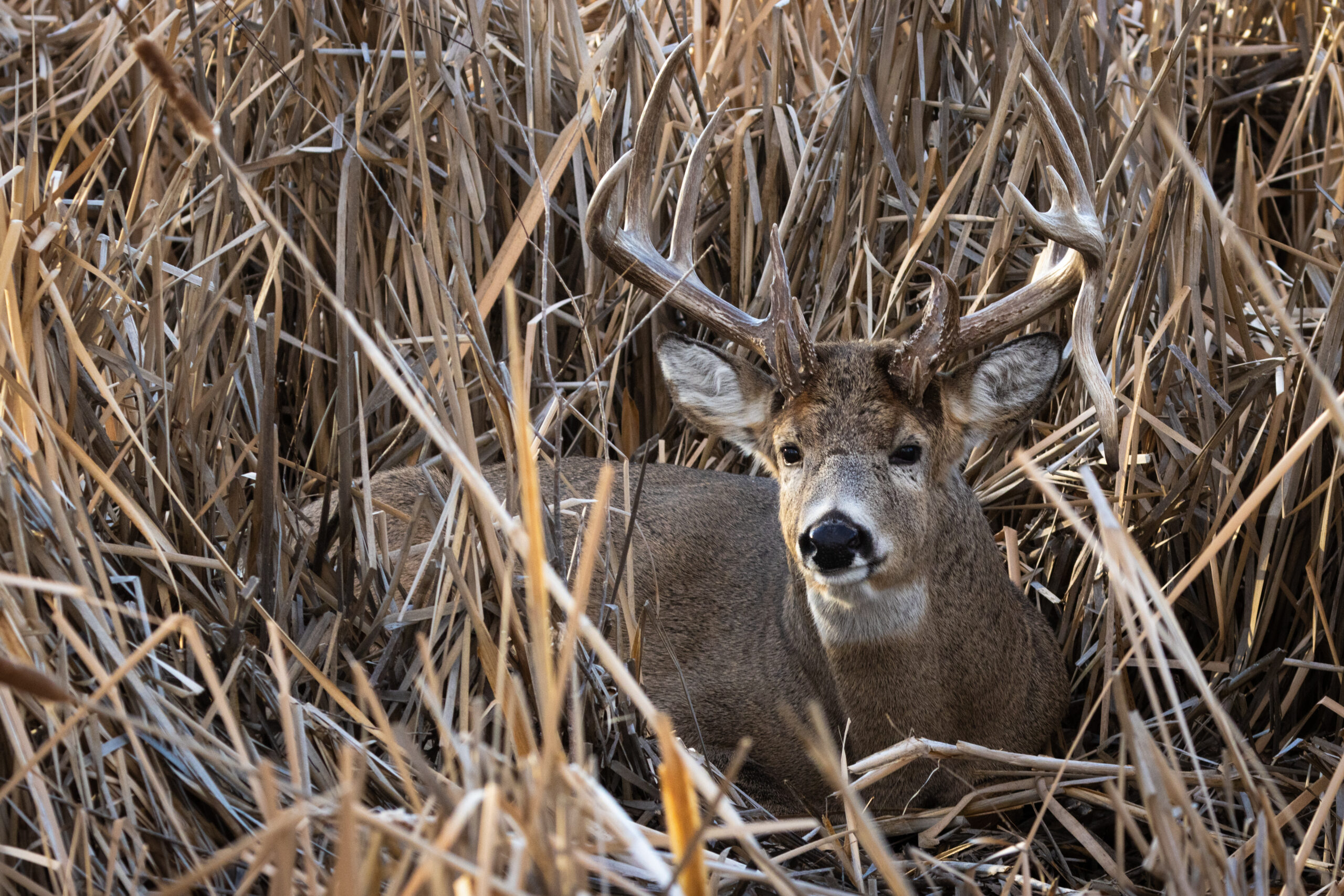
Ninety-seven percent of the time whitetail bucks are not like humans, in that they don’t return to the same cozy bedroom to get their z’s. According to a recent collared-buck study, the places were bucks choose to snooze most of the time is akin to us choosing an odd park bench one night and a stranger’s couch the next. It’s unpredictable and random. Though this fact may be a jolt for the diehard buck-bed hunter, there is a tiny yet profound exception: the 3% of locations selected time and time again. And any hunter that has one of these high-fidelity haunts pegged is onto a potential gold mine of consistent buck encounters. The question is, how do you find one of these exclusive spots? Here’s the skinny on how to pinpoint and hunt these elite buck bedrooms, and even create one on your own hunting ground.
The Latest Science of Buck Bedding Behavior
The study by Mississippi State University used data from 60 collared bucks in an attempt to discover the secrets of buck movement, including bedding. You can read more about the study here, but in the area of bedding-site fidelity specifically, researchers found that over the course of a hunting season, the average study buck used 31 different bedding areas in total and bedded four times per day between two different areas. Also, bucks seemed to circle back to favored bedding areas on a six-day circuit, which decreased to every day and a half during the rut, when they were at peak movement.
Sight fidelity, or how frequently beds and bedding areas were returned to, is where things get very interesting for any hunters who make buck bedding areas a major part of the hunting strategy. The study data revealed that specific buck beds were not necessarily reused, although the precision of the GPS collars leaves room for debate. What is clear is that 50% of bedding areas were used only once, most of the rest were used two to five times, and 3% were returned to a whopping 200 times during the season. In other words, while most bedding areas were used infrequently and unpredictably, a very small handful were used over and over again—a fact that can obviously benefit you as a hunter, assuming you could nail down these favorite lairs.
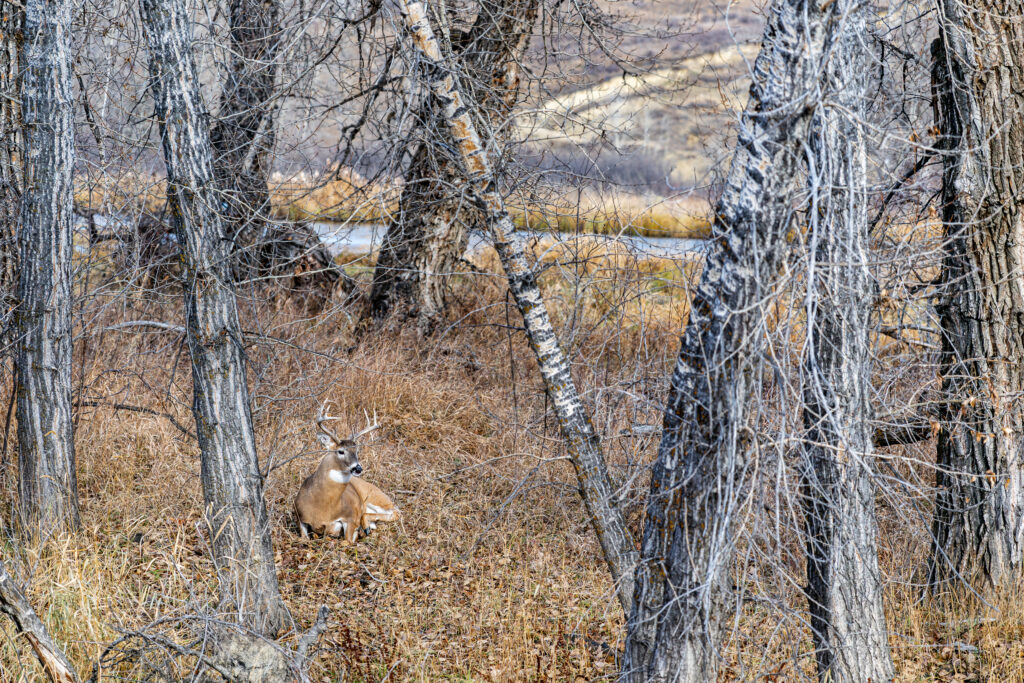
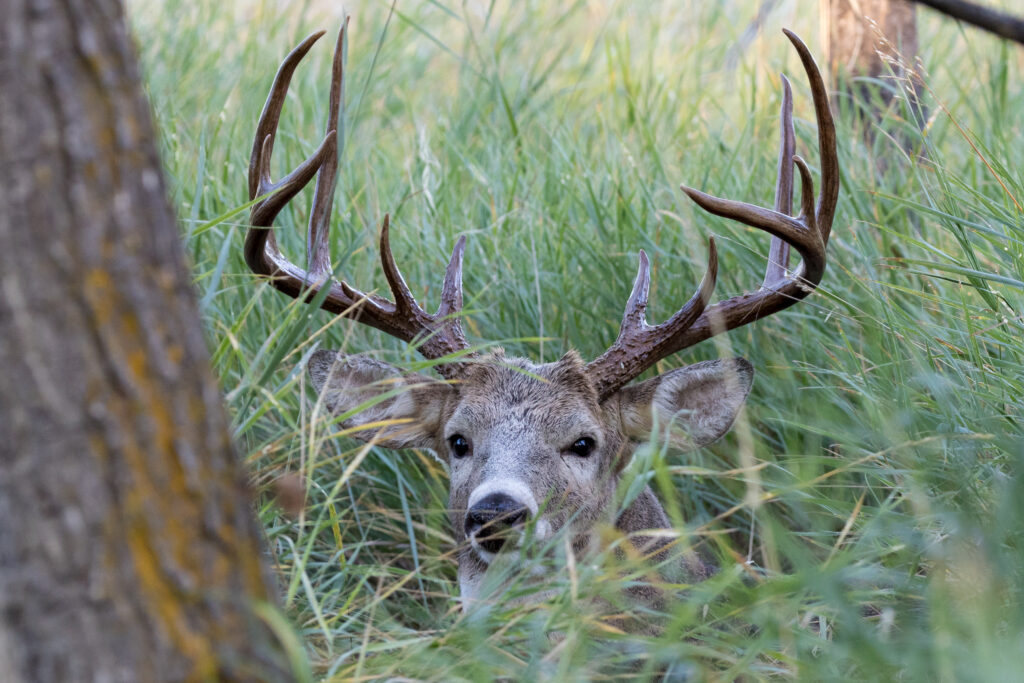
When researchers tried to determine the commonalities of these elite 3% bedrooms, they found only one repeating factor: They were all in dense screening cover. In the end, and what will probably come as a surprise to some hunters, the data seems to suggest that focusing on a specific buck’s bed may be a fool’s errand, while identifying and focusing on these rare 3% bedding areas could be a hunter’s cheat code.
Related: Where to Deer Sleep? Top 13 Bedding Areas
How to Find a 3% Buck Bedding Area
Keep in mind that the study area was cover-dense and therefore had many places conducive to bedding. Similar landscapes with ample cover will likely see sporadic use of many bedding areas, while those with limited cover will see more concentrated bedding due to its scarcity. Since the study didn’t identify any additional X factors of these top bedding areas, we need to dig deeper to narrow down promising areas. Here are four steps to help you hone in on and hunt a mature buck’s inner sanctum, or 3% bedding area.
Step 1: Eliminate Terrain
Since “dense screening cover” is the main filter, ignore all areas on your map that are easy to see through or walk through. For a lot of properties, this will eliminates a majority of possibilities, and therefore quickly narrow down the field.
Step 2: Add Historical Bedding Favorites
To narrow things down even further, factor in bedding information you’ve gained through experience. There are certain locations, known from grizzled hunters jumping many bucks from their belly’s, for example, that mature deer just seem to like. Stacking these factors will further refine the search, and include:
- Easy Escapes – Bucks don’t like to be trapped, and therefore favor places that offer several quick, easy ways to escape into other secure cover. In a clearcut I scouted last year, I jumped a buck in a thick and slightly elevated pocket of early-growth oak. Upon exploring his bedding area, I discovered several trails all coming and going from it, allowing him to see everything around him and have predetermined escapes that he trusted.
- Big Barriers – Anything that would keep a predator from getting to a buck on one or more sides adds security. Bodies of water, including ponds, lakes, and rivers, as well as cliffs and big blowdowns all work. Bucks will put these to their backs, watch the unprotected side, and orient themselves to smell the unseen direction. The traditional “oxbow bed,” utilizes three sides of a river to protect a buck, which if needed he can cross to escape.
- An Elevation Advantage – In hill country, I’ve observed bucks bedding on ends of ridges with the wind at their back more times than I can count. With this height advantage, bucks can see anything coming below them from afar, and can smell anything coming from behind. Humps in swamps or slight rises in relatively flat terrain also give this slight yet useful visual edge.
- Loud Alarms – In flat terrain, thick cover usually means deer cannot see very far if at all when bedded. In this case, they are counting on their ears to tell when a predator is close. Dry goldenrod, cattails, vine tangles, and particularly nasty briar patches are difficult for a predator to bust through and make plenty of noise if tried. This is the perfect alarm for deer and gives them ample time to exit the back door.
Related: The 6 Types of Big-Buck Deer Beds
Step 3: Apply Precision Scouting
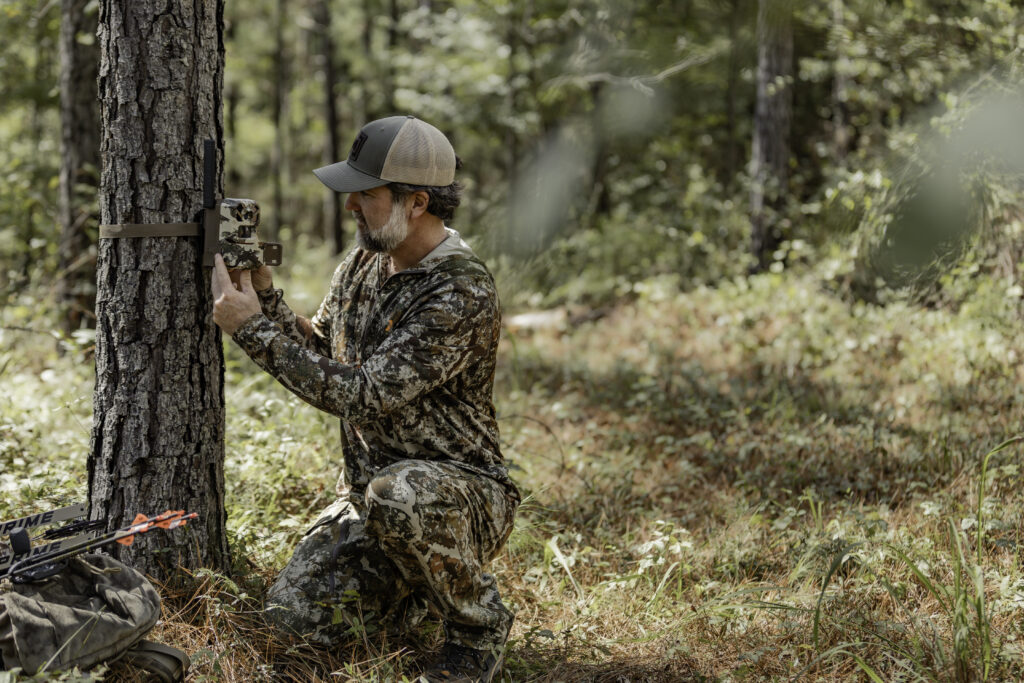
With the acres that remain, now lean into scouting data. Setting a dragnet of cameras around the area of focus is the best way to collect this. Although you won’t catch every buck visit, dozens should be the minimum to qualify a 3% area, so keep a detailed spreadsheet for tallying observations. Where most hunters fail, however, is setting cameras with little forethought of when and how they’ll check them. So predetermine and document this for each camera, as any felt pressure could blow the whole operation. Obviously, cell cameras can be a huge help here.
For locations deep in bedding, place a camera in the spring with lithium batteries and a solar panel, only checking it after season. Deep bedding can also be scouted in the winter for the previous season’s sign without fear of changing a buck’s behavior. For in-season data, use these 9 trail camera placement rules to help.
Related: Best Cellular Trail Cameras, Tested and Reviewed
Step 4: Confirm that the Buck is Killable
Many a season has been wasted hunting un-killable deer. To invest in a hunt you need the intersection of both daylight activity and a setup location where you can feasibly take a buck. Remember, a 3% bedding area is likely chosen due to its rock solid ability to keep a buck safe—which means it’s difficult to hunt by definition. So the last step is looking for current or historical sign that a buck is or will become daylight active, and a place along his travel route that allows you to hunt undetected.
If You Build It They Will Come
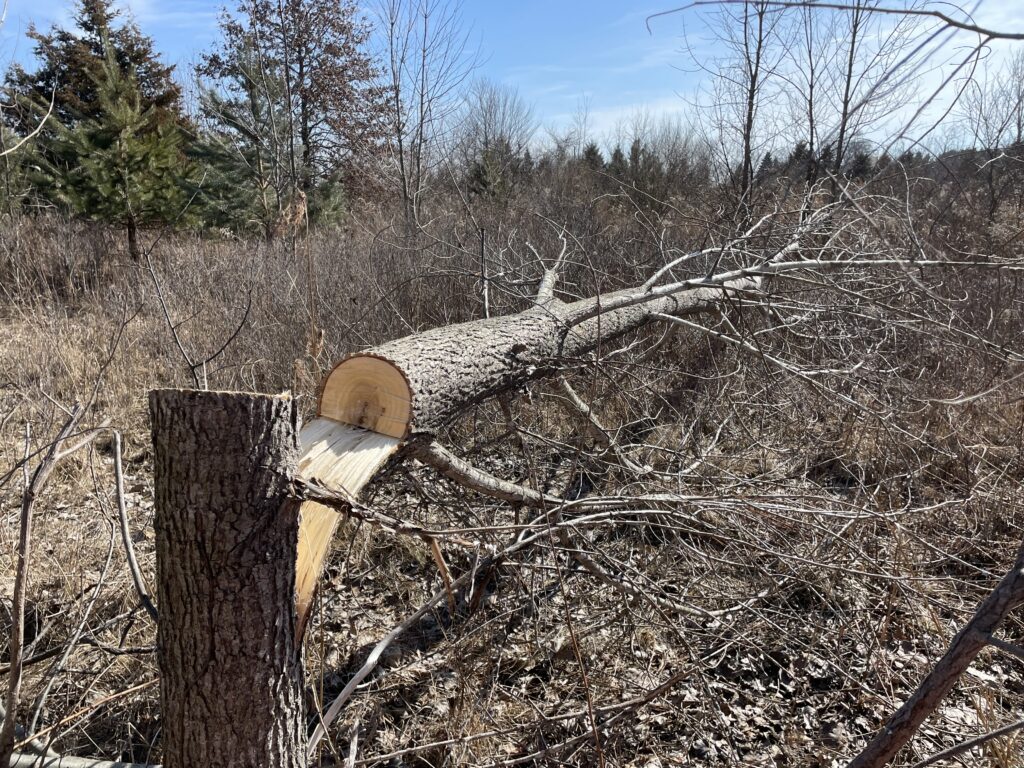
Private-land owners can use this knowledge to manipulate the land and encourage bucks to bed in strategic places that benefit them. First, plans should be made to increase cover and designate “no go” sanctuary areas where bucks feel safe. You greatly increase your ability to create “buck bedrooms” by choosing areas they already prefer—ridge points, humps in swamps, bends in rivers or oxbows, in conjunction with the four factors listed above. By increasing the stem count in these areas through selective harvest of timber, hinge cutting, clear cutting, or disturbing the soil in open areas, you start “stacking” the factors bucks naturally choose, thus increasing the likelihood they will become 3% locations. But don’t go overboard. Being selective and not turning your whole property into a bedding area limits where a buck could possibly be, making him much easier to predict and target.
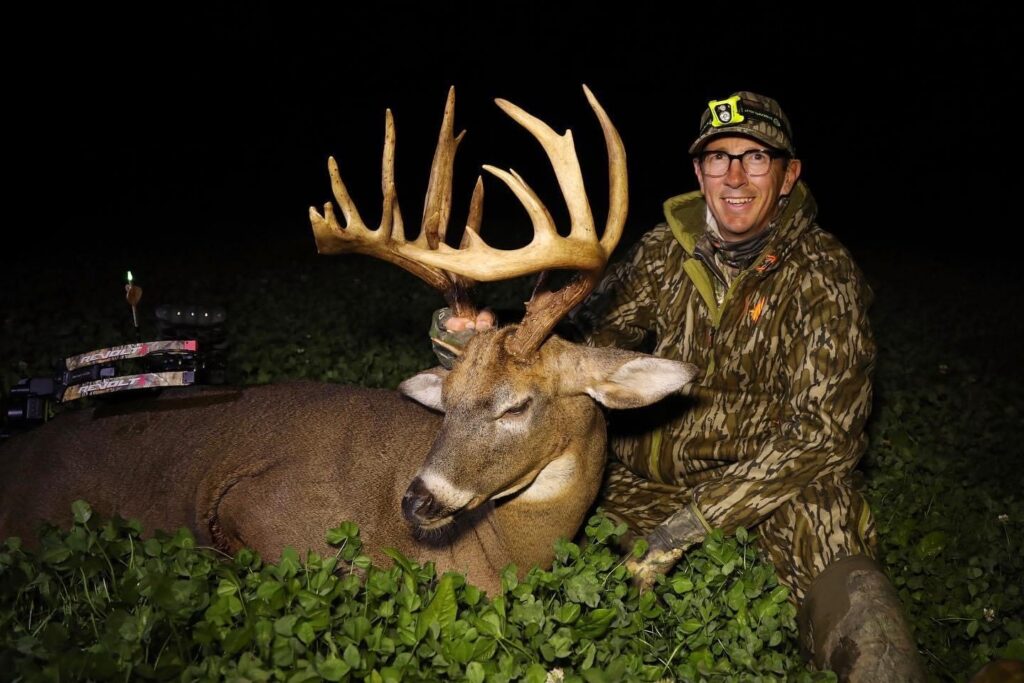
My friend Ty Easley of Heartland Bowhunter takes this up a notch by placing a small kill plot next to a known 3% bedding location of a specific buck. This allows him to plan an entry and exit that benefits him, and manipulate the shape of the plot to make it easy for the buck to feel safe while still giving him a shot. The upside of this approach is that when a big buck is taken, another typically fills the void because the same 3% bedding factors exist.
The Public Challenge
For public-land hunters who cannot manipulate the land, finding as many of the four bedding factors at one location is key. For my aggressive public-land tactics I focus on hunting inside a bedding area in the morning, and for evenings I set up just into the edge or in a staging area leading to a food source or used scrape. The best bedding areas usually become morning or all day hunts for me with very early entries, which allows for making the noise required to get set before any buck shows. I’ve taken an equivalent of three times more bucks in the morning than the evening, and 3% bedding areas are the place to do that.
There’s a reason why mature bucks live long and avoid hunters with uncanny ability. Rarely do they repeat how they enter, exit, or exactly where they bed in one of these 3% locations. However, locating and hunting the most actively used bedding areas can up your odds to encounter a good buck—in fact, by much more than 3%.
content_whitetail-hunting,content_deer-hunting,content_hunting,content_stories

THE 1871 CLUB

Recommended Products
Read the full article here