


Estimated reading time: 8 minutes
Disappearing into the wilderness for a week is a great way to learn and practice survival skills, but for many of those skills, it’s not really essential. Your garage, porch, or backyard can be the perfect training ground. It’s controlled, convenient, and forgiving, which is great when you’re still a newbie.
Below are ten survival skills you can teach yourself at home. A few are fun weekend projects, some are surprisingly practical, and all of them build confidence fast.
Want to save this post for later? Click Here to Pin It On Pinterest!
1. Knot Tying

Rookie survivalists tend to take knots for granted. Big mistake. Knowing the right knot for the right situation can be a literal lifesaver. Plus, it can actually be pretty fun once you start to get good at it.
There are knots for tying flat straps together, joining two ropes of different widths, securing buckets or barrels, shortening a rope without cutting it, and so much more. I suggest starting with these five knots.
Most people learn best by watching and doing, so check out this excellent site. It includes pictures, animations, videos, and written instructions for every kind of knot you can imagine.
2. Slingshot Making and Mastering
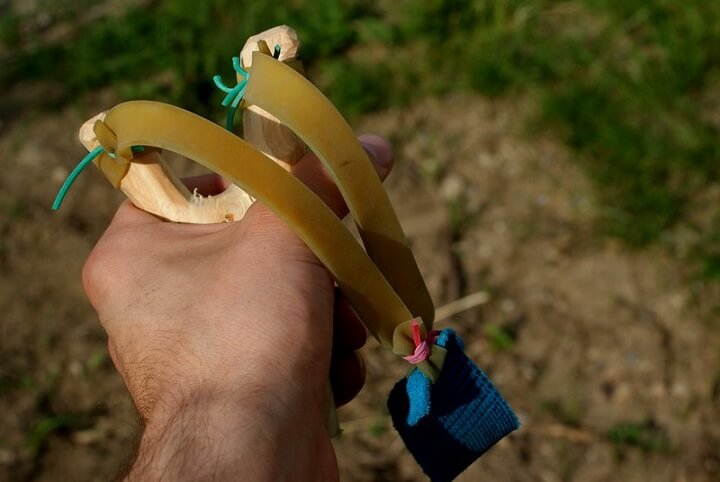
The slingshot is a highly underrated tool. While you can buy a ready-made one, you can also make your own, assuming you have access to rubber tubing.
Medical rubber tubing is perfect, but you can also use heavy gauge rubber bands, exercise bands, or even bicycle innertubes, cut to size.
For ammo, you can use steel ball bearings, steel nuts, or stones. There are many instructions on how to build a slingshot, but I would start here.
Once you’ve made your weapon, set up a target in the yard and practice, practice, practice. Don’t forget to wear eye protection.

If you’ve ever imagined being lost in the wilderness without a cutting tool, you’ve probably thought about how you might fashion a tool out of stone, just like our ancestors once did. It takes a good bit of practice, but if you’ve got some native stone and a little time on your hand, it’s definitely worth a try.
There are excellent instructions online, but I would start with this article, which covers stone knives, hammers, hatchets, arrowheads, spears and more.
However, make sure you wear eye protection and gloves. It is very easy to cut yourself severely on a fresh flake of stone, so don’t underestimate your stone-age cutting surfaces.
4. Drawing Drinking Water
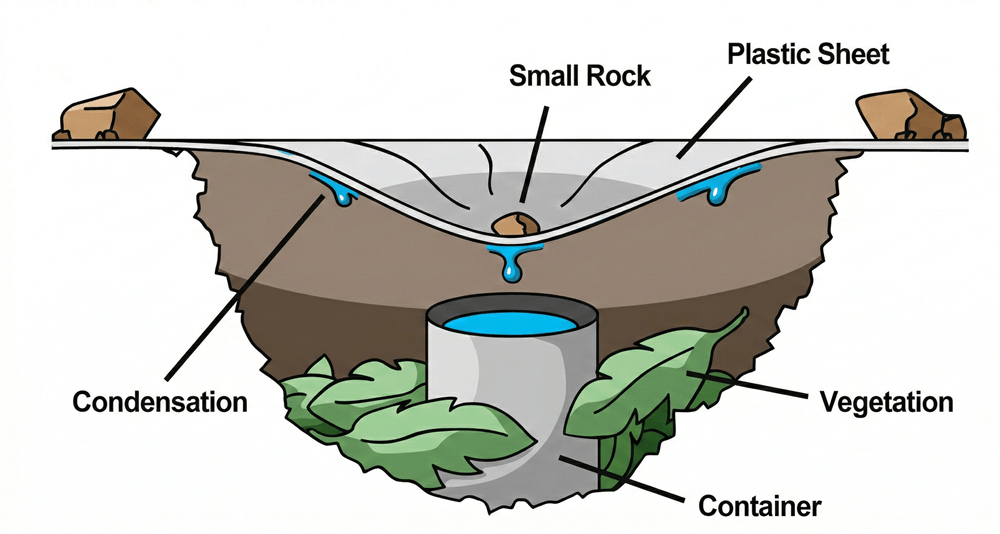
No matter what your backyard looks like, you can use it as a staging ground for creating potable water from thin air. The classic water drawing method is the solar still, which requires a 6’ by 6’ sheet of plastic, a cup, and a hole in the earth.
Experimenting with this technique will help you understand just how much water you can create in a day. However, if you have plenty of water that just needs to be purified, you can also experiment with a different sort of solar still.
This DIY system will allow you to convert any water into clean, pure drinking water.
5. Making a Fire Anywhere
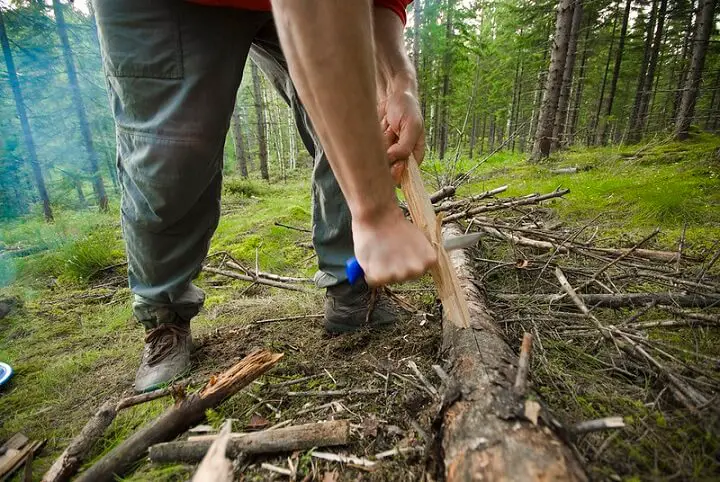
Being able to make a fire in any circumstances, wet or dry, is a vital survival skill. Striking flint with steel is a classic method that unsurprisingly takes a lot of practice to get right.
The same goes for starting a fire with friction, which is a lot of work and not guaranteed if you don’t have dry kindling. If you have sunshine and a magnifying glass or another such lens, you can make a fire by light of day, but this won’t help you at night or on an overcast afternoon.
There are many other ways to start a fire, some of which are kind of weird. I recommend starting by learning how to start a fire with a fire plow.
6. Foraging for Food
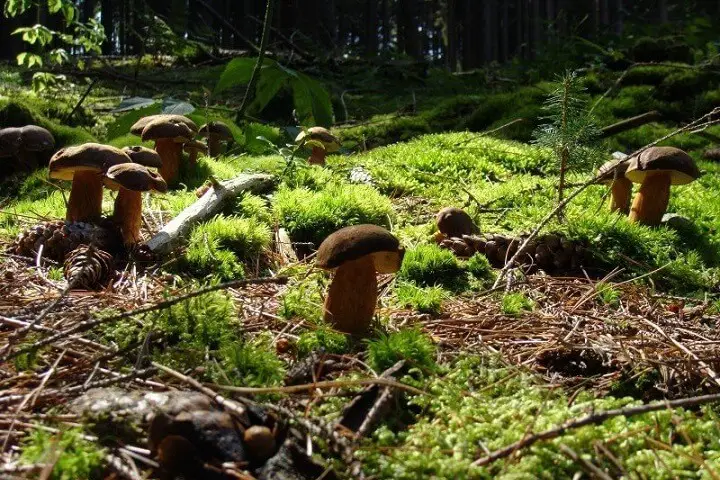
Knowing and finding wild food sources is an essential survival skill. There are a lot of weeds and common plants that are edible, such as nettles and dandelion greens.
Additionally, there is a wide range of forageable foods probably right inside your neighborhood including nuts and weeds. This simple online guide to seasonal foraging is an easy place to start, but there are many books out there that can help you find your way into the wonderful world of foraging.
Many insects are edible as well, and it’s worth knowing how to identify and prepare them, just in case.
7. Building an Outdoor Shelter
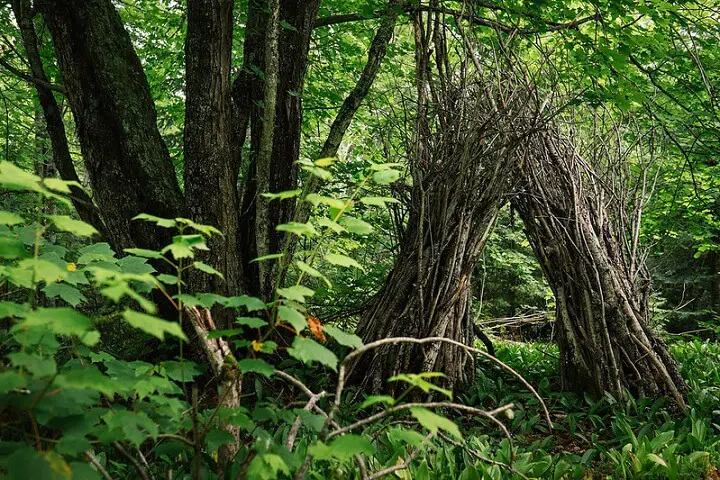
Remember building leaf forts as a kid? This is like the grownup version of that, only with the understanding that if you were lost in the wilderness, a shelter is often the only thing standing between you and hypothermia, which can be deadly.
Of course, building an appropriate shelter is not only fun, it’s fairly easy, too. Here’s a basic guide on how to build a shelter from natural materials. But the most straightforward online guide is designed for a group known for their preparedness: the boy scouts.
8. Basic Emergency First Aid
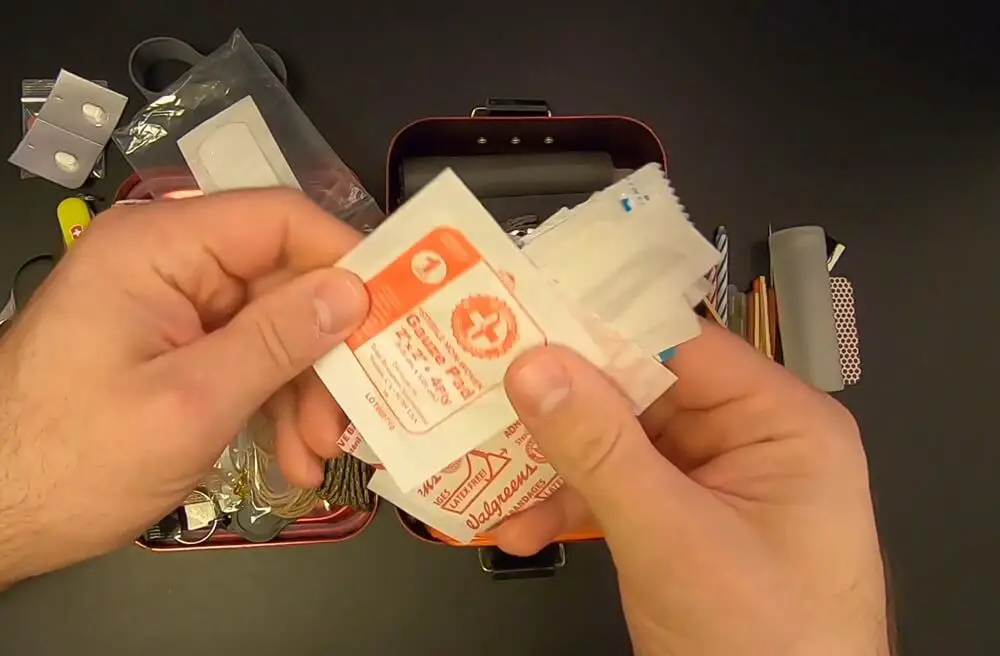
No set of survival skills is complete without a basic grasp of emergency first aid. If you don’t know how to perform CPR, you can easily learn online, and then practice it until you know the steps by heart.
This article has some great tips on how to set a broken bone, treat a blister, and more. Of course, you should also know how to use wild plants to treat injuries, bites, and skin irritation.
9. Trapping
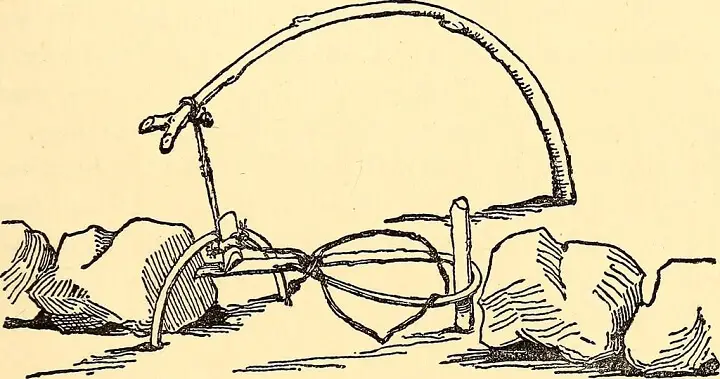
In a survival scenario, food is one of your top priorities. Learning how to set a snare can provide you with small game for relatively little expended effort. Here are some other ways to make a trap.
Of course, you’ll have to head out into the wild to test them, but learn what you can in your backyard first.
10. Sharpening and Maintaining Blades
A sharp knife (and a sharp hatchet/axe) is one of those “boring” skills that turns out to be a huge deal in real life. Dull blades are slower, more frustrating, and ironically more dangerous because they tend to slip when you force them.
The good news is you can learn blade maintenance entirely at home. Start with a cheap knife you don’t mind scratching up, then work your way up to the tools you actually rely on. You can use a whetstone, a guided sharpening system, or even sandpaper on a flat surface in a pinch.
Here’s a step by step guide.
Like this post? Don’t Forget to Pin It On Pinterest!
You May Also Like:

Read the full article here