
Key Takeaways
- Quality, jacketed hollow point (JHP) ammunition is essential for reliable performance in defensive firearms.
- JHPs expand upon impact, reducing the risk of harm to unintended targets and ensuring energy remains within the threat.
- High-quality ammunition has tighter tolerances, environmental seals, and improved reliability compared to budget options.
- The transition from FMJ to JHP by agencies like the NYPD highlights the importance of safety and risk mitigation.
- Using JHP ammunition minimizes danger to bystanders, making it the recommended choice for personal defense.
Estimated reading time: 5 minutes
Why does every reputable instructor recommend the use of quality, fairly mainstream, jacketed hollow point (JHP) ammunition in defensive use firearms?
The Key Issues
There are four things that we need the ammunition loaded in our personal defense firearms to do. First, be reliable. Second, shoot to the sights. Easier to do in the age of slide mounted red dots and adjustable zeroes. Third, penetrate to the parts of the body that really matter. Fourth, expand reliably. The first three on the list are all important, but we are going to focus primarily on the fourth one, expanding reliably. The other items on that list can all be accomplished without using a JHP bullet.
The Difference
Really, it comes down to safety, and meeting the requirements of the generally accepted core safety rules that we attach to the gun. High quality ammunition has a feature set not found in many “budget oriented” offerings or ammunition intended to be used as practice ammunition. Good defensive ammunition is typically loaded to a tighter tolerance, and the cartridge is sealed against the environment. The primer will have sealant to prevent intrusion of moisture, and in many instances the same for the case mouth. For ammunition that is carried more than shot, these are important features for reliability. My gun gets sweated on 10 months out of the year, and literally goes and does whatever I do. Protection against the the elements is an important mitigation. The tighter tolerance in loading also usually equates to a more consistently accurate round, and fewer issues with poor build quality, like primers that have been put in backwards (looking at you Remington).
More from USA Carry:
Why Expansion Matters
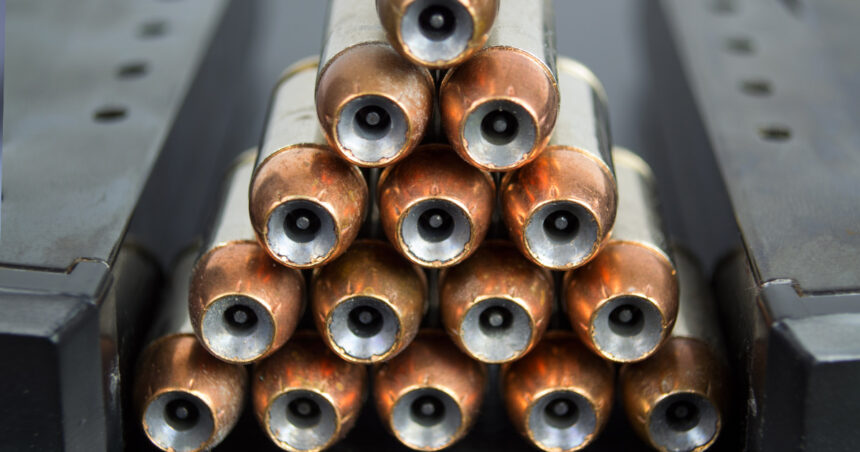
So that is just the cartridge. Why an expanding hollow point for the bullet? If you listen to certain voices in the world, they will tell you that expanding bullets are to cause maximum damage. In actuality, expanding projectiles are to mitigate the risk to people who are not the intended target. One of the generally accepted core safety rules is to know your target, what is beyond your target, and what is around your target. What that rule is getting at is that you have to know, as much as it can be known, where the final resting place of every projectile that leaves the muzzle will be. On the range, we use large backstops to catch our bullets. Off the range, the concept of backstops gets complicated. We should still be careful to maintain clear firing lanes and deconflict backgrounds, but even with clear lanes and clear target backgrounds, there are very few good, true backstops in the wild. The intention of using a JHP projectile is to expend enough energy on the intended target, that the projectile stays within the intended target. In essence, the threat becomes the backstop, as long as the shooting is up to par. We can accomplish all the things that we need a projectile to accomplish without using a JHP, except for this one.
A Historical Note
The NYPD issued FMJ 9mm ammunition all the way up to 1999 or so. Finally, at the turn of the century, they made the decision to issue a quality JHP bullet in place of the FMJ bullet they had been issuing. There is a document dated July 8, 1998, as the NYPD is considering this move, from the Committee on Hollow Point Bullets Presented to the Civilian Complaint Review Board that supports this same logic. These are not new ideas, but as time marches on it is not unusual for us to lose an idea here or there. One of the the conclusions of that board reads as follows “Thus, the Department’s assessment that full metal jacket bullets present a great risk of pass through and ricochet dangers is consistent with our observations.” If the NYPD can figure this out, then surely the gun toting American public can also figure this out.
The Bottom Line
Use of JHP ammunition in defensive firearms is a risk mitigation measure to reduce the likelihood of harm to uninvolved third parties. And that is why everyone that knows a thing about a thing, recommends the use of high quality JHP ammunition. This is also why nearly every law enforcement agency in the country does the same. Be wise with what you carry, and know why you carry it.
Read the full article here