
The fatal shooting of Alex Pretti in Minneapolis, the third federal shooting in less than three weeks, serves as a textbook “initial spark” in modern conflict simulations. This article examines how the clash between Operation Metro Surge and local governance creates the jurisdictional and social friction necessary to ignite a broader domestic crisis, potentially leading to a civil war.
LISTEN TO THIS ARTICLE
MINNEAPOLIS, MN (8-minute read) — In the study of modern domestic conflict such as civil war, the “initial spark” is rarely a planned insurrection. Instead, it is almost always a high-friction encounter between competing authorities that occurs in an environment already primed by distrust. In January 2026, the streets of Minneapolis have provided a chillingly accurate simulation of this dynamic. The fatal shooting of 37-year-old ICU nurse Alex Pretti by Border Patrol agents, the third shooting by federal officers in just 17 days, has created a perfect storm of jurisdictional defiance, social media acceleration, and political polarization that raises concerns about the potential for a civil war.
The Spark: High-Friction Jurisdictional Clashes Could Spark Civil War
The simulation begins when a federal mandate, such as Operation Metro Surge, is deployed into a local jurisdiction that fundamentally opposes its presence. In Minneapolis, Mayor Jacob Frey’s characterization of the federal surge as an “invasion” created the psychological framework for conflict long before the first shot was fired. When federal agents, operating outside the command structure of local police, engage in kinetic actions like the shootings of Renée Good and Alex Pretti, they create a vacuum of accountability.
This vacuum is deepened when the victim is a member of the community who carries significant social capital. Alex Pretti was not just a name; he was a 37-year-old U.S. citizen and an intensive care nurse at the local VA hospital. He was a professional who dedicated his life to saving others, and he was a lawful gun owner with a valid permit to carry. This profile makes the incident relatable to a vast cross-section of the public, from healthcare workers to Second Amendment advocates.
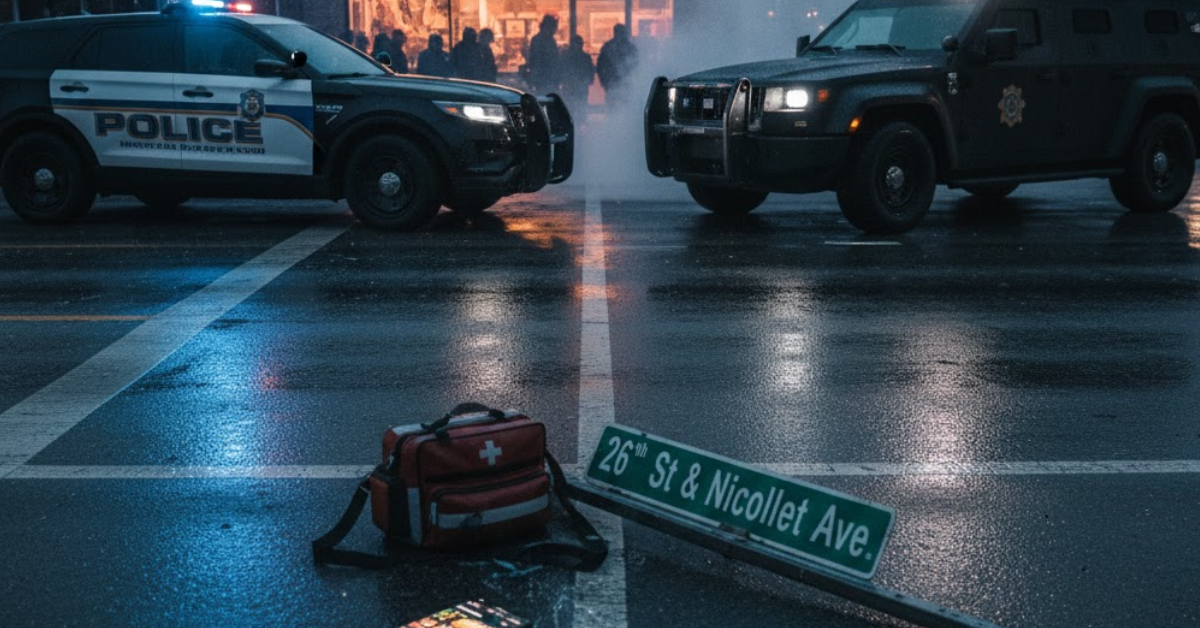
The spark ignites when local law enforcement and federal agents literally clash at the crime scene. In the Pretti case, Minneapolis police were reportedly blocked by federal armored vehicles despite having a state-issued warrant. This “agency vs. agency” friction is a primary accelerant. It signals to the public that there is no unified “law,” only competing factions of power. This confusion encourages civilian groups to interject, believing that the standing authorities are no longer capable of maintaining a neutral order. When the Minneapolis Police Chief refuses to back down, and the County Attorney demands the scene be secured by local law, the friction moves from the sidewalk to the halls of government.
The Spread: Rhetorical Escalation and the Insurrection Act
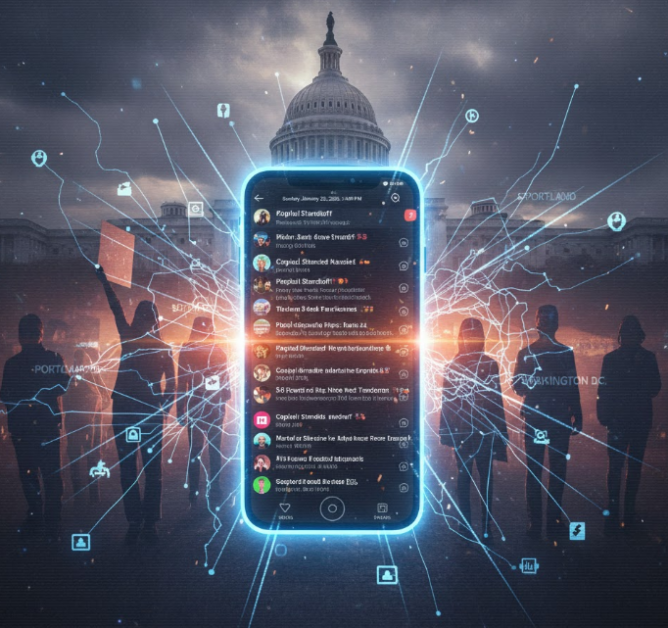
Once the spark occurs, the conflict spreads through rhetorical escalation from the highest levels of government. In this simulation, the threat to invoke the Insurrection Act acts as a secondary igniter. When the executive branch labels local protests as “insurrections” and local leaders as “insurgents,” it removes the possibility of a political solution. The language of “domestic terrorism” used by federal advisors immediately after the shooting, unsupported by evidence, sets a narrative that precludes de-escalation.
This rhetoric flows down to the street level, where digital networks (like the Signal groups used in the Minneapolis aftermath) allow the unrest to propagate. The simulation suggests that a crisis in Minneapolis doesn’t stay in Minnesota; it creates “sympathy protests” and retaliatory actions in cities like Portland, Seattle, and Los Angeles. When the National Basketball Association postpones games and the National Guard is activated to protect federal buildings from local citizens, the conflict shifts from a dispute over immigration policy to a fundamental battle over state sovereignty.
The spread is also fueled by the direct contradiction in narratives. When DHS claims a suspect brandished a 9mm handgun, but verified bystander videos show a man holding a phone while attempting to help a fellow citizen, the “truth” becomes a matter of tribal alignment. This erosion of a shared reality is essential for the transition from civil unrest to civil war.
Infrastructure Sieges and the Rural Buffer

As the Minneapolis spark spreads, the mechanics of the conflict move toward the physical control of territory. In a modern American civil war, this manifests as the interdiction of “soft targets” and supply lines. Protesters blocking intersections in South Minneapolis are the early stage; the late stage involves the disruption of the “Metro Surge” logistical chain.
Rural-urban dynamics come into play when state authorities refuse to facilitate federal movement through their land. If the Governor of Minnesota creates a “log of evidence” to prosecute federal agents, it effectively turns state boundaries into hard borders. This creates a “siege” environment for federal enclaves within the city, leading to a breakdown in essential services and a rapid increase in the likelihood of armed encounters between unorganized civilian factions and federal units.
Furthermore, the involvement of the National Guard creates a potential for fractured loyalties. If state-level soldiers are ordered to stand between their own neighbors and federal agents, the cohesion of the military itself is tested. In this simulation, the “Rural Buffer” refers to the surrounding counties where local sheriffs may explicitly refuse to assist federal agents, creating safe havens for dissidents and further complicating the federal government’s ability to maintain a presence in the region.
The Fallout: Accountability and Institutional Decay
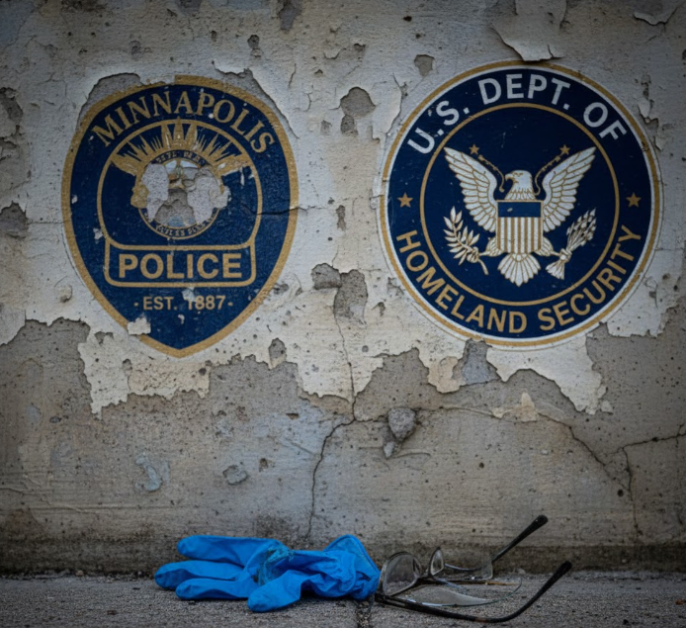
The aftermath of a spark like the Pretti killing is marked by a total breakdown in institutional cooperation. When federal investigators from the FBI arrive in armored vehicles to a scene where local Bureau of Criminal Apprehension agents are already working, the competition for evidence becomes a competition for the narrative. This decay of trust extends to the medical field and the legal system. When a physician on the scene is barred by federal agents from providing aid to a dying man, the professional codes of conduct that hold society together begin to unravel.
Ultimately, a modern civil war simulation suggests that the conflict is sustained by the inability of the system to provide justice that all parties can accept. As long as federal agencies are perceived as operating with impunity and state leaders are viewed as inciting rebellion, the cycle of violence continues to expand.
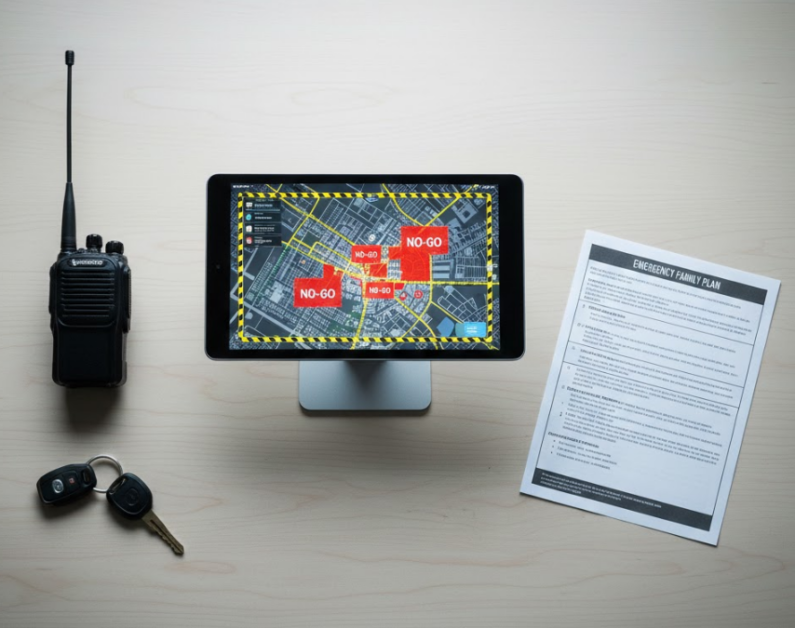
In a landscape defined by federal-state friction, your primary responsibility is to avoid becoming a data point in a jurisdictional battle. If you are a lawful firearm owner, recognize that “duty to retreat” and “self-defense” laws become incredibly murky when federal agents are involved. In a situation like the Minneapolis protests, even a lawful act of recording can be perceived as an act of hostility.
Your goal is to maintain a “gray man” profile: do not wear clothing that identifies you with any faction, do not interject in scuffles between agents and protesters, and ensure your home is a self-contained fortress.
Real-time situational awareness is your best defense; monitor local police frequencies and independent digital feeds to stay ahead of rapid response deployments.
Avoid “picking a side” in the immediate vicinity of a flashpoint; your primary objective is to extract yourself and your family from the zone of kinetic engagement.
Read the full article here