

Sometimes conservation work can look a little unconventional, and in this case, it meant wild turkeys boarding a plane in Texas, bound for a new future in Utah thanks to a network of partners, volunteers and NWTF staff who understand that healthy turkey populations don’t happen by accident.
Recently, Utah welcomed Rio Grande wild turkeys from Texas as part of a carefully coordinated, multi-state trap-and-translocation effort. The story behind those birds stretches far beyond state lines and speaks directly to the mission NWTF members support every day.
A few years ago, South Dakota offered to send Eastern wild turkeys to Utah. Texas, meanwhile, was in need of Easterns to bolster its own restoration efforts in East Texas. Through a cooperative three-state exchange, South Dakota’s birds went south, and in return, Texas offered Rio Grandes to Utah. That exchange didn’t just move birds; it opened the door to a unique research opportunity that could shape turkey management for years to come.
Bringing Rio Grande turkeys into areas with established resident birds enabled Dr. Nicki Frey, an extension professor from the Wildland Resources Department at Utah State University, to design a study comparing resident versus non-resident birds, while also collecting feathers for genetic analysis. The Utah Division of Wildlife Resources (DWR) welcomed the opportunity to implement this study design. The goal: evaluate heterozygosity (a measure of genetic diversity) and hybrid vigor (increased performance of offspring) in Utah’s flocks — key indicators of long-term population resilience.
This kind of work doesn’t happen without boots on the ground and support behind the scenes. The National Wild Turkey Federation and the Utah NWTF State Chapter played a major role in making the translocation possible, providing funding for trapping efforts in Texas, airfare to get the birds to Utah quickly and safely and the turkey boxes used for transport.
When the birds landed, the job wasn’t finished. Retiring just weeks earlier, Utah NWTF State Chapter President Lynn Worwood was there to meet them, personally transporting the turkeys from the airport to the release site using his own trailer.
For many NWTF volunteers, Lynn’s dedication will sound familiar. Serving as a state chapter president often resembles a second full-time job, from organizing banquets to supporting conservation projects statewide. Even in retirement, Lynn continues to show up for the wild turkey, playing an instrumental role during the processing and release of these birds.
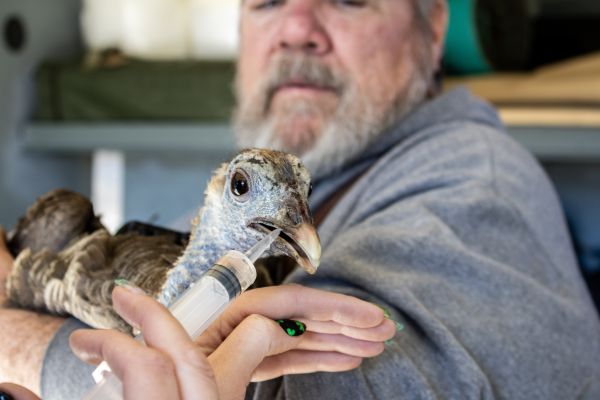
Before release, each turkey was carefully handled for research purposes. Utah DWR staff and volunteers recorded weights and temperatures, collected feather samples and administered electrolytes to help with rehydration after transport. Many birds were also fitted with backpack GPS/VHF transmitters, allowing researchers to track survival, habitat use, movement patterns and nesting behavior.
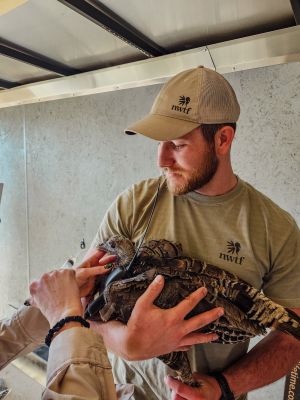
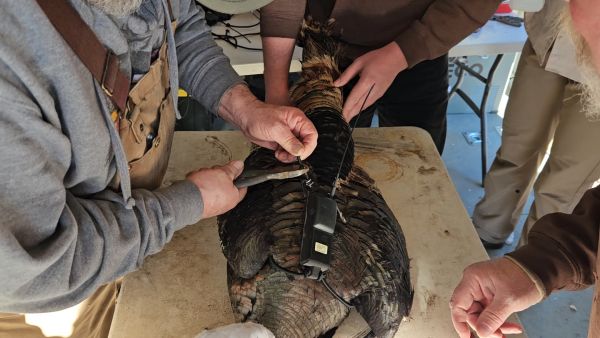
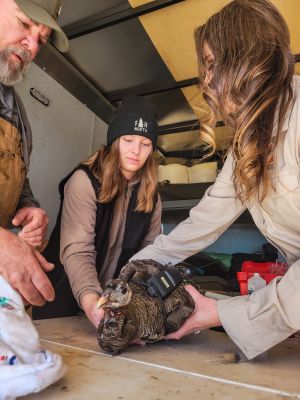
As a key part of this research, monitoring nesting activity will allow Utah DWR to back-calculate peak breeding dates. This information will directly inform hunting season timing. If data shows that limited-entry hunts are occurring before 60–70% of breeding has taken place, season dates can be adjusted to ensure hunting remains compatible with sustainable population growth.
Beyond season timing, the project is answering other important questions in modern turkey conservation:
Do soft releases increase wild turkey survival versus hard releases?
How does survival vary across habitat types?
Are translocated birds nesting as successfully as resident birds?
What habitat features define successful nesting and brood-rearing areas?
By pairing GPS data with GIS tools, researchers can evaluate both fine-scale habitat use and large-scale landscape features, and this information will directly guide future habitat restoration projects.
After acclimating in soft-release pens, the birds were released in the northern portion of Utah’s Southern Region, an area selected specifically for its climatic similarity to their Texas origin.
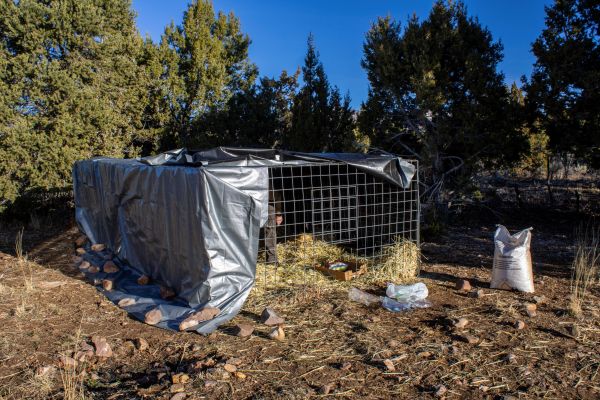
“Since there is an existing resident population, we anticipate the Texas birds will integrate with the residents, which should increase survival,” said Heather Talley, upland game coordinator for the Utah Division of Wildlife Resources. “We hope that increasing hybrid vigor to the resident flocks will produce increased survival during unpredictable events, that we can learn more about turkey nesting habitat selection to enhance those habitats through restoration projects, and that these factors will ultimately expand turkey populations in this area.”
The project reflects a shared stewardship approach, with partners including the Texas Parks and Wildlife Department, TPWD Wild Turkey Program leader Jason Hardin, Utah State University professor Nicki Frey, and Dustin Darveau and Joe Sayer from the Arizona Game and Fish Department, whose research focuses on soft-release methodology. NWTF conservation staff, including Doug Little, director of conservation operations in the East and Chuck Carpenter, district biologist for Utah, Idaho, Arizona and New Mexico, also played key roles throughout the project.
For NWTF members, this effort is a reminder that conservation isn’t just about adding birds to the landscape, it’s about building resiliency and representation of populations through science, partnerships and dedicated volunteers. From a turkey box at the airport to data shaping future hunting seasons, every step reflects the mission members support: conserving the wild turkey and preserving our hunting heritage for generations to come.
Read the full article here