

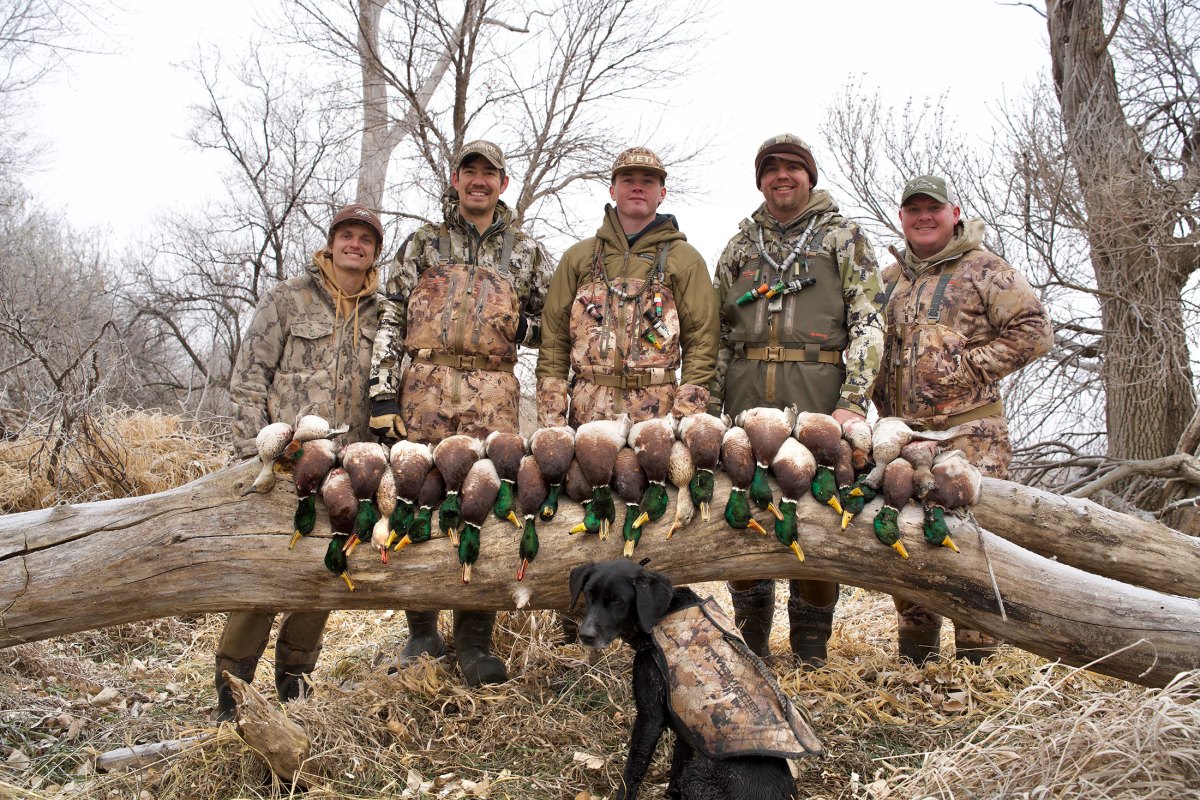
Okay, so maybe I was being just a little dense when my editor wrote and asked if I’d be interested in doing a piece titled ‘The Best Late Season Duck Hunts.’ Self-explanatory, right? Well, I needed more.
He responded: “Basically, if I called you last minute and was like… Hey! I need to get in one last good duck hunt this year. Where should I go?”
My response? Come January, there’s still a lot of excellent duck hunting, and even more great goose hunting, to be had. But, the first thing you need to ask yourself is, – Am I looking for quantity? Or am I in search of a so-called bucket list bird (like a fully colored-up cinnamon teal, a drake surf scoter, or a handsome black duck)?
Let’s take a look at some of the best duck hunts to be had as the 2025-26 waterfowl season winds down, keeping both options – quantity and quality – in mind. I’m going to go just a bit heavy on the Pacific Flyway. That’s because so many of the states here offer a duck season lasting damn near or until the end of January, 2026. Give that some thought the next time you’re planning an away-from-home, end-of-season duck hunt.
PACIFIC FLYWAY
The Columbia River for Bucket List Birds
The Columbia River has it all – sea ducks in the estuary; tidally influenced divers; and puddle ducks, including Eurasian widgeon and gorgeous pintails. Further upriver, there are back-bay mallards and widgeon. And while I won’t say there are canvasbacks to rival the Mississippi’s famed Pool 9, there’s plenty of them whipping around too. You’ll even find redheads and goldeneyes if you work the waters of Kittitas County. What the Columbia doesn’t have is much in the way of walk-in or shoreline access. There’s some, but not a ton. This is a boat hunt. You’ll need a reliable, big boat with an experienced captain at the helm, for the Columbia is anything but forgiving.
The Snake River for Mallards and Goldeneye
“Late season birds on the Snake are different than any other ‘late season’ birds I’ve run into,” says Jordan Murdoch, national sales manager for Rig ‘Em Right, and an Idaho resident. “These birds seem to be less pressured and more willing to cooperate in terms of working a spread. It’s not uncommon to find groups of 500 to 1,000 mallards in a 100-yard stretch of river loafing mid-day or roosting overnight. We’ve had tornadoes of ducks in January, and it can rival the Arkansas woods in terms of pure mallard hunting enjoyment.”
The Snake has action for the diver freaks as well. “There are tons of common goldeneyes, with the possibility of Barrows (goldeneye) as well, which is super neat.”
The Great Salt Lake for the Ultimate Mixed Bag
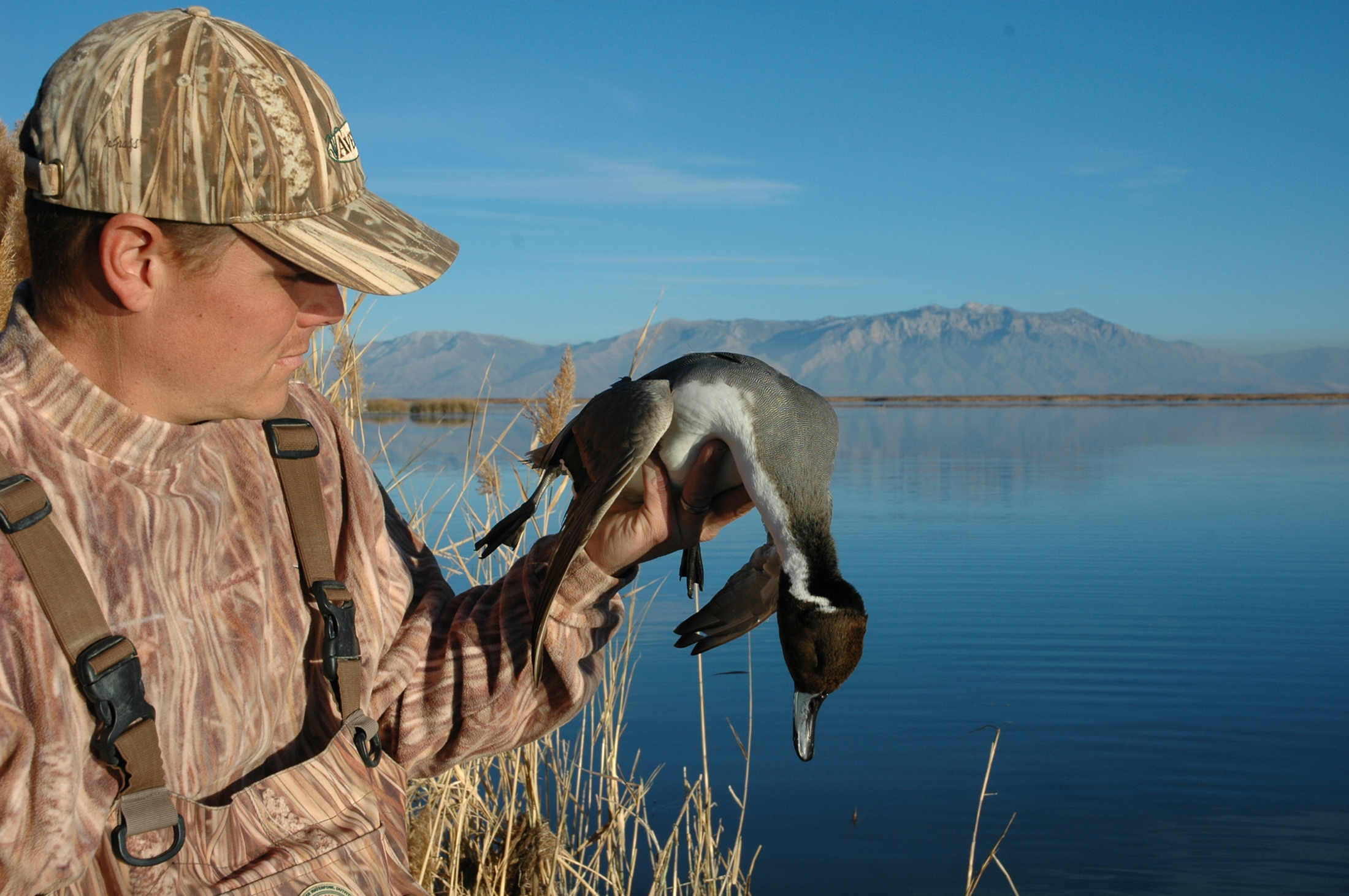
Canvasbacks. Redheads. Goldeneyes. Ruddy ducks. A smorgasbord of puddlers, including cinnamon teal. Canada geese. Snow geese. Tundra swans. It might sound too good to be true, but if you’re looking for any or all of these birds, plus some of the most spectacular drake northern shovelers on the planet, then head to Utah’s Great Salt Lake. Got a buddy with an airboat? I’d highly recommend doing the coffin blind hunt with 400 to 600 silhouettes on the flats. I’ve done it a handful of times, and you will not be disappointed. No airboat? You can do a traditional layout hunt on Farmington Bay, targeting an all-drake seven-species daily bag. And then there’s Ogden Bay, Howard Slough, and Salt Creek, if it’s a walk-in hunt you’re after.
Read Next: Where to Hunt Ducks: 4 Underrated States for Freelance Waterfowlers
CENTRAL FLYWAY
Texas for Teal and Pintails
I love teal. Always have. September blue-wings. December green-wings. Salt Lake cinnamons. But despite half a century of chasing teal ducks, I have yet to shoot a gorgeous fully-feathered drake blue-wing. I still dream of that purple head, jet-black bill, and crescent moon.
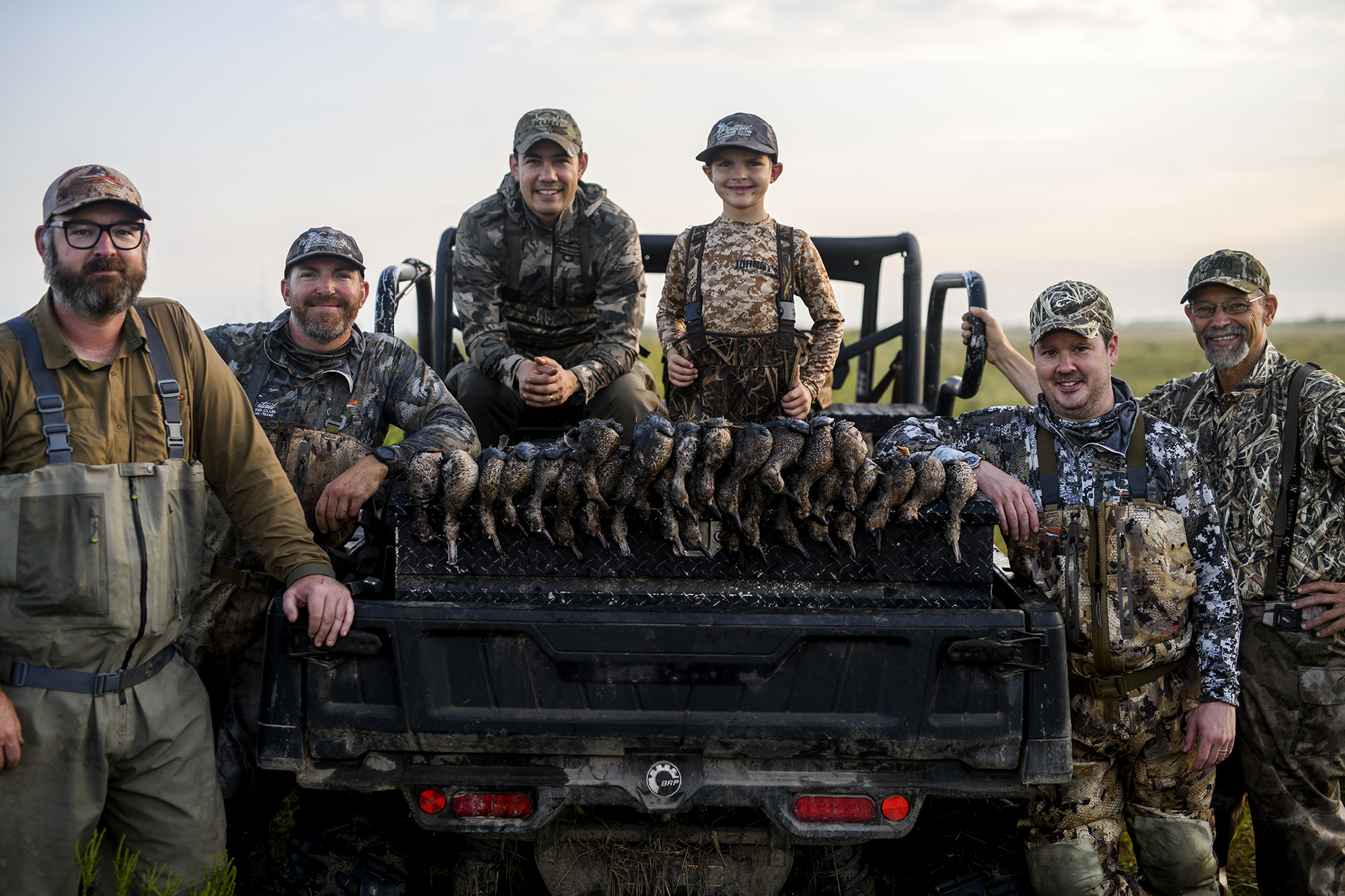
If you’re a teal lover like me, and want to shoot them in conjunction with a lights out duck hunt, get with Steve Biggers, owner of Rocky Creek Retrievers in Texas. “We get a reverse migration during the last two weeks of January,” Biggers told me. “If someone’s looking to shoot a trophy blue-wing, they need to come back those last two weeks of the season. I call it Teal Season 2.0. These are Smithsonian (Museum) trophies. You can go to Mexico, but it’s just easier to come to El Campo.”
Also worth considering is Pintail Hunting Club just to the north in Garwood, Texas. True to their name, they put hunters on plenty of winter pintails — along with teal, divers, spoonies, and cranes. Their guides and dogs are excellent, the lodge has a hunt club vibe, and the gunning is exceptional.
Haskell County, Texas for Speckle Belly Geese
Haskell County, Texas, home of Justin Hill and his Ranger Creek Goose, whose website proclaims his county, along with neighboring Knox County, will winter roughly half a million specklebellies and lesser Canadas. That’s a lot. “We really started getting specks in the 1990s,” Hill told me. “Our (area of operations) is small, about 30 square miles, and we winter the vast majority of the specks coming down from Alaska. There will be times during the year when we’ll have 125,000 specks right here.”
And while you’re enjoying that Texas hospitality, make sure to pencil in an extra day for a crane hunt over decoys, which is another of Hill’s specialties.
Beaver Dam, Mississippi for the Southern Mallard Experience
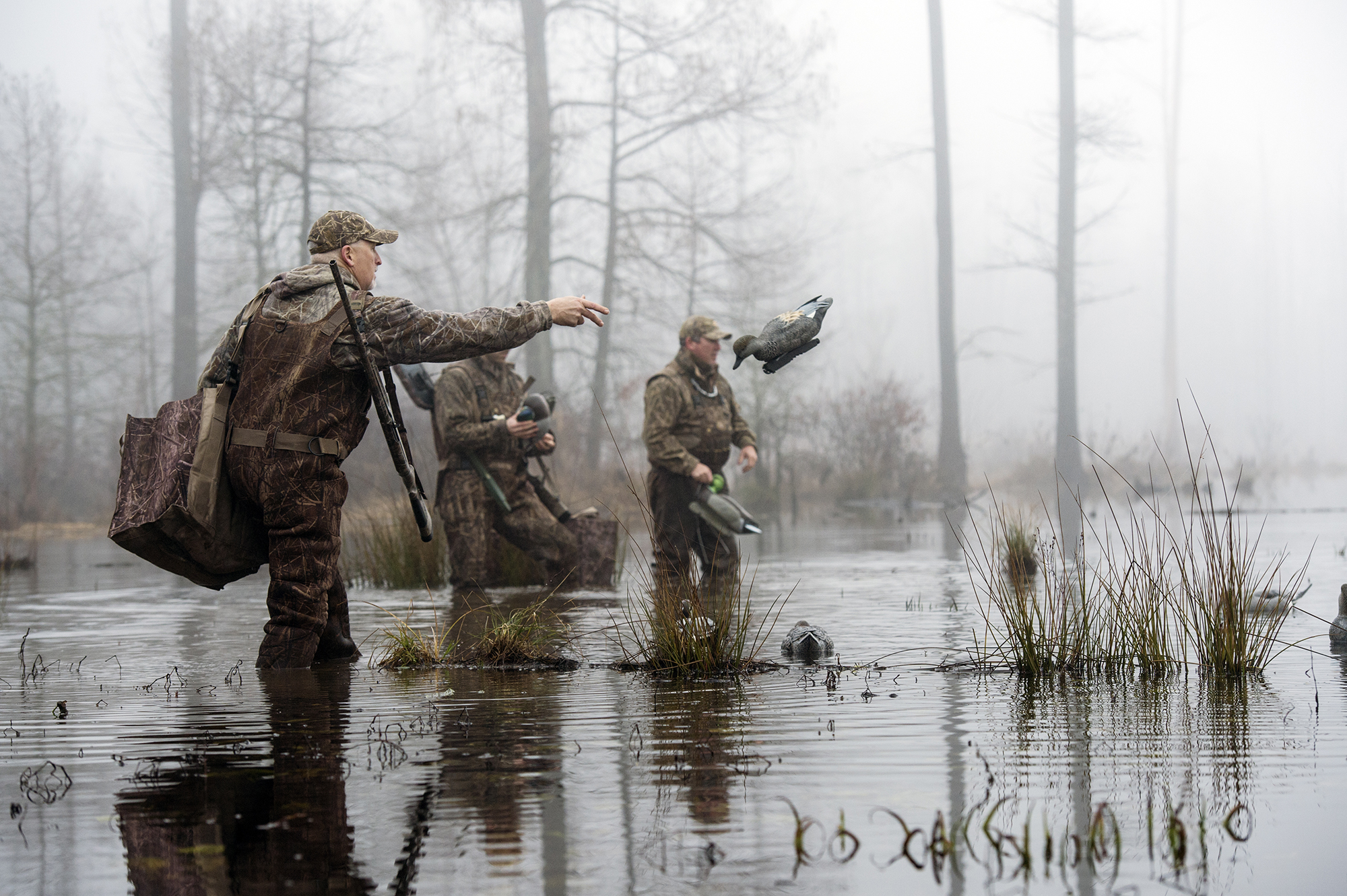
Yes, sir. This one’s going to set you back just a little bit, but for the price you get to spend a couple days surrounded by the ghosts of the late 1800s, including that of the legendary outdoorsman and writer, Nash ‘De Shootinest Gent’man’ Buckingham. Of course you’ll also be shooting mallard ducks and some of the most handsome drake gadwall ever to grace a strap. Set amongst generations-old cypress, the short boat ride to the blind is an experience in and of itself. And as for your hosts, Mike Boyd and his son, Lamar, owners of Beaver Dam Hunting Services, both are the very definition of the ‘southern gentleman.’
Stuttgart, Arkansas for a DIY Adventure
Here’s the plan, unless you already live within a short distance of Stuttgart. Convince a couple buddies to take vacation, hook up the boat, load the truck, update your onX Maps subscription, and head to the 34,000-acre Bayou Meto WMA. Or the White River NWR (160,000 acres). Or the Cache River NWR (68,000 acres). This is traditional green timber mallard hunting at its finest, and given the right conditions, a whole lot of hard work, and a little luck, this could very well be a hunt to remember. Offering his advice on Bayou Meto is Bill Cooksey, four-time Tennessee State duck calling champion.
“Study the hell out of maps and download them to an app that doesn’t require a cell signal to work,” he said. “If you’ve never been in flooded woods, you WILL get turned around because it all looks the same.”
Don’t expect to show up as an out-of-stater and shoot limits out of the gate. There will be plenty of local pressure here from locals who know the water much better than you. But if you’re up for a cheap adventure and a big challenge, you’ll find it here.
Tips for Hunting January Ducks
Focus on the hide. You must hide well to shoot late-season ducks, it’s just that simple. Step back and take an in-depth critical look at your hide. Too much? Too little? Soften the straight lines by adding a bit more reed canary grass? Overhead cover is critical; so, too, is the ability to sit still. A friend in Tennessee cuts two or three times the brush he’ll need for the season, tucking the excess behind the blind to age; when, mid-season, he refreshes the hide, the ‘new’ cover blends perfectly. The details matter.
Try micro-spreads. No, it’s not going to work for everyone everywhere, but as the season winds down, I start running the smallest decoy spreads possible. I focus on hunting the ‘X,’ and use realistic fakes. Invest the time scouting and narrow that ‘X’ to the smallest area possible. A bend in the river. A puddle within a puddle. Put your duck hunt under a microscope; that’s where you want to be. For decoys I’m packing six to eight Dave Smith Decoys’ Maxima Mallards anchored with EZ Dekes’ Texas Rigs. The DSDs look eerily real, and the Texas rigs let me pick up and move quickly, if need be.
Read Next: Best Duck Decoys, Tested and Reviewed
Move when you have to. Which brings me to flexibility. Remember what I said about putting the ‘X’ under a microscope? I know it’s psychologically tough to get set up and then realize you have to move. It’s a pain in the butt, I know, but don’t hesitate to pick up that small, easily relocated spread, and move to where the birds actually want to be.
Invest in an Old School jerk rig. Yes, electronic gurglers, squirters, splashers, swimmers, and spinning wing decoys are available; however, not all states allow their use. Those old school jerk rigs are legal everywhere, they require no batteries, and they always function.
Use Soft and Simple Calling. Every day is different. Every duck is different. But for the most part, I find that late season birds respond more positively to minimalistic simple calling. No theatrics. No stage performances. Think ‘The Paralzyer’ by the late Phil Robertson, an elemental three-note run with the first QUACK drawn out a bit. That, and working those January greenheads with the drake mallard’s unmistakable DWEEEEK sounded out on the late Buck Gardner’s 6-in-1 whistle. Watch how the birds react and base your calling on that.
Final Thoughts
Duck season doesn’t have to be over in December. In some places, despite the chill in the air, it’s just getting downright hot. But most of the easy duck hunting is gone now. Head in the right direction with the right weather and some luck, and you’ll enjoy a shoot like you dream about.
In some cases you’ll have to pay an outfitter a pretty penny to get in on the game. In others, you’ll have to pay in hard work and days of scouting. But the opportunities are still out there.
Read the full article here