

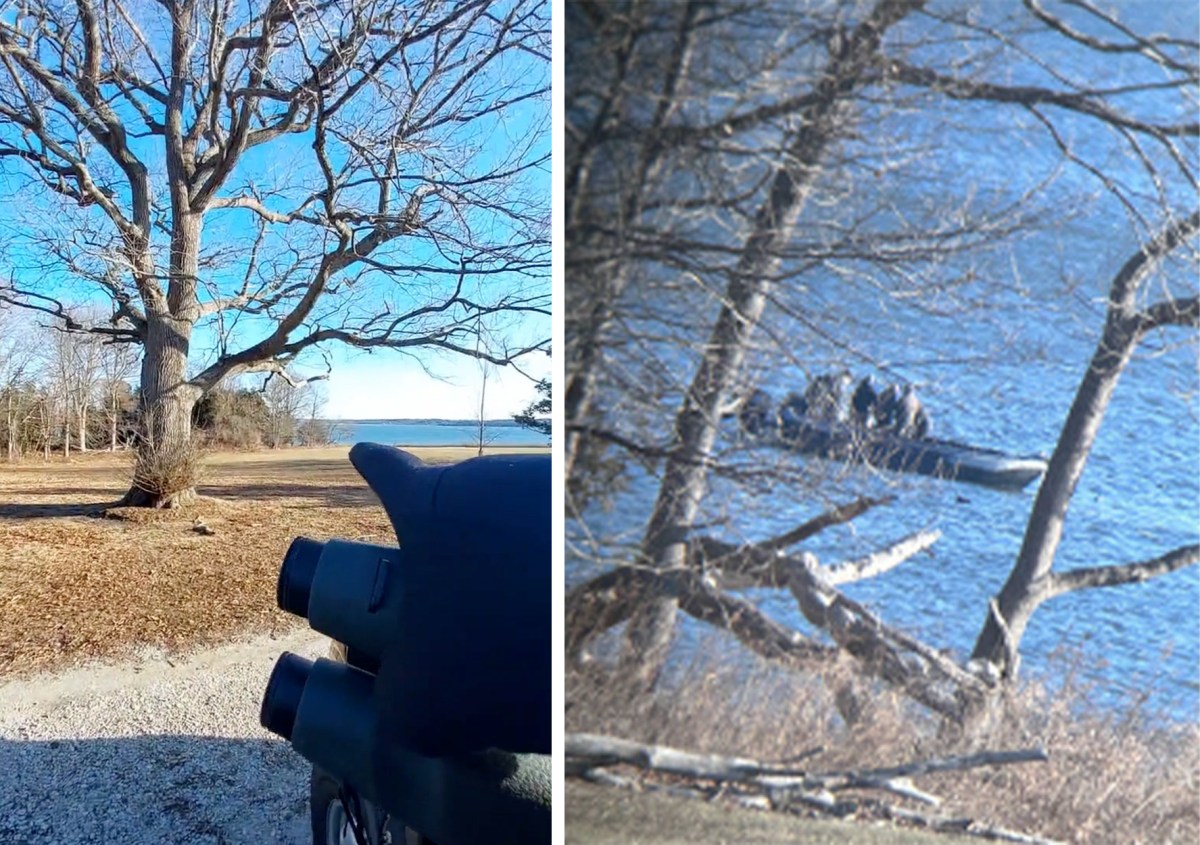
A Michigan-based outfitter who was guiding waterfowl hunts in Rhode Island in 2025 was caught on video by game wardens rallying sea ducks for his clients. The practice, which involves using a boat to stir up, push, or flush birds to waiting hunters, is illegal at both the state and federal level.
The guide, Craig Macphee, was caught on video by Sgt. Joshua Beuth, an environmental police officer with the Rhode Island Department of Environmental Management. Beuth, who is also an avid waterfowler, says it was one of the more clear-cut cases of rallying he’s witnessed. Macphee did not immediately respond to a request for comment from Outdoor Life.
As Beuth’s body cam footage shows (see below), Macphee’s hunting party had set up multiple layout boats and decoy spreads on the Sakonnet River near Portsmouth. At one point during the hunt, Macphee uses his tender boat to circle and push a group of buffleheads toward one of his paying clients. The client then shoots one of the birds over the decoys from a layout boat.
‘Textbook Rally, Shoot, Kill.’ Game Wardens Catch Waterfowl Guide Rallying Sea Ducks on Video
“It was so crystal clear and concrete that every movement of that boat, and the intent of that guide [Macphee], was to drive [birds] to that hunter and provide a shot opportunity. Which is exactly what happened,” Beuth tells Outdoor Life, referring to the hunt he observed and filmed from shore on Jan. 7, 2025. “This case was so crystal clear that it’s forever ingrained in my memory.”
The footage also shows that later on during the same hunt, Macphee used the same approach to stir up a raft of scoters. He drives his boat slowly and methodically to circle around and then push the birds toward the same hunter in the layout boat. After some of the scoters flush wide, a lone drake surf scoter is left swimming toward the decoys. Again, Macphee operates his boat to intentionally flush the duck in the direction of the decoys and the layout boat. Driving straight at the swimming scoter, he keeps using the boat to squeeze the bird until it finally flushes and flies over the decoys. The hunter then kills the duck with one shot.
“Textbook rally, shoot, kill,” Beuth says in the video.
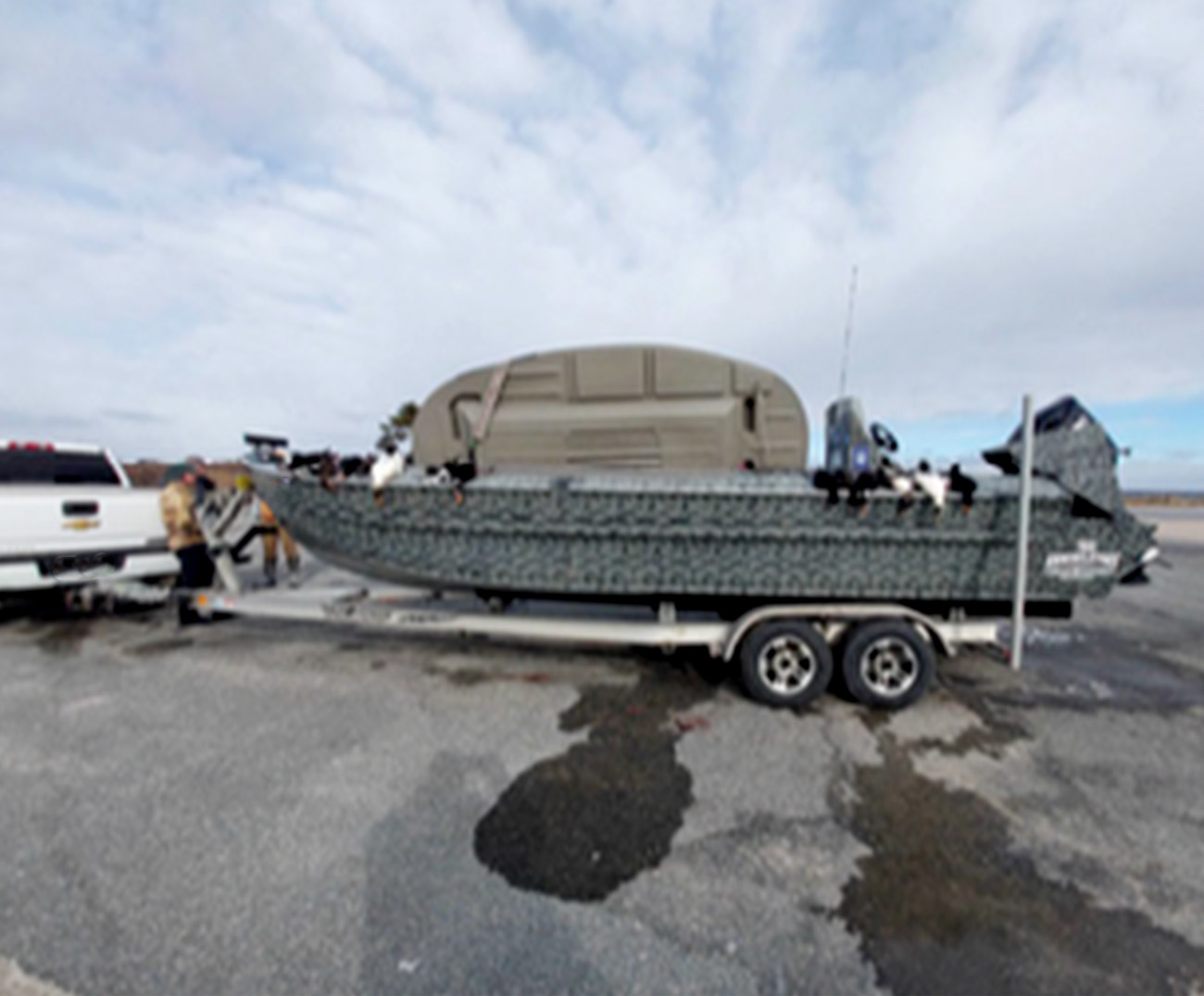
Soon after, Beuth explains, Macphee wrapped up the hunt and collected his decoys, and the party headed back to the boat ramp. At that point, Beuth had all the evidence he needed to charge Macphee and the client with rallying waterfowl. He had also noticed while watching the hunt from a distance that Macphee’s hunting party included a total of eight people — Macphee himself, plus five clients and two assistant guides. This is also illegal according to Rhode Island regs, which prohibit hunting parties larger than five.
Macphee, who operates Tail Annihilators out of Bad Axe, Michigan, had been traveling to Rhode Island to guide sea duck hunters for the last several years. Beuth had heard reports during past seasons from other local guides, who had reported “negative or less desirable interactions” with Macphee at the boat ramp or on the water. Beuth had also seen social media photos from past hunting seasons that appeared to show Macphee with a party of more than five hunters.
“He was on my radar, you could say,” says Beuth. “So once I knew where he was that day, and I found him and his hunting party, that’s when I settled in to monitor him and observe how he conducted his hunt.”
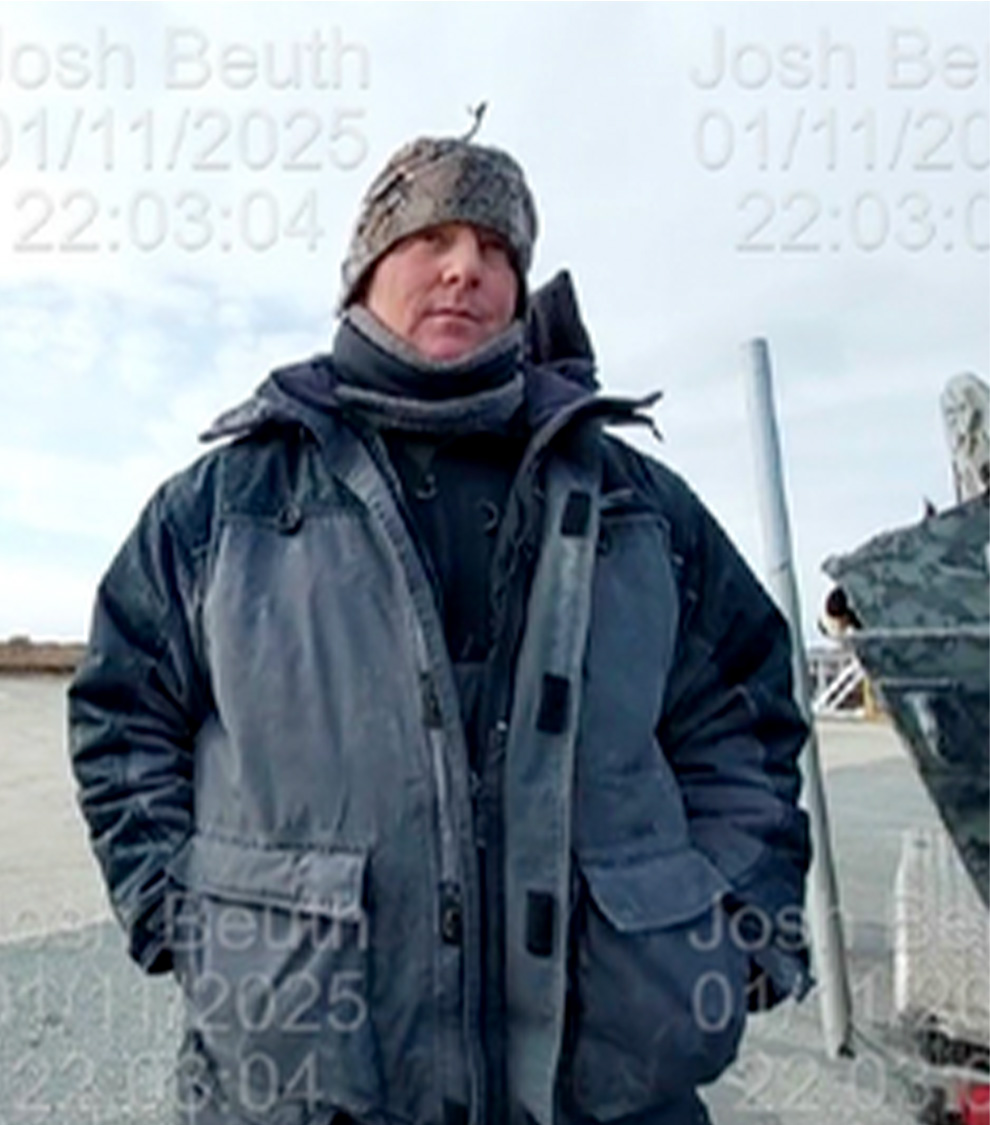
Upon contacting the hunting party at the boat ramp, Beuth learned that the five clients were also from Michigan. They were all younger men and experienced duck hunters, and they booked with Macphee’s guide service because they had never hunted sea ducks before.
According to the arrest report provided to Outdoor Life, Beuth and the other game wardens present identified Toby Macphee, Craig’s son, and Brandon Echtinaw as crew members of the operation. The wardens checked the group for compliance, and found that two of the clients did not have an HIP permit. Echtinaw also did not have a state or federal duck stamp. The three men were charged accordingly with civil infractions.
Based on the video evidence Beuth obtained, he charged both Macphee and the client who had shot the two rallied birds with three crimes apiece: two charges of rallying waterfowl, and one charge of hunting with more than five people. He also seized their shotguns and the two sea ducks (a drake bufflehead and drake surf scoter).
While interviewing the party at the boat ramp, Beuth says he found the one client who’d shot the two ducks to be “very honest and forthcoming.” The client could tell by Beuth’s description of the hunt that he had been monitoring them from afar. He confirmed Beuth’s observations about what all had transpired and how Macphee was operating his boat to rally birds.
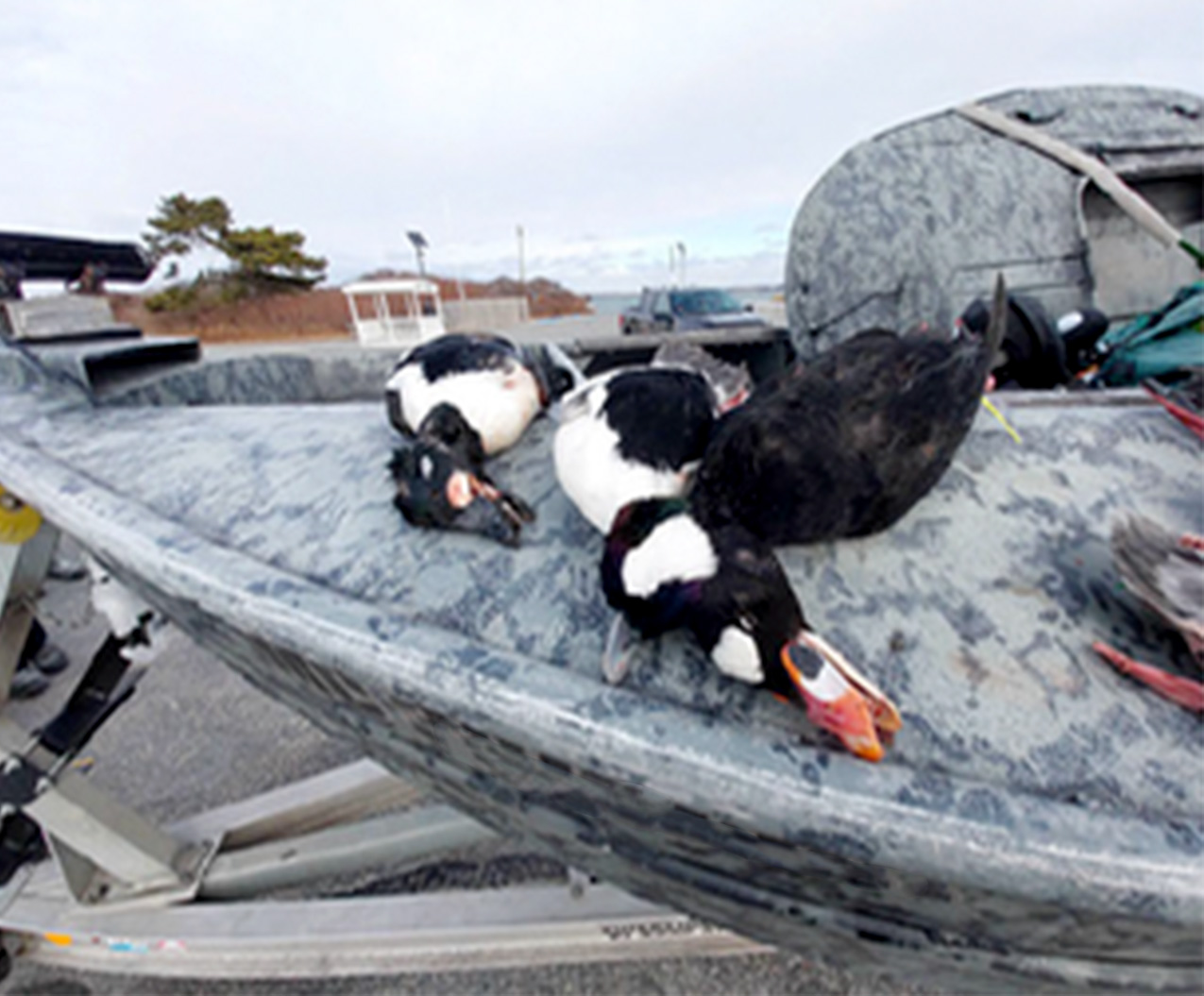
“He also seemed incredibly frustrated, both at Mr. Macphee and himself, for not realizing in the moment that what was occurring was illegal,” says Beuth. He adds that all of the clients contacted him the next day to genuinely express how sorry they were. “They were seemingly ashamed of themselves for not realizing what exactly they were participating in. And they felt that they had let their guard down and put their trust in Mr. Macphee.”
Beuth says Macphee’s responses during the interview were the direct opposite of his clients’. He repeatedly denied Macphee’s accusations, and he refused to take responsibility for the actions that Macphee had witnessed and caught on video.
“I found him to be pretty standoffish, and, I would say, arrogant,” Beuth says. “But his failure to acknowledge his actions wasn’t going to change this case. I didn’t need him to [admit to] what he did … I was going to proceed with the charges no matter what.”
The criminal charges filed against Macphee and his client were later forwarded to RIDEM prosecution officers. From Beuth’s later interactions with a prosecution officer, he learned that the charges against the client were reduced to warnings. Beuth says he and the prosecuting officer felt this was a fair deal because the client owned up to his mistakes, and “was to some degree a victim of the circumstances he was put into.”
He says Macphee’s case was handled very differently. This was partly because of his attitude when charged. But it was mostly because, in Beuth’s eyes, hunting and fishing guides should be held to a higher standard when they are profiting off a public resource. Beuth says he wanted to see Macphee convicted, and that personally, he would have liked to see his hunting license suspended.
That did not happen. Beuth says Macphee’s attorney pushed for the case to go to trial. And while Beuth was confident he could prove his case in court, it is his understanding that the prosecutor in the state attorney’s general office did not wish to go to trial due to all the other criminal cases on their docket.
“Those prosecutors have immense caseloads. They are dealing with domestic assault cases and homicides, and some ugly stuff,” Beuth says. “And [when it’s] a guy shooting a duck from a boat … they’re very unlikely to actually bring that case to trial.”
Court records obtained by OL show that Macphee and his attorney reached a plea deal with the state on May 6, 2025. Macphee entered a “no contest” plea to one of the rallying charges, and the other two criminal charges were dismissed by the prosecution. Macphee did not receive any kind of license suspension, and he was fined $641.75. His seized shotgun, a Benelli Super Black Eagle II, was also returned.
While a no contest plea is not an explicit admission of guilt, it is treated the same as a conviction under Rhode Island law. That conviction will remain on Macphee’s record. And although he will still be able to obtain a hunting license in the Ocean State, Beuth says Macphee will not be able to obtain a Rhode Island waterfowl guide license for at least three years from the date of that conviction.
Beuth explains that the state’s waterfowl guide license was established in 2025, when Rhode Island issued its updated hunting regulations for the year. Beuth says the guide license, which requires passing an in-person exam along with other stipulations, is meant to level the playing field by ensuring that all guides understand and abide by the same laws. He says the new license will also help with monitoring harvest and gauging hunting pressure.
“It wasn’t to prevent people from guiding here,” he says. “It’s more to just set a standard and make sure we can hold people accountable to that.”
Read Next: Poachers Who Shot 100-Plus Wood Ducks Over Bait Get Caught After Posting to Social Media
Beuth says the state’s fish and wildlife commission had been discussing the creation of a waterfowl guide license since long before 2025. He says they’ve seen an increasing number of waterfowl guides operating in Rhode Island during the 15 years he’s been with the agency.
“Our charter fishing fleet, those captains are required to have a license as well,” Beuth says. “This is a similar thing. We’re regulating people who are fishing and profiting off the resource. So [we decided] let’s do the same for wildlife.”
It is also Beuth’s understanding that Macphee’s ability to legally guide waterfowl trips in his home state of Michigan could be (or could have been) affected by his conviction in Rhode Island. Outdoor Life reached out to the Michigan DNR for clarification on this, but did not get a response by press time.
Read the full article here