
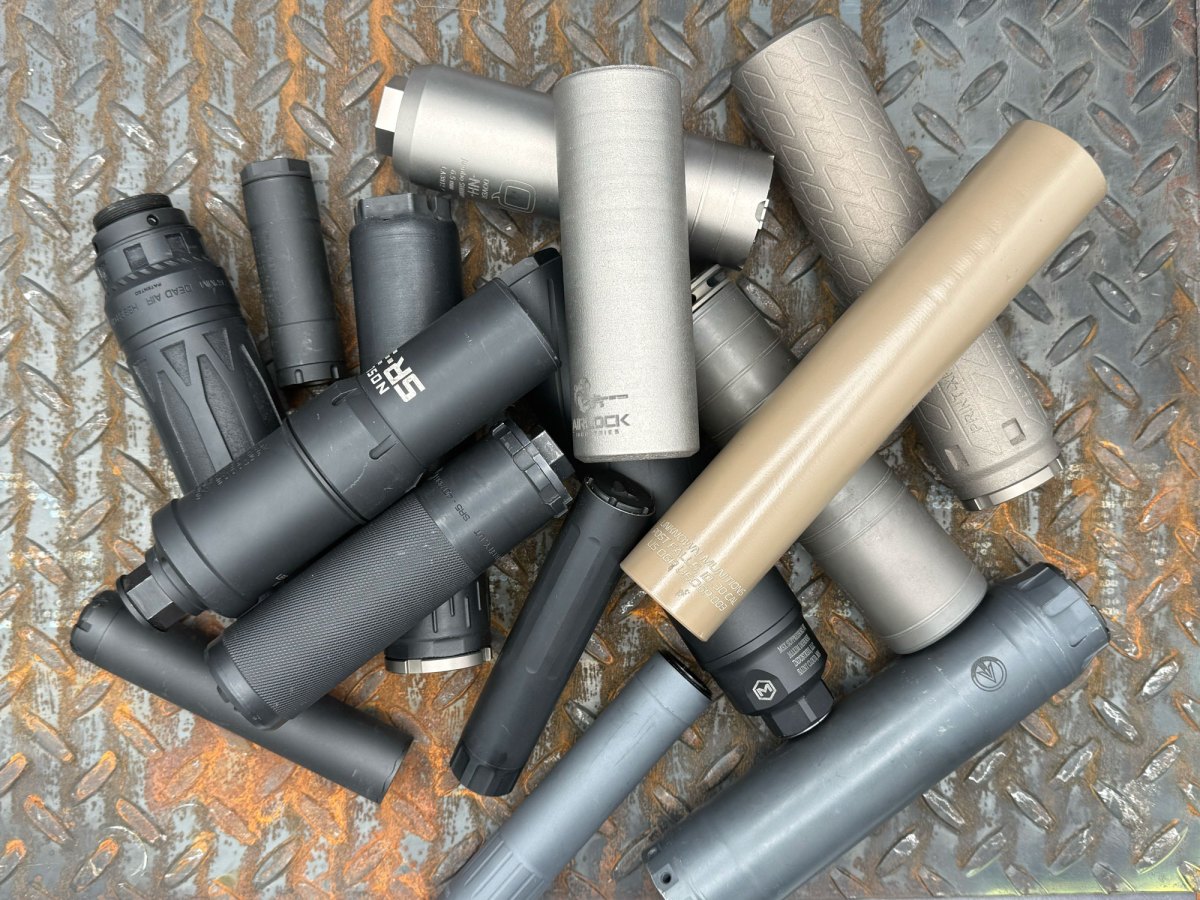
In the past couple years suppressors, or silencers, have boomed in popularity, and more people than ever are experiencing their benefits. The market has exploded with both consumer knowledge and product quality growing by leaps and bounds. However, lots of folks, maybe you, are shopping for your first suppressor now. That’s in part because the elimination of the $200 NFA tax on January 1, 2026 has softened the relatively intimidating red tape for silencer ownership. If you’re among those planning to take the plunge, there are a few things that will help you pick a suppressor you’ll be happy with — and some things you don’t need to worry about.
Don’t Put Too Much Weight in Sound Ratings
Because sound reduction is a big benefit of suppressors, it’s the natural first step to try and rely on sound ratings as the primary basis for your buying decision. While some cans are certainly louder than others, and sound level isn’t something to discount entirely, it’s important to remember that how a suppressor sounds to your ear can vary wildly depending on the firearm, ammunition, and conditions. Shooting suppressors that are rated as hearing safe can still damage your hearing with enough volume in the wrong conditions and you should still use ear protection — especially when shooting a lot. The fact is that most reputable suppressors will be close enough in sound level that you often won’t be able to tell the difference. I’ve used lots of suppressors and, of my 5 or 10 favorites, I couldn’t tell you which is louder or quieter, or what their sound ratings are. There are other factors that matter more, and sound ratings should be a secondary consideration.
Bore Size
If you’re looking for your first suppressor, you likely already have an idea of what gun or guns you’ll use it with. The caliber, and sometimes, cartridge will dictate the minimum bore diameter of your suppressor, and you need to shop for one with a bore large enough to accommodate your needs. Silencers work perfectly well with cartridges that are smaller bore than what the can is designed for, but not larger.
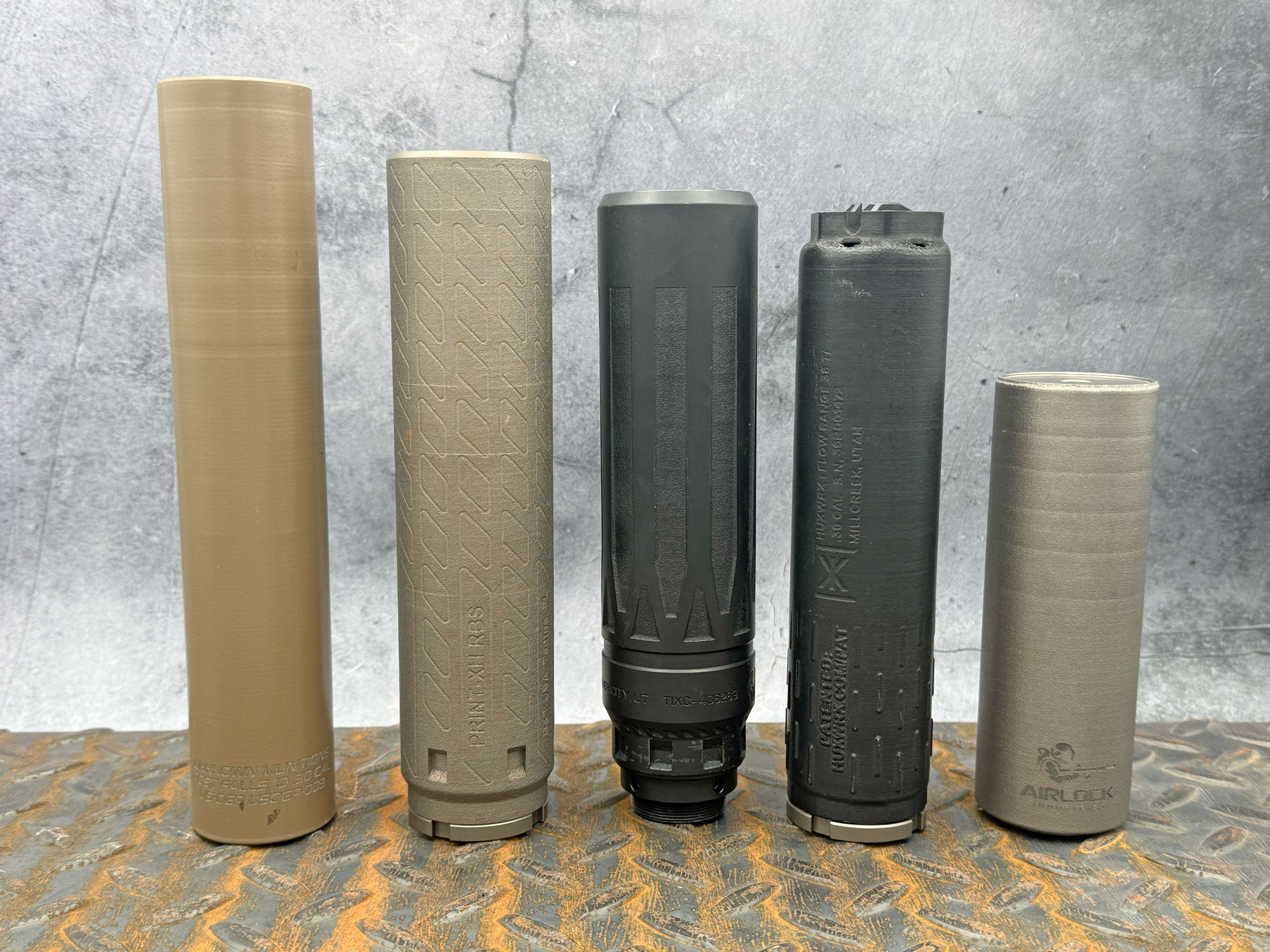
If you want a suppressor that will work on your .30/06, 7mm, and you can still use for your .223, a .30-caliber suppressor is what you need. Or maybe you have a .350 Legend and a .338, but want a suppressor you can also use on smaller stuff too. In that case, you’ll want a .36-caliber can like this one from Huxwrx.
Pick a Simple Attachment System
One of the most important things to consider when buying a suppressor is how you’ll attach it. Generally, you’ll be choosing between direct thread or muzzle device attachment. Generally, you will be best served to pick the simplest attachment system that will meet your needs.
Direct Thread
Direct-thread suppressors are set up to screw directly onto the threaded muzzle of your barrel. This is the simplest attachment method and is usually the best choice for hunting rifles. It also works well with many semi-auto rifles like ARs. If you just want a can for your hunting rifle, there are great options that are direct-thread only, but I highly recommend HUB-compatible can for first-time buyers. More on that in a second.
Muzzle Device or Quick-Detach
Aside from direct thread, the next most common attachment method is to lock the suppressor over top of a specialized muzzle brake or flash hider. There are numerous styles that use muzzle devices. Some thread directly onto a muzzle brake, others use a locking mechanism to quickly attach and detach the can. These systems are handy if you’re using the same compatible muzzle device on different rifles. One benefit is that it’s often less likely that the suppressor will loosen. Direct-thread cans need to be checked frequently as they can work loose while shooting — especially when they are new and the threads haven’t accumulated any fouling.
HUB
If you’re buying your first rifle suppressor, and you want some flexibility, it’s a great idea to get a suppressor that is HUB compatible. This means the rear of the suppressor is threaded with a standard 1.375 in. x 24 pitch that accepts standardized mounting hardware. You can easily order various direct thread mounts and, depending on the suppressor, can also use quick-detach mounts.
Material and Weight
My first suppressor weighs about two pounds. Thankfully, the market has produced better and lighter cans that we can choose from these days. If you’re looking for a heavy-duty high-volume suppressor for your AR, a heavier material like inconel might be a good choice, though hybrid titanium/inconel/steel suppressors like B&T’s Print X series tackle hard shooting at a lighter weight. Most hunters will find titanium suppressors to be the ideal option, but if you don’t mind a little extra heft, stainless steel suppressors can be more affordable. Suppressors over 11 or 12 ounces total weight can make a normal-weight hunting rifle feel very front heavy. Lightweight or over-barrel options can help mitigate that.
When looking at or comparing the weight of a suppressor, make sure to read whether or not that includes all mounting hardware. Some manufacturers publish this date without including the weight of the HUB mount or necessary muzzle hardware. So effectively, the weight of the suppressor is a few ounces heavier when you’re actually using it.

Suppressor Design (Printed vs. Welded vs. Removable Baffles)
Traditionally, suppressors were either welded into one piece or featured removable baffles — many still do. More recently, 3D-printed cans have taken center stage. Which is best? That depends.
Suppressors with removable baffles are somewhat easier to clean and, because of the increased lead fouling, they are still most common for rimfire cans. This is what you should look for if you’re buying a 22 rimfire can. There are some centerfire models out there, but it’s a bit of a primitive design that doesn’t offer a lot of benefits.
Welded suppressors typically offer good strength, and the one-piece baffle stack doesn’t need a lot of maintenance aside from the occasional clean and flush. There are many high-quality steel and titanium welded cans, and their only real downside is that occasionally baffle welds can fail. Expanding gasses can send the front end of your suppressor downrange like an Apollo rocket booster — this is most common on titanium models. A benefit of many welded cans is that if a failure occurs — whether user error or not — the suppressor can often be repaired by the manufacturer.
I believe that 3D printing is the future of suppressors. Design and prototyping are infinitely easier than with traditional silencer manufacturing, and the nature of 3D printing allows for complex baffle systems to better slow muzzle gasses. Printing, especially with titanium, has given us some of the lightest and quietest silencers ever. It’s even made them more affordable too.
Modularity
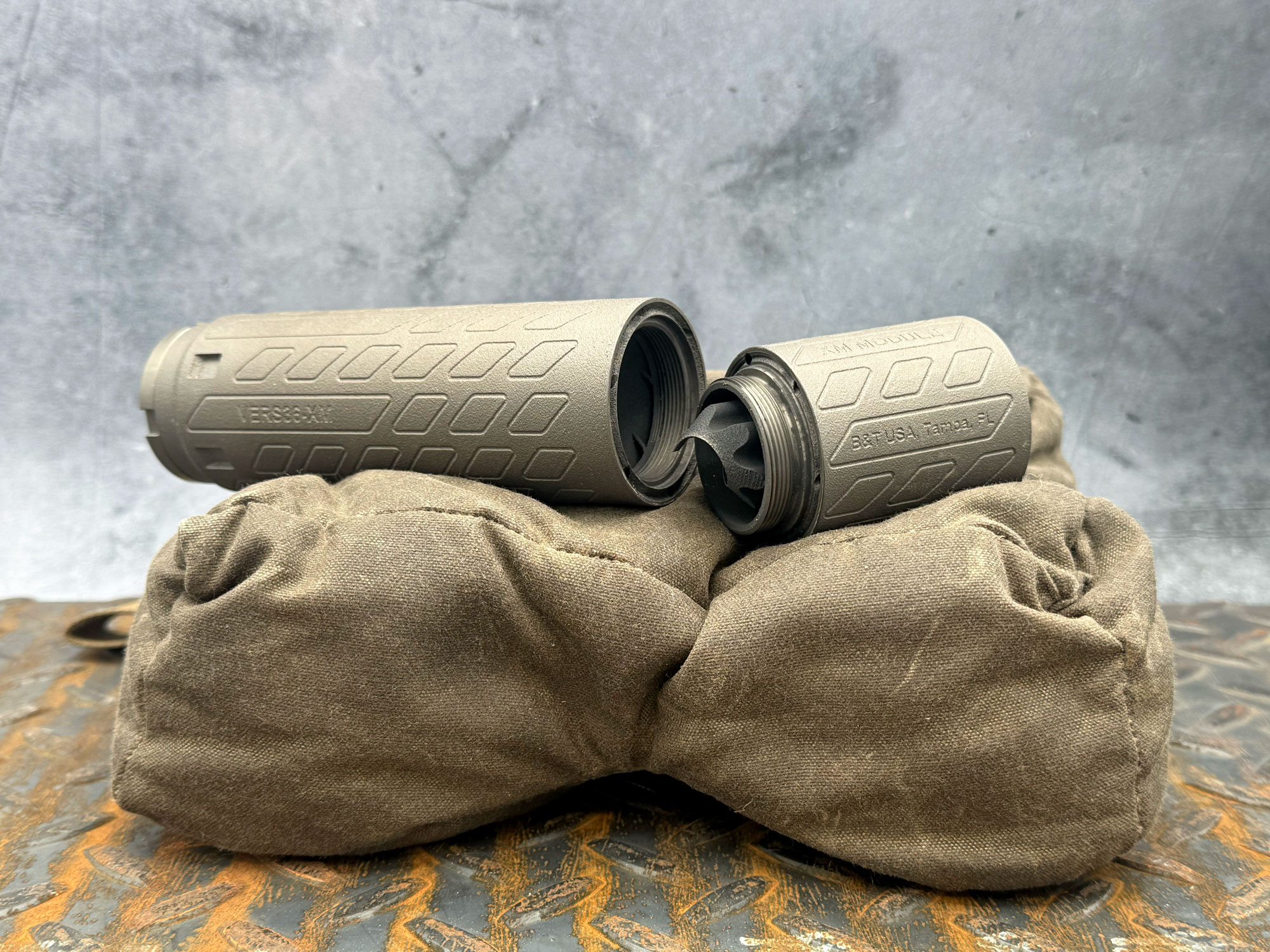
Depending on your needs, you may want to consider a modular can. These are suppressors that can be configured with different end caps and mounting systems to use on a variety of guns. Silencers like the Silencerco Omega 36M and B&T Print VERS36 can be used on everything from a .338 Lapua to a 9mm pistol with the right adapters. Both also offer long and short configurations and are excellent options. This is the type of suppressor for the shooter who just wants to get one that can do everything.
Final Thoughts
One of the most intimidating things about getting your first suppressor is simply choosing one from the thousands available. Considering the five previous points will get you headed in the right direction and whichever one you pick you’ll be happy with it. You don’t have to fret about getting the best or coolest suppressor out there — because they will continue to improve. Pick something that will be most useful to you and that you’ll enjoy, and if you still have questions about the process of purchasing one, Executive Editor Natalie Krebs put together this excellent guide on How to Buy a Suppressor.
Read the full article here