
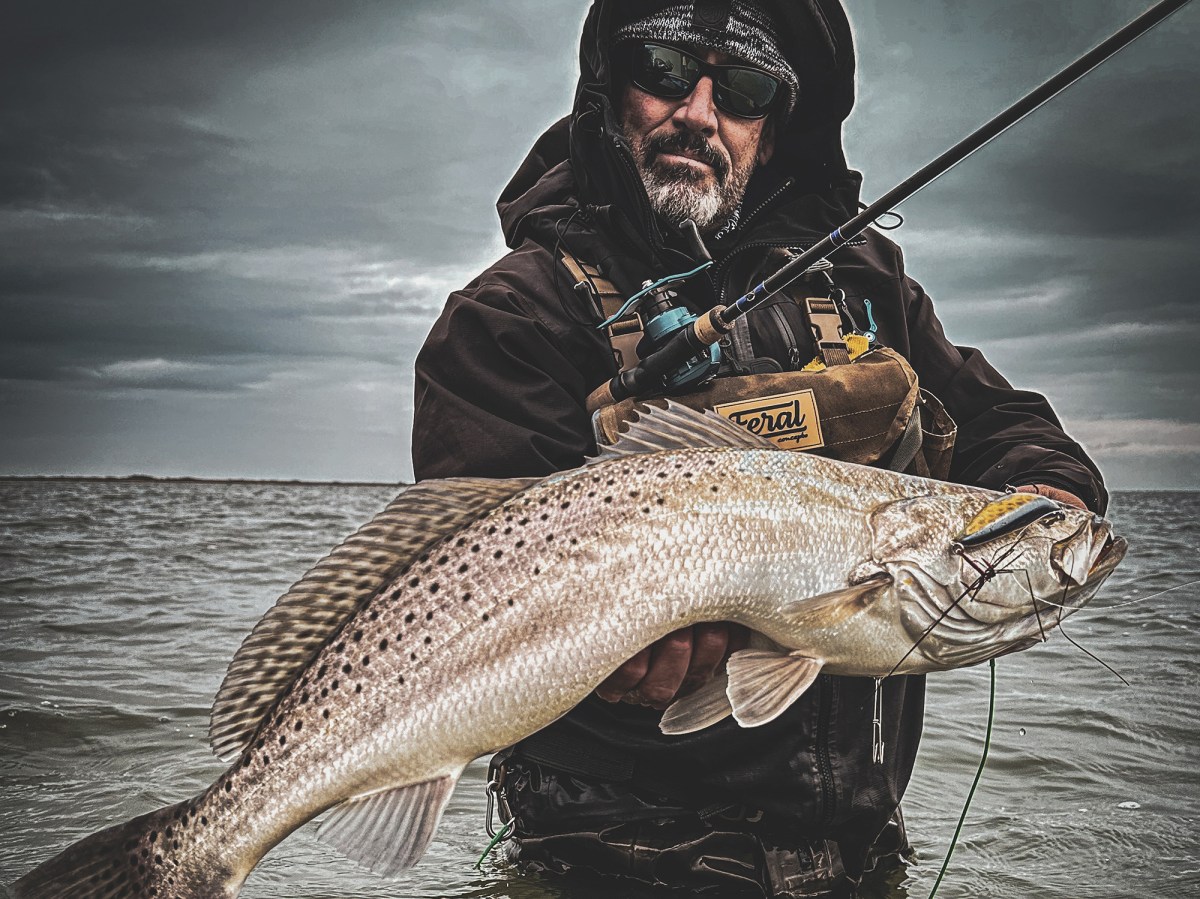
Everybody knows the Florida Keys are a popular winter escape. It’s logical — the farther south you go, the warmer it is. But what many anglers miss is this also applies to the southern coast of Texas. In fact, if you look at a map, Texas dips even closer to the Equator than Florida. The Lone Star State also offers some amazing saltwater fishing, but it’s arguably most famous for its trophy speckled seatrout. The best part is that the winter months aren’t a shoulder season for the heaviest hitters. February and March give you some of the best shots at trout breaking the 30-inch mark.
My friend and owner of the hunting and wading gear brand Feral Concepts, Darren Jones, is a Texas native and former guide. Despite the redfish, tarpon, and jacks that can be found in Southern Texas, Jones is a trout hunter through and through. If you’re looking for an escape, he’s got the inside track on the winter scene. It’s world-class fishing, but there are some important things you need to know.
Listen to this week’s episode of Quick Strike on Apple, Spotify, or wherever you get your podcasts.
Front Loaded
Unlike saltwater species such as redfish, sheepshead, and snook that can move well offshore if water temperatures fall below acceptable levels during the winter, seatrout are home bodies. Three hundred and sixty-five days a year, Texas hotspots like Laguna Madre provide targetable fish, and cooling waters get them fired up. Like many Southern coastal areas, however, weather is often in flux during the winter months. That means you need a bit of luck on your side to nail the timing.
“Fishing just ahead of a front can be the best,” Jones says. “I’ve caught a lot of huge trout, including my personal best, just ahead of a winter front. I’m lucky because I’m local, but I always tell people coming down here in winter from farther away, be prepared to have at least four days of fishing on the books. If you land on the day of a front, the wind might make it impossible to get out, so you’ll have to let things settle down before you can even get on the water.”
Ideally, Jones wants to see water temperatures from the mid to low 60s into the high 50s. These will get the trout into a winter pattern and make their location a bit more predictable. When the water cools, they’ll often seek out shallows with a dark mud bottom that retains more heat — and a front can put them there in a hurry. Jones says water anywhere from 6 inches to waist deep is most productive. Your job is to come prepared for anything from air temperatures in the 50s to 80s. Keep in mind that the fishing is often better when the weather forces you to be a little less comfortable, especially if you’re wade fishing.
Focus Up
The Texas coast has nearly 3,300 miles of shoreline, and all of it provides great fishing. Jones points out that despite the vastness of the coastal bays and estuaries, it shouldn’t be intimidating to out-of-state anglers pulling their boats down if boat can run in shallow water. One of the perks of fishing the Texas coast is the amount of room to roam, but in winter, it’s beneficial to narrow your focus.
“Catching big Texas trout is a lot like deer hunting,” says Jones. “During the winter, you’ll catch plenty of them along the northern part of the coast closer to Galveston or Rockport. But if you want a trophy, you have to be hunting on the right ranch. This time of year, Corpus Christi south to Brownsville is really where you want to be.”
According to Jones, this stretch of coast has better genetics for growing trout measuring north of 30 inches. The Lower Laguna Madre also has a higher salinity level than the northern coast and loads of grass flats, which trout find favorable. Given that the southern part of the Texas coast is sub-tropical, it will also rebound faster from extreme cold snaps.
Just Below the Surface
One of the biggest advantages of chasing winter trout in Texas is that the fish aren’t lethargic. Comparatively, southern lakes produce big largemouths during the coldest months and the coasts of Louisiana and Mississippi can give you shots at redfish, but you’ll often have to slow down presentations to connect. Texas trout, meanwhile, remain in full attack mode, allowing you to aggressively work soft plastics, subsurface plugs, and even topwater lures. Jones, however, says that while watching a trout smash a surface lure is a blast, it’s not necessarily the best method for bagging a true goliath.
Read Next: The Best Trout Rods of 2026, Tested and Reviewed
“Jerkbaits like the Rapala Shadow Rap are really popular in the winter,” he says. “You can fish a bait like that in anything from a foot-and-a-half of water to four feet of water because it’ll dive but then float back up quickly. You can essentially fish it almost like a topwater, but because it’s not on the surface you get a lot more positive connections. Spooks and similar lures are great, but I call them heartbreak baits because you lose a lot of trout on them.”
Jones notes that modern lures like glide baits are also growing in popularity in the Texas trout game. New lures like the soft-plastic Berkley Nessie work very well because you can get them to practically hover in place over potholes and along flats drop-offs. The only hang-up with these baits is that they’re less aerodynamic than more traditional trout lures, which can make them more difficult to deliver to distant fish if you happen to be dealing with wind during your visit.
Read the full article here