
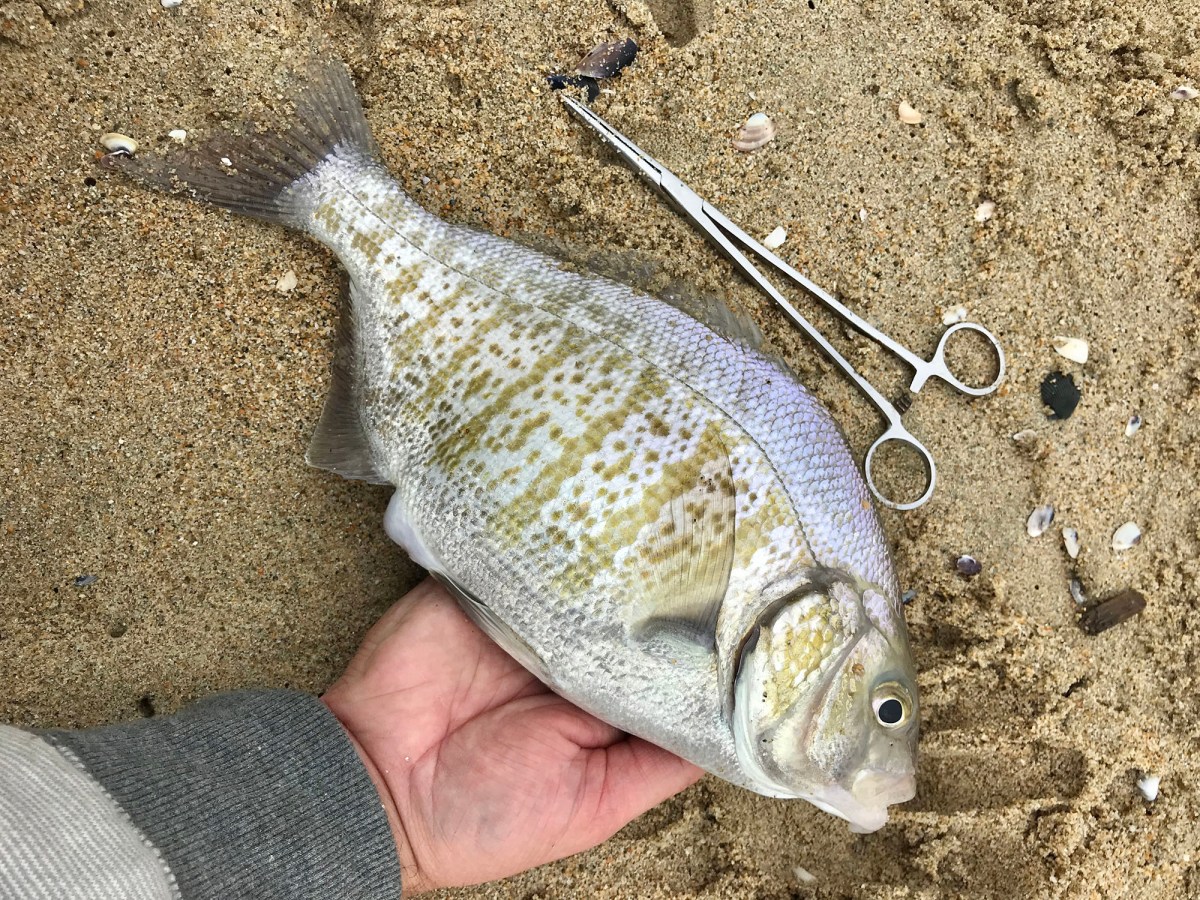
In many parts of the country, surf anglers are always looking for the biggest and baddest players. Striped bass are a great example on both U.S. coasts. But in the West, surf perch offer year-round fun for anglers of any skill level, and they make one heck of a great meal. The coolest part — literally and figuratively — is that the winter months offer some of the best shots at numbers and big fish.
Ben Hervey-Murray is a surf guide based in Southern California, as well as the captain of the U.S.A. surf fishing team. Born in England, his experience “finesse style” surf fishing has given him a serious leg up with perch, which require a simple yet different approach. Anyone can find perch and catch a mess of them this time of year with a basic understanding of their habits — and knowing that a 12-foot “Hatteras Heaver” won’t do you much good.
Listen to this week’s episode of the Quick Strike Podcast on Apple, Spotify, or wherever you get your podcasts.
Cool It
Surf perch range from Southern California into Washington State, making them one of the most readily available species in the West Coast surf. In Southern California, however, their abundance can ebb and flow. Their ideal temperature range is between 55 and 60 degrees, so, as winter looms, Hervey-Murray is paying attention to ocean temperatures above all else.
“What I’m waiting for is the water temperature to drop into the fifties,” he says. “The perch give birth to live young in the spring, but, as I think it goes with many animals, during the build-up to that, they feed heavily and the drop in temperature is one trigger. But the water in Southern California can be too hot for good perch fishing in summer. As our water cools, fish in Northern California will ride the currents down our way. We’ll have more and bigger fish in the surf starting in December.”
Hervey-Murray likens perch fishing to crappie fishing in terms of fish class. Ten- to 13-inch fish are common and considered quality, and this is the size class he prefers for the table. Perch measuring north of 13 inches are considered trophies. Though fish of that caliber can be caught anywhere within their range, they are more commonly found in Northern California where the water is cooler year-round.
Pick Your Scab
In any kind of surf fishing, figuring out where to cast can be the biggest challenge. Oceanic beaches are, after all, vast and can be difficult to read. In other fisheries such as striped bass, there are times when fishing from the rocks can be better than the open sand and vice versa, but with surf perch, it’s much easier to narrow down a likely haunt.
“I give my clients a very simple acronym called SCAB,” Hervey-Murray says. “It stands for structure, current, and bait. The best fishing is usually around hard structure like a rock jetty, and if you see a trough near it that’s ideal. You also want some tidal current moving through. Now, in the summer these fish feed heavily on sand crabs, but in the winter, they mainly eat tiny clams, and you’ll often find those around the hard structure.”
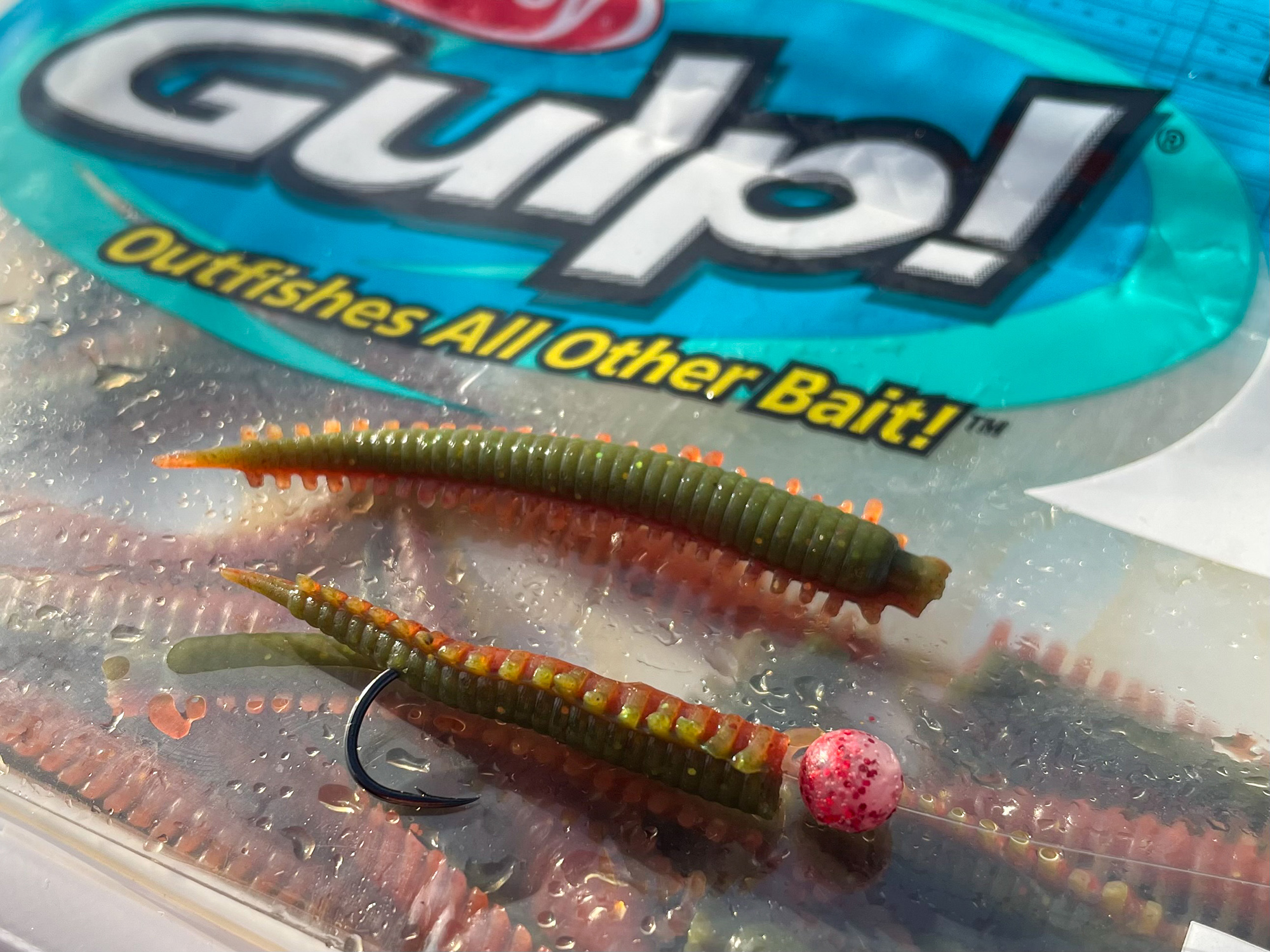
Hervey-Murray pointed out that the clams are often too small to use as bait, but one of the best bets is collecting mussels, and since you only need a very small piece of bait on your hook, a few mussels pulled off the rocks can last you all day. Lugworms are also a popular bait that are readily available, as are small pieces of artificial GULP! Sandworms. If you’re looking for trophy perch, though Hervey-Murray says bites will be fewer, a small, hard-plastic jerkbait will fool the bigger fish in the area.
Tone It Down
Those uninitiated in the surf have a habit of thinking long, heavy rods are necessary for distance. In many fisheries that’s true, but surf perch are often found very close to the beach. So close, in fact, that Hervey-Murray says at times you can almost catch them at rod’s length. His idea of the perfect perch setup is something light but with a little backbone in case a corbina or errant striped bass happens to grab his bait.
“The biggest mistake people make when they get into perch fishing is using tackle that’s too heavy or too light,” says Hervey-Murray. “They might be used to fishing for trout, which are similar in size to perch, but as soon as they’re fishing saltwater, they feel like everything has to be bigger. Or it’s the opposite and they show up with a 6-foot trout rod. What I like is an 8-foot, six-inch rod, 4500-sized reel, and I spool with 10-pound braid.” Hervey-Murray says 8- to 10-pound leader is sufficient for perch, and he leans most heavily on a size 4 straight-point, wide-gap hook. Using a hook this small is critical, because perch don’t have very large mouths, so if you try to use a bait or hook that’s even slightly too big, you’ll miss a lot of fish. Though rigs like the high-low can work for perch, Hervey-Murray uses a Carolina style rig to present baits most often, and also tries to use as light a weight as possible so the rig can actually roll around a bit in the surf. Because perch are often roving around, your bait will encounter more fish if it’s not pinned in one location with a heavy sinker.
Read the full article here