
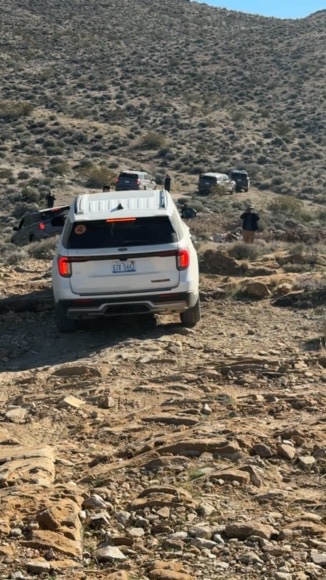
The rough desert road pitches sharply upward and then disappears into rock. Ahead of me, a Ford Explorer Tremor Edition—identical to the one I’m driving—tilts skyward and crawls over a mess of boulders. I watch its brake lights flash from the bottom of the hill as it drives almost vertically, kicking up dust, before it disappears over the top. Now it’s my turn.
I know the SUV I’m in can handle the steep grade and slippery, rocky terrain. It’s the latest in Ford’s lineup of Tremor Edition vehicles. But something about this obstacle seems like I’m pushing it too far. If I were alone, I’d hesitate to attempt this in a car that, at first glance, looks less like a rock crawler than it does a family crossover.
But I’m not alone. Ford has brought about 18 other journalists to Death Valley, along with engineers and off-road experts to guide us. Riding shotgun is Emme Hall, an automotive writer and video host who builds and races off-road vehicles in her spare time.
“Remember, as slow as possible, as fast as necessary,” she says. It’s the four-wheel-driver’s mantra when they encounter tricky terrain. The idea: Keep forward momentum just enough to get over high-clearance obstacles without breaking things.
I shift out of park and ease the Explorer toward the base of the climb while my stomach tightens. Just ahead, it looks like someone dumped a trailer full of loose stone and basketball-sized boulders. It’s the kind of ground where the momentum Hall is trying to manifest is most important—and hesitation makes things worse.
Meeting the Latest in the Tremor Lineup
I started this trip in Las Vegas, and at first I was a bit confused. I’ve been on hunting and fishing trips for work, but I’d never been on a press event to see a new car. So far, I didn’t have much of an itinerary. My editor asked me to fill out a few forms and get on a plane to Vegas. I would find out more details there.
After spending a night at a casino, I meet a driver from Ford in a brand new Expedition. She makes sure I have my bags and lets me know we’ll be leaving Vegas for a couple of days. Then she drives me across town to the parking lot of a donut shop that’s been turned into what looks like a car dealership.
A Ford rep introduces himself and asks me to choose a car. I pick a steel blue Explorer from a row of identical models. He introduces me to Hall, and lets me know that we’re going to be partnered up. Our first task is to take the Explorer on a small road trip into the desert from Las Vegas to Death Valley. But before we can hit the road, some engineers give us a rundown of the car.
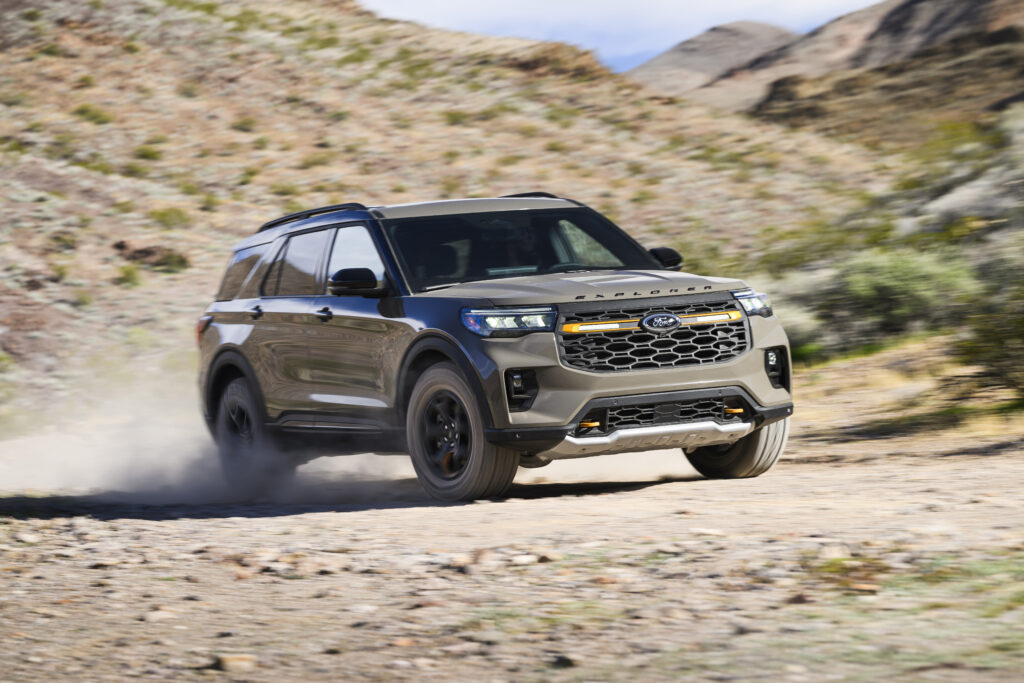
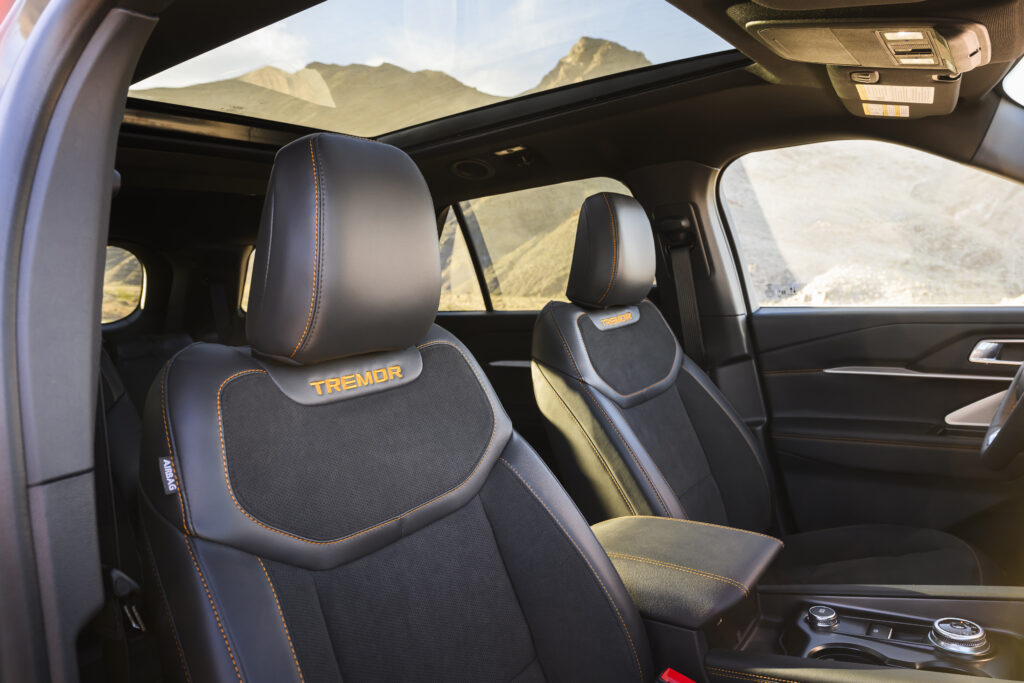
The Tremor edition isn’t just a normal Explorer with orange trim (and that isn’t orange; it’s called Electric Spice). The package brings real off-road changes:
- A tuned suspension with unique springs and sway bars
- A one-inch lift for extra ground clearance
- Improved approach and departure angles
- 18-inch wheels wrapped in all-terrain tires
- Steel skid plates protecting the underbody
- Recovery hooks up front
- A Torsen limited-slip rear differential designed to keep traction.
Under the hood, Ford’s optional 3.0-liter EcoBoost V6—the same twin-turbo engine used in the Explorer ST—makes 400 horsepower. The mention of the extra horsepower gets Hall’s attention. Out of the parking lot, she smiles as she puts the hammer down to merge onto the highway.
Highway Performance, Dirt Hardware
Despite the off-road suspension and aggressive tires, Hall tells me that the Tremor doesn’t feel loose or floaty on pavement at highway speed. We move along at a brisk 75 to 80 mph, changing lanes and zipping around slow-moving tractor-trailers.
Once we catch our stride, it’s time to test Ford’s latest version of BlueCruise—a semi-hands-free driving mode in which you can let go of the wheel and take your feet off the pedals on mapped highways. This version is supposed to execute lane changes if it senses that the car ahead of us is going slower than the programmed cruise control speed. It’s my first time in an automated car, and at first it’s a little surreal to watch the car take over, but I’m surprised at how quickly I get used to it and forget that Hall isn’t driving. After about an hour of this, we pull over and switch seats, and I get my turn in the new Explorer.
I lean into the throttle and pick up speed on the entrance ramp to the highway. But this is short-lived. Over the hill, I spot a line of cars going into the distance for miles. “Oh, bad luck,” Hall says. “Looks like you’re going to be in some traffic.”
I like old things—manual transmissions and side-by-side shotguns—but traffic universally sucks, and I’m willing to change my ways to avoid how much it can be a drag. I hit the BlueCruise button and let the car take over. With both hands free, I finish my breakfast, and in no time, I take the wheel again.
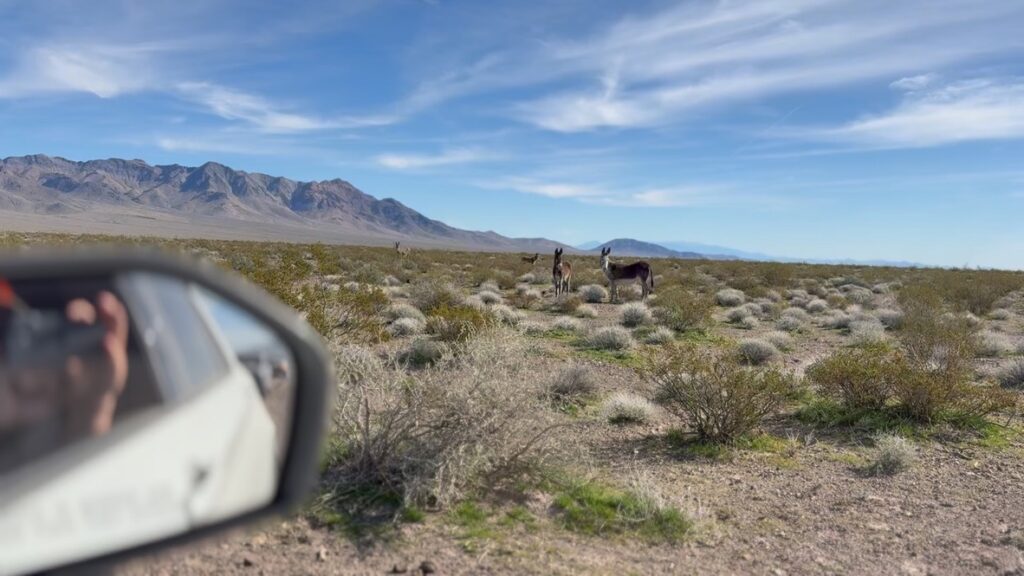
The rest of the trip is traffic-free, as desert driving usually is. The landscape grows more stark, dotted with attractions like the World’s Largest Thermometer. Eventually, the flat land gives way to a long, sweeping downhill run into Death Valley. At the bottom, a small green dot grows larger as we get closer. That dot, an oasis of palm trees with a golf course and hotel, will be home for the next 48 hours.
As Slow as Possible—As Fast as Necessary
The next morning, Ford stages the Explorers in the parking lot. After breakfast and a driver’s meeting, they lead us into the mountains in a long caravan. We follow dirt roads that narrow and twist into a skinny trail until a sign appears: HIGH CLEARANCE 4X4 ONLY.
“Well,” Hall says, “this should be interesting.”
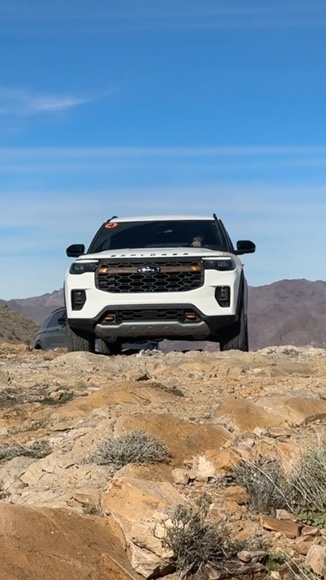
I know that all Tremor package Fords are built for off-road use. But off-road “roads” are a spectrum. Some are just dirt two-tracks that wouldn’t warrant 4WD. Others look more like hiking trails with the kinds of obstacles that snap suspension components like pretzel sticks. A sign like this one in a popular off-roading locale like Death Valley commands respect. Even in my 4×4 pickup, I’d hesitate if I were alone. In the Explorer, which is built more like a car than a truck, with a unibody design, I’d turn around and head back for the hotel bar. But I’m not alone, and we’re going up this trail.
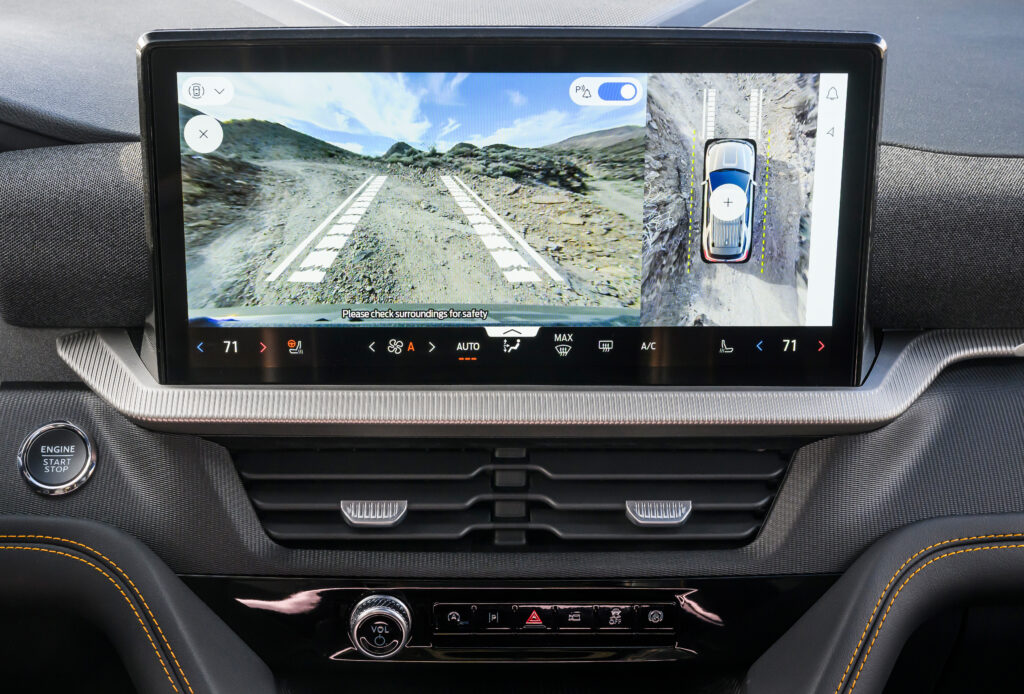
I switch the drive mode to Off-Road on the dashboard. This disengages the traction control system and activates the cameras, giving me a front view from just below the bumper and a 360-degree overhead perspective that I struggle to comprehend, given there isn’t a drone floating above the car.
The trail is relatively mild at first, but it soon gives way to exposures and drop-offs that require my full attention. At the tougher sections, with rocks to crawl and off-camber turns, Ford has positioned spotters—though with the cameras on, it would be possible to navigate obstacles alone with confidence.
Judging by how the Explorer handled on the highway, I’m immediately surprised at how efficiently it covers ground on the trail. The 8.7 inches of clearance and improved 23.5-degree approach and 23.7-degrees departure angles are just enough to get us up and over small boulders, but not so aggressive that the sporty Explorer ceases to be sporty when back on the pavement. The rest of Ford’s upgrades aren’t just for vanity either. The limited-slip differential makes quick work of washed-out roads, and it’s easy to stay in control when ascending and descending steep grades. I feel as confident as I would be in a Bronco, and as comfortable as I would be in a Lincoln Navigator.
But when we see the steepest, roughest grade I’ve seen all day, I’m taken aback. It’s impossible see over the top from the bottom where we’re staged before being called to climb the hill via radio one at a time. There’s also a drop off on the right and left of the hill. Gun it up the hill, and I could spin out of control. Too slow, and I might as well just roll back down and start again.
When it’s my turn to go up, Hall reminds me, “As slow as possible, as fast as necessary.”
I feed the throttle with one foot and feather the brakes with the other. The rear Torsen limited-slip differential searches for grip on the slippery gravel as I switch my attention from the spotter on top of the hill to the screen in the Explorer’s dash with a live feed of the ground in front of the tires.
I do my best to maintain easy pressure on the throttle, turning the wheel to place a tire every so often over large boulders on the incline. Just before I hit the summit, the spotter tells me to turn hard toward my passenger side. My hood points toward the sky, then we ease back down nose first, kissing a rock with a skid plate on the way down while one of my rear tires lifts off the ground. I level off at the top of the hill, ease back onto the brake, and come to a stop. Then, I exhale.
The Bottom Line
We spent the rest of our time in Death Valley pushing the Explorer Tremor on and off-road. We climbed trails, drove to remote ghost towns, and may or may not have tested how fast that 3.0 twin-turbo V6 could accelerate on pavement. And when you’re doing all of that stuff in a car, it’s easy to forget what we actually use cars for—especially as hunters. Back home, I’ve had a little time to reflect, and here’s what I think you should consider if you’re considering a new Explorer Tremor.
Read Next: Build the Ultimate Hunting and Fishing Truck
First, let’s talk about off-road capability. In my opinion, people like to think about off-road driving in the same way they think about long-range rifle shooting. Long shots are impressive, but they rarely happen in the field. Your rifle can probably make the shots you’d be scared to attempt, and the same can be said for the Tremor Explorer in terms of driving. I’ve hunted in some pretty unforgiving ground, and with the exception of two trips (one in Texas, where we broke a Toyota Tacoma, and the other in Africa, where I saw Land Cruisers perform impossible feats), I’ve never traversed worse roads than I did in Death Valley to get to a hunting spot. This Explorer may not look like a Bronco or a Raptor, but it will probably take you through roads you’d be nervous to drive on.
On the last day of the trip, I woke up at 5:00 am to make the two-hour trip back to the airport. And while the off-roading was impressive, this is the kind of driving I’m most used to in my hunting life: early mornings, long highways, coffee cups rattling in cupholders. This is where the Tremor makes a lot of sense. Call me soft, but I’m learning to appreciate comfort as I get older. When it’s cold outside, I like heated seats (the Tremor has them plus an optional massage function), and when I have a long drive ahead of me, I like a good soundsystem and a smooth ride.
The Tremor isn’t a hardcore off-road toy, but it can do hardcore things when you need it to. It’ll get you through anything you’d probably feel comfortable driving and get you to those challenging trails comfortably. It’ll tow your boat or a small trailer, and it’ll get the kids to school on time. It has enough room for your family, your buddies, your dogs, and your gear, but it isn’t so big it won’t fit in your garage. In a lot of ways, even though it isn’t body-on-frame, the Tremor is a lot like the old Ford Explorers—it has everything you actually need vs what you probably don’t.
content_auto-&-truck,content_camping-&-outdoor-rec,content_outdoor-gear

THE 1871 CLUB

Recommended Products
Read the full article here