

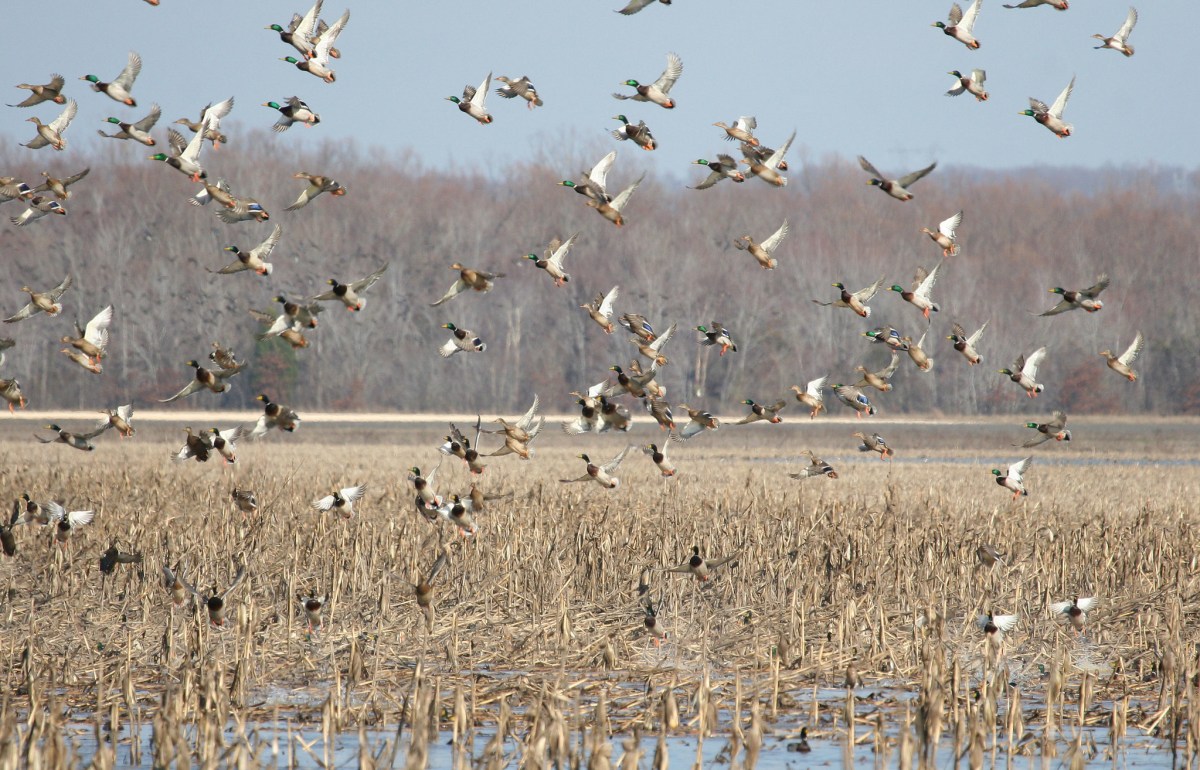
Last week Senator John Kennedy of Louisiana waded into a heated waterfowl debate when he wrote a letter asking the U.S. Fish and Wildlife Service to investigate the practice of flooding standing crops in the Mississippi Flyway. The Republican lawmaker says the “unsportsmanlike” practice of “illegal baiting” has “played a significant role in the decline of waterfowl migration to Louisiana.”
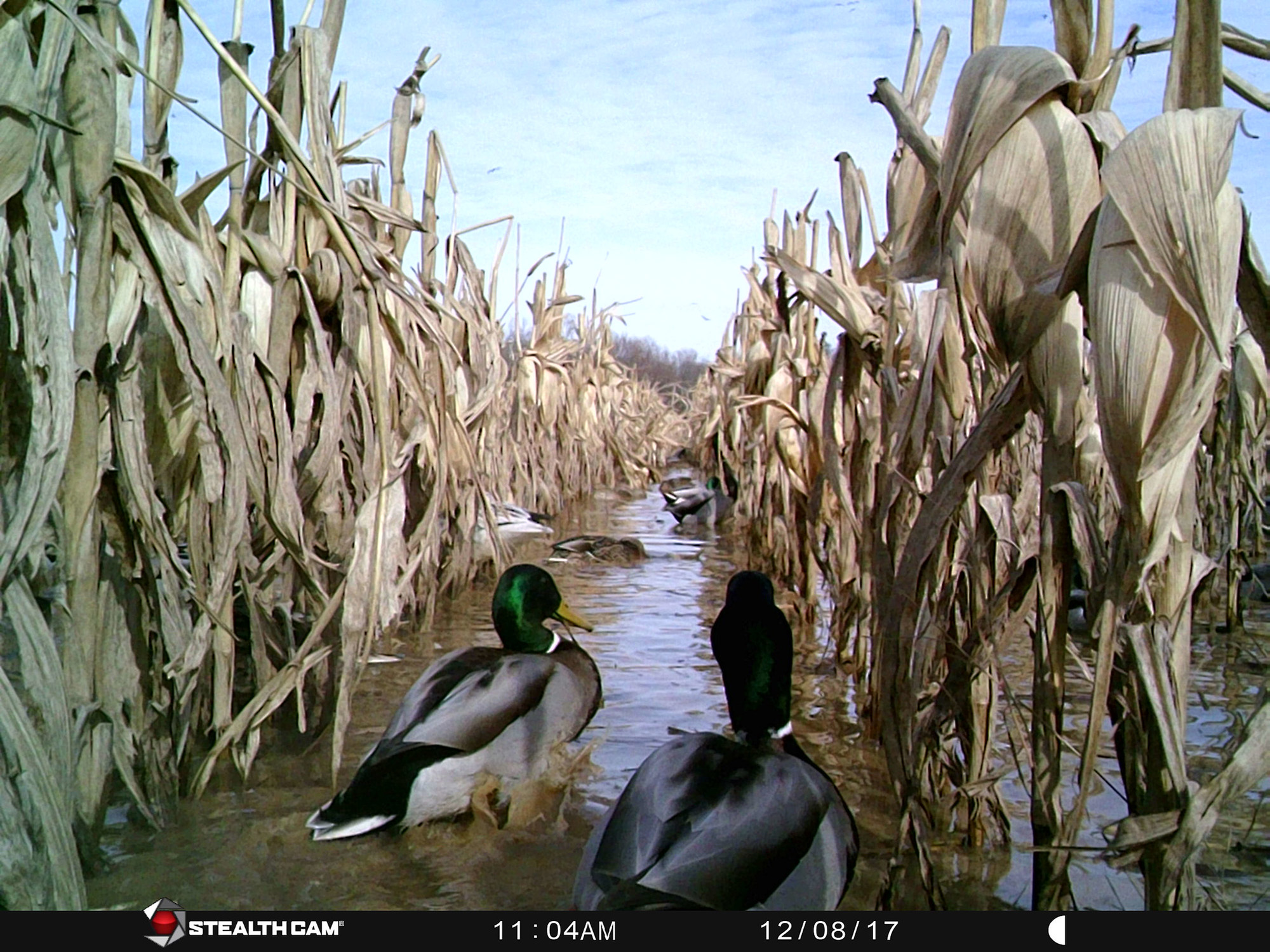
The longstanding practice of flooding standing crops to create food and shelter for ducks — and prime spots for duck hunters — has increasingly drawn the ire of some hunters. Those opposed are primarily Southern hunters who say landowners in states like Illinois, Missouri, and Tennessee who flood unharvested corn to hold more ducks in their area have disrupted the migration. In other words, they think private landowners are short-stopping mallards and preventing them from making their full migration southward.
The practice, groups like Flyway Federation claim, is so out of hand that it’s a key reason states like Arkansas, Louisiana, and Mississippi are experiencing slow duck seasons and low harvests.
“Unlike rice, which requires flooding as part of its natural growth cycle, there is no agronomical justification for flooding corn,” writes Kennedy in his Jan. 6 letter to USFWS director Brian Nesvik. “Put simply, the intentional flooding of standing crops has enabled an unsportsmanlike practice, weakened long-standing protections for migratory birds, and adversely impacted waterfowl populations in Louisiana.”
It is illegal to hunt ducks over bait under the Migratory Bird Treaty Act. Those same federal regs, however, clearly allow hunting in flooded standing crops. In his letter, Kennedy repeats the belief among some waterfowlers that a revision to the Migratory Bird Treaty Act in the late 90s “removed the enforcement mechanism that previously restricted the growth of hunting over intentionally flooded standing crops, particularly corn.”
This claim is false, according to policy experts. Hunting waterfowl in flooded standing crops has been legal and widely practiced without citation for the better part of a century. Shooting ducks and geese in “flooding standing crops” has been explicitly legal since at least 1973.
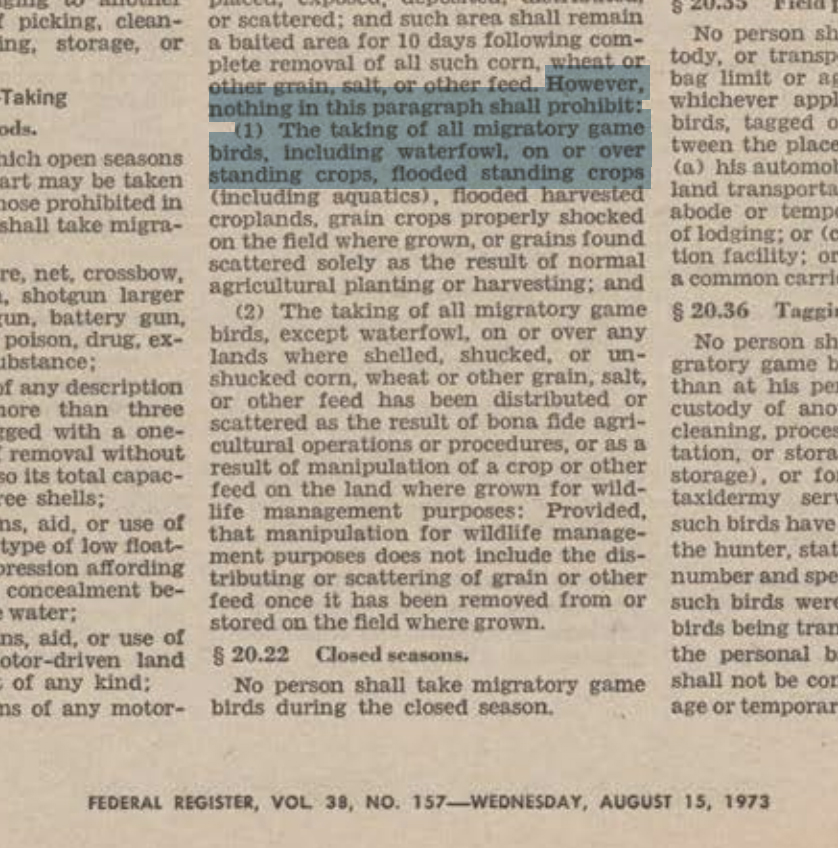
The Migratory Bird Treaty Reform Act of 1998 instead removed the “strict liability standard” that made it harder to cite hunters who didn’t know they were hunting baited areas and brought harsher punishments for deliberately placing bait. The revision aimed, in part, to crack down on landowners and outfitters who were, for instance, dumping corn piles without their guests or clients’ knowledge. (You can read more about the problems that led to the reform here.) In other words, the law reaffirmed that placing and scattering bait is illegal.
Kennedy also links Louisiana’s low mallard harvest directly to flooded corn.
“Mallard harvest in the state of Louisiana dropped 95% from 1999-2021, more than any other state in the Mississippi Flyway. In Missouri, the mallard count rose from 280,000 in 1999 to 550,000 in 2016,” he writes. “[T]he data indicates that mallards are concentrating and stopping in regions where the manual flooding of corn has become widespread.”
While mallard harvest has certainly declined in Louisiana, Kennedy’s stats are cherry picked. The USFWS report he cites shows that:
- The total national drop in mallard harvest across all four flyways declined 65 percent from 1999 to 2022.
- The mallard harvest was down 69 percent across the entire Mississippi Flyway from 1999 to 2022.
- Mallard harvests declined in every single state within the Mississippi Flyway — including 46 percent in Missouri — from 1999 to 2022.
- The mid-winter mallard count in Missouri actually fell from about 281,000 to 169,971 from 1999 to 2023. Its long-term average remains below Louisiana’s, though its counts are roughly trending up while Louisiana’s are trending down.
- Louisiana has the highest overall duck harvest of any state in the Mississippi Flyway, with a long-term average of 1.27 million ducks from 1999 to 2022. Arkansas is second, with 1.16 million. Missouri ranks fifth, with 386,057 ducks harvested. That’s 30 percent of Louisiana’s duck harvest.
Kennedy specifically called on the USFWS to “initiate a formal study to evaluate the impact of flooded corn on migratory waterfowl behavior, wintering distributions, and associated economic outcomes in the Mississippi Flyway.”
The Flyway Federation has been coordinating with Kennedy on the issue for six months to a year.
“We’ve been sharing information [with Sen. Kennedy] and answering questions because the other conservation organizations don’t want to go down this road,” says Flyway Federation’s managing director, Duke Bourg. “Our intentions are not to replace any major [waterfowl] conservation organizations. Our goal is to reform them.”
Flyway Federation hopes the federal government will outlaw “the intentional flooding of standing agricultural crops for the sole purpose of hunting and attracting migratory waterfowl.” The organization compares large waterfowl outfitters to modern-day market hunters for “commercializing the resource” in the name of personal profit.
“We don’t want to wade into whether or not climate change is real,” says co-chairman J.D. Liles. But banning hunters from shooting ducks in flooded corn, says Bourg, “is the one thing we can change to make an effect.”
A USFWS spokesperson told Outdoor Life the agency does not comment on correspondence. The agency did appear to troll Kennedy’s letter, however, when it posted an inverted “food pyramid for waterfowl” Monday. USFWS ranked grains like corn well below native forage, indicating that corn doesn’t play the largest role in a duck’s diet. The pyramid was topped with a pair of mallards.
The topic of hot cropping arose during a hearing on hunting and fishing access at the U.S. House of Representatives on Tuesday, when Arkansas representative Bruce Westerman (R) questioned Delta Waterfowl CEO Jason Tharpe.
“There’s been some recent criticism about [private] land owners doing management practices on their land. The public sees this as they’re hoarding all the ducks onto their property,” Westerman asked. “Can you speak to the benefits of private management and how that’s maybe a misguided assumption?”
“We absolutely understand and feel for … folks having those kinds of experiences,” Tharpe replied. “It could be argued at this point that we’re actually dependent on private land owners to provide food and energy [for ducks]. There’s a lot of conversation now about how efficient farmers are at getting the yield out of the field and what’s actually available to those waterfowl. Whereas you look at private clubs that are managed, you’re going to see pristine habitat with lots of food availability.”
Westerman concluded by suggesting public lands also be afforded the same type of habitat enhancement. While Nesvik testified at the hearing as well, he was not asked to comment on the issue.
What the Duck Biologists Say
The debate over hot cropping is, at its core, a tug of war over mallards. Mallards are the primary duck that feeds on grain, and mallards were the focus of Kennedy’s letter to the USFWS. And indeed, the winter migration of mallards is shifting northward. Research bears this out, including one extensive band recovery analysis that showed mallard and pintails were shifting north by 100 to several hundred kilometers (about 62 miles to 120-plus miles) in December and January.
“Mallards are not migrating as far south as they used to,” says Bradley Cohen, the associate professor of wildlife ecology and management behind the Cohen Wildlife Lab in western Tennessee. “The data plays that out pretty clearly now. The blame is so multi-factorial.”
Those factors that affect migration include sustained severe winter weather, quality habitat and water, available food, and hunting pressure, among others. All of these interact to affect migration. (While Cohen’s area of study is in the Mississippi Flyway, it’s worth noting that mallard migrations are also shifting northward globally, including in places like Europe.)
“In a world where we took corn off the landscape … probably nothing would be different [in terms of migration] if we don’t have more severe weather. It just doesn’t take much energy for a mallard to survive a mild winter,” says Cohen. “The way mallards are kind of wired, there’s no reason for them to go [south] even with the corn off the landscape. [Banning it] is not a silver bullet.”
One reason is due to inconsistent hot cropping in the Mississippi Flyway. While flooded standing corn might seem like it’s everywhere because it’s all over social media, that’s not actually the case.
“The amount of flooded corn on the landscape is patchy,” Cohen says. “Some areas have a lot more energy than mallards would need, and some areas don’t have enough energy. Some places have really high-quality habitat and some places don’t.”
Ethan Dittmer is a duck hunter and PhD student at the University of Nebraska-Lincoln who earned his master’s degree studying mallards in southeast Arkansas and is currently tracking mallards in southeast Kansas. He reiterates that greenheads are hardy ducks that require severe cold-weather events to push them south.
“I don’t see there being considerable evidence that corn is short-stopping ducks,” says Dittmer. “The vast majority of academic research shows, for mallards, it’s weather.”
“The majority of mallards only go as far as they have to,” says Paul Link, a waterfowl biologist and the research program manager at Rockefeller Wildlife Refuge in Louisiana. “There is a subpopulation of mallards that shows up down here early and stays late. Those are still coming. Most of the birds that are important to the Louisiana duck hunter harvest are photoperiod migrators [such as teal]. They choose to come here, they aren’t waiting and being forced down here [by weather]. Really nothing is forced to be here right now.”
Flooded Corn Is Important for Ducks
The way ducks use standing flooded crops isn’t as well studied, though a few researchers have already collected data points that could be analyzed to answer some of these questions. Cohen has studied how mallards relate to unharvested and flooded standing crops in Western Tennessee.
In one study, researchers found that ducks hit unpressured flooded corn harder than hunted corn on public and private land. The study found that “sanctuary fields were devoid of corn by the end of January, whereas 55 percent of public and 50 percent of privately hunted fields still had corn remaining on March 15, by which time most ducks had likely initiated [northern] migration.”
In another, Cohen and his team looked at how much food was available to ducks in unharvested crop and moist soil management areas.
“It’s astronomical how much energy is out there for mallards,” says Cohen. “Pintails will kinda eat corn, mallards of course, and most other ducks are probably in it for the structure more than the food. With all the corn that’s out there, [mallards] are not energy limited.”
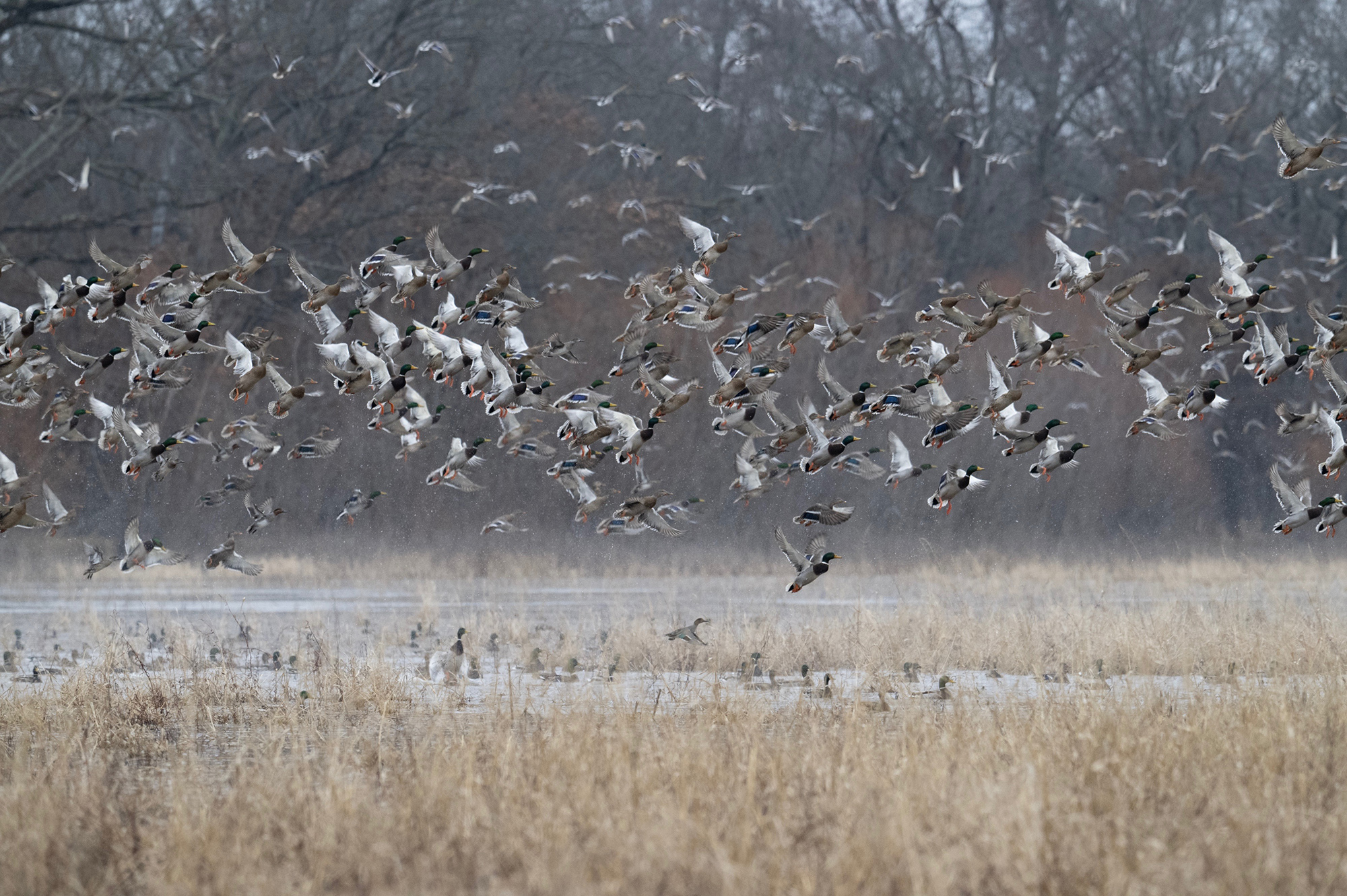
If flooding corn was theoretically outlawed, Cohen hypothesizes that mallards would probably move more frequently and fly farther distances locally. They would have to explore their landscape more. There would be fewer discrete flight lines. That does not necessarily mean, however, that they would migrate south farther or faster.
“I would also expect their body condition might be more depleted. They might be slower to get back north. It may or may not change their behavior in the winter ground, but having good body condition from having access to corn may affect their timing or behavior when they get to the breeding grounds. And that’s really what matters,” says Cohen. “Because the earlier they get to the breeding grounds, the more likely they are to succeed in nesting. And if corn is the thing that’s basically boosting their body condition to get them there early, it’s serving its purpose.
The half-dozen biologists and waterfowl managers I spoke to for this article generally agree that moist-soil habitat (think smartweed, millets, invertebrates, and more) creates the best offering for ducks. It’s also good for other native critters. But they also say flooded crops have an important role to play during migrations.
“Corn in general, whether it’s flooded or not, is a high energy food-resource. But it’s not a complete resource,” says Dittmer. “The simple equivalent would be like a human eating bread. It’s going to give you energy but you can’t survive on it for days and weeks on end. For mallards, it’s really useful for those cold events because it’s a carb. It provides quick, high energy.”
That’s why, says Dittmer, corn does have a place on the landscape as a useful tool for waterfowl managers. Some ducks in Cohen’s research still choose moist soil even when there’s lots of corn available.
“I do think the risk and reward landscape is pretty stark right now for a duck,” says Cohen. The idea of taking flooded corn off the landscape is “like punishing the ducks to go to Louisiana. Instead of the carrot, we’re using the stick … Louisiana habitat quality is decreasing and that’s why the mallards aren’t there. There’s just no incentive for them to go down there.”
Louisiana Has Lost Food and Habitat
The acreage used to produce rice in Louisiana has fallen by nearly 40 percent from its peak in the 1970s, according to one LDWF waterfowl report from 2020. Meanwhile, waste grain has plummeted. In the 1980s roughly 400 pounds of rice per acre were left in the field after harvest; that’s plummeted to about 75 pounds per acre in recent years.
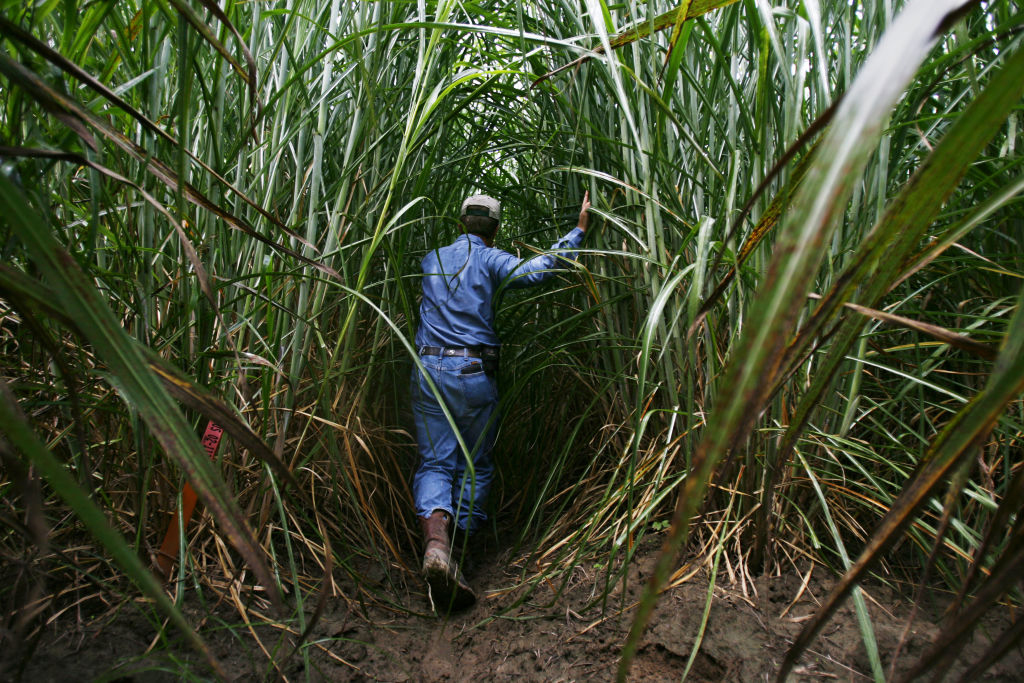
“A lot of food for ducks used to be in ‘dirty’ rice farming. We plant rice months earlier now than we did thirty, forty years ago,” says Link, the waterfowl biologist at the state’s Rockefeller refuge. “The rice varieties mature much faster so they get harvested earlier. And the earlier they get harvested, the less availability there is for wintering waterfowl upon their arrival.”
Fields are drier in winter, too, thanks to no-till planting, with Link estimating 80 percent fewer flooded acres in the rice-growing region of Louisiana compared to even 20 years ago. Link, along with several other waterfowl biologists, also cited the growing prevalence of crawdad farming and replacement of rice with sugar cane. To protect crawfish, producers aggressively deter waterfowl that are trying to feed in stubble fields that are flooded for crawfish — particularly when it comes to snow geese and specklebellies.
“There’s a ton of disturbance and hazing, and a lot of lethal control. Farmers are allowed to kill them and a lot of those guys are driving around shooting into flocks day and night,” says Link, noting that additional deterrence methods include pyrotechnics, flags on poles, and laser lights. “The quality and quantity of the marsh has degraded severely in that same time period. We have tons of invasive aquatics, tons of saltwater intrusion, subsidence. Everything is going against waterfowl habitat down here.”
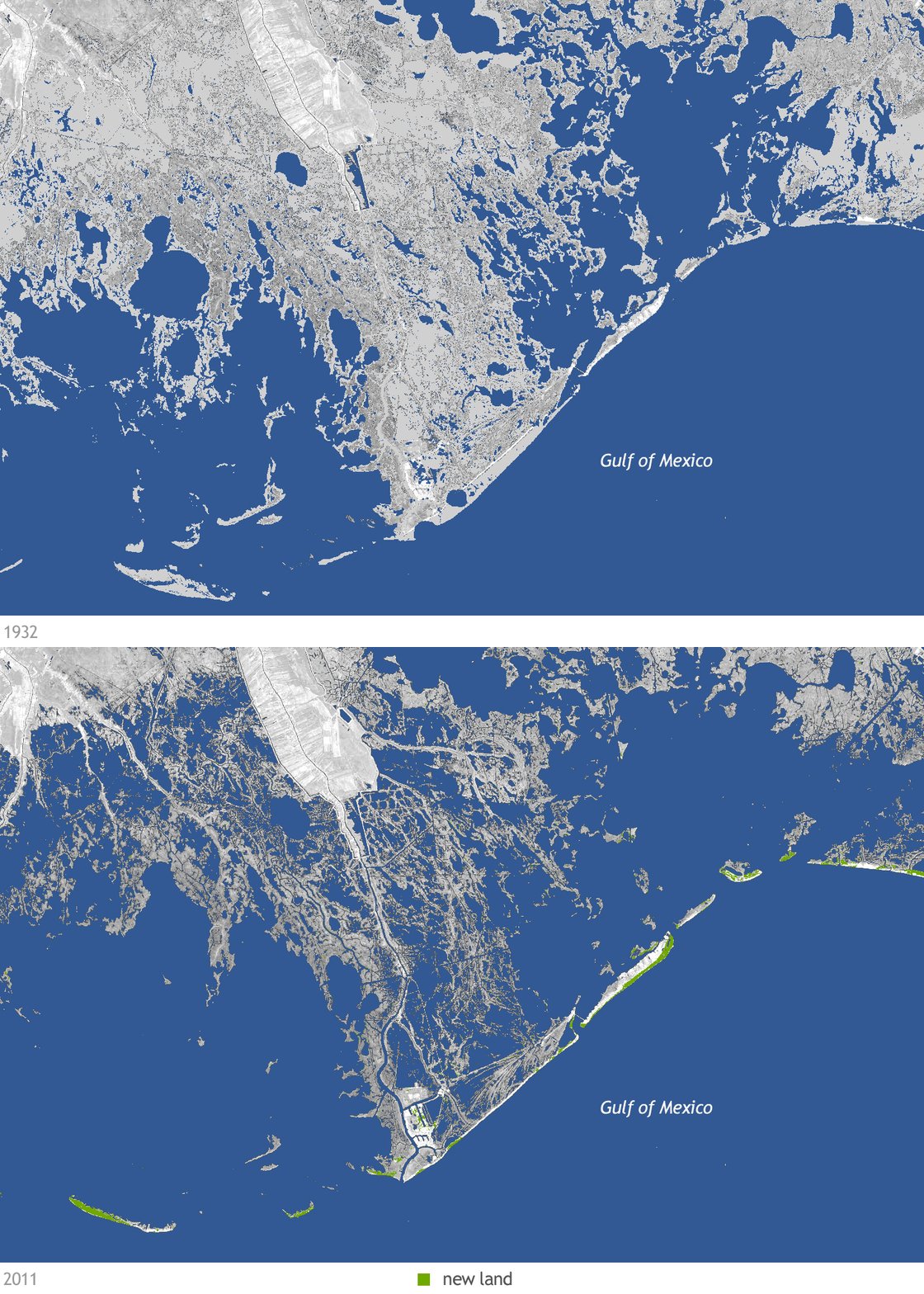
But, he says, it’s not too late to try to reverse course.
“If we decide we’ve had enough watching habitats deteriorate, it’s as simple as bringing the habitat back,” says Link. “Obviously we have to do a better job on the prairies [too], where most of our ducks hatch.”
Read Next: Where Are All the Ducks
Biologists like Link and Cohen agree: The most important thing for ducks, including mallards, is the amount of water on the prairies and preventing further destruction of them. We should focus, researchers say, on restoring habitat instead of reducing available forage in the flyways.
While that perspective might be best for the ducks, it’s little comfort to those Southern duck hunters who are sitting under empty skies. Because with the continued trend of mild winters, adding more greenheads to the flyway doesn’t mean they’ll end up in Southern marshes during duck season.
Read the full article here