
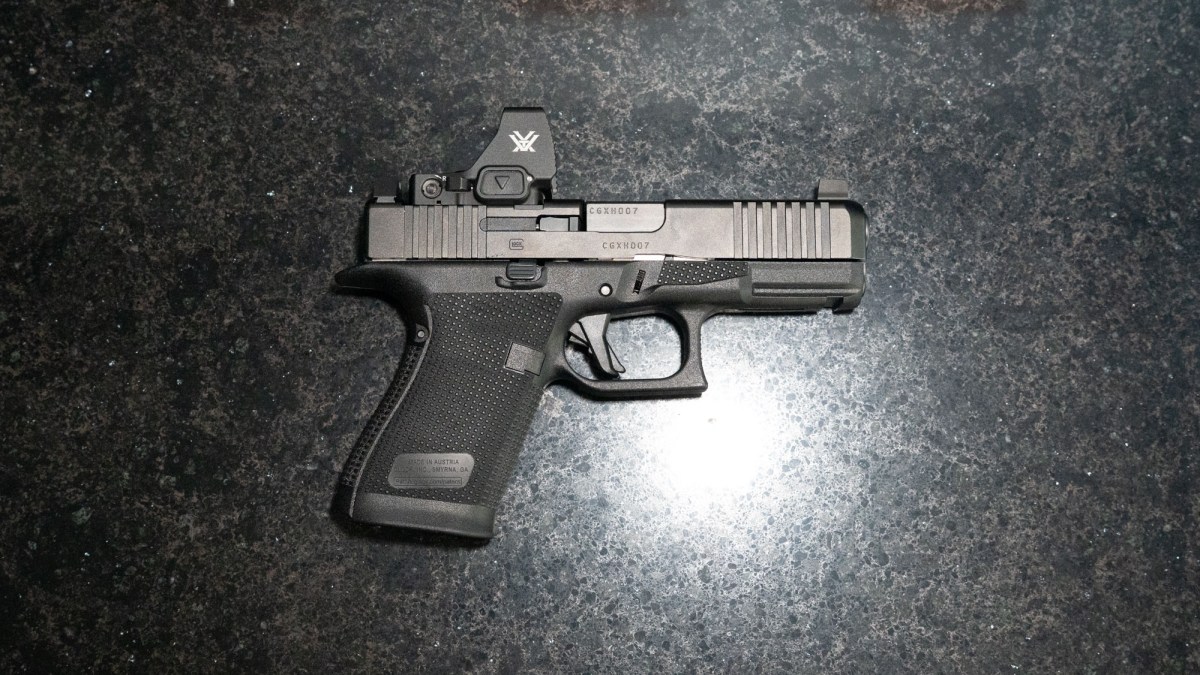
The Glock Gen 6 pistol is the answer to the question that’s swirled around the gun world the last few weeks. What was the deal with Glock’s sudden move away from the Gen 3, Gen 4, and Gen 5 pistols and the introduction of the V Series? We’ll delve into the background of this in a bit, but it turned out Glock had a new flagship design in the wings that’s launching to coincide with Glock USA’s 40th Anniversary in 2026. The initial lineup of models is the G17 Gen 6, G19 Gen 6, and G45 Gen 6, all in 9mm.
Put simply, these Gen 6s are the best factory offerings from the company to date. The Gen 6 has an impressive number of ergonomic and design upgrades that Glock owners have long sought and have often incorporated with modifications into their own pistols. That includes:
- Revamped grip with palm swells and smart contours
- Gas-pedal thumb rests cut into frame
- Undercut trigger guard
- Flat-faced trigger with shorter reach
- New optics mounting system
- Improved checkering
- Large beavertail
- Modified extractor
- Single-stage recoil spring assembly
Pros
- Most ergonomic Glock ever
- Excellent recoil management
- Secure optics mounting system
- Shorter trigger reach
- Compatible with Gen 5 holsters
- Same price as Gen 5 guns
Cons
- Limited initial availability
- Only three models at launch
- Won’t be offered with the COA optics cut until later in 2026
Other Key Features
- Ambidextrous slide stop lever
- Deeper cocking serrations
- Takes Gen 5 mags
- Reversible mag catch
- Comes with three magazines
- Includes two extra grip backstraps
- Optics Ready System works with RMR, Delta Point, and C-More pattern red dots
- Pronounced border around slide lock
- Price: $745 MSRP
Shooting the Glock Gen 6
I got to spend about an hour with the pistol during a media event last week where I, along with the other attendees, shot the pistols pretty much non-stop.
We put several thousand rounds of American Eagle 124-grainers through the guns and I didn’t witness a single malfunction, which bodes well and is in keeping with Glock’s nearly obsessive focus on reliability and safety.
Because the company prioritizes those qualities above all else, they are very deliberate — and at times glacially slow — when it comes to adding features that are commonplace on competing products. That generates understandable frustration among their fans and has spawned an entire industry geared around aftermarket mods.
In that respect, these Gen 6 pistols are a breath of fresh air. Out of the box they are eminently shootable.
The improvements to the trigger and the design of the frame make this an easy gun to control. It shoots flat and fast and is certainly the best stock Glock I’ve ever run.
Grip Shape and Checkering
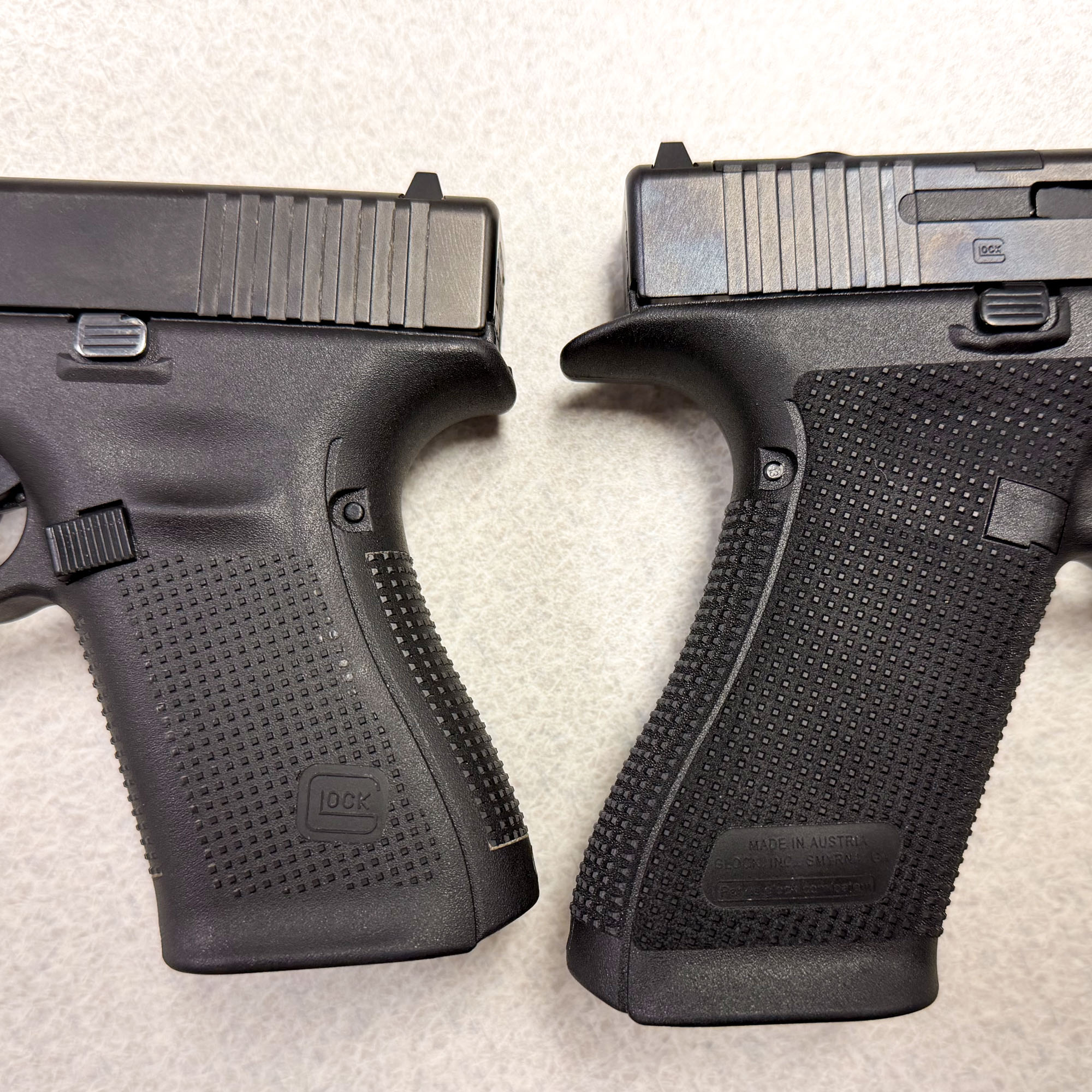
The ergonomics of the grip is a vast improvement over previous generations. Between the palm swell and the hollowed out contours the Gen 6 sits naturally in the hand with complete contact, translating to better control. It also has a new texture, which combines two previous styles — the RTF2 Substrate, which was a coarse sandpaper-like texture, and the raised squares of the RTF4. Adding two and four together, Glock naturally designated this new pattern the RTF6.
It is an effective mix, offering a secure grip without being too raspy, which was a common complaint with the RTF2.
The Gen 6 ships with two extra backstraps to alter the grip’s dimensions, should you want a larger or smaller profile.
One of the most notable features on the Gen 6 pistols is the generous backstrap incorporated into the frame. I found this, too, made the pistols very comfortable to shoot, and it eliminates the possibility of getting bitten by the slide with a high grip.
Undercut Trigger Guard
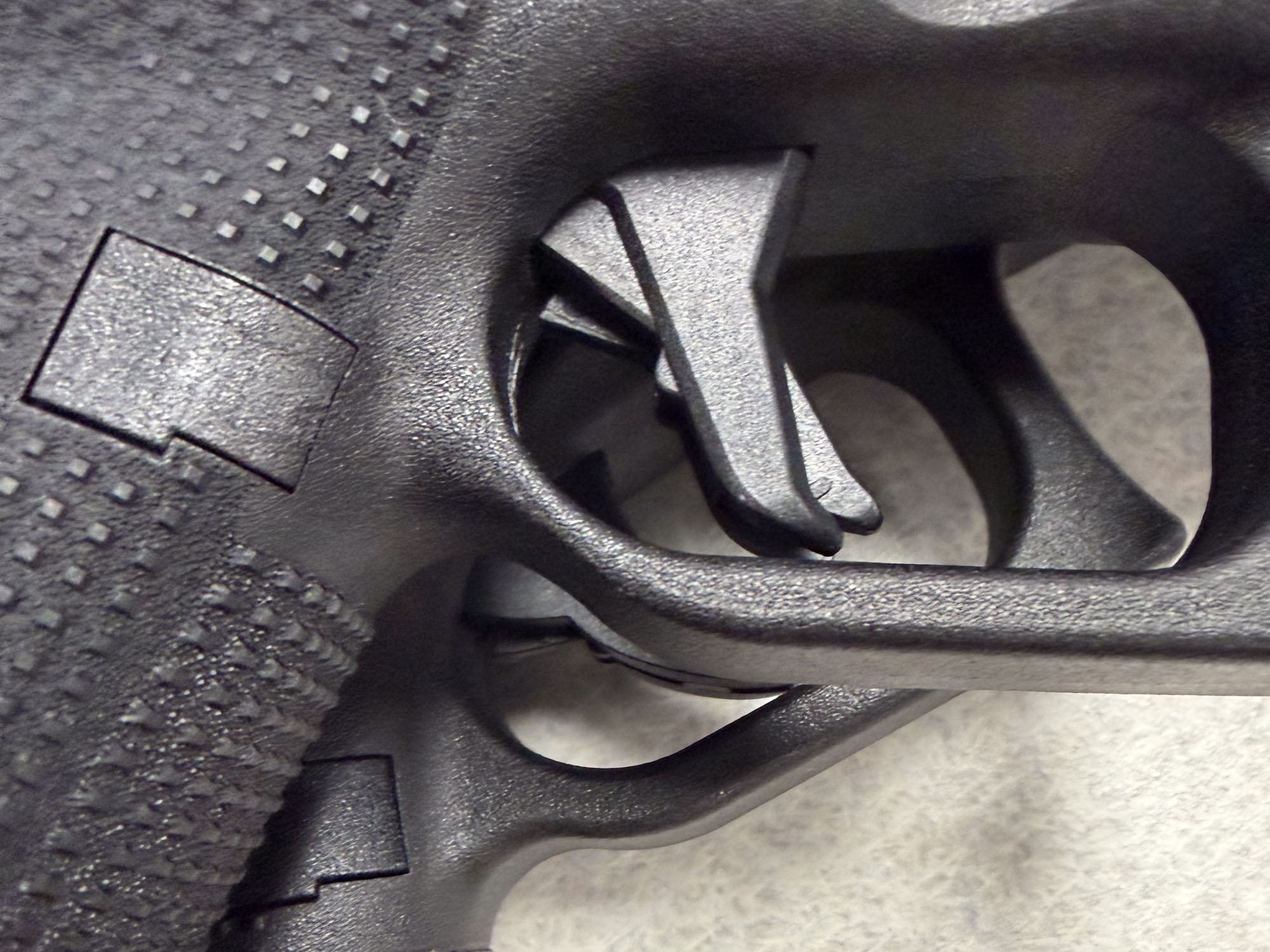
The Glock Gen 6 has an undercut trigger guard, thinned out where it joins the grip. This is perhaps the most common modification to previous Glocks as the thicker trigger guard could be uncomfortable where it rubbed against the middle finger of the trigger hand. This should eliminate, or at least reduce, the likelihood of developing the notorious “Glock finger” callus with high-volume shooting.
Integrated Gas Pedal
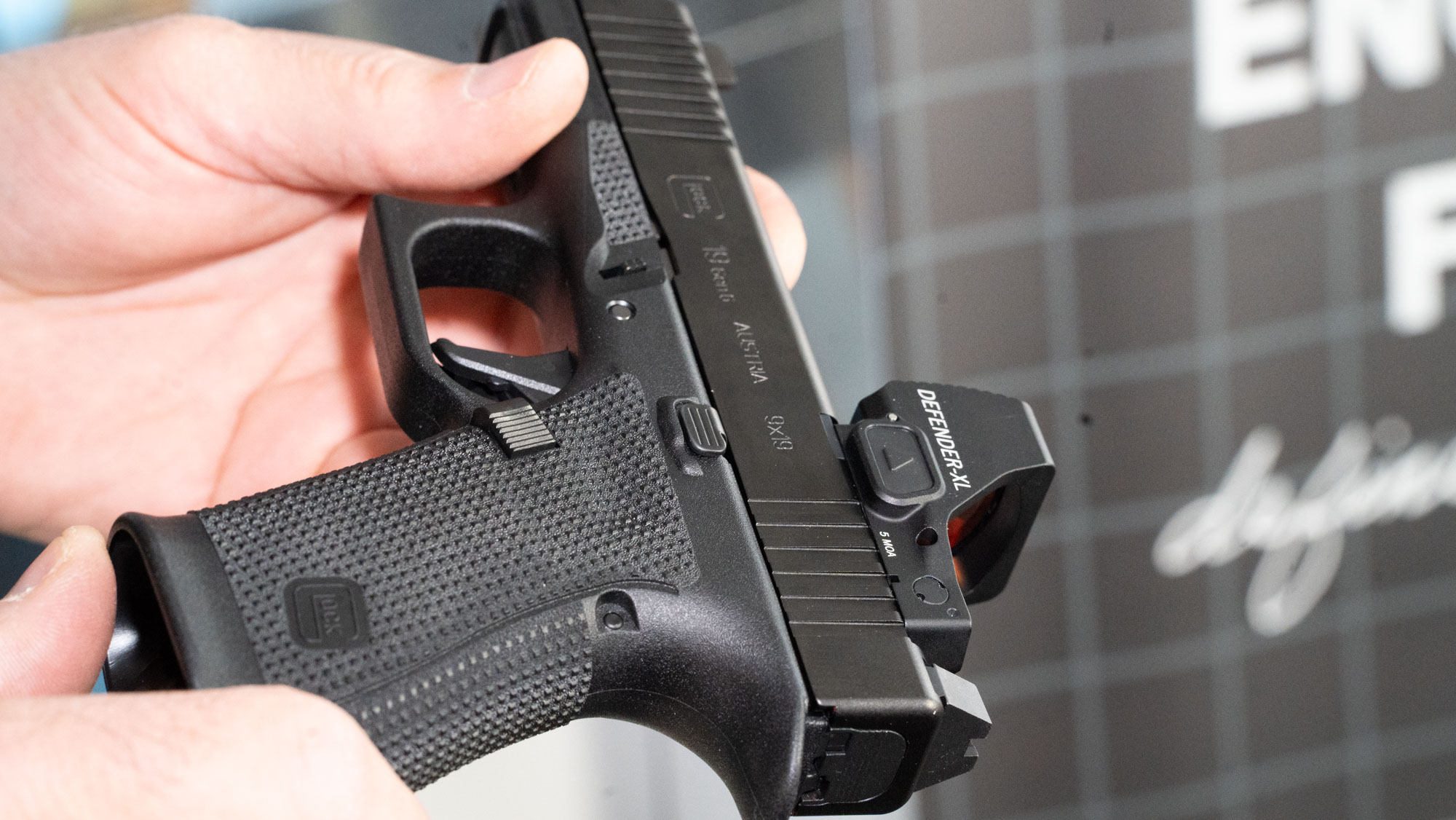
The thumb rests on the frame might be my favorite upgrade to the Gen 6. If you’ve ever run a pistol with a gas-pedal, you know how much they improve recoil management. With the thumb of the support hand driving down on that shelf, muzzle rise is dramatically reduced.
One of the things that’s so cool about what Glock did is that the shelf is formed by removing material from the frame, rather than adding on something that sticks out to the side. This allows the pistol to remain compatible with Gen 5 holsters, which is a massive benefit for shooters that run Gen 5 gear and are wanting to upgrade. It also means that none of the existing holsters on the market need to be modified for the new guns.
The texture on the thumb shelf gives enough purchase so that I had no issues keeping my thumb in place even while running mag dumps. It works very well.
Flat-faced Trigger
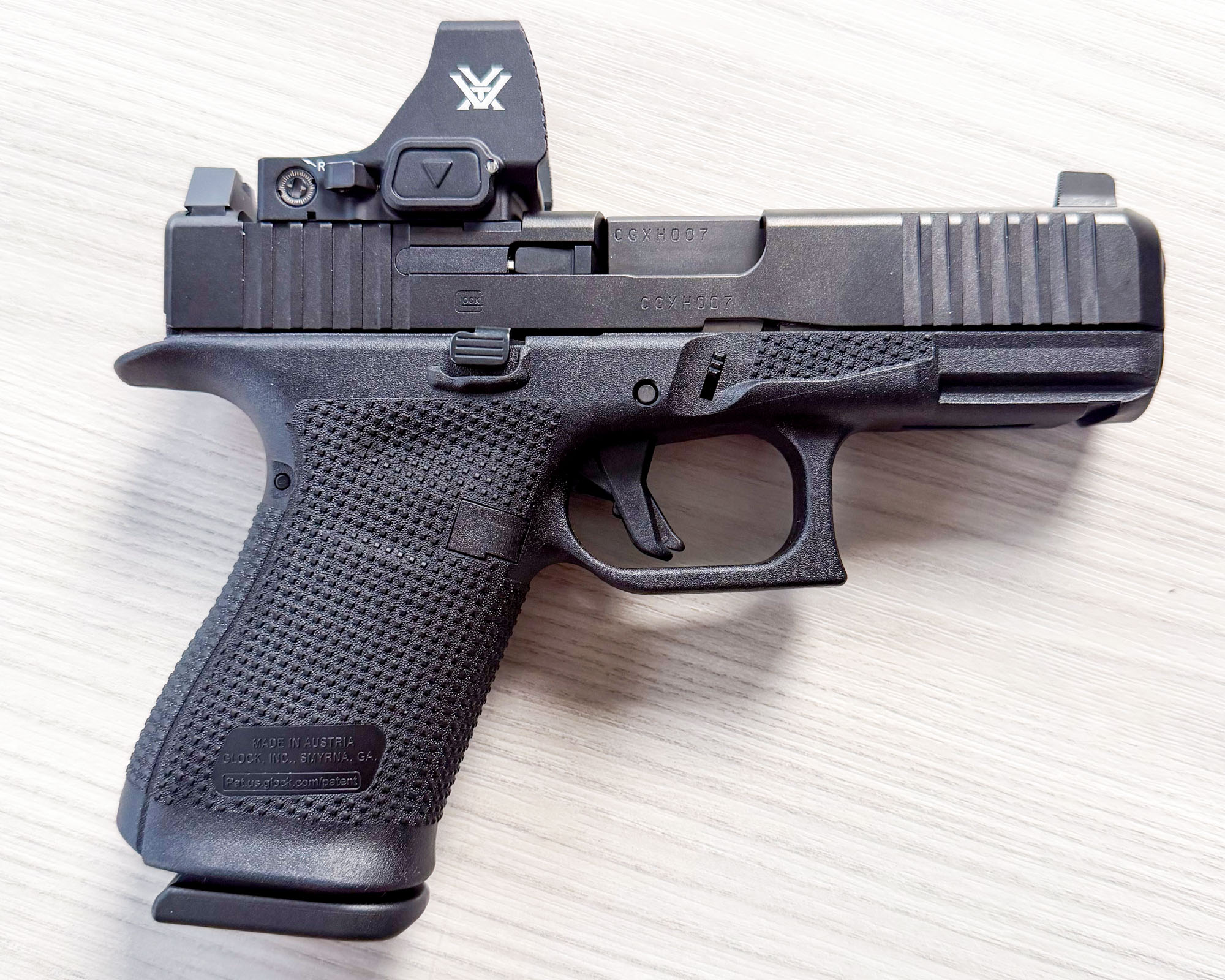
The new trigger on the Glock has a flat face, which has become all the rage of late. (Even the new Beretta AX800 shotgun, which is designed for waterfowl, has a flat trigger.)
Trendiness aside, triggers with a flat shoe tend to give better control over the gun, and the one on the Gen 6 has the added benefit of shortening the trigger reach a bit, which most shooters appreciate.
I wasn’t able to measure the trigger reach myself, or the Gen 6’s takeup and overtravel, but it shot better than a traditional Glock trigger. It broke crisply and ran really well. I had no complaints.

Deeper Cocking Serrations
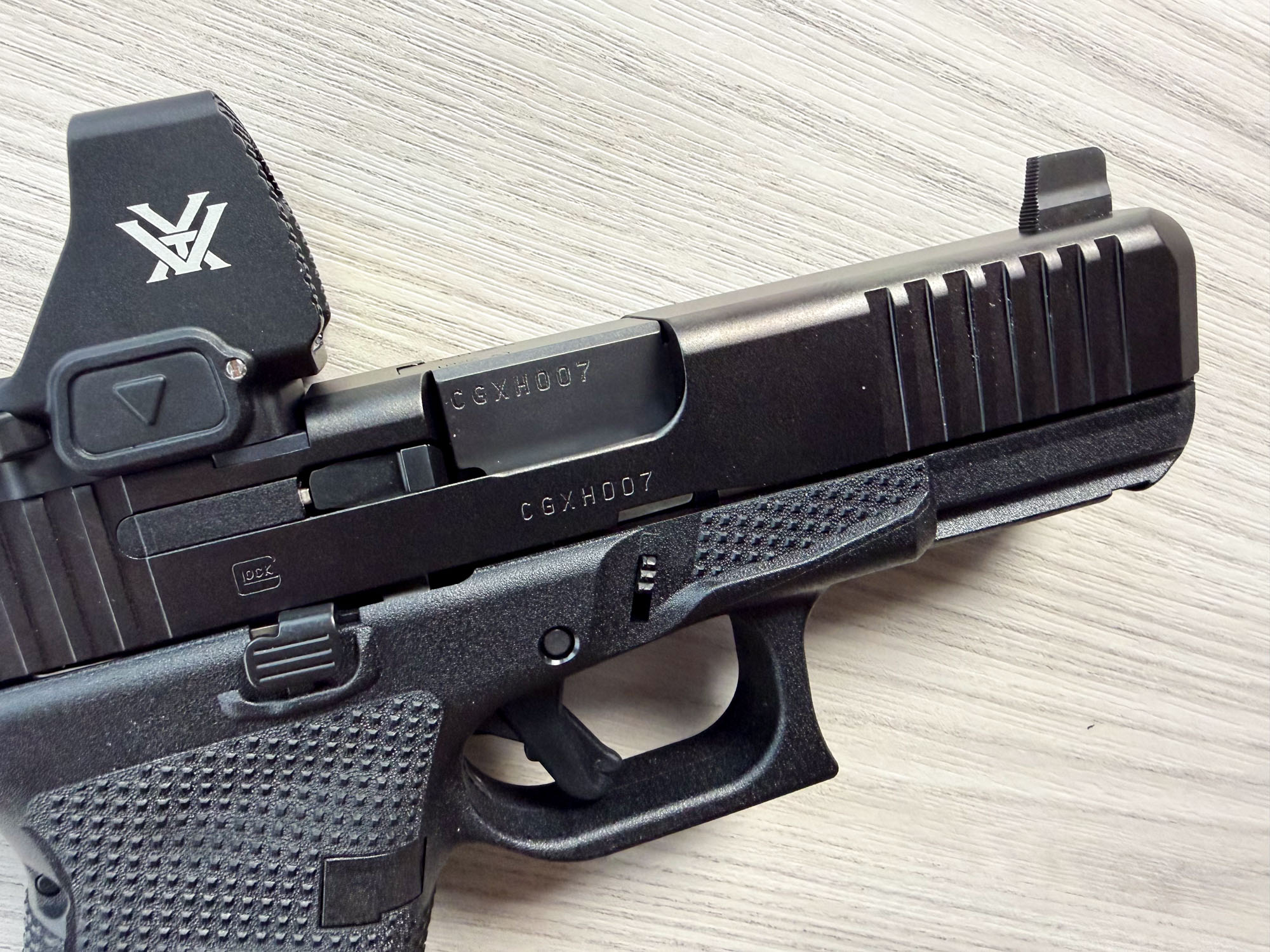
Glock has machined the Gen 6 slides with deeper cocking serrations and angled them slightly. The deeper cuts should offer a more secure grip and the angled serrations look a little more stylish than the flat cuts of yore.
Glock’s New Optics Ready System
The Glock COA optics mounting pattern, done in conjunction with Aimpoint this year, created quite a stir for its simple and stout design. Sadly, finding one has become next to impossible, and in any event, it only works with that one Aimpoint.
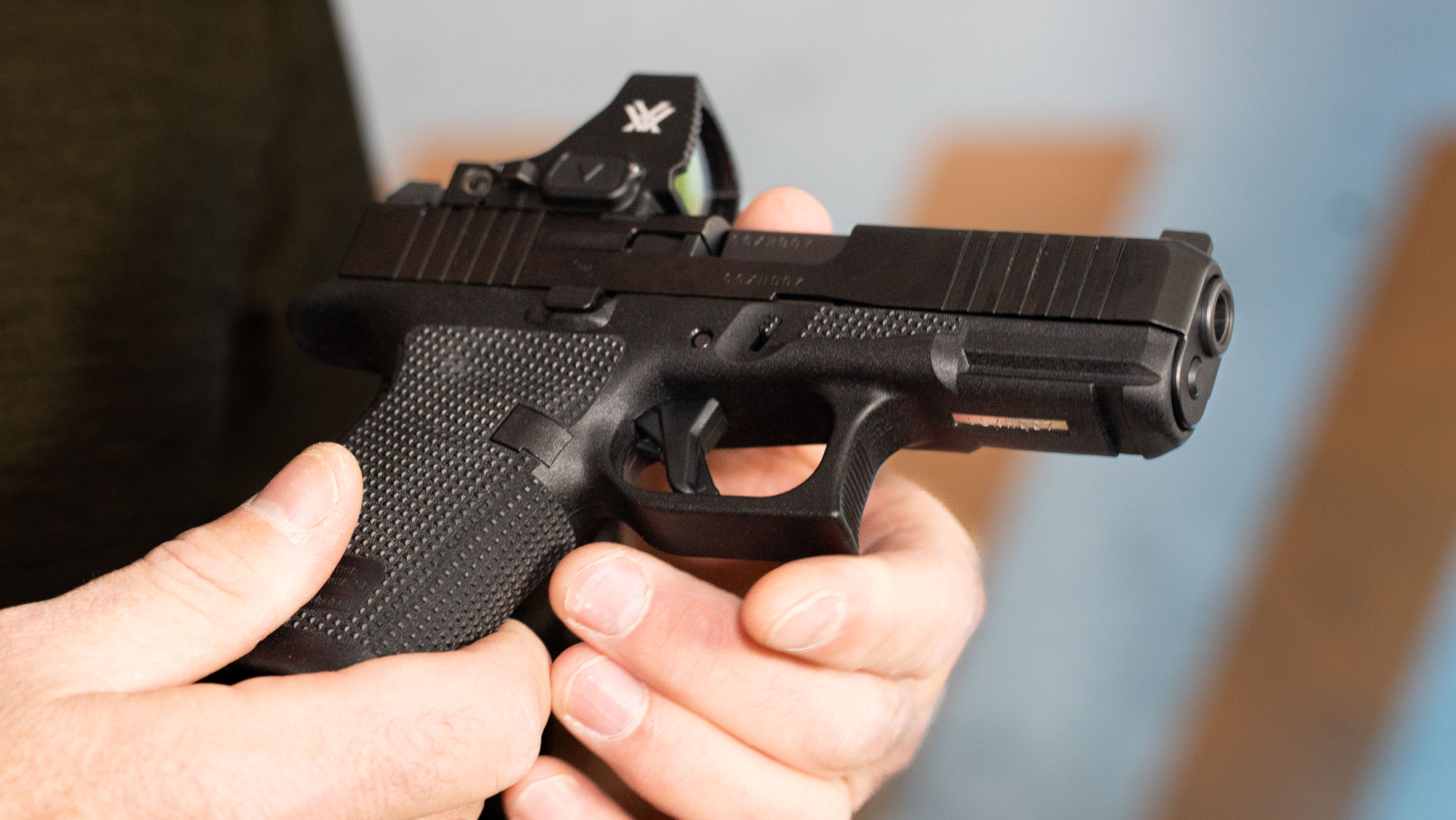
The Glock Gen 6 replaces the old MOS system with the Optics Ready System (ORS). Unlike the MOS, which used pattern-specific plates that you attached to the slide and then used as a surface on which to mount the optics, the Glock ORS lets you screw the red dot directly into the slide, eliminating a whole set of fasteners.
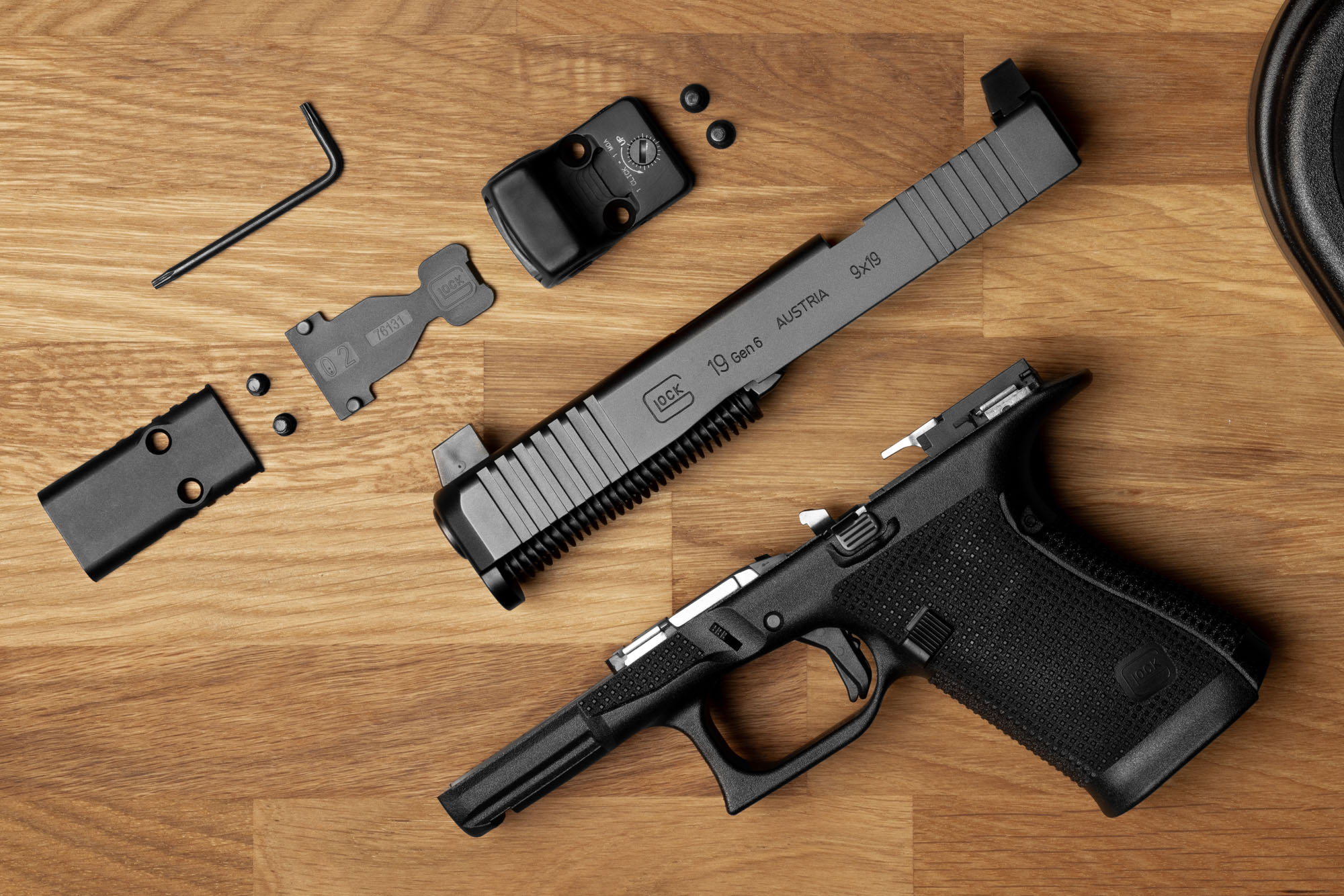
Instead, the Gen 6 pistols ship with thin pattern-specific polymer plates that sit between the optic and slide. Using the plate as a guide, you screw the optic right into the slide. The three plates fit RMR, Delta Point, and C-More footprints.
According to Glock, these thin polymer plates act as a crush washer of sorts, making the screws less likely to come loose. The friction the polymer provides helps the optic resist the shear forces generated by the violent movement of the slide, which is one of the reasons they chose this material over metal.
One thing that’s readily apparent is how low the ORS positions the optics in relation to the bore. The cut in the slide is fairly deep and because these shims are so thin, the red dot sits low, which is a big advantage.
Glock says it will offer the Gen 6 with the A-Cut system for the Trijicon COA at some point, but because the demand from military and law enforcement for that design is so high don’t expect to see many for sale at your local gun store.
Gen 6 Internal Upgrades
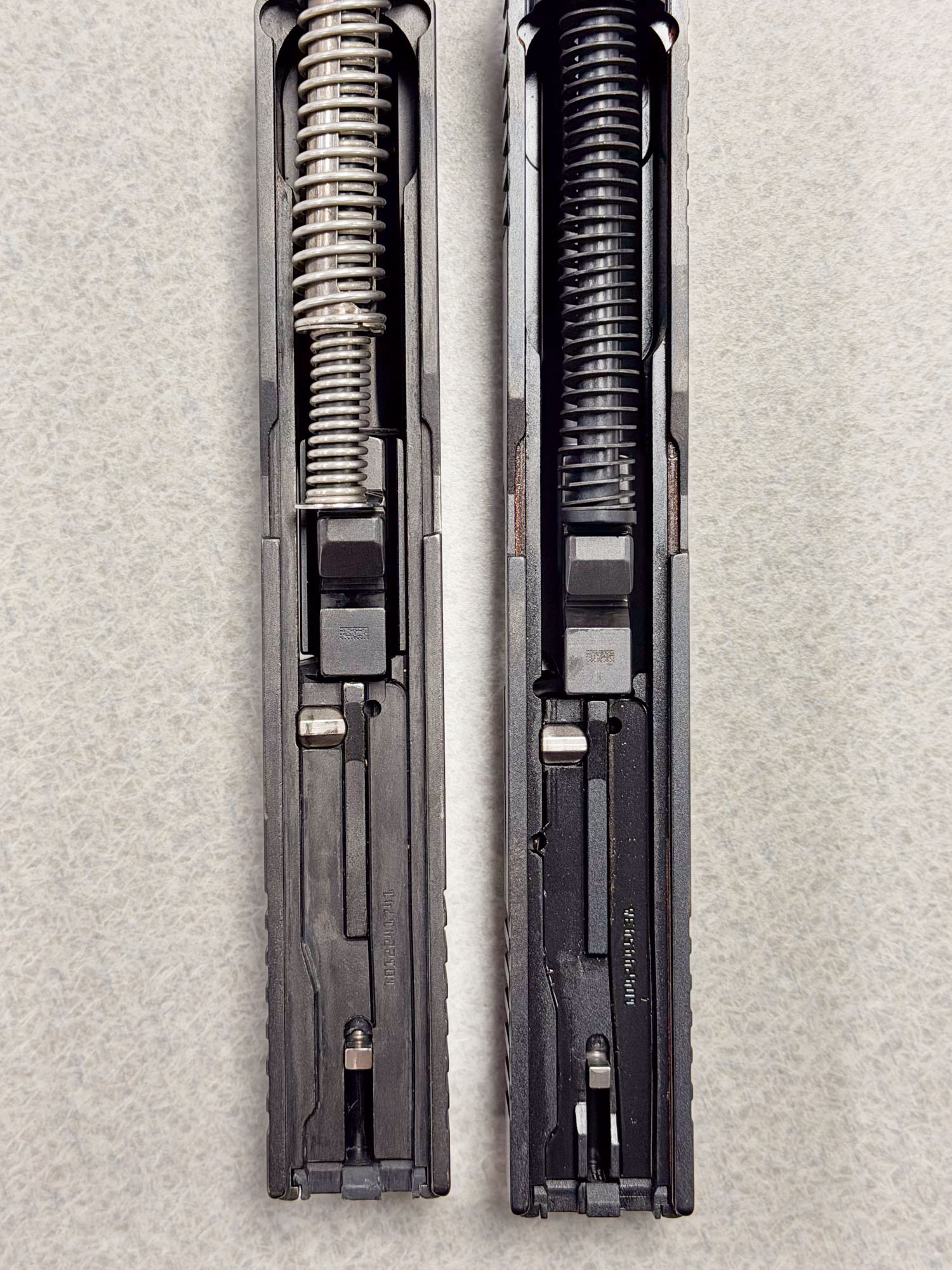
Glock made some changes to the internals of the Gen 6 series as well. Two in particular, the redesigned extractor system and going back to a single-stage recoil spring assembly were done to improve reliability, while the changes to the cuts on the underside of the slide were meant to inhibit modifications that allowed previous Glocks to run full-auto. As you probably know that barrier didn’t last for a day before it was breached.

Extractor and Recoil Spring
The extractor system on the Gen 6 has been shortened. So the holes drilled in the slide for mounting red dots no longer go all the way through the slide. These holes could allow thread locking material fluid — like Lok-tite — to get into the pistol and cause malfunctions. This shorter system eliminates that.
We’ve grown used to seeing dual-stage recoil springs on many semi-autos. They were born of the necessity to deal with higher-pressure rounds like the .40 S&W.
Glock’s testing with the Gen 6 shows that extra measure isn’t required with these new pistols. So they’ve gone back to a single-stage recoil system. One spring is less likely to go sideways than two, so they feel it augments the pistol’s overall reliability.
Beefed up Slide Lock Gate
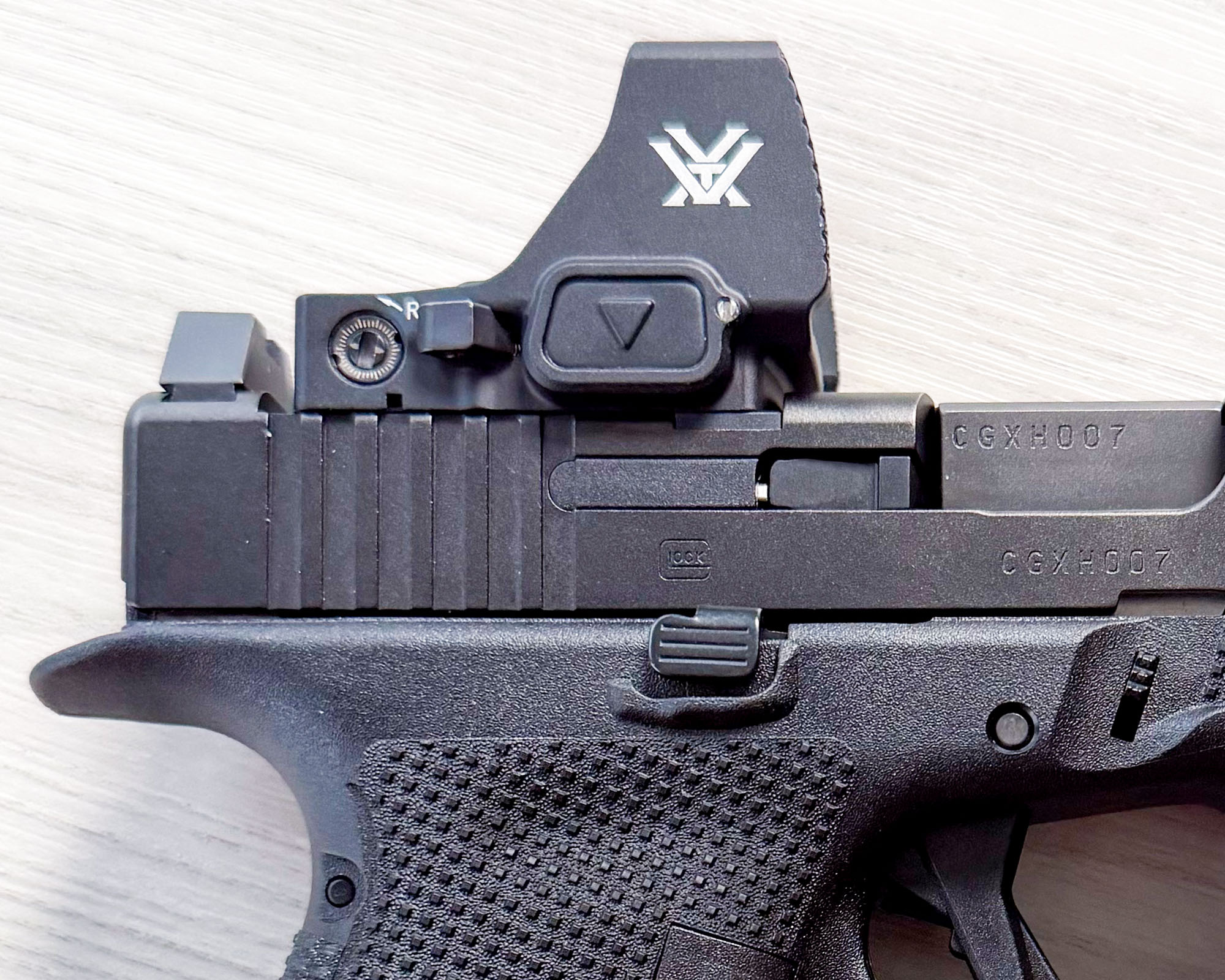
This is a small detail but you can see that the border around the slide lock has been beefed up. It’s taller and is built up along three sides, like you see on most AR lowers.
That will help prevent the shooter’s thumb from riding up during recoil and potentially engaging the slide lock and locking the slide back while firing. It’s a subtle but meaningful touch.
Glock Gen 6 and Gen 5 Compatibility
Given the scope of the changes in the Gen 6 it isn’t surprising that many parts are not backwards compatible with the Gen 5 (or even Gen V) series, most notably the fire control system and slides. That said, the Gen 6 still uses the traditional Glock magazines, and will fit in Gen 5 holsters.

Modified Slide Cuts and the Trigger Switch Controversy
When news about the V Series, and its modified slide, leaked in October the Internet gun community went into overdrive. California Governor Gavin Newsom had signed Assembly Bill 1127 into law to ban many handguns that could be converted to full-auto fire, including Glocks. The law is scheduled to go into effect January 1, 2026. It seemed the V Series, and the sudden discontinuation of Gen 3, Gen 4, and Gen 5 pistols for commercial sale, was a capitulation by Glock.
This impression was augmented by the bare-bones design of the V Series, the timing of the news about both events (the signing of AB 1127 and the V Series leak), and the lack of communication by Glock on the matter.
In the subsequent information vacuum people speculated that Glock was on the ropes and the reception of the V Series was cool to say the least.
The story took on an added twist when some V Series pistols reached dealer shelves and within a day or so someone had converted one of these new pistols to full auto with a freshly minted trigger switch.
Enter the Gen 6
Glock is a notoriously tight-lipped company and doesn’t cultivate relationships with the gun media — either traditional writers or guntuber and influencer types — the way most other large firearms companies do.
So I wasn’t sure what to expect when I arrived in Smyrna, Georgia last Wednesday. Part of me wondered whether this was just going to be a lukewarm account of the V Series and why we should be excited about it.
When we were ushered into the room where the presentation was to take place we saw the new pistol displayed by the stage within a Plexiglas box and it was obvious something bigger was in the works. (The Gen 6 banners hanging everywhere also didn’t escape my finely-honed journalistic intuition.)
Glock executives quickly stepped us through the new pistol, and as they explained one bullet point after another it became clear they had created an intriguing new platform.
Timing of the Gen 6 and V Series
It takes a long time to design a new firearm and bring it to market. Even at a lightning pace it requires a minimum of two years for a major rollout, and most new guns have been in the works for several years. In the case of the Gen 6 and V Series, work on them started around the time the G43X came to market, which was in 2019.
I’m sure the company was keeping tabs on the California ban, but that wasn’t the driving force behind this product. Like every other gun company, Glock wants to make sure their products are safe and legal — a feeling augmented by their dominance in the law enforcement and military markets, and the deep relationships they have with those agencies as a result.
But the rumors of cause and effect between the ban and the V Series don’t hold up and, as far as I can tell, were just the result of bad timing and unfavorable optics.
Glock Gen 6 versus V Series
The Gen 6 is Glock’s top-of-the-line pistol and as production ramps up to meet demand we’ll see more models appear, but initially it’ll be the G17, G19, and G45. The V Series is much more expansive, spanning 10 models: G17 V, G19 V, G19X V , G20 V MOS, G21 V MOS, G23 V, G23 V MOS, G26 V, G44 V, and G45 V.
The V Series doesn’t have any of the ergonomic enhancements that the Gen 6 features, and will be the baseline pistol.
Currently it is retailing online for about $540, compared to the $745 MSRP for the Gen 6 — though I’d expect the street price on the Gen 6 to be around $699 once they are in stock.
And it is worth repeating that the Gen 3, Gen 4, and Gen 5 models will be discontinued except for some military and L.E. orders. So you’ll need to look to the used market at some point if you want one.
What’s Not To Like
I don’t see any real negatives to this design, but that hasn’t stopped some in the online mob from grousing. The most common complaint I’ve seen concerns the large beavertail, which some feel will make the gun more difficult to conceal. It does extend the overall length of the pistol a tad, but I really like what it does to improve the gun’s handling.
The pistols I shot with optics mounted had suppressor-height sights which co-witnessed through the red dots, which is a great feature. Unfortunately, the pistol ships with standard height sights, so you’ll need to swap those out if you want that functionality. That said, I’d be surprised if some distributors didn’t place orders of Gen 6s with those installed, so there’s a good chance we’ll see them for sale configured that way.
Another thing to note is that the pistol maintains the traditional Glock grip angle, which some shooters don’t care for. So if you were expending a more vertical grip, you’re going to have to wait until the Gen 7 or beyond.
Final Thoughts On The Glock Gen 6
This review is based on a single day with the pistol, so I’ll have more to say as I get more hands-on experience with the Gen 6.
My initial impressions are very favorable, and that feeling was universal among all the other attendees at the event as far as I could tell.
The new pistol is a shooter. It’s comfortable in hand and is easy to manage. I really like the feature set and appreciate that Glock didn’t jack up the price. The new optics mounting system seems like a winner too. That design makes a lot of sense intuitively and should boost the strength of the optic-to-slide connection.
No doubt we’ll see some lighter aftermarket triggers crop up, but I really didn’t mind the factory trigger at all.
It’s clear that Glock went to a lot of effort to get a feel for what their customers want — whether military, law enforcement, or civilian — and executed a design that incorporates those improvements while maintaining the brand’s historic reliability.
Read the full article here