

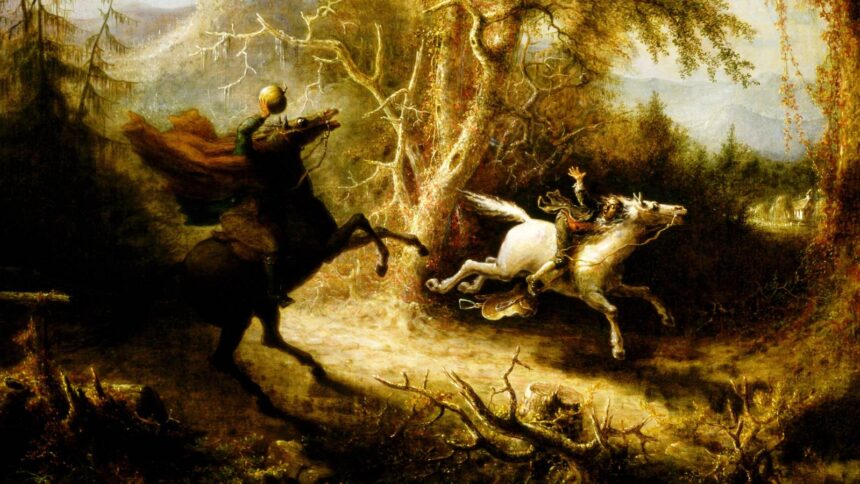
Washington Irving’s Headless Horseman is supposed to be a Hessian soldier who lost his head to a cannonball during the Revolutionary War. Strangely enough, that actually happened.
Just days after the Battle of White Plains in 1776, Continental Army Maj. Gen. William Heath recorded American cannon fire that “took off the head of a Hessian artilleryman.” Whether that grisly death eventually became the ghost galloping through The Legend of Sleepy Hollow is harder to prove.
A Real Headless Hessian at White Plains
The connection is especially tempting 250 years later.
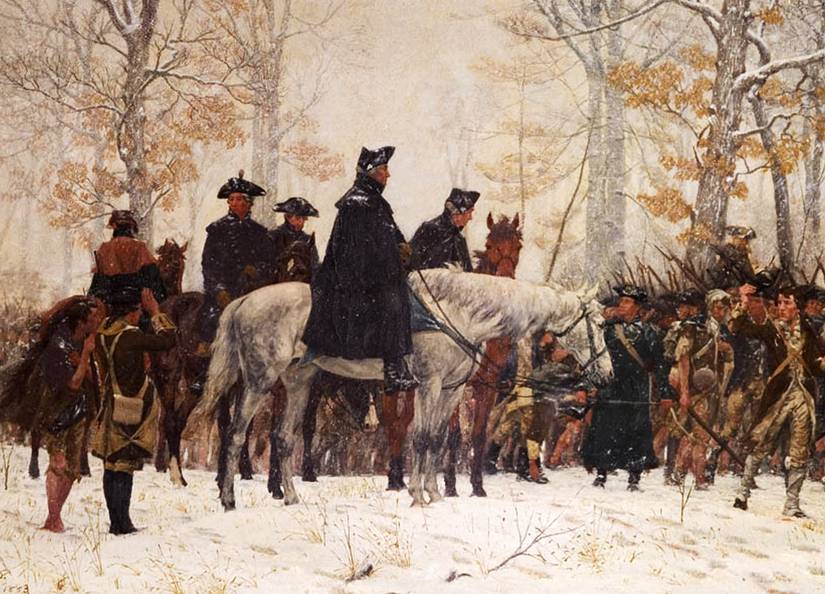
On Oct. 28, 1776, British and Hessian forces attacked George Washington’s army at White Plains, N.Y., as the Americans retreated north from New York City. Hessian troops played an important role in breaking the American right flank, forcing Washington’s men to withdraw.
The battle itself did not end the fighting around White Plains.
On Nov. 1, Heath described another encounter as British artillery moved toward the American right. Hidden American 12-pounders opened fire, sending the opposing artillery retreating. One shot, Heath wrote in his memoir, decapitated a Hessian artilleryman. An artillery horse was also left dead on the field.
It is an unsettlingly close match for the ghost Irving would put on horseback decades later.
This October also gives the old story a fresh reason to resurface. Oct. 28 marks the 250th anniversary of the Battle of White Plains, with commemorative events planned throughout Westchester County. On Halloween, the Museum of the American Revolution in Philadelphia is also hosting gallery talks specifically examining the possible Hessian origins of Irving’s Headless Horseman.
What Washington Irving Actually Wrote About the Headless Horseman
Irving published The Legend of Sleepy Hollow in 1820, setting his ghost story in New York’s Hudson Valley.
In the tale, locals say the Horseman is the ghost of a Hessian trooper whose “head had been carried away by a cannonball” during an unnamed battle of the Revolutionary War. The soldier’s body, according to the story, was buried in a nearby churchyard, leaving the ghost to ride back toward the battlefield each night searching for his missing head.
“Hessian” was a catch-all term Americans commonly used for the German troops Britain brought into the Revolutionary War from several German states, numbering roughly 30,000 over the course of the conflict.
Those troops became some of the most recognizable opponents of Washington’s Continental Army, including at the Battle of Trenton, where Washington surprised Hessian forces after crossing the Delaware on Christmas night in 1776.
The geographic connection is also tantalizing. White Plains lies only several miles from the Tarrytown and Sleepy Hollow area that Irving later transformed into one of the most famous settings in American horror.
Irving knew the region well. He first spent time around Tarrytown as a teenager in 1798 and became fascinated with both the Hudson Valley landscape and the ghost stories circulating among its residents. That was also the year Heath’s memoir was first published.
The History Lines Up. The Evidence Doesn’t Quite
Put the pieces together and the theory practically writes itself.
A real Hessian is decapitated by American cannon fire near White Plains. The battlefield sits close to the future setting of Sleepy Hollow. Heath publishes the incident. Irving spends time in the area, where stories about a headless Hessian are reportedly circulating. Years later, he writes about a headless Hessian killed by a Revolutionary War cannonball.
But there is one problem: there is no surviving evidence showing Irving took Heath’s artilleryman and deliberately turned him into the Headless Horseman.
The Jamestown-Yorktown Foundation, which has examined the history behind the story, notes that the resemblance is striking but says whether Irving ever read Heath’s account is unknown.
Other influences muddy the trail further. Scholars have pointed to older European stories involving spectral riders and to Irving’s literary relationship with Scottish writer Sir Walter Scott. Smithsonian historian Elizabeth L. Bradley has cautioned that the Horseman’s ancestry cannot be traced neatly to one source.
The Headless Horseman is also part of a much larger pattern in which popular culture has repeatedly reshaped how Americans remember the Revolutionary War, sometimes leaving the mythology better known than the history underneath it. Even Irving leaves himself an escape hatch.
The Horseman is a story being told inside another story, and the disappearance of schoolmaster Ichabod Crane is deliberately ambiguous. Brom Bones, Crane’s romantic rival, seems to know suspiciously more about the supposed supernatural encounter than he lets on.
The ghost may have been a prank. The history behind him is murkier still.
A Military Death That Became American Folklore
Whatever Irving’s exact inspiration, the real incident at White Plains gives The Legend of Sleepy Hollow a darker military foundation than its pumpkins and Halloween adaptations might suggest.
That blending of documented military history with supernatural folklore is hardly unique to Sleepy Hollow. Military sites across the country have accumulated their own ghost stories, often growing out of battles, deaths and generations of retelling.
There really were Hessian troops fighting around the Hudson Valley. There really was a soldier killed by a cannon shot that took off his head. And the event happened close enough to Irving’s fictional hollow that generations of historians and readers have wondered whether the two stories eventually became tangled together.
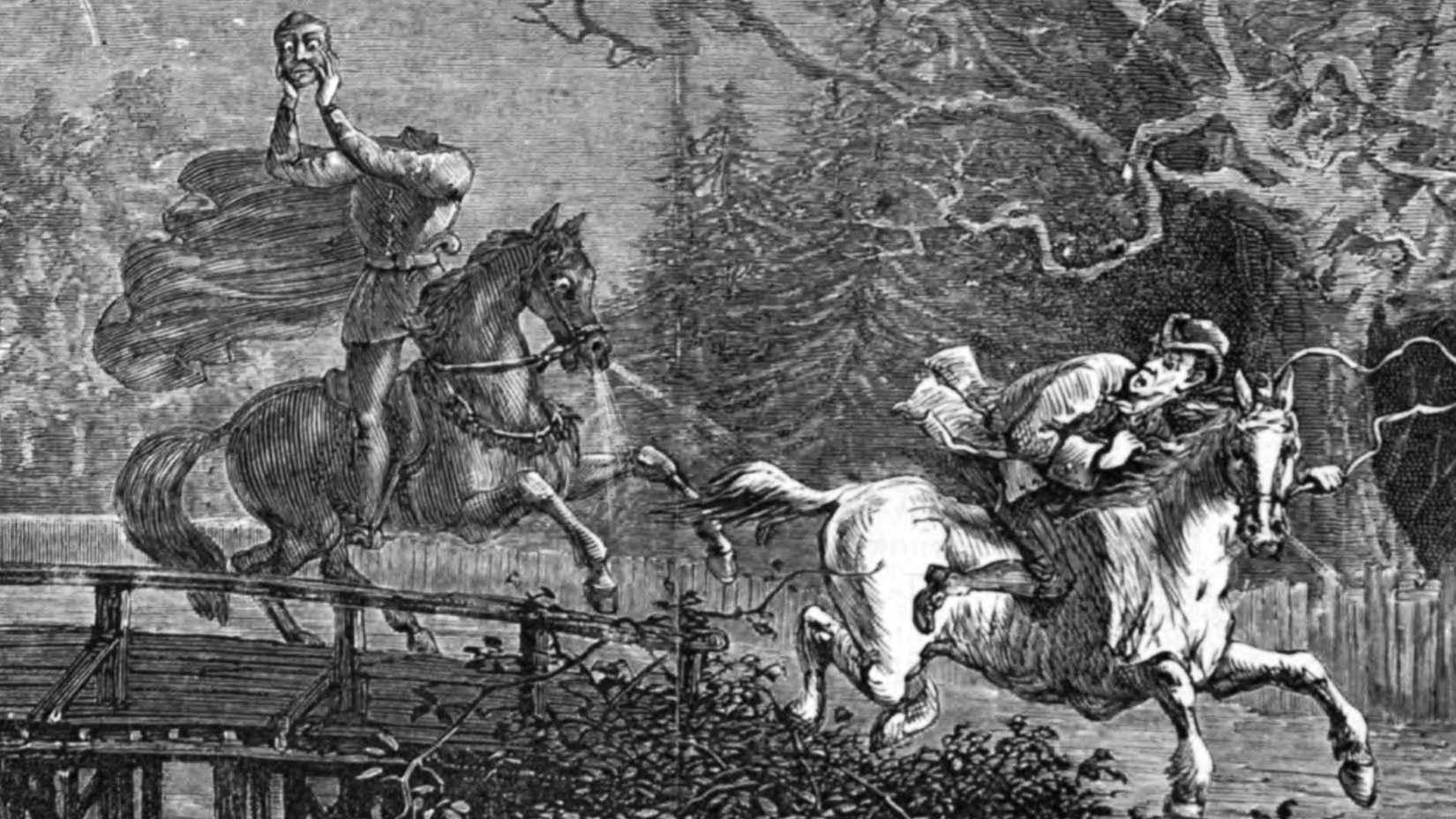
The Museum of the American Revolution is revisiting that possibility as part of its Halloween programming this year, while New York marks the 250th anniversary of the campaign that put Hessian soldiers in White Plains in the first place.
Two and a half centuries later, historians still cannot put a name to Heath’s unfortunate artilleryman or prove that Irving ever knew his story.