
“Sir, the Enterprise is Burning”: How a Flight Deck Accident in 1969 Almost Caused an Environmental Disaster 70 Nautical Miles South of Hawaii: The USS Enterprise (CVN-65) was the world’s first nuclear-powered aircraft carrier. It set the precedent that defined every future American aircraft carrier. Commissioned on November 25, 1961, the USS Enterprise was the pinnacle of American naval power and superior engineering for its time. She measured 1,123 feet long and displaced more than 90,000 tons fully loaded. Her nuclear power gave the Enterprise incredible endurance.
The USS Enterprise Aircraft Carrier Incident
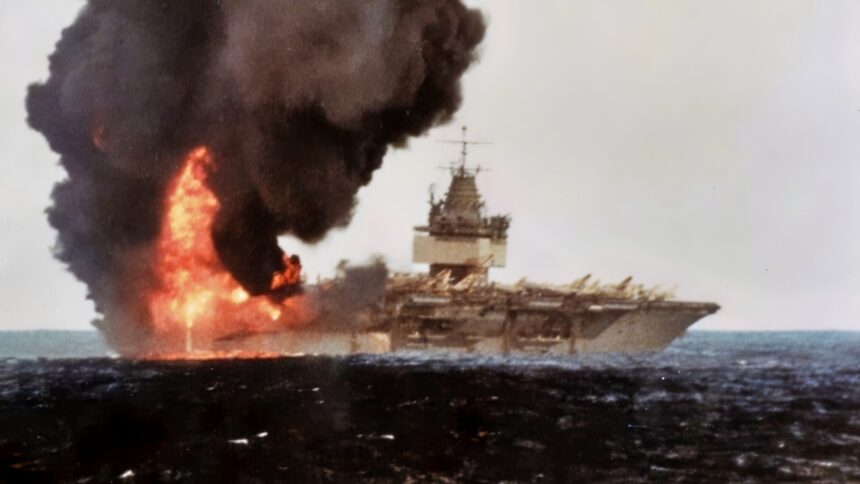
But one incident on January 14, 1969, nearly brought a major environmental catastrophe at sea. Indeed, it is considered one of the worst aircraft carrier accidents in US naval history.
At the time, the Enterprise was conducting flight operations around 70 nautical miles southwest of Pearl Harbor. The Enterprise was preparing for another deployment to Southeast Asia as part of the ongoing Vietnam War. It was part of the carrier’s readiness exercises before deployment in theater. Fuel and ordnance-laden aircraft crowded the bustling flight deck.
At around 8:19 am local time, exhaust from an MD-3A aircraft-starting unit, known as a Huffer, was directed toward a pod containing four five-inch Zuni rockets beneath the wing of an F-4J Phantom II fighter. That exhaust temperature burned at a scorching 850 degrees Fahrenheit. Unbeknownst to the busy crew, that exhaust was unexpectedly too close to the Zuni rocket pod for the ship’s safety.
That intense heat detonated the rocket warheads. Each warhead carried about 15 pounds of a powerful military explosive called Composition B. The Zuni rocket warheads ruptured the F-4J Phantom II’s fuel tanks, igniting JP-5 aviation fuel.
In just one minute, three more Zuni rocket warheads exploded beneath that aircraft’s other wing. The explosions were so powerful they ripped holes through the flight deck, letting burning fuel into the compartments below.
F-4 Phantom 19FortyFive Photo
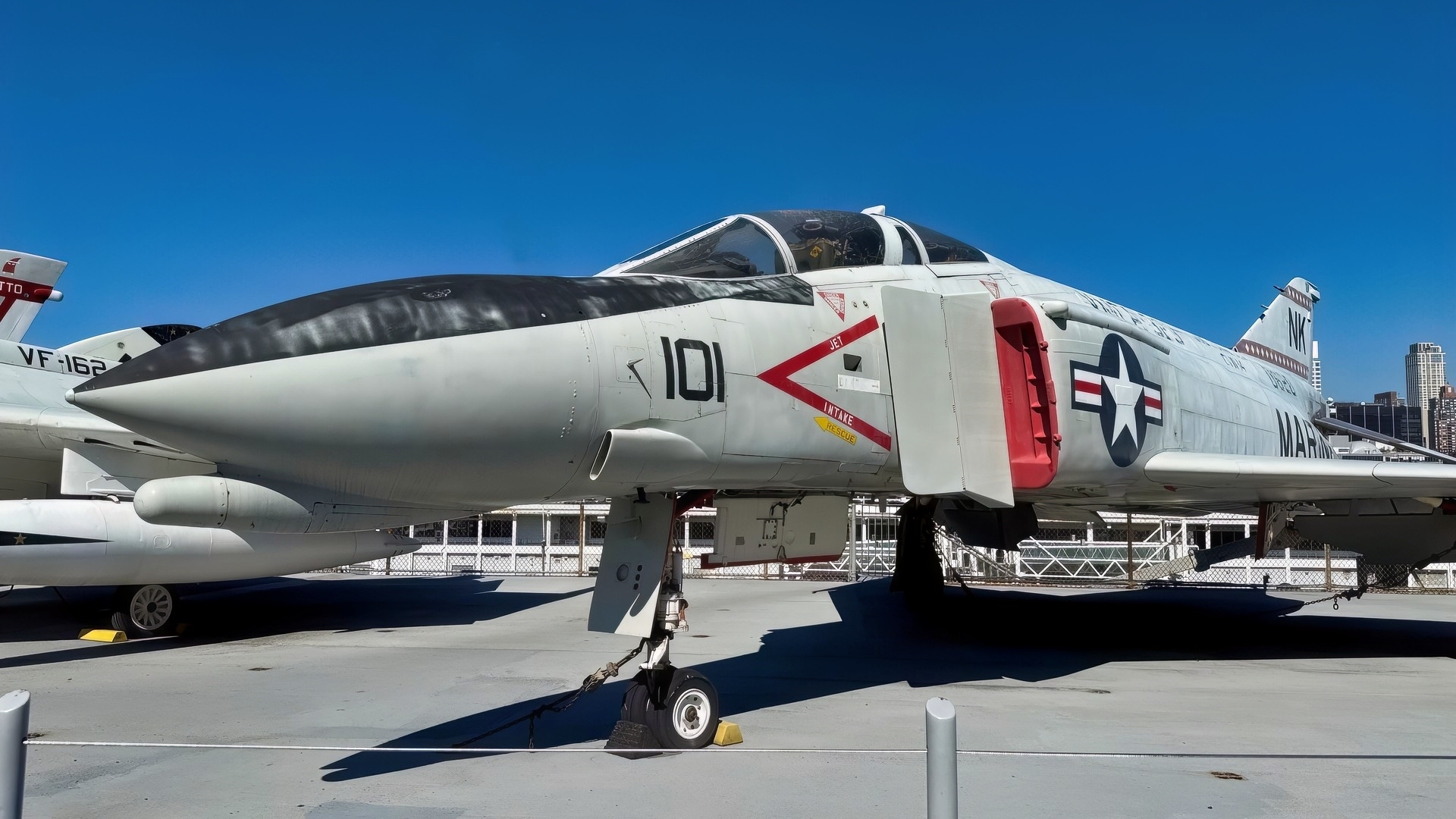
F-4 Phantom Fighter Aboard USS Intrepid Aircraft Carrier 19FortyFive Photo by Harry J. Kazianis
The situation onboard the Enterprise became chaotic within the first few minutes as a massive conflagration consumed the ship.
Conflagrations Galore
In fact, at that point, following the initial explosion of the Zuni rocket warheads, a bomb exposed to the spreading fire blew up just beneath the Phantom.
That explosion, just three minutes after the initial round of blasts, ripped an eight-foot-long and seven-foot-wide hole through the flight deck. Just 40 seconds later, another 500-pound Mk 82 bomb detonated.
A third bomb exploded shortly thereafter.
The blast that almost did the mighty Enterprise in, however, was the explosion that detonated a rack containing three Mk 82 bombs near a tanker aircraft that was carrying 6,000 gallons of JP-5 aviation fuel. The blast created a 22-by-18-foot hole in the flight deck.
The excess aviation fuel detonated, creating a massive fireball and sending flames deeper into the carrier decks below.
When the disaster was over, investigators would find a total of eight holes in the flight deck caused by 18 munitions explosions or bomb detonations. Damage reached deep inside the carrier.
To make matters worse, the explosions were so severe that they knocked out firefighting equipment and damaged hoses, further complicating the crew’s attempts to contain the flames.
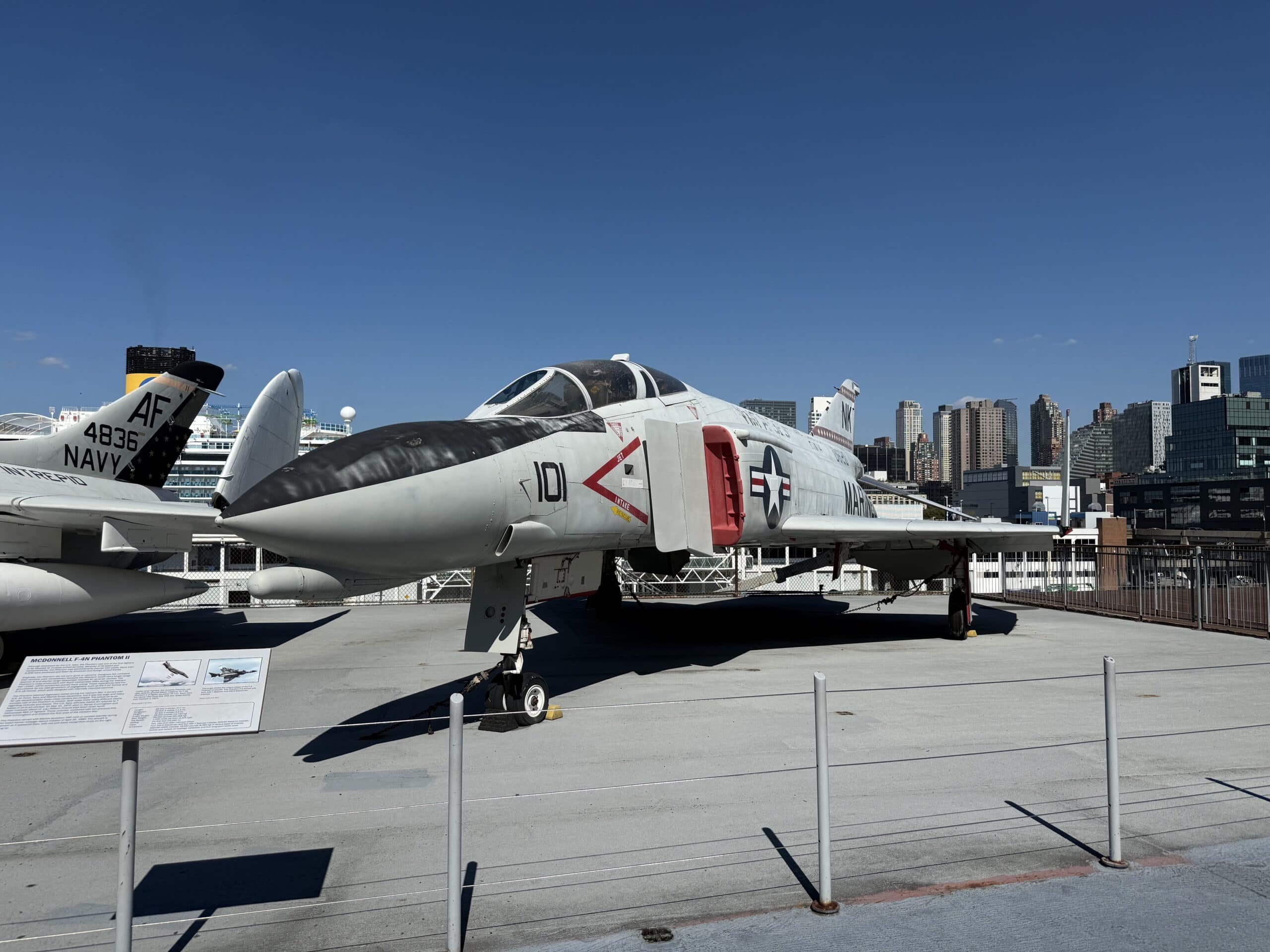
F-4 Phantom. 19FortyFive.com Photo.
Sailors fought the flames valiantly. Damage-control teams did what they could to stop the fire’s spread using any water they could muster and firefighting foam. Meanwhile, personnel evacuated casualties and tried to stop the fire from reaching additional aircraft and ammunition storage areas. The carrier’s destroyer escort, the USS Rogers (DD-876), assisted with firefighting.
Ultimately, the Enterprise crew contained the fire on the flight deck, keeping it behind the carrier’s island and far from ammunition storage areas.
But the fire raged for more than three hours.
The Damage Assessed
Fifteen aircraft were lost, and another 17 were damaged. According to History.com, 27 crew members were lost, and another 344 were injured.
The combined cost of replacing those aircraft and the equipment used to fight the fire, plus significant structural repairs, exceeded $126 million (in 1969 dollars).
The Enterprise disaster was the third such disaster in a row for the US Navy. In October 1966, the USS Oriskany endured catastrophic fires onboard, and in July 1967, the USS Forrestal did as well. As terrible as they were, the fires exposed real flaws in the Navy’s carrier flight deck operations and forced serious changes.
After the Enterprise disaster, the Navy improved its firefighting procedures and ordnance handling, and it developed explosives designed to reduce the likelihood of unintended detonation when exposed to heat or mechanical shock.
‘Surprisingly, the carrier returned to service later that same year.
Enterprise served the country for more than 40 years, providing another 40-plus years of duty before she was finally decommissioned in 2017.
About the Author: Brandon J. Weichert
Brandon J. Weichert is the Senior National Security Editor at 19FortyFive.com. He also manages The Weichert Brief on Substack. Weichert also hosts “National Security Talk” on Rumble. He is the author of four bestselling national security books, most recently A Disaster of Our Own Making: How the West Lost Ukraine (Encounter Books). Follow him via Twitter/X @WeTheBrandon.