
Introduction
Owning a firearm comes with a responsibility that goes far beyond the range or the safe. Proper maintenance is what keeps a gun functioning safely, accurately, and reliably over the long haul. Yet many gun owners underestimate just how much a consistent cleaning routine affects performance. Carbon buildup, moisture, and old lubricant residue can quietly degrade a firearm’s action, accuracy, and even its safety.
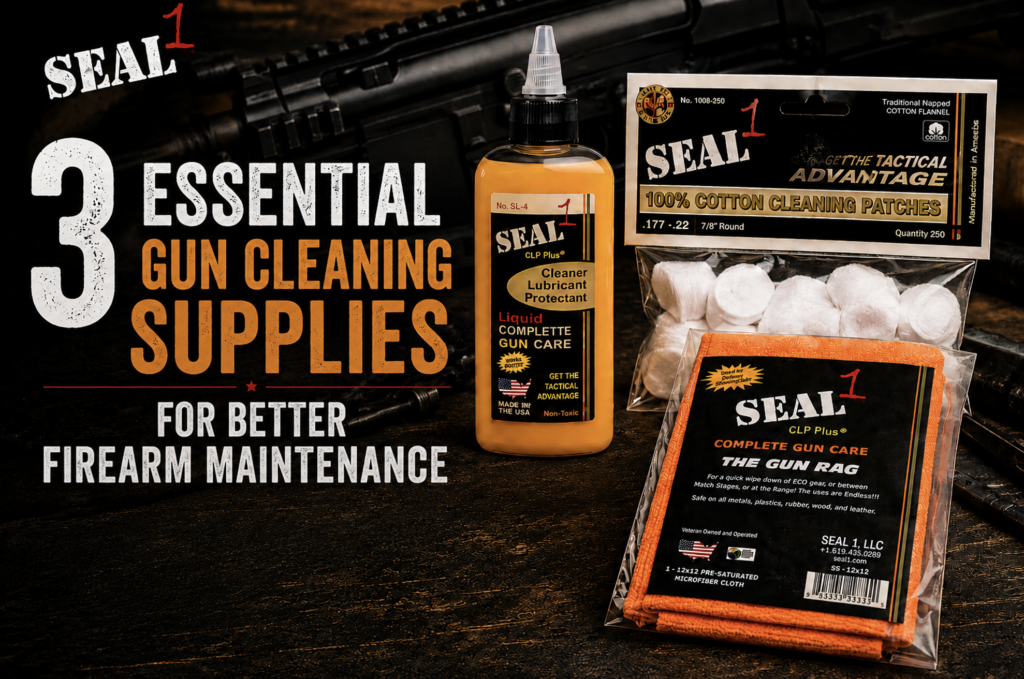
The good news is that you don’t need a massive toolkit to keep your firearm in top shape. Three supplies form the backbone of almost every effective cleaning routine: a CLP gun cleaner, gun cleaning patches, and a gun cleaning rag. Together, these three items cover the essential steps of cleaning, lubricating, protecting, and wiping down a firearm. In this guide, we’ll break down what each supply does, how to use it properly, and how they work together to extend the life of your firearm.
1. CLP Gun Cleaner: Clean, Lubricate, and Protect
What Is a CLP Gun Cleaner?
CLP stands for Clean, Lubricate, and Protect and that name describes exactly what this product does. A CLP gun cleaner is a multi-purpose formula designed to handle three critical maintenance tasks in a single application. Instead of juggling separate solvents, oils, and rust preventatives, a quality CLP combines all three functions into one bottle, simplifying the maintenance process considerably.
Most CLP formulas are built around a blend of solvents that break down carbon and powder fouling, lubricants that reduce friction between moving parts, and corrosion inhibitors that create a protective barrier against moisture and oxidation. This combination makes CLP one of the most versatile products in any gun owner’s cleaning kit.
How CLP Helps Maintain Firearms
Every time a firearm is fired, it generates carbon buildup, unburned powder residue, and copper or lead fouling inside the barrel and action. Left untreated, this residue can interfere with the smooth cycling of the action, increase wear on internal components, and even affect accuracy over time.
A CLP gun cleaner addresses this in three stages. First, its solvent properties loosen and dissolve fouling so it can be wiped or brushed away. Second, once the surface is clean, the lubricating agents in the CLP coat metal-on-metal contact points, reducing friction and heat during operation. Third, the protective layer left behind helps shield the metal from humidity, sweat, and other environmental factors that lead to rust and pitting.
This all-in-one approach means a gun owner can run a bore brush or patch soaked in CLP through the barrel, apply it to the slide rails or bolt carrier group, and know that the firearm is simultaneously being cleaned and protected in one pass.
Key Benefits of Using CLP for Firearm Maintenance
There are several reasons CLP has become a staple in gun maintenance kits. It simplifies the cleaning process by reducing the number of products needed, which is especially valuable for owners who maintain multiple firearms or who want a lightweight range bag setup. It also tends to perform well across a wide temperature range, making it suitable for firearms used in varying climates or seasons.
Because CLP leaves behind a thin protective film, it helps firearms resist corrosion during storage, which is particularly important for guns that aren’t used frequently. Many shooters also appreciate that a good CLP reduces the buildup of hardened carbon over time, which can make future cleaning sessions faster and easier.
2. Gun Cleaning Patches: Removing Residue and Fouling
What Are Gun Cleaning Patches?
Gun cleaning patches are small, absorbent pieces of cloth, usually made from cotton, that attach to a cleaning rod or jag and are run through the bore of a firearm. Their primary job is to physically remove fouling, solvent, and lubricant from inside the barrel and other tight spaces that a rag or brush can’t easily reach.
Patches come in various sizes and shapes depending on the caliber of the firearm being cleaned. Using a patch that’s properly sized for the bore ensures full contact with the barrel’s interior, which is necessary for effective cleaning.
How to Use Cleaning Patches Effectively
The typical process starts with applying a small amount of CLP or solvent to a patch, then running it through the bore using a cleaning rod. This first pass helps loosen fouling and distribute cleaning solution evenly along the barrel. After letting the solvent sit for a few minutes, a bore brush is often used to scrub loose the more stubborn residue.
Once the bore has been brushed, dry patches are run through the barrel repeatedly until they come out clean, with no visible carbon, copper, or lead residue. This step is important because leftover fouling can trap moisture and contribute to corrosion inside the barrel. A final patch lightly coated with lubricant is sometimes used to leave a thin protective layer inside the bore before storage.
Why Quality Patches Matter
Not all patches are created equal. Lower-quality patches can leave behind lint or fibers inside the barrel, which may affect accuracy or require additional cleaning passes to remove. Durable, properly sized patches hold together under the friction of being pulled through the bore and provide more consistent, thorough cleaning.
Using patches that are too small for the caliber can result in incomplete contact with the barrel walls, leaving fouling behind. Conversely, patches that are too large can be difficult to push through and may bunch up on the cleaning rod. Choosing the correct patch size for each firearm ensures a more effective and efficient cleaning process.
3. Gun Cleaning Rag: Wiping and Protecting Firearm Surfaces
What Is a Gun Cleaning Rag?
A gun cleaning rag is a soft, lint-free cloth used for wiping down the external surfaces of a firearm. Unlike patches, which are designed for the bore, rags are meant for larger, flatter surfaces such as the slide, frame, stock, and other exterior components.
These rags are often made from materials like microfiber or specially treated cotton that won’t scratch metal or wood finishes while still being absorbent enough to pick up oil, fingerprints, dirt, and moisture.
Where to Use a Cleaning Rag
A cleaning rag is typically used at the end of a maintenance session, after the bore and internal components have been addressed. Wiping down the exterior of the firearm removes fingerprints and skin oils, which can otherwise contribute to corrosion over time, especially on carbon steel surfaces.
Rags are also useful for applying a light, even coat of CLP or oil to external metal surfaces, helping protect them from rust during storage. Many gun owners also use a dedicated rag to wipe down magazines, holsters, and other accessories that come into regular contact with the firearm.
Benefits of Using a Dedicated Gun Cleaning Rag
Keeping a rag specifically for firearm maintenance, separate from rags used for other household or automotive tasks, helps avoid cross-contamination with dirt, grit, or chemicals that could scratch or damage a firearm’s finish. A dedicated rag also tends to stay cleaner over time, making it more effective for its intended purpose.
Beyond cleaning, a rag plays a protective role by removing moisture that accumulates from handling or humid storage conditions. This simple habit of wiping down a firearm after each use or cleaning session can meaningfully extend the life of its finish and reduce the risk of surface rust.
How These Three Gun Cleaning Supplies Work Together
While each of these supplies serves a distinct purpose, they’re most effective when used together as part of a complete routine. CLP handles the chemical side of cleaning and protection, patches provide the mechanical action needed to physically remove fouling from the bore, and a rag finishes the job by addressing the external surfaces of the firearm.
Think of it as a three-step process: solvent action to break down residue, patches and brushes to remove that residue, and a rag to wipe down and protect the exterior. Skipping any one of these steps can leave gaps in the maintenance routine, whether that means a fouled barrel, a rusting slide, or a firearm coated in leftover cleaning solution.
Choosing the Right Gun Cleaning Supplies
When selecting a CLP gun cleaner, look for a formula that’s effective across a range of temperatures and doesn’t leave behind a gummy residue that attracts dust and debris. For patches, choosing the correct caliber-specific size is essential, and opting for durable, lint-resistant material will produce better results. When it comes to rags, a soft, non-abrasive material that won’t scratch finishes is the best choice.
It’s also worth considering how often a firearm is used. Firearms used frequently, such as those for training or competition, may benefit from more heavy-duty cleaning supplies, while firearms used occasionally for hunting or home defense may only need lighter maintenance products.
Common Mistakes to Avoid When Cleaning a Firearm
One common mistake is using excessive amounts of CLP, which can attract dirt and debris rather than repel it. Another is neglecting to let solvent sit long enough to properly break down fouling before scrubbing. Using patches that are too small or reused past the point of usefulness can also leave residue behind rather than removing it.
Failing to wipe down the exterior of a firearm after cleaning is another oversight that can lead to fingerprints and moisture causing corrosion over time. Lastly, cleaning a firearm without first verifying it’s unloaded is a critical safety mistake that should never happen.
How Often Should You Clean Your Firearm?
The frequency of cleaning depends largely on how often a firearm is used and the environment it’s exposed to. Firearms used regularly at the range or in training should be cleaned after every use to prevent carbon buildup from hardening. Firearms stored for extended periods, even if unused, should be inspected and lightly maintained periodically to check for signs of rust or degraded lubrication, particularly in humid climates.
Simple Firearm Maintenance Routine
A straightforward routine might look like this: first, ensure the firearm is unloaded and field-strip it according to the manufacturer’s instructions. Apply CLP to a patch and run it through the bore, followed by a bore brush if needed. Continue running clean patches through the barrel until they come out free of residue. Apply a small amount of CLP to moving parts such as the slide rails or bolt carrier group. Finally, use a clean rag to wipe down all external surfaces before reassembling the firearm.
Conclusion
Maintaining a firearm doesn’t require a large collection of tools, it requires consistency and the right supplies. SEAL 1 provides essential firearm maintenance solutions, including a quality CLP gun cleaner, properly sized gun cleaning patches, and a dedicated gun cleaning rag to support cleaning, lubricating, protecting, and wiping down your firearm. By incorporating SEAL 1 products into a regular maintenance routine, gun owners can help keep their firearms clean, protected, and ready for reliable performance when needed.
Read the full article here