
When the Empire of Japan built the battleship Yamato, they made a bold statement as much as they built a world-class battleship. That’s because the Yamato was the world’s largest battleship, possessing the world’s largest battleship guns. The platform was essentially a giant, floating series of cannons that could outpace any rival battleship — and wreak havoc on whatever distant enemy shores it was ordered to bombard.
A New Battleship
Despite its impressive build and obvious power, the Yamato was built to win a battle that never occurred, in a kind of naval war that never came.
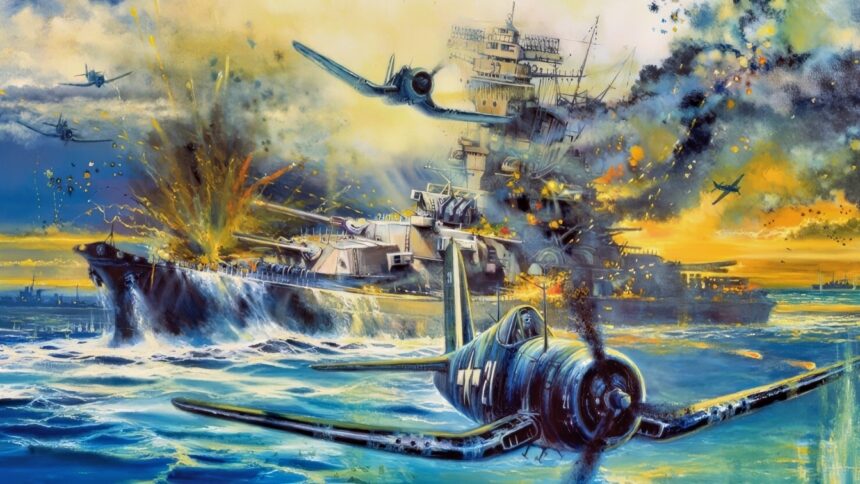
Instead, on April 7, 1945, Yamato was attacked by swarms of aircraft from a United States Navy aircraft carrier.
It sank during Japan’s last-ditch effort to stop an American invasion of Okinawa known as “Operation Ten-Go.”
During the 1930s, the Imperial Japanese Navy started designing its newest, largest, most powerful battleship, the Yamato.
They made it so large and powerful because Tokyo understood that their country could never match the United States in industrial might.
America’s factories could churn out new warships, ammunition, warplanes, and recruit massive numbers of new sailors to their cause seemingly ad infinitum.
Japan could not do any of that.
Instead, Japanese naval planners designed their new battleship to be qualitatively superior.
They’d not match the US Navy ship-for-ship or shell-for-shell.
Japan would create individual battleships so much more powerful than their American rivals that fewer Japanese battleships could easily swamp the numerically superior American fleet.
Battleship Yamato. Image Credit: Creative Commons.
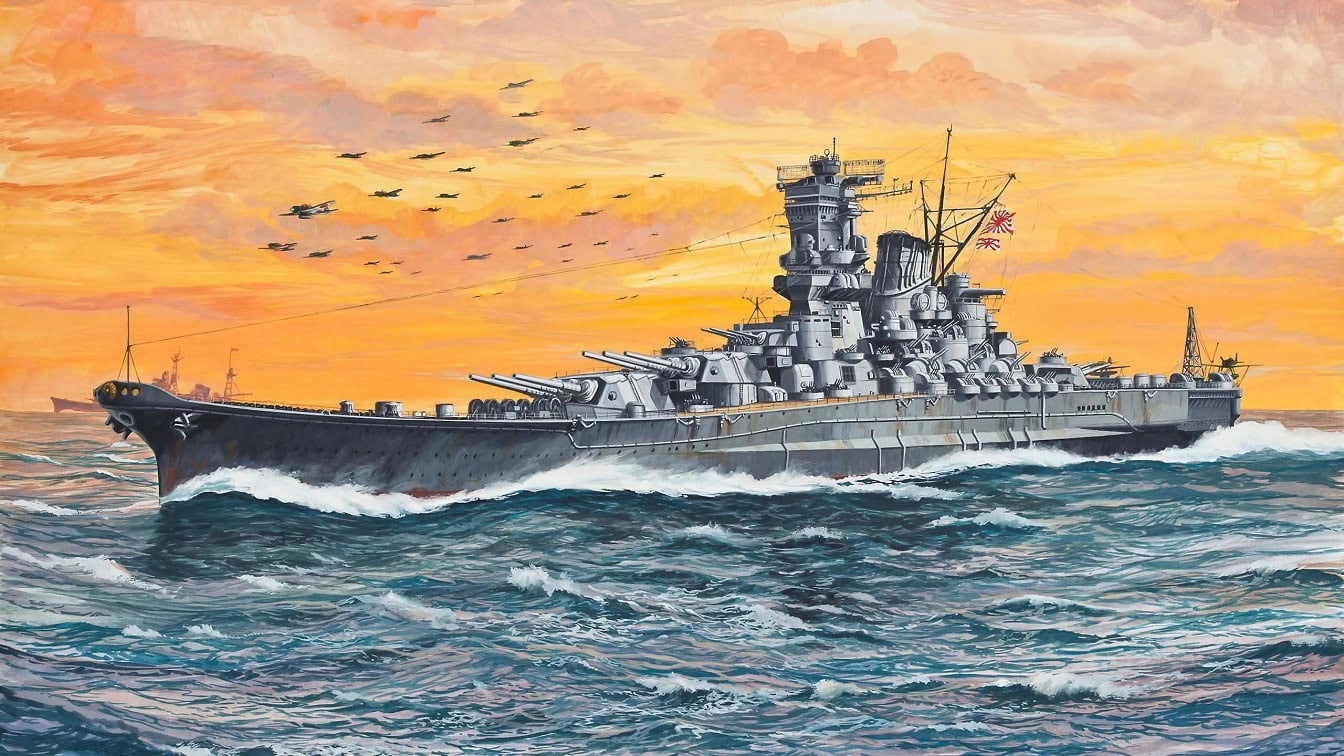
Yamato-Class Battleship/Artist Rendition. Image Credit: Creative Commons.
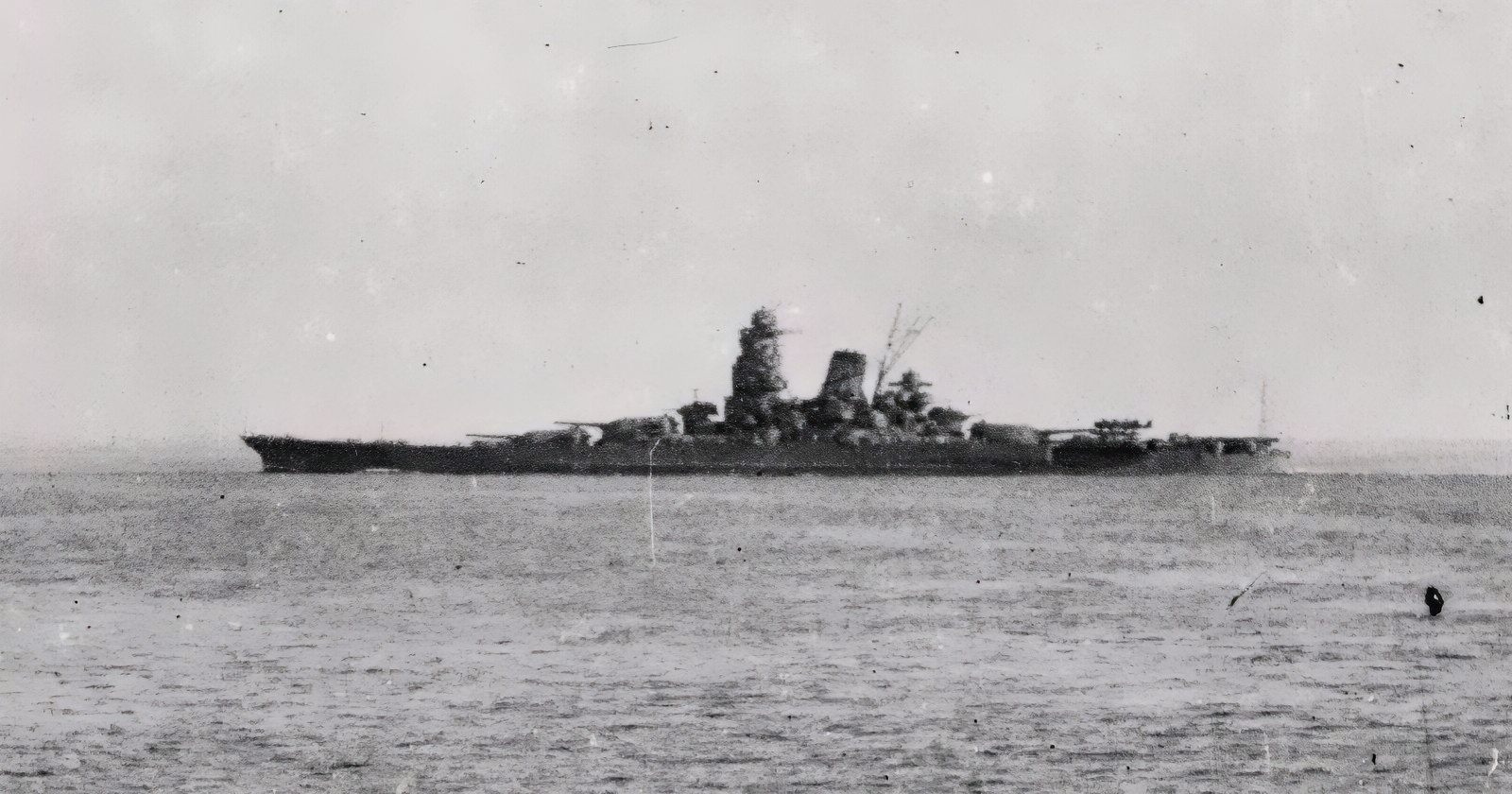
Yamato-Class Battleship in 1944 Creative Commons Image
What’s more, Japanese designers had to design the Yamato to fit through the Panama Canal, meaning natural limitations shaped what was otherwise a gargantuan project.
At full load, the Yamato displaced more than 72,000 tons. She was 863 feet long and had engines capable of delivering 150,000 shaft horsepower.
Yamato easily exceeded 27 knots when at speed.
Portions of the great battleship’s armored deck were 200 millimeters thick, while her armored belt measured an impressive 410 millimeters.
Armor and Ammo
The hulking Japanese battleship carried nine 18.1-inch Type 94 guns arranged in three triple turrets. Each turret mounting weighed roughly 2,774 tons, comparable to a destroyer’s displacement.
Yamato was built to last in a battleship duel.
And if the Second World War had erupted earlier, and if the Japanese had commissioned the great warship before December 16, 1941, then Yamato might have had its great day against the American fleet.
Yet naval warfare had fundamentally changed right under the noses of Japanese naval designers.
By December 16, 1941, about a week after the Imperial Japanese Navy (IJN) launched its dastardly surprise attacks on the Hawaiian Islands, battleships were no longer the king of naval warfare.
Aircraft carriers had quietly emerged as the true leaders of surface naval warfare.
And they would remain the kings of naval warfare from World War II until today (where they are only now being rendered increasingly obsolete by advances in missile and drone technologies).
Anyway, the Japanese employed the Yamato with great effect throughout the Pacific Theater of WWII.
She fought US and allied forces at the Battle of Leyte Gulf in October 1944. She duked it out with US Navy surface ships during the infamous Battle of Samar.
In these campaigns, though, Yamato fought escort carriers, destroyers, and destroyer escorts.
She never dueled the mighty American battleships she was designed to attack and sink.
Operation Ten-Go
When American forces landed on Okinawa, in what was a clear bid to have permanent striking distance at the Japanese Home Islands, Tokyo’s leaders panicked.
They devised an equally desperate plan to stymie the American advance on Okinawa, as a way to delay what they assumed was the inevitable American invasion of the Japanese Home Islands.
It was known as Operation Ten-Go.
With the Yamato as the centerpiece of a naval flotilla, the IJN’s Surface Special Attack Force took the tenets of Kamikaze strikes that had become the norm in the final stages of the war against the US Navy and applied them to the remaining IJN surface warships. IJN planners gave the Yamato only enough fuel for a one-way trip, reflecting the logic of the engagement.
The force would sail to Okinawa with light air protection.
Once on scene, the mighty Yamato and its escorts would punch their way into the American transport area, inflicting as much damage as possible along the way, beach the mighty Yamato near Okinawa, and turn the warship into an artillery platform aimed at breaking up the American landing on Okinawa.
She would continue firing while beached–while under sustained American bombardment from the air–until her mighty guns ran dry.
Once empty, her sailors would break into ground forces and join the Japanese defense of Okinawa against the advancing US military elements.
But the Americans knew the Surface Special Attack Force was coming for Okinawa. The Americans were waiting.
An Agonizing Death for an Irrelevant Platform
A day after departing Japan, US Navy Vice-Admiral Marc Mitscher was ordered to take his Task Force 58 carrier force and attack the Yamato. Around 390 US warplanes were committed to the fight against the Yamato and her task force.
Bombs systematically shredded the Yamato from swarms of American naval warplanes for about two hours.
She sank in the East China Sea after a magazine exploded, sending the ship to the bottom of the sea forever. Her powerful main guns, which were capable of hitting targets 25 miles away, never fired on an American battleship.
She never fought the war she was built to win.
The Yamato perfectly encapsulates what happens when a military becomes too fixated on the current trend at the expense of adaptability. That lack of adaptation led to the destruction of the mighty Yamato battleship.
About the Author: Brandon J. Weichert
Brandon J. Weichert is the Senior National Security Editor at 19FortyFive.com. He also manages The Weichert Brief on Substack. Weichert also hosts “National Security Talk” on Rumble. He is the author of four bestselling national security books, most recently A Disaster of Our Own Making: How the West Lost Ukraine (Encounter Books). Follow him via Twitter/X @WeTheBrandon.