

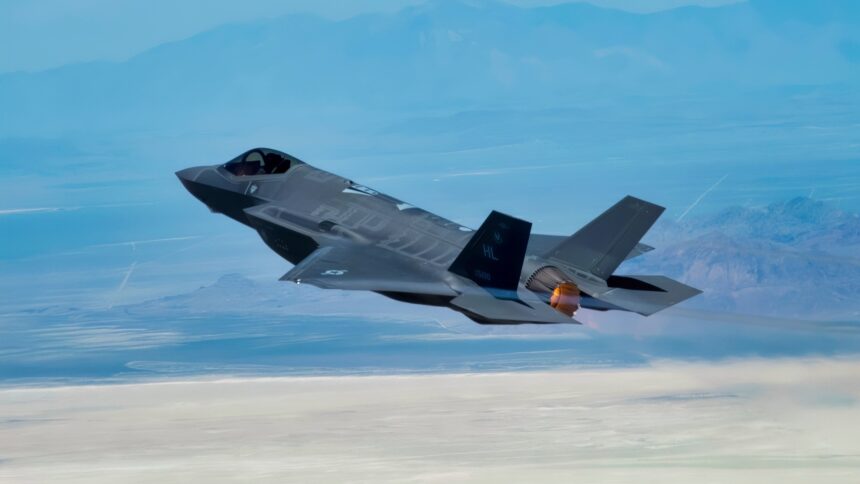
On September 17, the US Department of State said it had approved a “possible foreign military sale to the Kingdom of Saudi Arabia for their purchase of F-35 Lightning II Joint Strike Fighter and related equipment.” This deal matters for Saudi Arabia as it seeks to continue acquiring advanced military technology and keep pace with security challenges in the Middle East.
The deal is also important and expensive, estimated at around $24 billion.
For other US allies and partners in the region, such as Israel and Turkey, the deal will be monitored closely.
Saudi Arabia and the F-35
Saudi Arabia has been a major customer of the US for decades, acquiring advanced military equipment and using American-made systems.
This has had mixed results, as can be judged by the recent setbacks in Yemen, where the Iranian-backed Houthis recently made gains near the strategic Bab al-Mandeb Strait.
Saudi Arabia intervened in Yemen in 2015, leading several Arab countries to back Yemen’s government against the Houthis.
However, the intervention hasn’t gone as planned.
The Houthis still control a swath of Yemen, and the Saudi-backed forces have not been able to roll them back.
What does this mean for Saudi Arabia’s armed forces? The F-35 would provide a much-needed upgrade to the Saudi Air Force’s large number of F-15s, which have been in service for decades.
A U.S. Air Force F-35A Lightning II assigned to the 95th Fighter Squadron is parked on the flightline during exercise Noble Panther 26-4 at Tyndall Air Force Base, Florida, March 9, 2026. Airmen participated in night sorties, requiring them to perform their tasks in low-light conditions while staying watch for potential simulated attacks. These high-intensity, realistic scenarios were designed to build the confidence and muscle memory required for combat operations. (U.S. Air Force photo by Senior Airman Zeeshan Naeem)
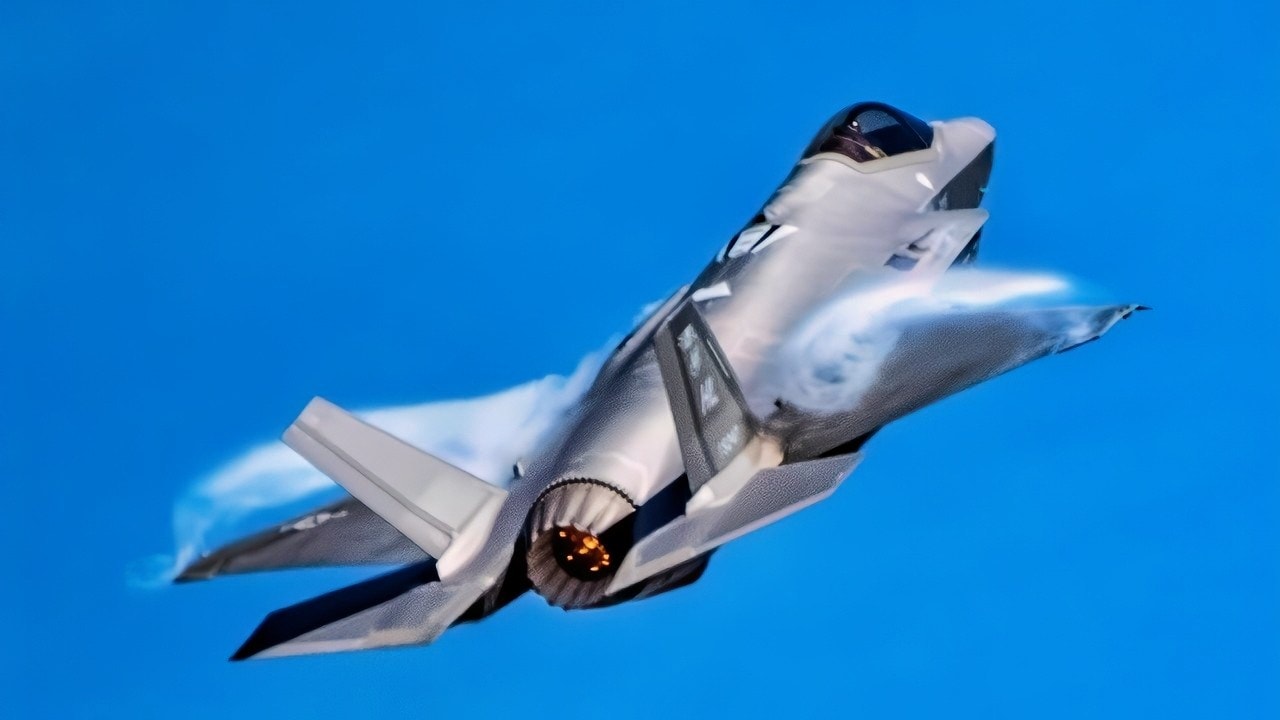
U.S. Air Force Maj. Kristin Wolfe performs a demonstration in the F-35A Lightning II during at the Reno Air Races in Reno, Nevada, September 19, 2021. The F-35 Lightning II Demonstration Team is based out of Hill Air Force Base, Utah. (U.S. Air Force photo by Tech. Sgt. Nicolas Myers)
Will the Deal Even Happen?
However, delivery of the aircraft will take years if the deal proceeds.
Other countries in the region that have wanted F-35s have faced similar hurdles.
Turkey, once part of the F-35 program, was removed from it in 2019 after acquiring Russia’s S-400 system. The UAE considered F-35s but settled on the French Rafale in a 2021 deal.
Several issues are involved in the F-35 deal.
One concern in Washington is China. “Congress was officially notified Thursday of the possible transfer of the advanced military aircraft to Saudi Arabia, and some lawmakers have already raised concerns that the technology behind it could be acquired or stolen by China, which has a military partnership with the kingdom,” NBC noted.
The Israel Factor
A second hurdle may be Israel.
Jerusalem will want more advanced American systems if the deal proceeds, The Jerusalem Post said.
The F-35 has played an important role in recent conflicts in the Middle East.
Israel was the first foreign country in the region to take delivery of the warplane. It was also the first to use it in combat in 2018.
There are 20 users of the fifth-generation warplane.
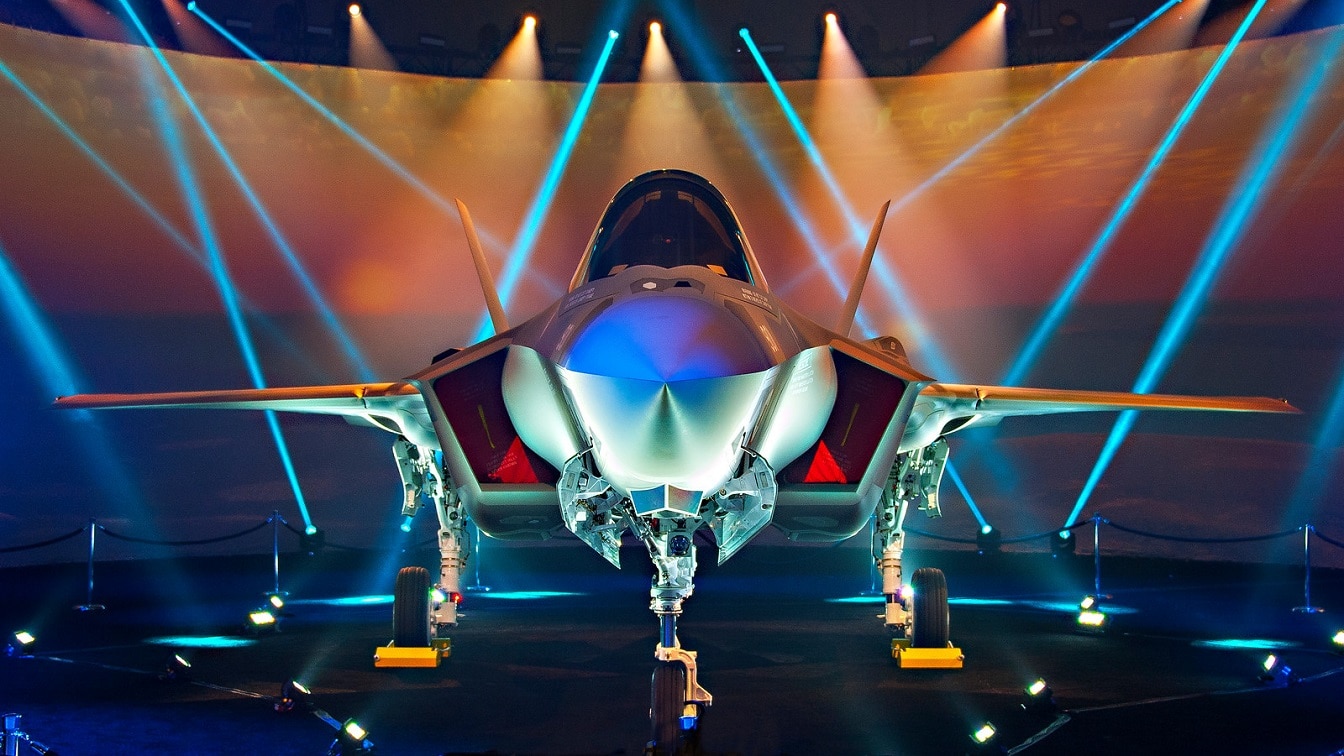
F-35I Adir. Image Credit: Creative Commons.
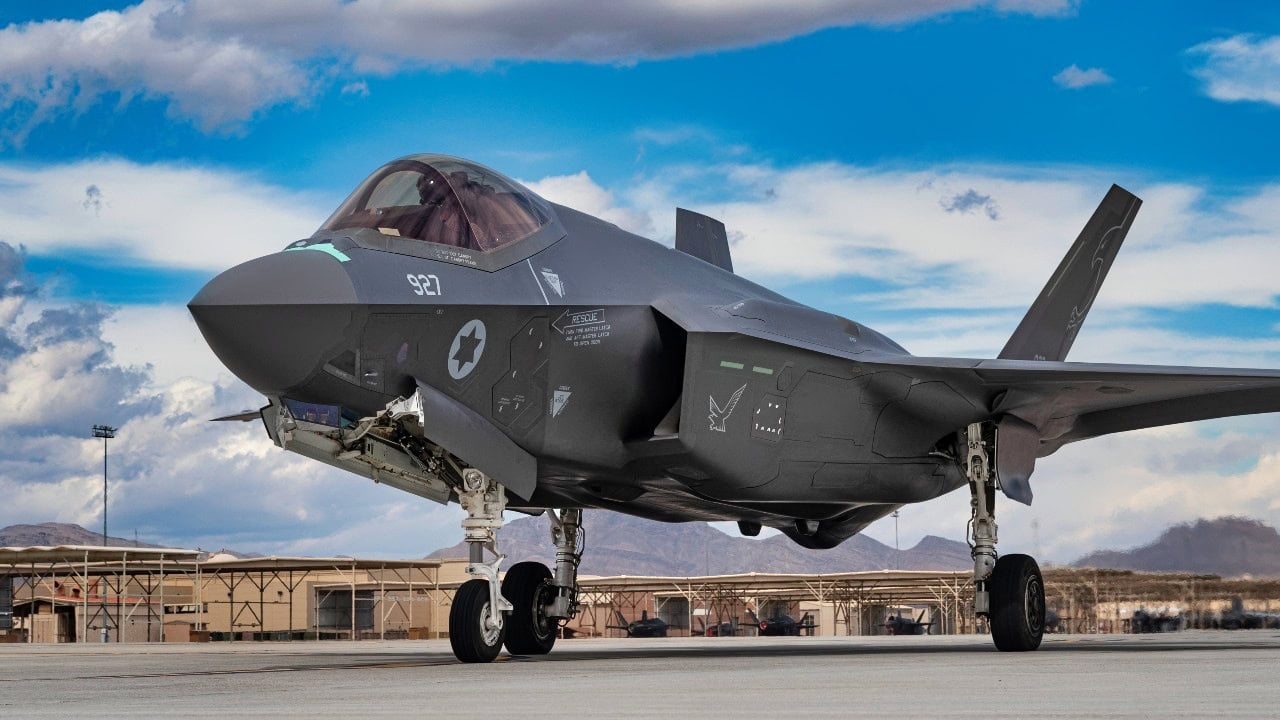
F-35I Adir Fighter from Israel
A Lockheed Martin fact sheet published on September 1 said that more than 1,355 of the planes have been delivered.
These include users such as the US, UK, Italy, Australia, Japan, Singapore, Belgium, and others.
US F-35s have been used by US Central Command in Operation Epic Fury against Iran since the conflict began in late February.
Joint exercises Israel conducted with the US, UK, and Italy using the F-35 were important for interoperability training.
The Bigger Picture
Where does this leave the Middle East regarding the Saudi deal?
The recent Iran conflict has shown how vulnerable the Gulf is to Iranian attacks.
US bases have been struck in the Gulf and also in Jordan.
Major questions now remain about how the US may position itself in the region in the wake of the war.
The modern pattern of US bases in places such as Kuwait, Bahrain, Qatar and the UAE is largely a legacy of the post-Gulf War era of the 1990s.
The US shifted forces from Saudi Arabia to the Gulf states.
It also had forces in Iraq.
However, US forces deployed as part of the Coalition against ISIS are leaving Iraq ahead of a September 30 deadline. During the war on Iran, the US shifted some planes to Jordan and Israel.
This will raise many questions about how the US Air Force may deploy to the region in the future.
Saudi Arabia operating 5th-generation F-35s would enable it to work closely with Central Command and ostensibly mean it could work alongside Israel if relations improve between Riyadh and Jerusalem.
F-35I Adir Fighter from Israel
There is a big question mark about how those ties may change.
After the Abraham Accords in 2020, when Israel made peace with the UAE and Bahrain, there were high hopes that Saudi Arabia and Israel might also normalize ties.
However, Riyadh has been clear that it wants to see shifts in Israel’s policies toward the Palestinians. This is a historic policy of Saudi Arabia.
It has taken a stance since the early 2000s to support peace with Israel as long as there is movement toward a Palestinian state and Israeli withdrawal from most of the West Bank.
The Hamas attack on October 7 and the subsequent three years of war have shown that the chances for a move toward flexibility on the Palestinian issue in Jerusalem are unlikely.
This puts Riyadh in a complex spot.
It could choose to move forward with better ties with Israel, but it will feel it needs something to show for it.
The UAE justified the move toward the Abraham Accords in part because Israel said it would not annex the West Bank.
The Trump Administration has generally been good at these kinds of deals.
The Trump doctrine during this and the previous administration has rested on support for Israel and close ties with Saudi Arabia.
President Trump visited Saudi Arabia early in both terms.
He views the Kingdom as a key historic pillar of US policy in the region.
In a changing world order where countries such as China and Russia are seeking to challenge the US-led order that emerged in the 1990s, the US-Saudi relationship matters.
This is also true amidst outreach from non-Western economic blocs such as BRICS and the China-led Shanghai Cooperation Organization.
Knitting friendly countries into the US defense tech industrial base is important.
The Department of State noted that Saudi Arabia will seek to buy 48 F-35s. “This proposed sale will support the foreign policy and national security objectives of the United States by improving the security of a major non-NATO ally that is a force for political stability and economic progress in the Gulf region,” State said.
It also noted this will improve Saudi Arabia’s ability to deter future threats and improve “interoperability with U.S. forces, and other regional and NATO forces…The proposed sale of this equipment and support will not alter the military balance in the region.” This second sentence clearly aimed at assuaging Israel’s concerns.
For now, the F-35 sale is symbolic. It will take time to complete.
It means that Saudi Arabia will know that its military will continue to be modernized and expanded.
It will need to find a way to deter the Houthis and also help other Gulf countries shore up their defenses.
In addition, Saudi Arabia has faced threats from Iranian-backed militias in Iraq.
One of those militias attacked the key East-West Pipeline on September 11 in Saudi Arabia.
With US forces leaving Iraq, Riyadh could be more exposed than before.
This is all the more reason for the Kingdom to keep building up its forces, including air defenses in the coming years.
About the Author: Seth J. Frantzman
Seth J. Frantzman is the author of The October 7 War: Israel’s Battle for Security in Gaza (2024) and an adjunct fellow at The Foundation for Defense of Democracies. He is a Senior Middle East Analyst for The Jerusalem Post. He was born in Maine and holds a PhD from The Hebrew University of Jerusalem. He is also the author of Drone Wars: Pioneers, Killing Machines, Artificial Intelligence, and the Battle for the Future. Seth is now a 19FortyFive Contributing Editor. Follow him on X @Sfrantzman.