
“We are the third largest supporter of Ukraine in the world,” Swedish Defense Minister Pål Jonson said on 17 September at last week’s Prague Defence Summit 2026. But Sweden’s support for the Eastern European nation in its war against Russia is not a one-way street, he said.
On balance “we learn a lot from the Ukrainians,” he explained. “They are very generous in sending back data in return for the hardware Sweden sends. Ukraine will [also] soon be receiving the Gripen fighter aircraft,” which will be another “source for data.”
The data collected by various sensors and platforms in the conflict on the Ukraine side has been described by more than one military official as “priceless” for its instructive value.
This data is more than just the recordings of electronic emissions and other SIGINT intercepts.
The Ukraine frontlines have also produced endless amounts of battlefield statistics and combat footage that are “invaluable for artificial intelligence (AI) development in the defense sector,” said the now-former Ukraine Defense Minister Mykhailo Fedorov when he spoke with the Reuters news service earlier this year.
Another similar assessment comes from the prestigious US Massachusetts Institute of Technology (MIT) this month. “Battlefields in Ukraine are littered with the remnants of drones, which are now firmly established as a critical weapon of modern warfare,” writes a guest columnist for one of the university’s external publications.
“But behind all that wreckage, there’s a new gold mine for the defense sector. The data drones generate will far outlast the wars in which they are used to fight, increasingly becoming part of the AI architecture that shapes even civilian life.”
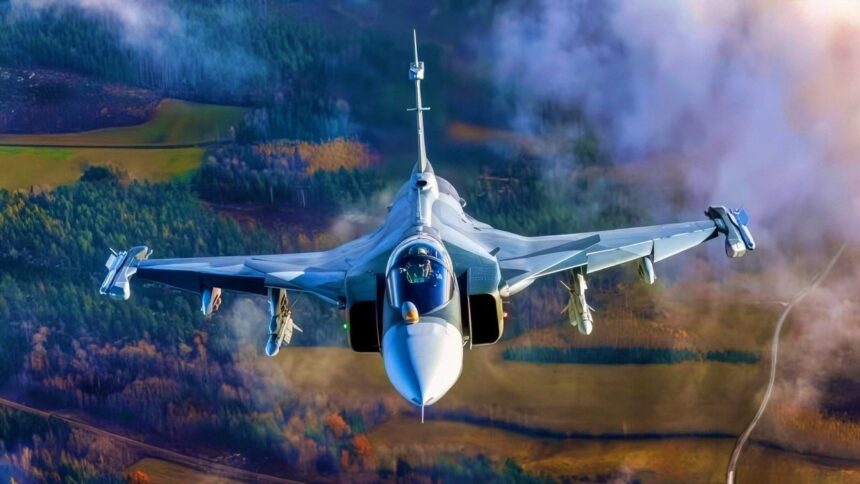
JAS 39 Gripen. Image Credit: Creative Commons.
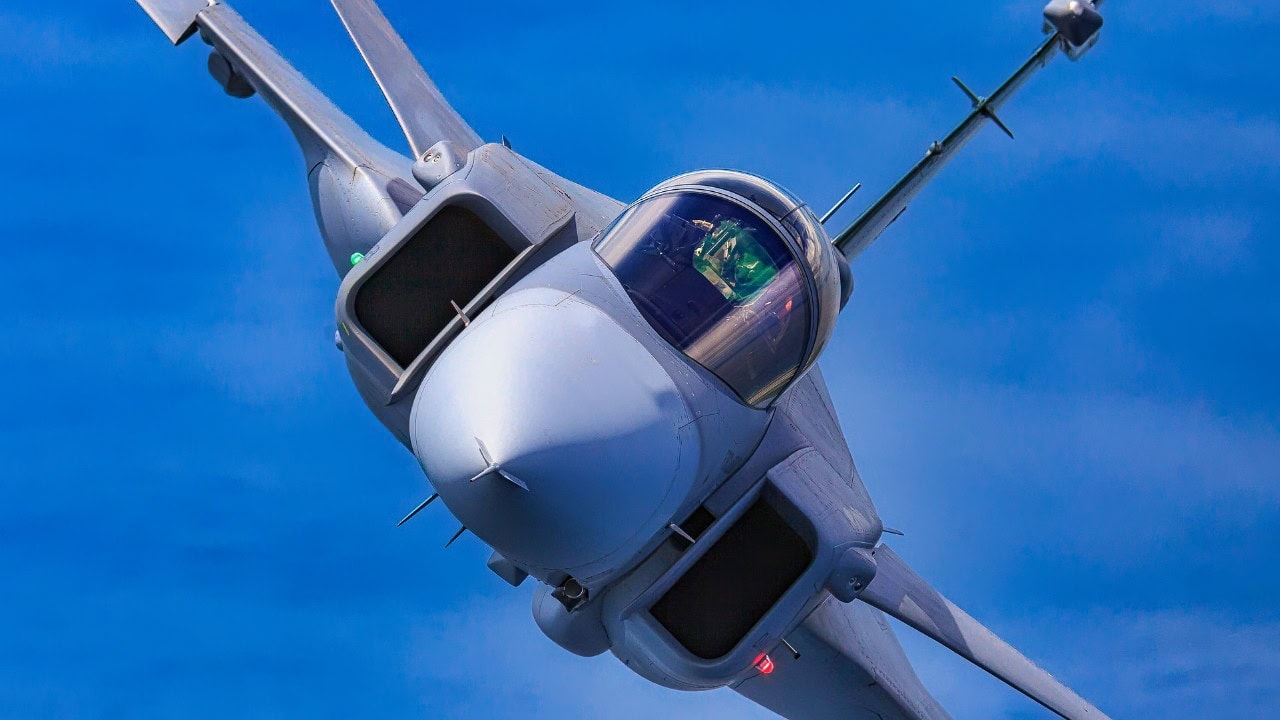
JAS 39 Gripen. Image Credit: Creative Commons.
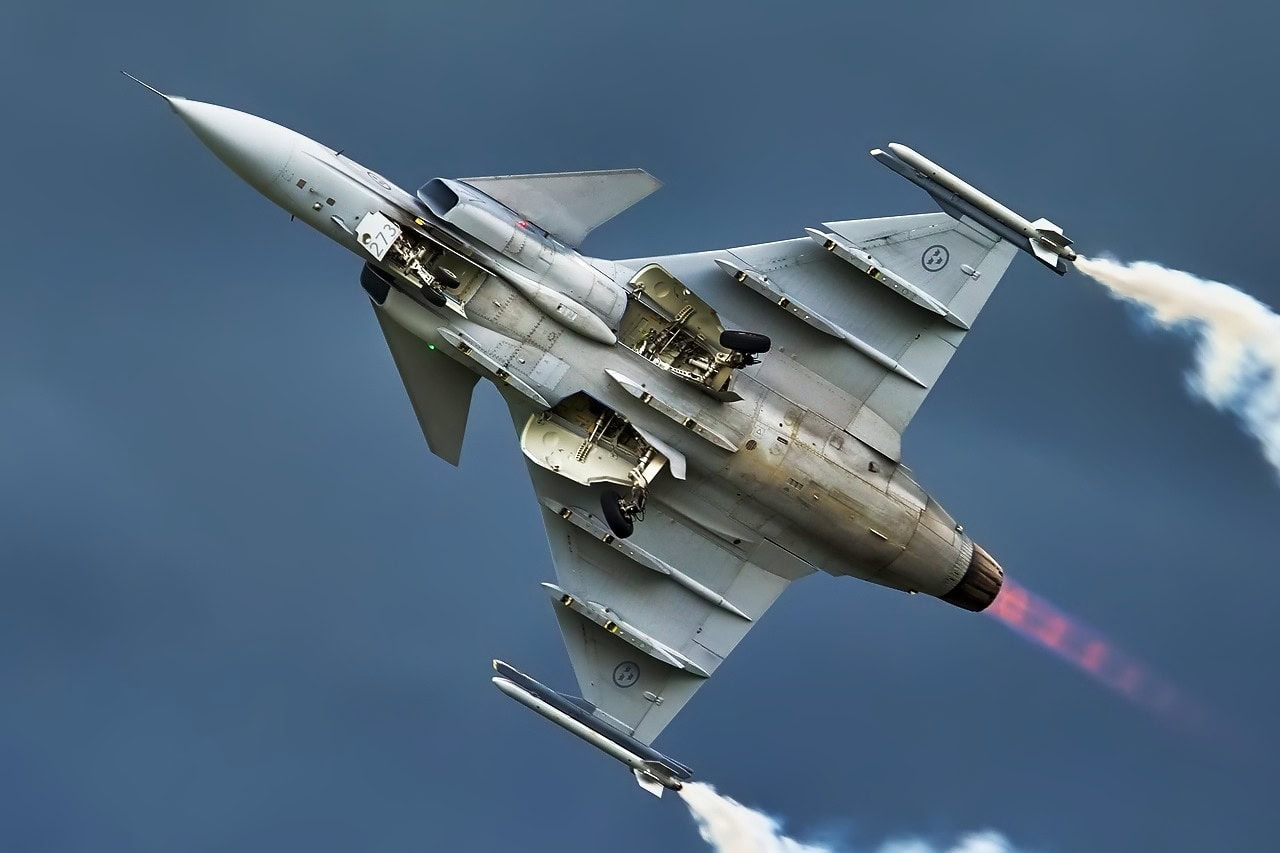
JAS 39 Gripen Fighter from Sweden.
The Only Defense Industry Where Prices Are Falling
Jonson also spoke of what he described as Sweden’s experience in its “fascinating cooperation with Ukraine’s defense industry. It is, as he made a point of emphasizing, “also the only defense industry in the world today where prices are falling.”
According to Ukraine defense industry officials who spoke to 19FortyFive, some of the key data that they are providing is — as one would expect — on air defense systems. This shows up in more than one way.
One is that Sweden received its first Patriot batteries only at the end of 2021, just slightly before Ukraine took delivery of the first units donated to its military.
Both nations are at about the same point on the learning curve of fielding the system, and they have an almost exclusive focus on the potential threat posed by Russian-made systems.
Secondly, both industries have experience integrating other nations’ air defense hardware onto their platforms.
The two nations have also concentrated on developing mobile, easily deployable short-range air defense systems (SHORAD) that are effective against the threats presented by Russia’s increasing drone forces.
The Electromagnetic Spectrum
Thirdly, Ukraine and Sweden have very well-developed capabilities and experience in analyzing and devising countermeasures against Russian electronic warfare (EW) systems. Ukraine has superb capabilities “in connectivity – particularly in EW,” said Jonson during the conference’s Q&A period.
Since June 2025, Sweden and Germany have been co-chairs of the Electromagnetic Warfare Capability Coalition within the Ukraine Defense Contact Group (UDCG). In March 2026, the Swedish government further directed the Swedish Armed Forces, Defence Materiel Administration (FMV), and Swedish Defence Research Agency (FOI) to intensify their participation and managerial support for the coalition of the willing that supports Ukraine.
“One of the advantages that Sweden has in the electronic warfare battle with the Russians is that we were never a priority target for them,” said a Swedish government EW specialist who spoke to 19FortyFive. “Russia’s EW industry was, of course, always focused on the US, the UK, France, etc. as their first-order targets.
“We were not a member of NATO during the Cold War, so the Russians did not spend the same amount of time focusing on how to defeat Sweden as they did on how to defeat the US and the rest of NATO,” he said. “So we take advantage of their lack of insight as to our capabilities and that they are now playing catch-up.”
About the Author: Reuben F. Johnson
Reuben F. Johnson has thirty-six years of experience analyzing and reporting on foreign weapons systems, defense technologies, and international arms export policy. Johnson is the Korea Fellow at the Casimir Pulaski Foundation. He is also a survivor of the Russian invasion of Ukraine in February 2022. He worked for years in the American defense industry as a foreign technology analyst and later as a consultant for the U.S. Department of Defense, the Departments of the Navy and Air Force, and the governments of the United Kingdom and Australia. In 2022-2023, he won two awards in a row for his defense reporting. He holds a bachelor’s degree from DePauw University and a master’s degree from Miami University in Ohio, specializing in Soviet and Russian studies. He lives in Warsaw.