
For hunters who gang-shoot big pheasant flushes, a 12-gauge pump or semiauto is the right call. For those working close-flushing birds over pointing dogs, a 20-gauge break-action fits the job. If you want a versatile used-market classic, the Winchester Model 12 or Browning Auto 5 Sweet 16 are standout picks. Gauge, action type, and hunting style determine the best choice from this list of 10.
- The Winchester Model 12 is the standout used-market pump pick. Its smooth action, natural pointability, and 100-year track record make it a proven pheasant gun.
- The Browning Auto 5 Sweet 16 is the rare semiauto scaled to a true 16-gauge frame, not a rebarreled 12—a meaningful distinction for balance and feel.
- Break-action guns in 20-gauge are well suited to close-flushing birds over pointing dogs but are a poor fit for hunters who regularly face large, fast-moving flushes where follow-up shots matter.
- This list mixes currently-available new guns with used-market classics. Buyers shopping new should confirm availability before committing to any specific model on the list.
We may earn revenue from the products available on this page and participate in affiliate programs. Learn more
The classic pheasant gun is a 12- or 16-gauge repeater, chosen because ringneck pheasants are tough and often found in bunches. When the air is full of cackling roosters, as it commonly was back in the day and still is in some places, you want four or five hard-hitting shells at your disposal.
While gang hunting for swarms of pheasants is still very much a thing, hunting the birds one at a time, on your own, over dogs is more in vogue today than it used to be. Break-action guns are well suited to this style of hunting, and when shots are close over pointing dogs, you can downsize in gauge (while also expanding the definition of a pheasant gun) to a 20.
To sum it up: Today’s pheasant gun is a pump, semiauto, or break-action in 12-, 16-, or 20-gauge. Which is right for you depends on your preference and how you like to hunt. But within that broad definition, some guns stand out as top pheasant guns. Here are 10 of them—a mix of classic shotguns you can find on the used market and currently made guns you can buy new.
- Winchester Model 12
- Browning Auto 5 Sweet 16
- Browning Superposed
- Remington Model 31
- Benelli Super Black Eagle
- Browning Citori 825
- Beretta 680 Series
- Ithaca Model 37
- Remington 870
- Weatherby Orion
Winchester Model 12
Winchester Model 12
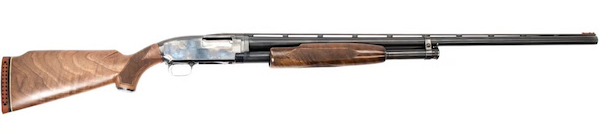
Long, trim, sleek, deadly, the Model 12 has a smooth action and points and feels like a good O/U. It succeeded Winchester’s John Browning-designed Model 97 pump. Introduced first as a 20-gauge called the Model 1912, it was made in all gauges (the .410 was a separate model, and 28s were rare) until 1964. Over 2 million were made, and many of those guns went pheasant hunting. If you had a Model 12 in your hands, you could face an eruption of pheasants from a weedy cornfield with confidence.
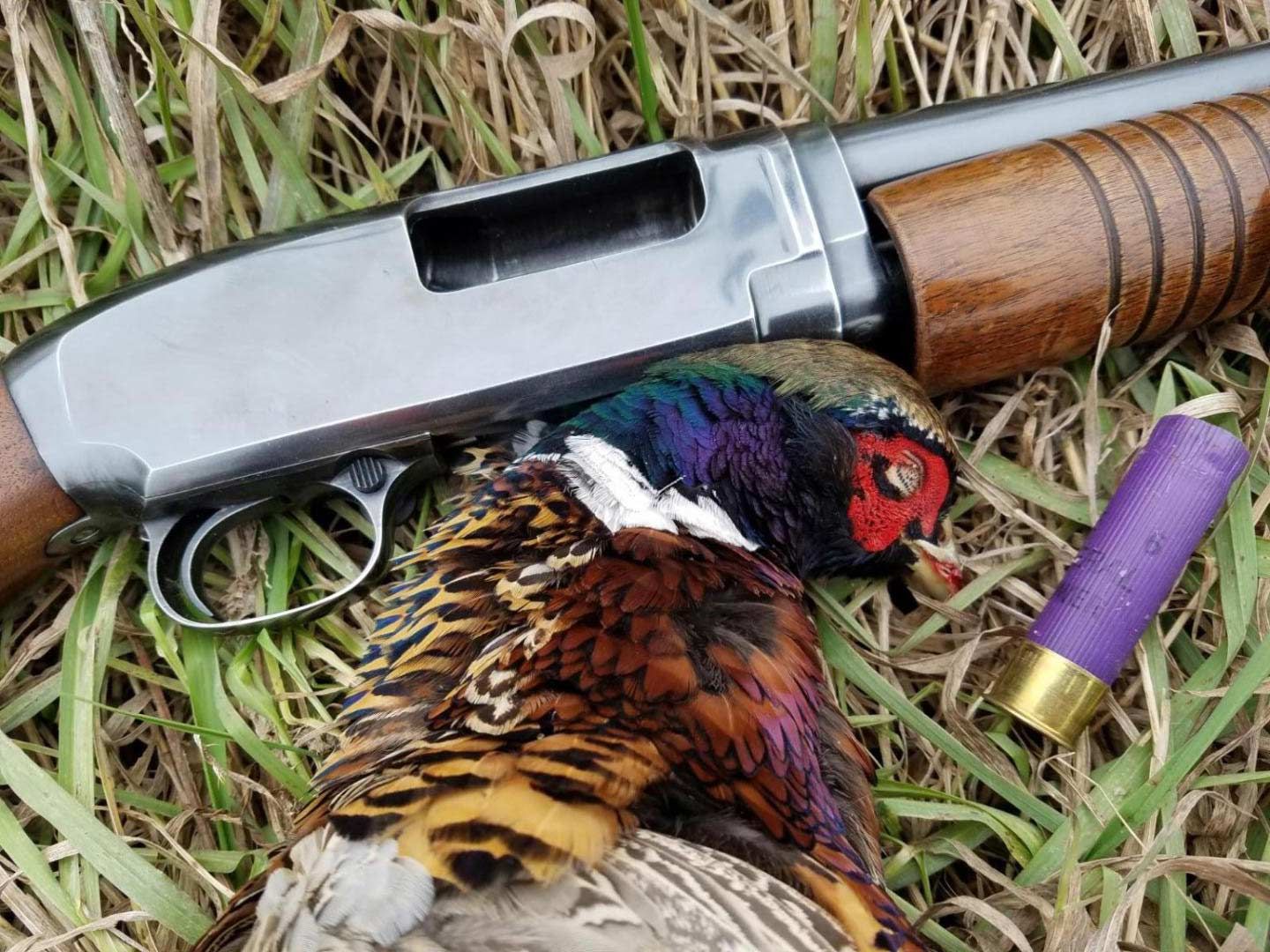
I had a 16-gauge Model 12 for a while that was a perfect pheasant gun, at least for those who can remember to work a pump action when pheasants are in the air. Model 12s are in good working condition, even in 16-gauge, and start at around $700 and go up (sometimes very steeply) depending on condition and specific models. Besides the originals, the Miroku-made Browning Model 12s in 20-gauge were beautifully made, and they would fit right into a modern pheasant hunt.
Browning Auto 5 Sweet 16

Browning A5 Sweet 16
The Auto 5 had an incredible run of nearly 100 years. The first semiauto shotgun, it relied on a long-recoil action in which the barrel and the bolt moved back together 3 inches or more under recoil. It felt funny when you shot it, but it worked, always. Nothing could compete with it for 50 years, both because John Browning was a genius and because he patented every last part of the gun he could, including the charging handle, which is fairly essential to any semiauto shotgun design.
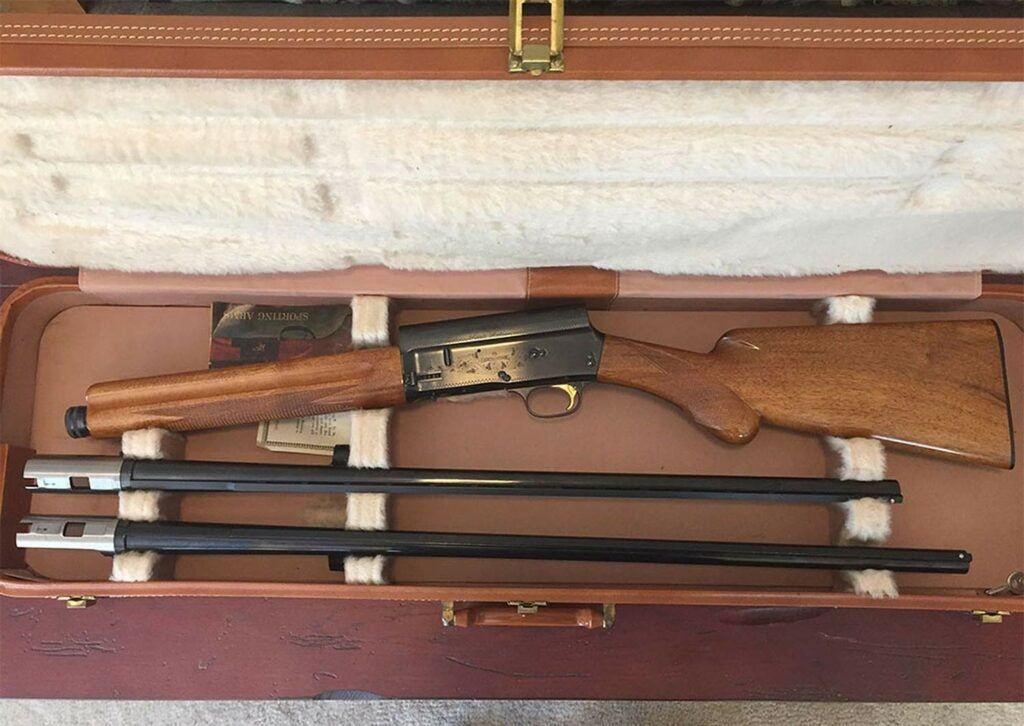
Whereas some gunmakers put 16-gauge barrels on 12-gauge guns and call it good, Browning scaled the Auto 5 frame to 16-gauge size in 1937. Engineers cut out some steel and took extra wood from the stock to make it lighter, and called the result the “Sweet 16,” and it was one of the greatest upland semiautos ever. The last of the Sweet 16s were made at Miroku in Japan, until they were discontinued in 1975.
The old Sweet 16 should not be confused with the new Sweet 16, a completely different inertia-operated gun that Browning currently produces. There are no flies on the new gun, either. It’s an easy-carrying 6 pounds—much lighter than the original—and it shares the famous humpback profile of the original Auto 5.
Related: Best Shotguns of 2026, Tested and Reviewed
Browning Superposed
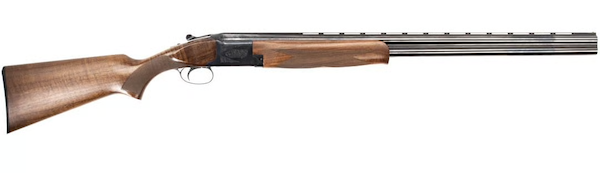
Browning Superposed
After a lifetime of inventing repeaters, John Browning turned to the break-action O/U as his final design. In fact, he died before he finished work on the Superposed, and his son, Val, completed the job. The elder Browning conceived of the Superposed as an affordable alternative to the only other O/Us on the market, which were high-end British guns. It was to be a gun that ordinary people could aspire to, and stretch their budgets to own.
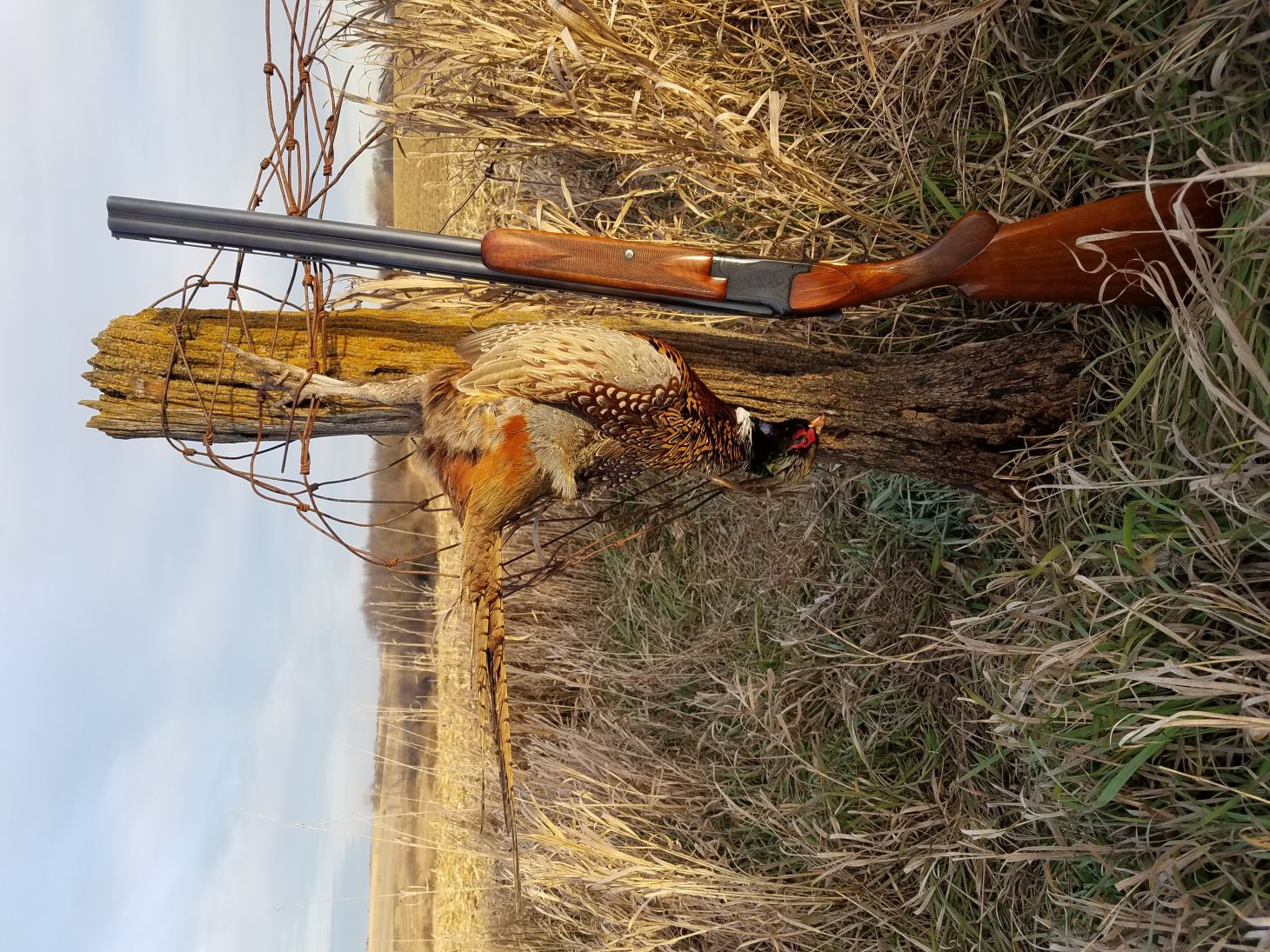
Browning’s death, the introduction of the gun during a global financial disaster, a world war that saw the gun’s Belgian factory occupied, then blown up, all could have spelled the end for the Superposed. Instead, the gun found its market in the 50s and 60s. It would be made in Belgium through the early 70s, and it’s still made there as a custom gun. Rising Belgian labor costs forced Browning to move production to Japan, in the form of the simplified Citori, which we’ll get to later.
The 12-gauge Superposed weighs too much for serious dog-following, while the 20-gauge Lightning model is just right and can be found on the used market starting at around $2,500. If you want a 12, look for the straight-gripped Superlight Superposed, and you’ll have one of the best pheasant guns ever.
Remington Model 31
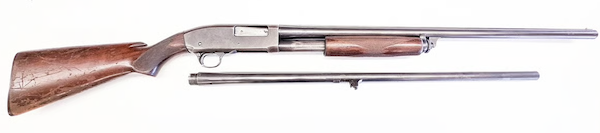
Remington Model 31
Remington offered only bottom-eject pumps before the Model 31. As a result, they had nothing that could compete with Winchester’s Model 12 in the target-shooting market, because bottom-eject guns are a pain to load for trap and skeet. The Model 31 was the answer, a butter-smooth, side-eject gun that Remington could sell against the Model 12 in the target market. It also made a great field gun, and its fervent fans say it was slicker than a Model 12. It came in 12-, 16-, and 20-gauge models, all with steel receivers and, unheard of at the time for repeaters, a lightweight aluminum frame model known as the 31L. Just under 200,000 Model 31s were made between 1931 and 1949, when it was discontinued to make way for the 870, a gun that was much less costly to build and finally allowed Remington to undercut and outsell the Model 12. Although not a ton were made, compared to Model 12s, they turn up, and an alloy-framed Model 31 makes a great gun to carry in the field. Working Model 31s start at around $500.
Benelli Super Black Eagle
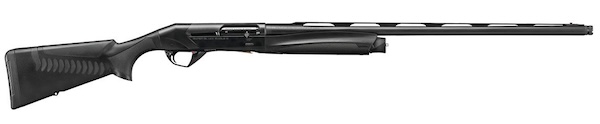
Benelli Super Black Eagle
I am told that Wall Street finance bros avoid the hassle of New York gun laws by simply buying a Super Black Eagle upon arrival to hunt in South Dakota. They shoot pheasants with it for the weekend, then leave the gun as a tip for their guides. Monday morning, guides who already own enough gifted SBEs line up at the local sporting goods stores to sell their new guns.
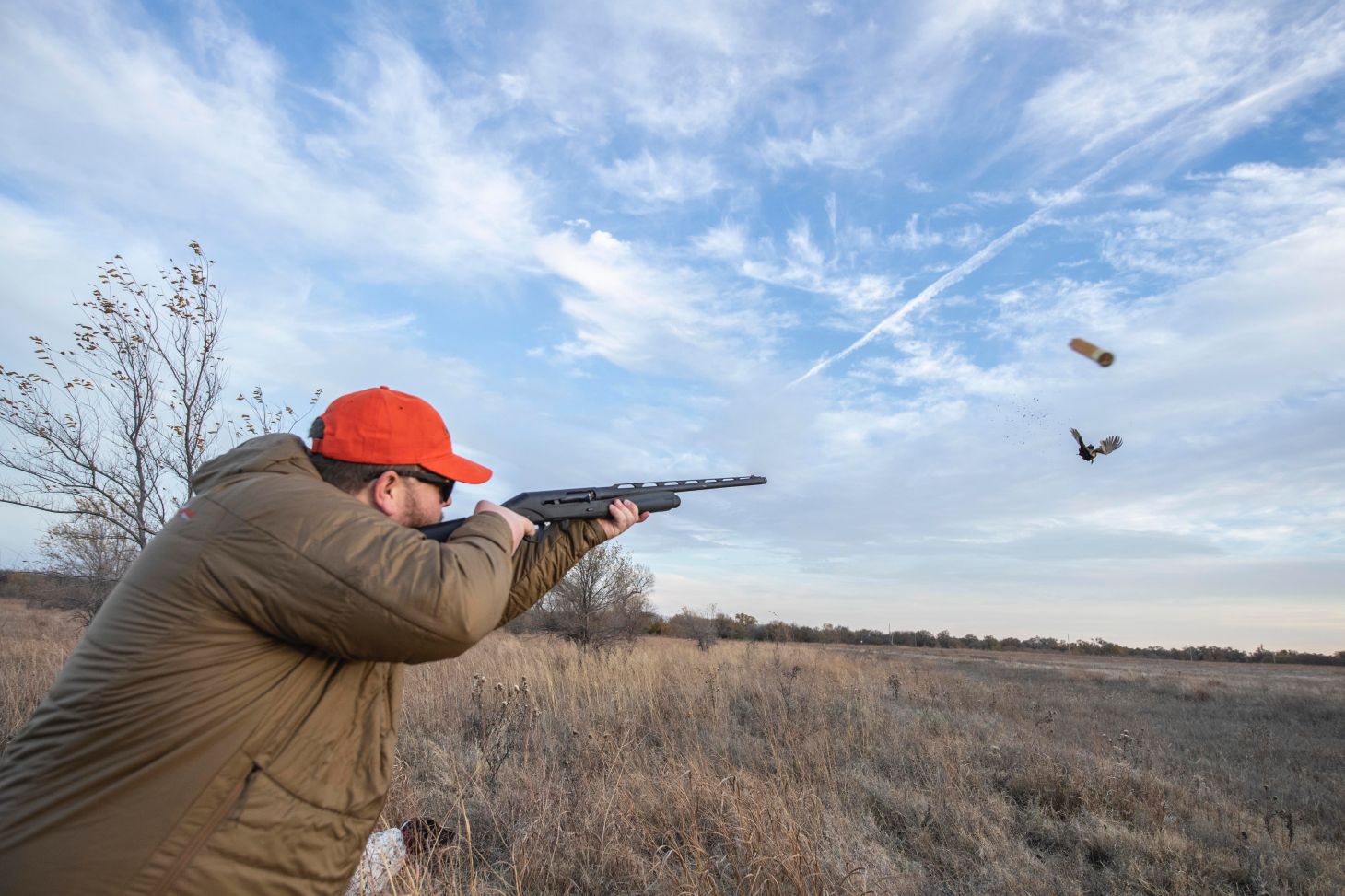
The Italian-made SBE was the first 3 ½-inch semiauto, introduced back in 1991. Its unique inertia action gave it the advantages of light weight, trim lines, low maintenance, and dependability that quickly made it a favorite among midwestern pheasant hunters, even though few saw the need to shoot 3 ½-inch shells at pheasants. You see them throughout pheasant country, and where birds are numerous enough that driving and blocking the old way is still popular, some wear magazine extensions. Now in its third iteration as the SBE3, the gun also comes in 3-inch 12-, 20-, and 28-gauges, and the new guns have features the original lacked, like a recoil-absorbing stock and a bolt that can’t be bumped out of battery.
Browning Citori 825
Browning Citori 825
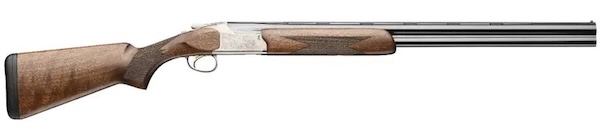
If the Browning Superposed and its successor, the Citori, had flaws, it was a tall, ungainly action and a weight near 8 pounds in 12-gauge. In 2012, Browning engineers lightened the barrels and removed metal from the bottom of the frame, saving about ¾ pound and lowering the receiver profile to make the gun a more natural pointer. The result was the 725, a great pheasant gun, with the pedigree of a Browning O/U and none of the extra weight.
The new 825 replaced the 725. It’s got a restyled receiver and a nice, traditional rounded forend in place of whatever it is the 725 had. The mechanical trigger is even better than the 725 trigger, and that says something. I hunted with one through the end of last year’s season and loved it. This year, Browning extended the lineup to include smallbores and alloy-frame lightweight models, and the 20-gauge I have right now is every bit the rooster gun I thought it would be.
Beretta 680 Series

Beretta 686 Silver Pigeon I
Beretta immediately responded to the Superposed with its own Sovraposti in the 1930s, but it was a high-grade gun. It wasn’t until the post-war era that the Italian maker developed an ingenious, very low-profile O/U action with two pointed lugs that engaged recesses between the barrels, designed so the gun would wear in, not out. It was trim and light, and Beretta first sold the gun under other names and series until it introduced the first 680s in the 1980s. The guns were, and still are, a favorite among pheasant hunters for the way they point instinctively and never give their owners a bit of trouble.
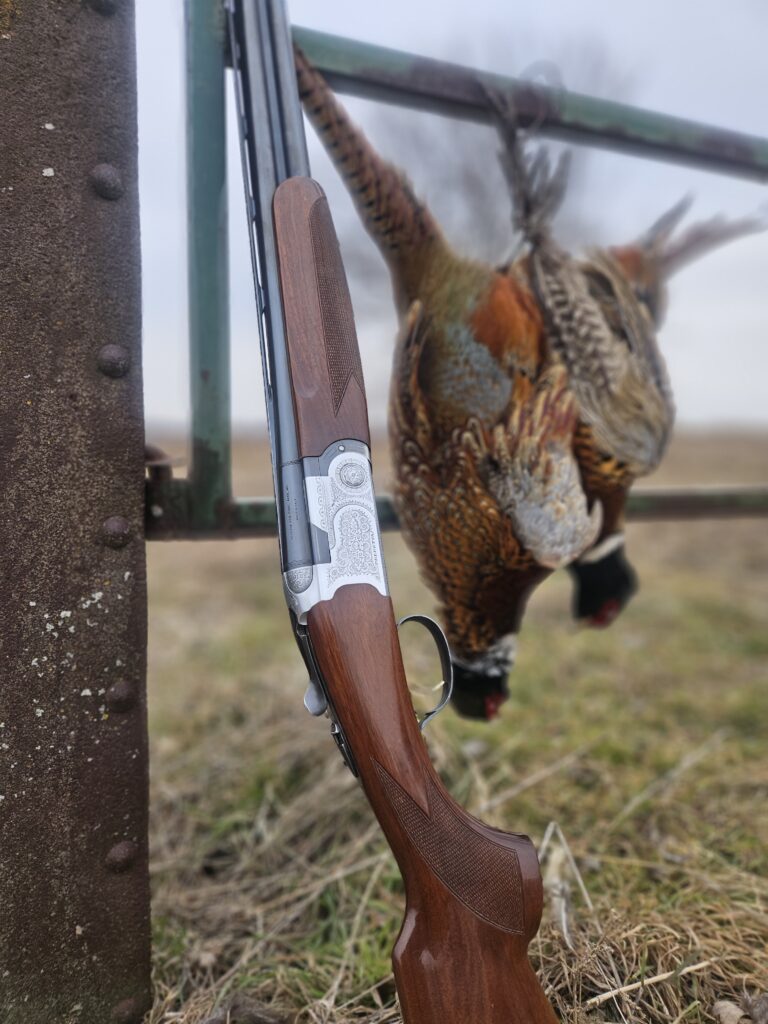
Beretta sells new 680s and 690s now, but if you’re me, you look for used 680s from 20 to 30 years ago that are beautifully made and still have a few hundred thousand rounds of shooting left in them. I picked up a 12-gauge 686 Special made in the early 90s before last season. At an ounce under 7 pounds, it’s easy to carry, looks great, and quickly became my new favorite pheasant gun.
Ithaca Model 37

Ithaca Model 37
It took a long time to get the Ithaca 37 off the drawing board and into the field, as Ithaca had to wait for John Browning’s patents on the old Remington 17 to expire before creating their own take on the bottom-ejecting pump. Once the gun was finally introduced, it went into production and stayed there, with occasional lapses for bankruptcies and changes of ownership, and it is the last of the classic, pre-war pumps. It is a trim gun, and many left-handers prefer bottom-ejecting to keep shells out of their line of sight.
Over 2 million have been made, in 12-, 16-, and 20-gauge, with steel and alloy frames, some with straight stocks, and many with plain, ribless barrels that save a few more ounces. The gun existed until recently as a fairly expensive, small-batch pump made in Sandusky, Ohio. While those guns may be hard to come by, there are tons of older, used 37s on the used market for not much money.
Related: 10 Best Shotguns for Grouse Hunting
Remington 870
Remington 870
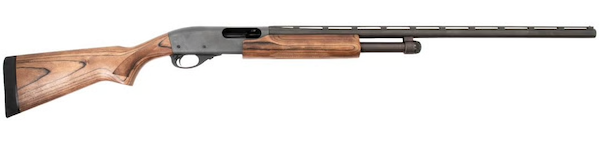
Once ubiquitous and still seen everywhere, the 870 has been in production since 1950. Many millions have been made, and they have claimed who knows how many ringnecks. Designed to replace the expensive-to-build Model 31 and undercut the popular Winchester Model 12 on price, the 870 became a mass-produced classic. The 12-gauge was actually built on a 16-gauge 11-48 receiver, so it was already light and slim from the beginning. It was also incredibly reliable and easy to take apart and maintain, which made it popular with police and the military, as well as hunters.
Remington added all the gauges over time, plus straight-grip models and a less-expensive Express model. The classic, glossy Wingmaster is the cool 870 to have, especially the 70s and 80s guns with the pressed fleur-de-lis checkering. After bankruptcy a few years ago, Remington’s gun division now exists as RemArms. Production has been at a standstill, though, and you should just grab a used 12- or 20-gauge Wingmaster and take it hunting.
Weatherby Orion

Weatherby Orion
Weatherby’s Orion O/U has been made by SKB in Japan, by Fausti in Italy, and, most recently, by ATA in Turkey. The classic is the old SKB version, made from 1981 to the 00s. They had a cross-bolt locking system similar to what you see on many German guns. They were very well-made, moderately priced guns, many stocked with beautiful Claro walnut and the Weatherby diamond grip-cap. They came in 12- and 20-gauge, and some of the later guns had a rounded Prince of Wales grip in place of the full pistol grip. I had one and shot a bunch of pheasants with it. I can’t remember why I decided to part with it, but it wasn’t the smartest decision I ever made. It was a very good gun, as all SKBs were, and maybe I thought I could always get another, but the factory now makes auto parts, not guns. For a while, Weatherby imported Orion d’Italias from Brescia, Italy, that are good guns but hard to get excited about. They rank third among the various Orions in my book.
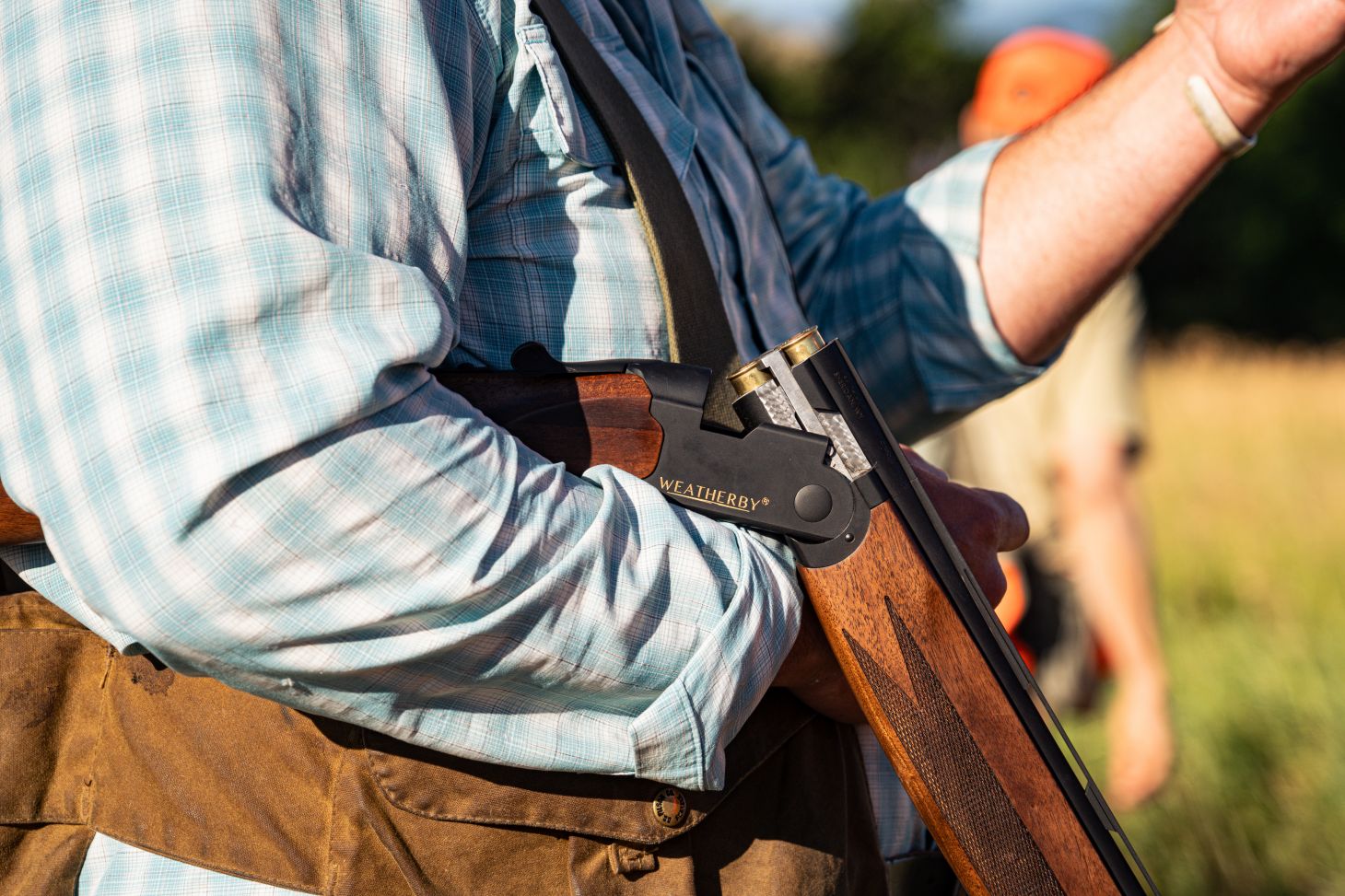
The latest version of the Orion comes from ATA in Turkey, and I was very pleasantly surprised by the one I shot on a recent visit to the Weatherby factory. These guns have an action very similar to the Beretta 680 series mentioned earlier, and while they have a pregnant-looking, bulky forend, they also have a very appealing price tag, starting at $1199. The guns are unadorned, but well fit and finished, and you can choose between matte and glossy versions for the same money. It’s a bargain; it shoots well, and it proves guns don’t have to cost a ton of money to drop roosters.
Best Pheasant Shotguns: Honorable Mentions
Benelli 828 U
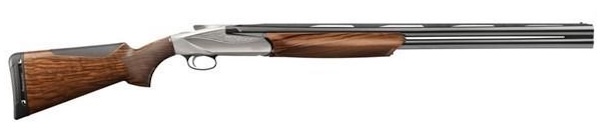
Benelli 828 U
This is a lightweight, alloy-framed O/U with several unique features, including a stock that reduces recoil and heads up against the receiver so it can be shimmed. It comes in 12- and 20-gauge. They start at $3,429.
Browning BPS
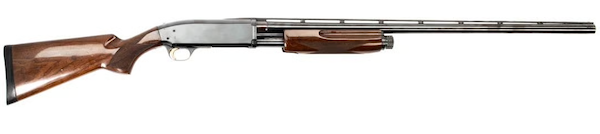
Browning BPS
The BPS had a good run; from 1977 to 2023, the all-steel, bottom-eject pump made a classy addition to the slide-action category. Many shooters, but especially left-handers, loved the top safety. It came in all gauges, with the 20 making an especially nice pheasant gun.
Why Trust Us
For more than 125 years, Field & Stream has been providing readers with honest and authentic coverage of outdoor gear. Our writers and editors eat, sleep, and breathe the outdoors, and that passion comes through in our product reviews. You can count on F&S to keep you up to date on the best new gear. And when we write about a product—whether it’s a bass lure or a backpack—we cover the good and the bad, so you know exactly what to expect before you decide to make a purchase.
The post The 10 Best Shotguns for Pheasant Hunting appeared first on Field & Stream.
Read the full article here