
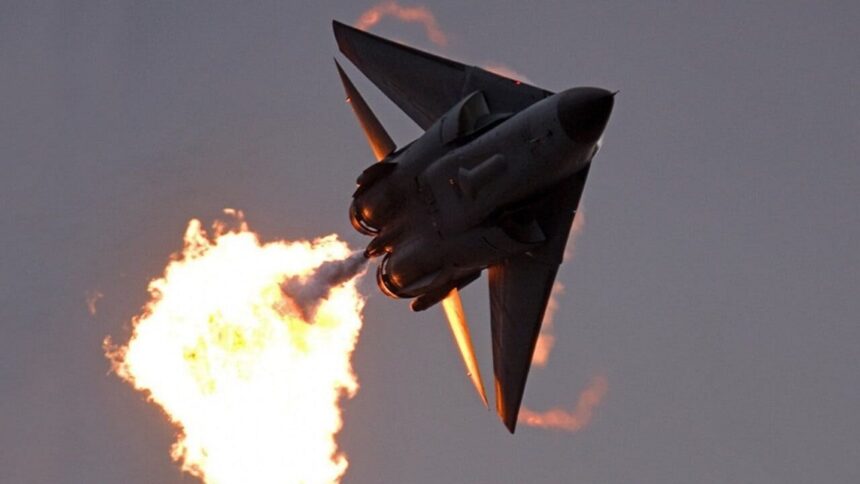
Summary and Key Points: In 1961, Defense Secretary Robert McNamara decided the Air Force and the Navy should buy two versions of the same aircraft. The logic was straightforward: shared development and shared components would save money. The problem was that the two services wanted opposite machines. The Air Force needed a successor to the F-105 Thunderchief — a long-range, high-speed strike aircraft that could penetrate at low altitude. The Navy needed something that could operate off a carrier deck and shoot down Soviet bombers hundreds of miles from the fleet before they could launch anti-ship missiles. General Dynamics won the contract, Grumman took on the naval variant, and the results were the F-111A and the F-111B.
Why the F-111B Failed
Earlier this month, reports claimed that the Pentagon has internally selected a winner in the competition to build F/A-XX — the Navy’s planned next-generation carrier-based stealth fighter. According to Reuters, two people briefed on the matter said that the decision has now been made and could be publicly announced within weeks.
The Pentagon has not yet confirmed which company has won, and a spokesperson also told the outlet that the department was continuing the work required to award the F/A-XX contract in the “near future.” The spokesperson declined to provide any additional information.
The news comes after the decision has repeatedly slipped and following years of complications with the program, including major indecision about funding. Chief of Naval Operations Adm. Daryl Caudle said in April that the Pentagon and Navy expected to choose between Boeing and Northrop Grumman in August. But August passed without an announcement.
F/A-XX NG Photo. Image Credit: Northrop Grumman.
F/A-XX is an important platform, too.
The aircraft that emerges from the program is expected to begin replacing the Navy’s F/A-18E/F Super Hornets aboard aircraft carriers in the 2030s. The new aircraft will also have greater range and endurance, advanced stealth, and the ability to operate alongside uncrewed combat aircraft. And the contract could be worth tens of billions of dollars.
It won’t be the first time that the Navy has attempted to develop a radically new carrier fighter for a new kind of war, though. Six decades ago, the service was supposed to receive the General Dynamics-Grumman F-111B, a huge variable-sweep-wing interceptor designed to defend aircraft carriers against Soviet bombers. And then the Navy ultimately rejected it.
Only seven F-111Bs were ever completed. 28 more aircraft on order were eventually canceled, and the fighter never actually entered operational service.
Why the Navy Built the F-111B
The F-111B was the product of a serious problem the Navy faced in the late 1950s and early 1960s: Soviet bombers gaining the ability to attack American carrier groups with long-range anti-ship missiles.
The Navy needed to destroy those aircraft before they got close enough to launch missiles, which meant detecting and engaging several targets at distances well beyond those expected in conventional fighter combat.
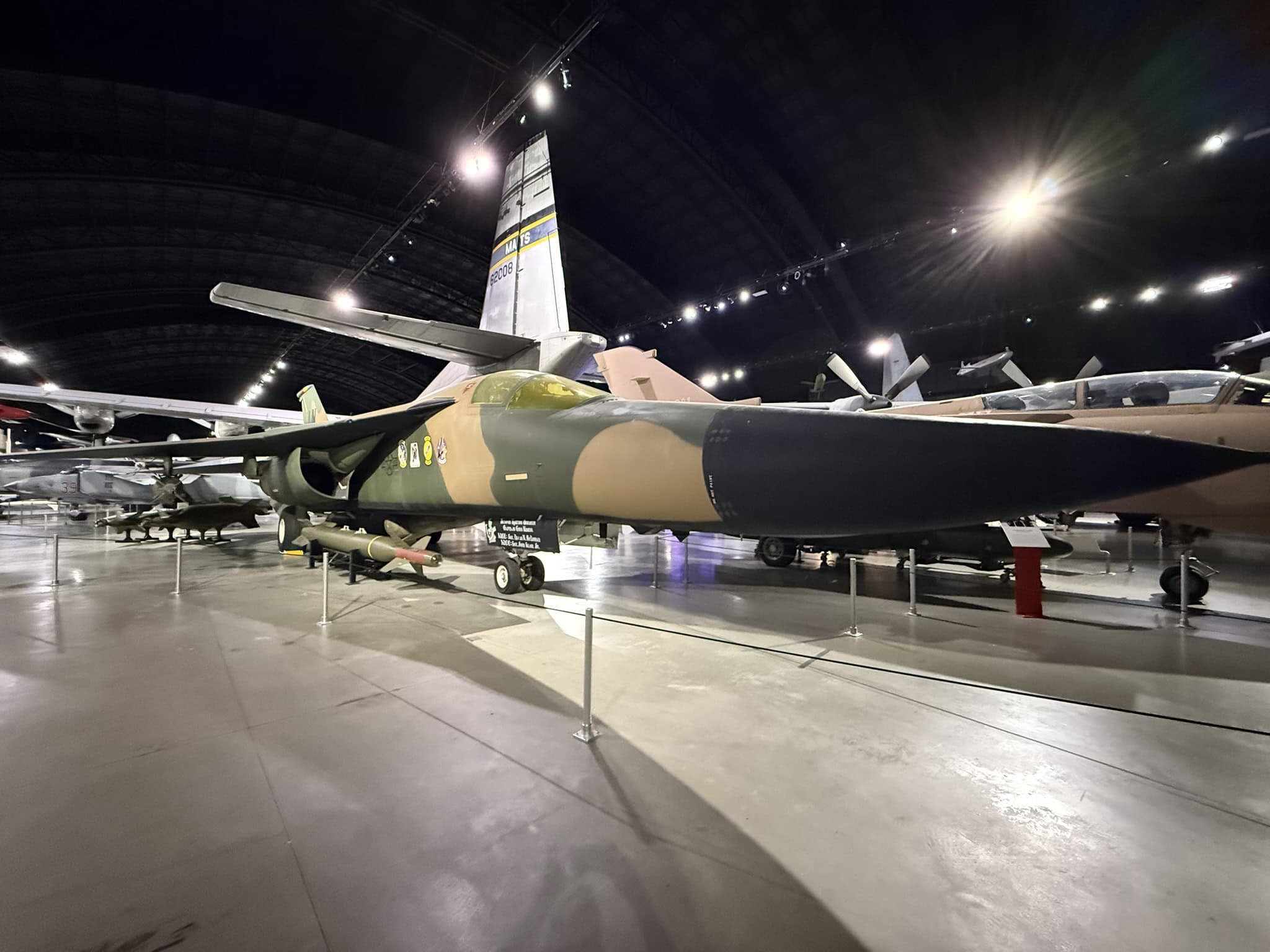
F-111 at the National Museum of the U.S. Air Force. 19FortyFive Photo by Harry J. Kazianis.
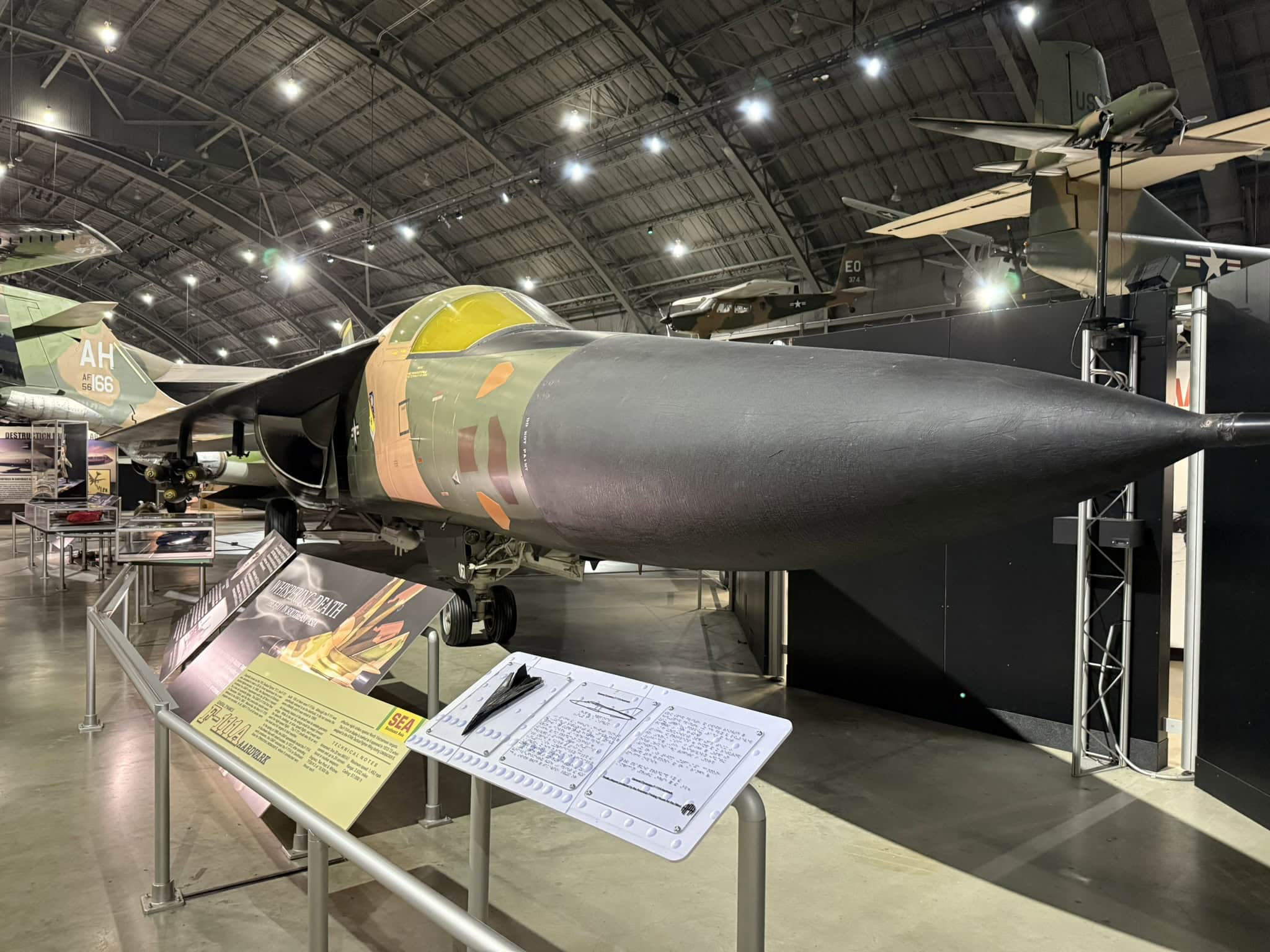
F-111 at the National Museum of the U.S. Air Force. 19FortyFive Photo by Harry J. Kazianis.
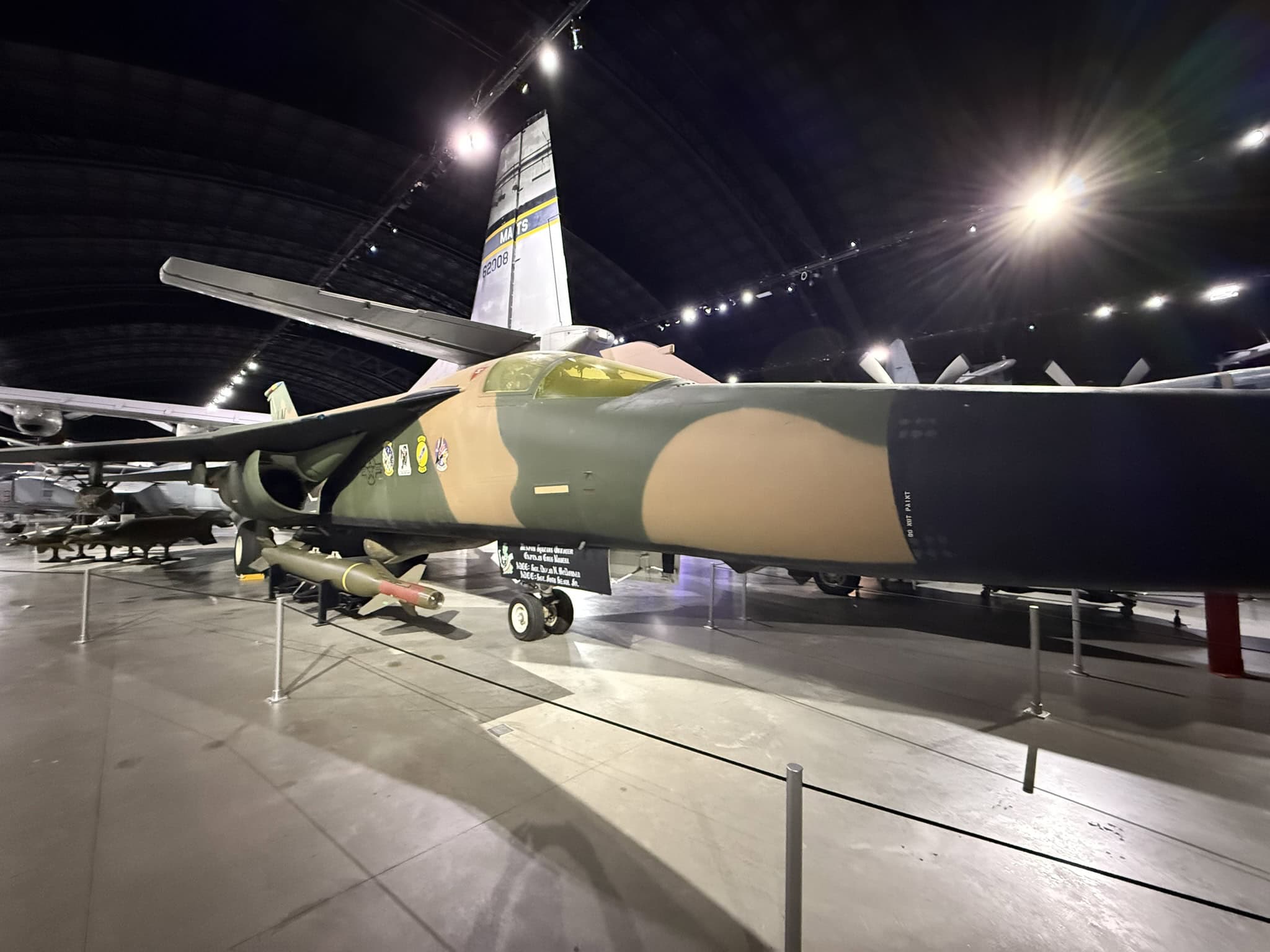
F-111 On Display at the National Museum of the U.S. Air Force. Take on July 19, 2025 by Harry J. Kazianis for 19FortyFive.com
At first, the Navy pursued the capability through the Douglas F6D Missileer – a large, subsonic aircraft that was designed almost exclusively to serve a fleet defense role. The Missileer was canceled in early 1961, but important elements of its planned weapons system survived. They evolved into the Hughes AN/AWG-9 radar and AIM-54 Phoenix missile, which were subsequently intended for a new supersonic aircraft.
And that aircraft came from the Tactical Fighter Experimental, or TFX, program.
In 1961, the Pentagon, under Defense Secretary Robert McNamara, decided that the Air Force and Navy should be given different versions of a common aircraft. The idea was that sharing development and components would save money, but the aircraft ultimately had two very different sets of requirements.
The Air Force wanted a successor to the F-105 Thunderchief capable of high-speed, long-range strike missions, including low-altitude penetration of enemy territory – but the Navy wanted an aircraft that could operate from carriers and defend the fleet at long range.
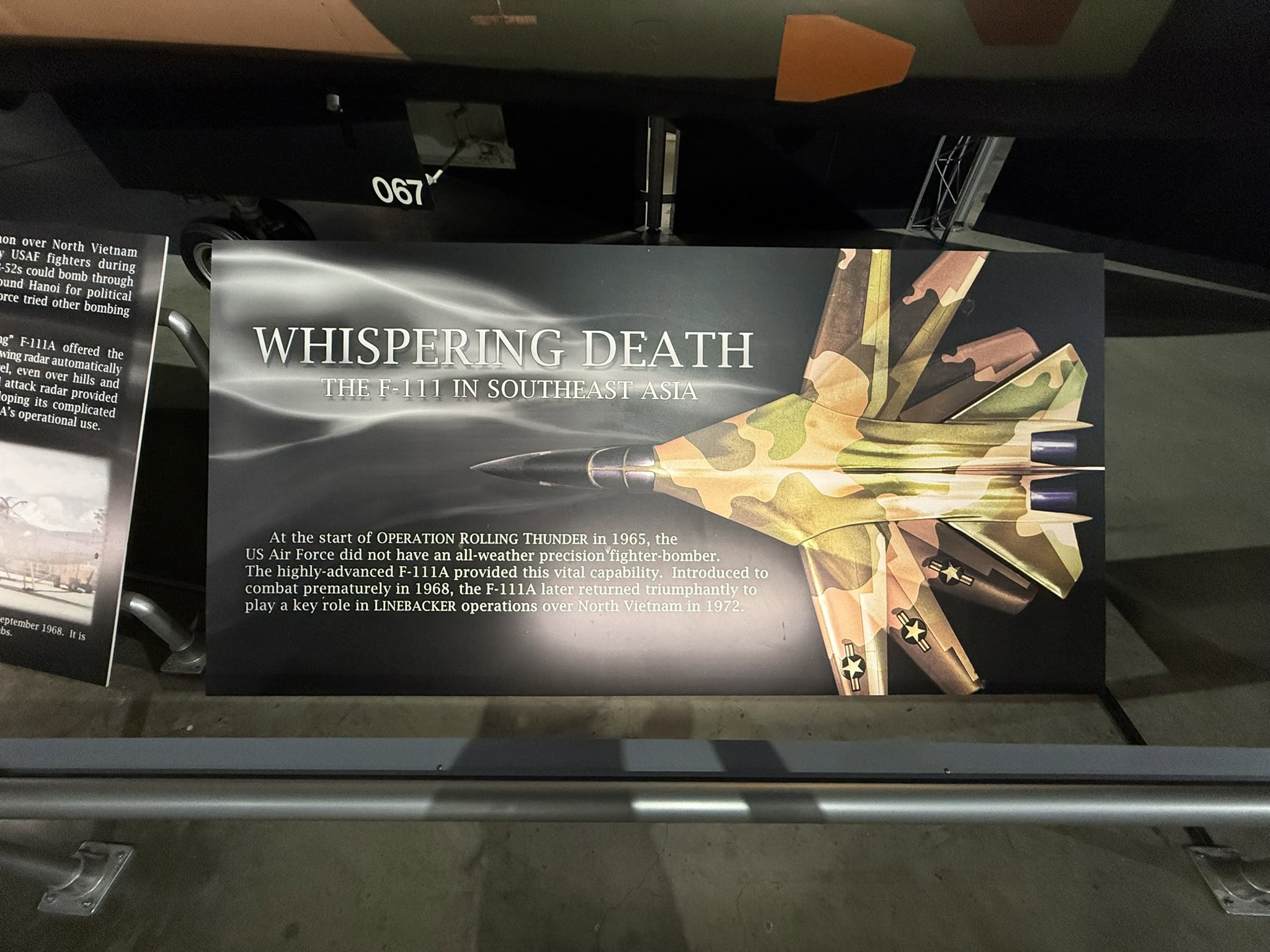
F-111 On Display at the National Museum of the U.S. Air Force. Take on July 19, 2025 by Harry J. Kazianis for 19FortyFive.com
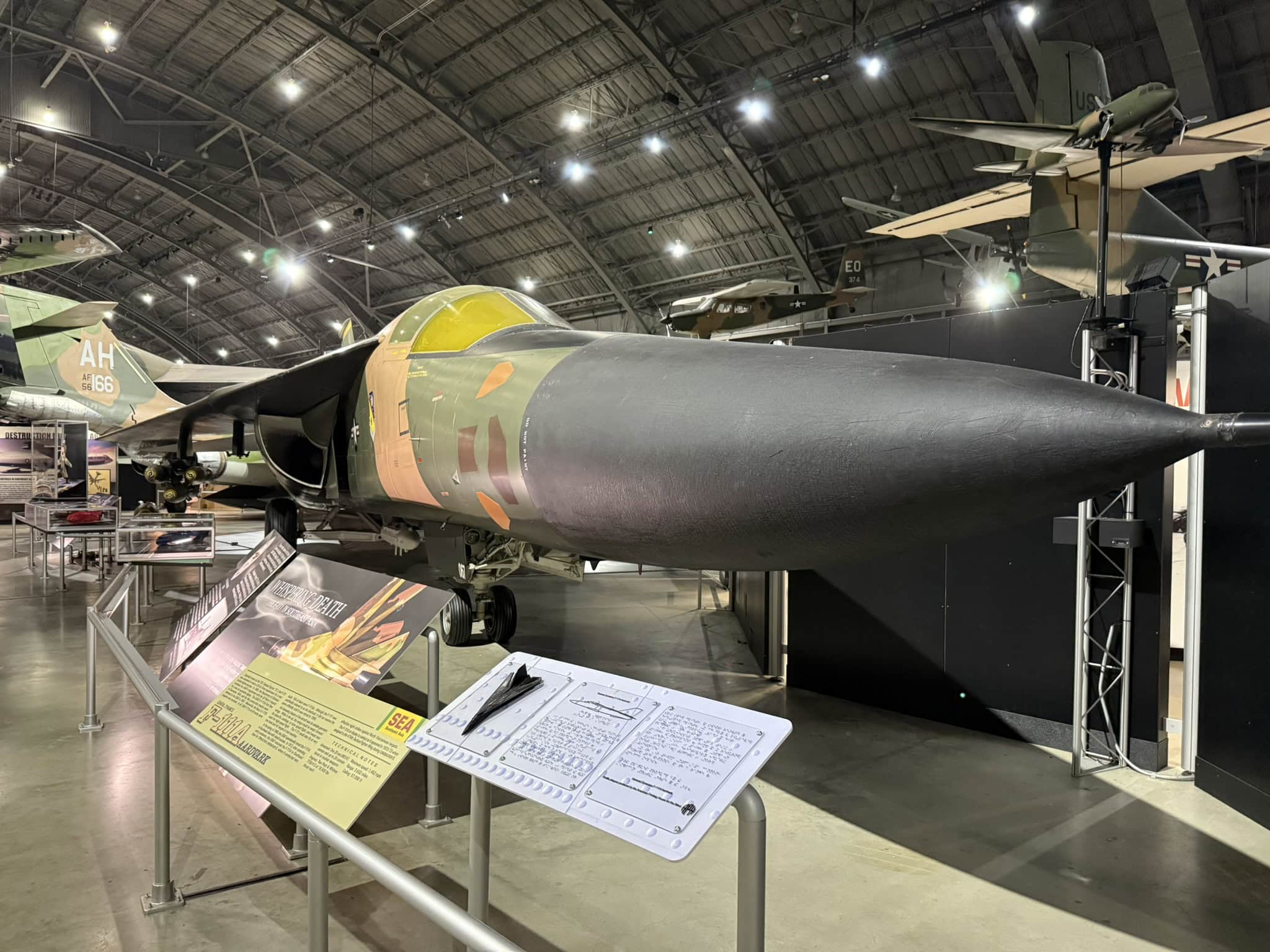
F-111 On Display at the National Museum of the U.S. Air Force. Take on July 19, 2025 by Harry J. Kazianis for 19FortyFive.com
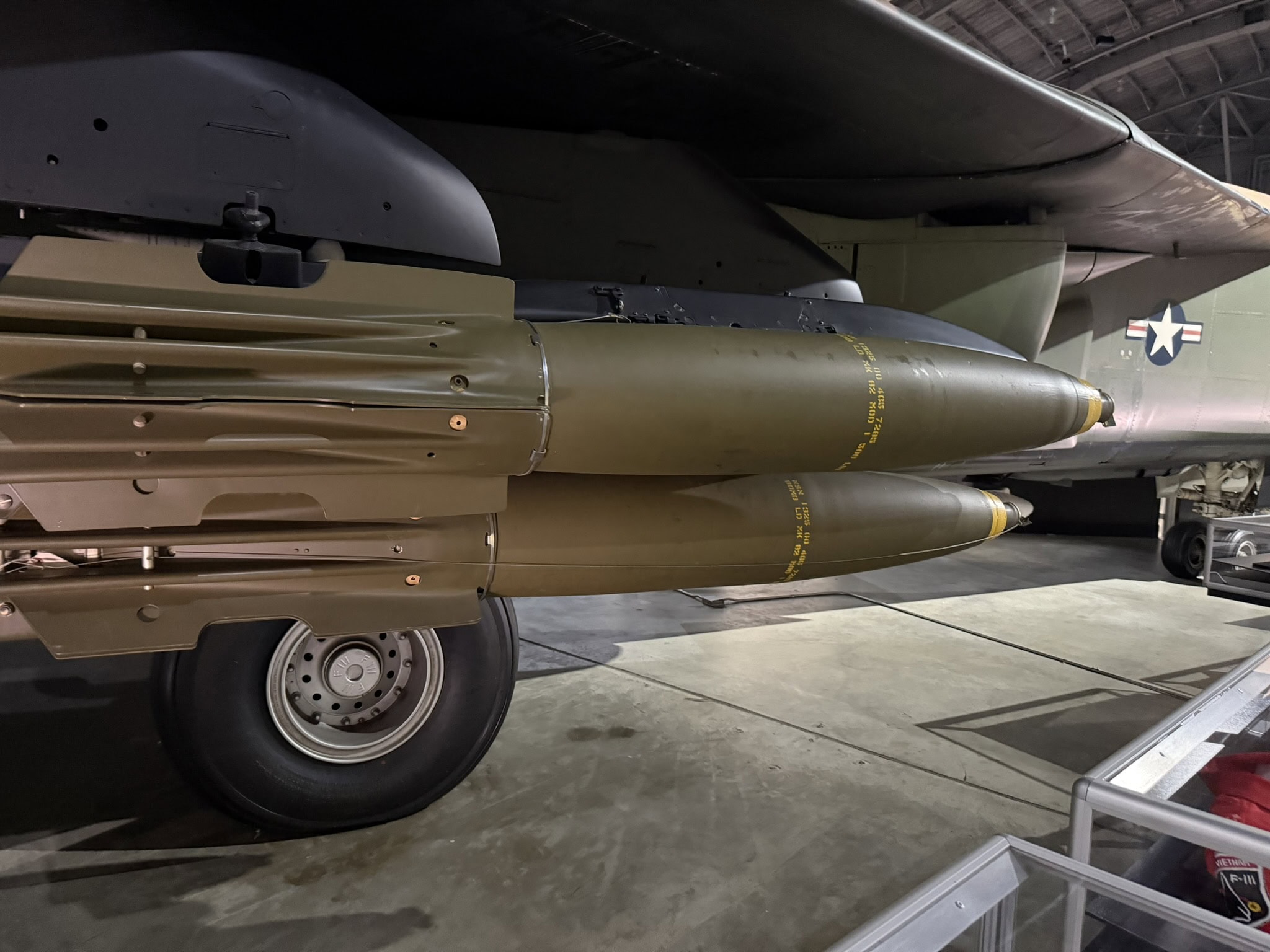
F-111 On Display at the National Museum of the U.S. Air Force. Take on July 19, 2025 by Harry J. Kazianis for 19FortyFive.com
General Dynamics was chosen as the main contractor, while Grumman was responsible for substantial work on the naval variant of the aircraft. The Air Force version became the F-111A, and the Navy received the F-111B.
The naval version of the aircraft saw substantial modifications, with variable-sweep wings extended to a span of 70 feet fully forward – seven feet wider than the F-111A. That wing design helped lower its approach speed for carrier landings. It was also designed to carry the AWG-9 radar and Phoenix missiles required to attack Soviet bombers from a long range.
The first F-111B eventually flew in May 1965.
How the F-111B Failed
By the time the F-111B was flying, the compromises made to build a common aircraft for both services were becoming quite obvious.
Weight was one of the biggest problems. Ultimately, the F-111B exceeded 80,000 pounds in some configurations, and the Navy determined that it was not perfectly suited for carrier operations and could not provide the fighter performance that it still needed.
But the problems also went beyond weight. In 1967, the program was 2.5 years behind schedule, and historic Pentagon testimony revealed that pilots had identified more than 250 deficiencies, including 100 deemed mandatory to correct.
The estimated cost of a fully equipped aircraft had also risen dramatically to around $10 million — more than three times the original estimate.
The Navy eventually decided that the F-111B just wasn’t worth saving.
Congress stopped funding further procurement, and the Navy withdrew from the program in May 1968. In July, a stop-work order came, and the 28 aircraft on order were canceled. Only seven F-111Bs were ever made. The F-14 Tomcat would fill the role instead.
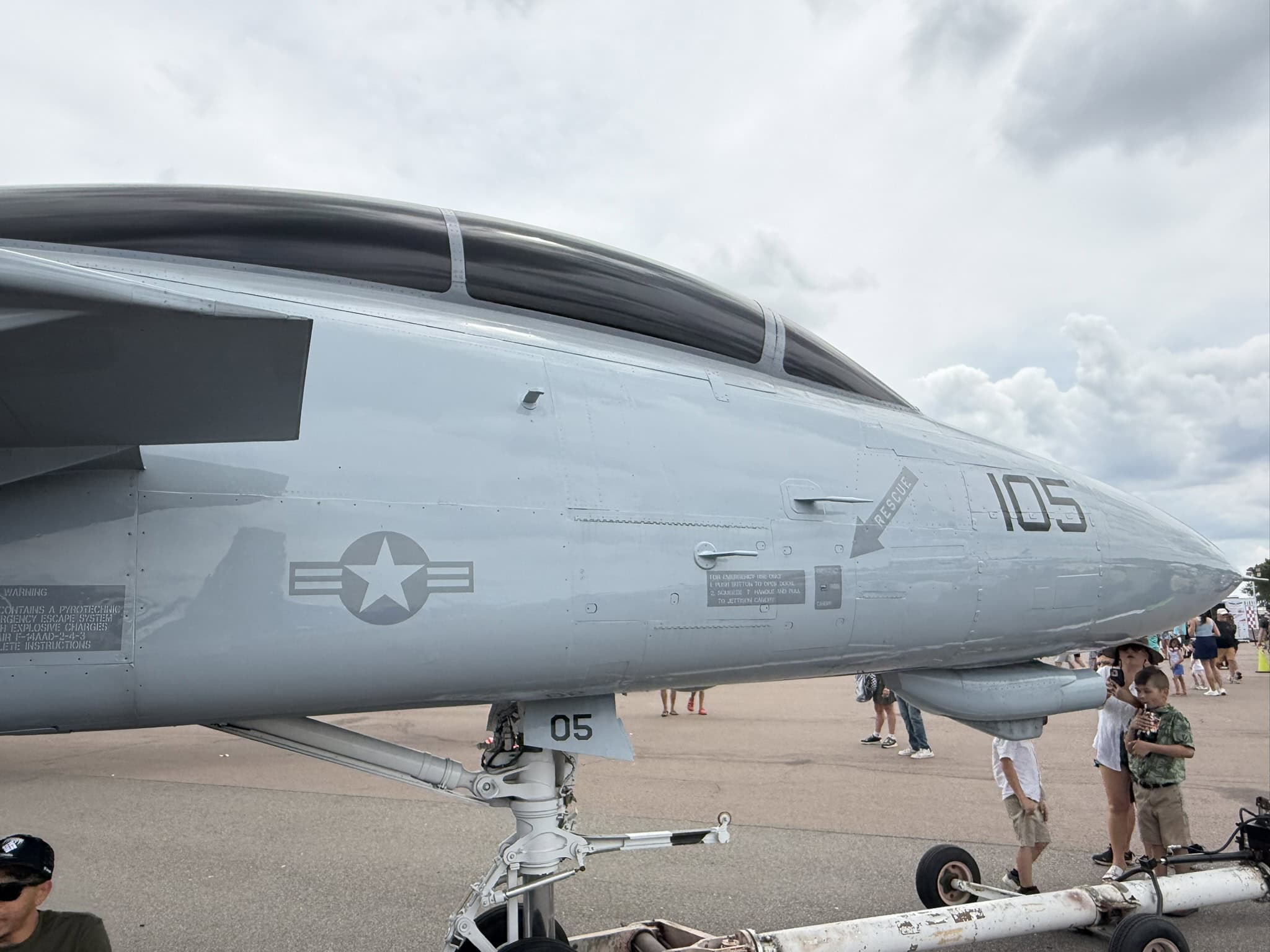
F-14D Tomcat from Lakeland, Florida Airshow. Image Credit: 19FortyFive.com. Taken on 4/19/2026.
About the Author: Jack Buckby
Jack Buckby is a British researcher and analyst specializing in defense and national security, based in New York. His work focuses on military capability, procurement, and strategic competition, producing and editing analysis for policy and defense audiences. He brings extensive editorial experience, with a career output spanning over 1,000 articles at 19FortyFive, and has previously authored books and papers on extremism and deradicalization.