
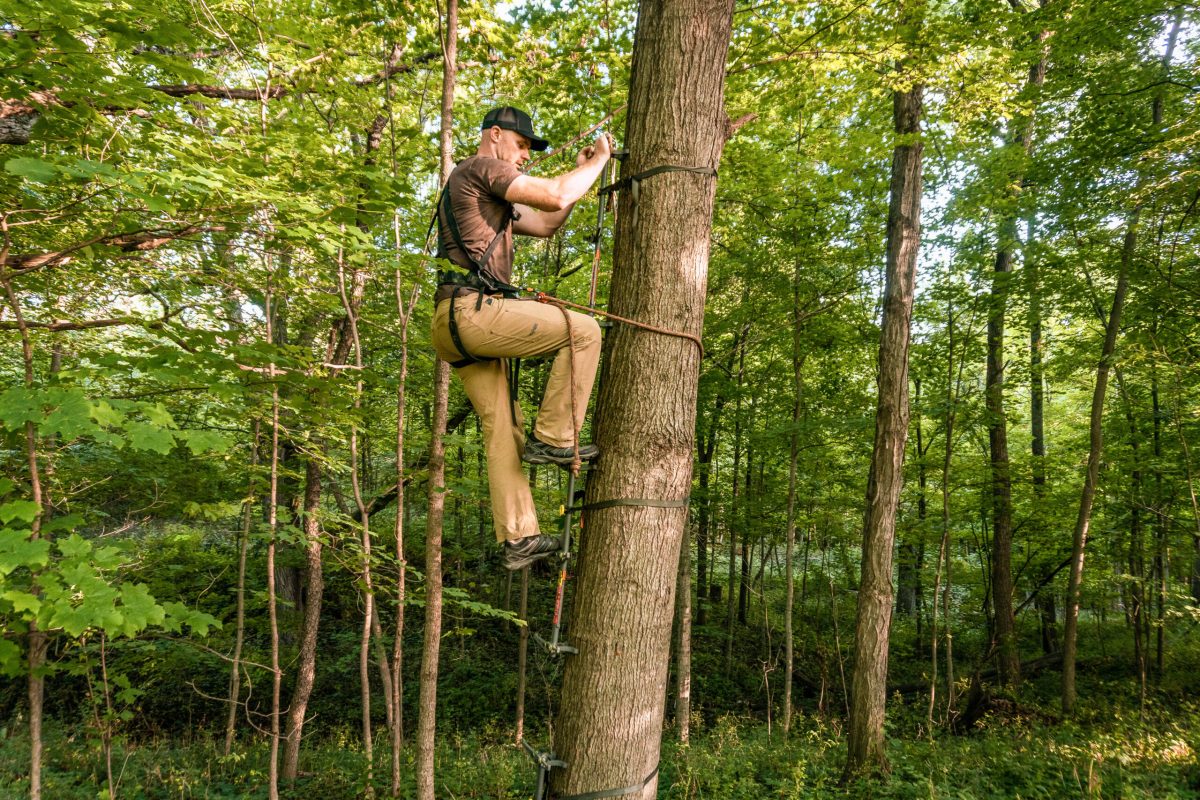
The days of hauling heavy, noisy climbing sticks through the woods are behind us. Modern climbing sticks are purpose built with the mobile hunter top of mind, resulting in climbing methods that are lighter, quieter, and far more mobile than their clunky predecessors.
This means you have a lot of options when it comes to shopping for your next set of climbing sticks, so I spent time comparing the best of the best to create a guide to buying the best climbing sticks for you.
How I Tested Climbing Sticks
The rolling topography and vast hardwood ridges that makeup southwest Wisconsin’s Driftless Area is one of the most prolific big buck hunting areas in the country. Laden with various species of oaks, walnut, and maple trees with interspersed cedar thickets and agricultural transitions, the region is representative of classic whitetail habitat. I conducted the test on various trees on a state-owned property that’s open to public hunting. The test focused on the key factors bowhunters consider when it comes to spending their hard-earned cash: weight and size, stackability, attachment method, material, noise, and climbing comfort.
Weight and Length
I used a kitchen scale to weigh each stick to the nearest 1/10-ounce and measured length from step-to-step.
Stackability
I scored each stick for their stackability from one to five, with five being the best. The score was from packed height, length, and width dimensions as well as ease of packing, how well they stay packed, and how quiet they were once stacked.
Noise
No matter how careful you are, you’re bound to make noise when setting up your sticks. Most noise is derived from the combination of the climbing stick and attachment materials. The perceived sound made while setting was given a score of one to five (five is the quietest).
Climbing Comfort
All sticks were used to climb a variety of trees throughout the test. A climbing comfort score was built on a one-to-five scale, with five being most comfortable. This was judged by seeing how well the sticks bit into the trees, noting any significant slipping or twisting experienced during the climb.
The Best Climbing Sticks: Reviews and Recommendations
Best Overall: Latitude Carbon Synergy
See It
Pros
- Lightweight (less than one pound per stick)
- Easy to pack together
- No noise while packing
- Plenty of attachment rope to get around even the biggest trees
- Aggressive climbing tread to avoid slips
- Roomy standoff distance
- Made in USA
-
Weight:
3 lbs. 11.6 oz. -
Length:
17” (step to step) -
Stackability Score:
5 -
Packed Dimensions:
18 1/2” long, 9 1/4” high, 9” wide -
Attachment:
93” of Amsteel rope -
Material:
Carbon fiber -
Noise Score:
5 -
Climbing Comfort Score:
5 -
Price:
$499.99 (4 sticks), $399.99 (3 sticks)
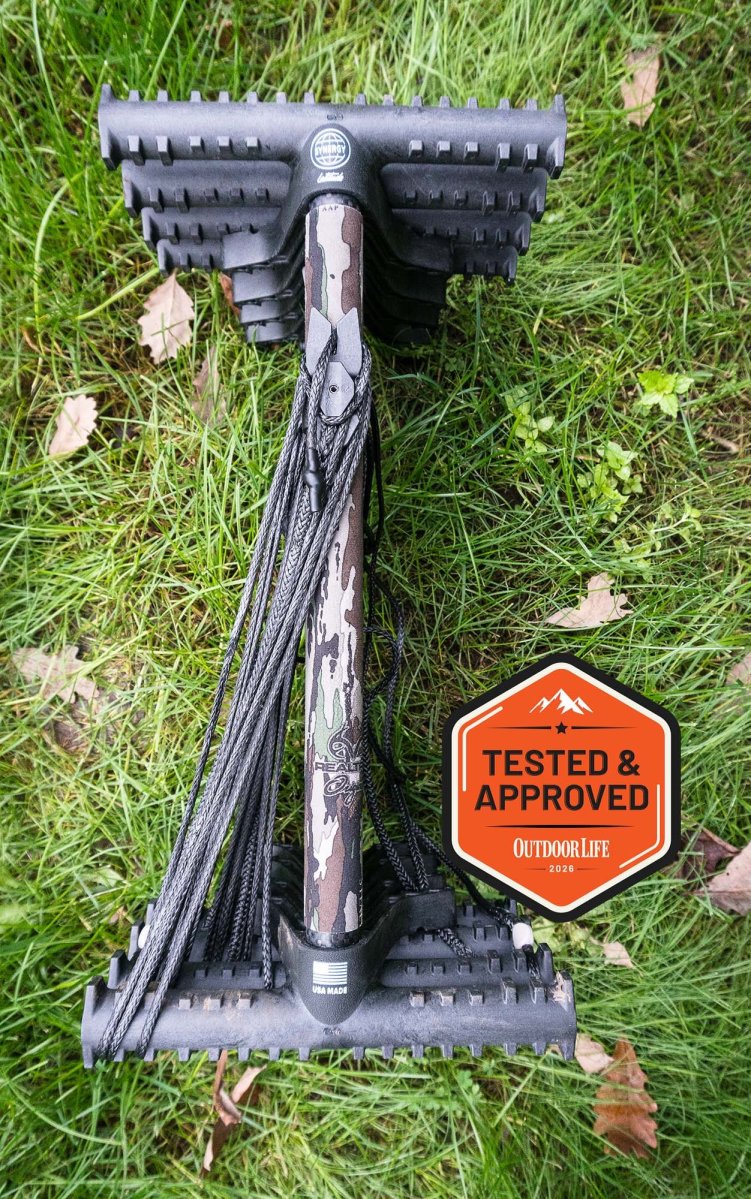
Latitude Outdoors acquired Tree Styx in 2025, and with a few intentional changes, the Carbon Synergy climbing sticks were born. At just 14.9 ounces per stick, Latitude’s Carbon Synergy is the lightest climbing stick in this year’s test. They’re not only lightweight but also pack together more effortlessly than any other climbing stick I’ve tried. I’ve noticed that “climbing confidence” tends to be a tradeoff as sticks get lighter, but the Synergy sticks made me rethink that assumption. For those reasons and more, Latitude’s Carbon Synergy climbing sticks earned the “best overall” ranking in this year’s test.
There’s absolutely no slop when the Carbon Synergy sticks are packed together. I shook them as hard as I could to try to produce even the slightest noise from the Amsteel rope contacting the stick, and it was barely audible, thanks to a rubberized, pre-installed silencing damper at the end of the rope.
The Synergy sticks use an aggressive tread on the steps to prevent slips, which I’ll especially appreciate later this season when I’m wearing insulated boots in frigid conditions. With a 4.21-inch standoff distance, my foot had plenty of room while climbing the tree. The integrated stacking system lets the post of each stick nest into the cleat on the bottom of the other, eliminating the need to align pins or nylon stoppers — you can pack them together with one hand. That’s not just convenient; it means you can attach all the sticks to one side of your saddle and deploy each as you climb, one-handed, instead of carrying a stick on each hip and a platform on your back. That makes the climb easier and makes it just as easy to pack up in the dark after an evening hunt.
As with any carbon-fiber product, the material has a slight sheen to it. If you’re particular about details like that, you can remedy it with Stealth Strips designed specifically for the Synergy sticks, available on Latitude’s website. You can also accessorize your Synergy sticks with a single-step aider that adds just 1 ounce and stows away cleanly when packing up, or with glow-in-the-dark illuminators that make climbing down in the dark easier.
Top Climbing Stick Innovation (Telescoping Design): Arsenal Icon X20
See It
Pros
- Compact footprint for easy packing
- Telescopes from 13 1/8” to 20”
- Plenty of attachment rope for even the largest trees
- Rubberized “cork wrap” coating for enhanced grip and sound dampening
- Integrated reflective tabs
- Wide steps for easy climbing
Cons
- Noisy when not telescoped to full length carefully
- Sticks rattle when stowed to compact length
-
Weight:
4 lbs. 11 oz. -
Length:
20” (step to step) -
Collapsed Length:
13 1/8” -
Stackability Score:
5 -
Packed Dimensions:
15 1/2” long, 5” high, 10” wide -
Attachment:
90” of 4mm DuraBRAID rope -
Material:
Aluminum -
Noise Score:
3 -
Climbing Comfort Score:
5 -
Price:
$399.00 (3 sticks), $139.99 (single stick)
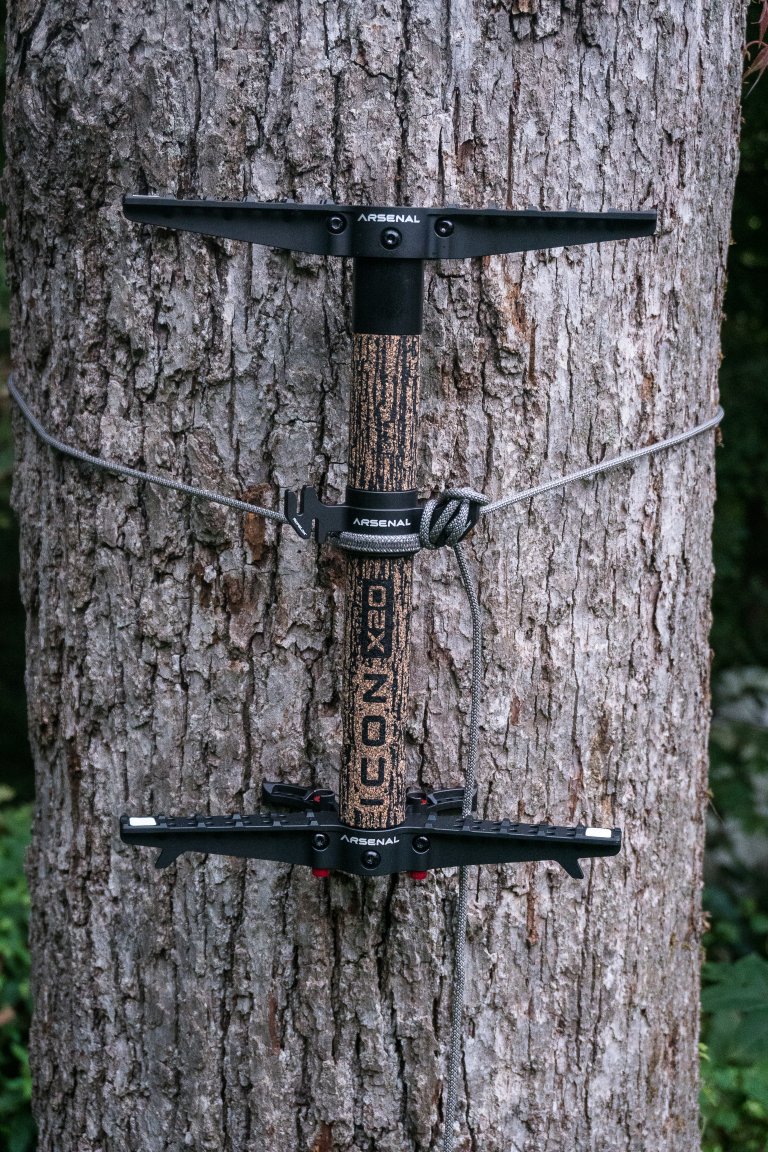
Arsenal’s Icon X20 climbing stick is one-of-a-kind, offering full-size climbing-stick performance in a compact package thanks to a telescoping design. Stowed away, it’s a sleek 13 1/8 inches long — the shortest overall length of any stick featured in this year’s test. Once you reach your tree, the Icon deploys to 20 inches, making it the longest stick in the test. That versatility, combined with its pared-down packed profile, earned the Icon X20 our pick for top climbing stick innovation of 2026.
The Icon X20 comes in a three-pack (a single stick can be purchased for $139.99). Three of the sticks pack together into a minimalist 15 1/2 inches long by 5 inches high by 10 inches wide. That small footprint attaches easily to any backpack and stays streamlined during transport to avoid snagging on branches. The Icon nests together in alternating sides with magnetic stacking sockets and a C-clip retainer that locks them tightly in place. Each stick is protected by a rubberized cork material that dampens unwanted sound and enhances grip.
The telescoping design naturally involves more moving parts, and as a result, I found the Icon produced more noise than other sticks in the test, earning it a modest 3 out of 5 on the noise score. I could cut down on the noise of extending the sticks to their fully deployed position by moving slowly and keeping tension on the stick during deployment. Once stowed and attached to my backpack, though, I noticed they rattle a bit while walking. The sound wasn’t enough to spook game, but it’s worth noting.
At 1 lb. 9 oz. per stick, the Icon isn’t what I’d consider ultralight, and that’s to be expected given its design. My three-pack weighed in at 4 lbs. 11 oz., but given the Icon’s 20-inch extended height, I could climb just as high with three sticks as I could with four from competing brands. The weight difference is negligible, and using less gear to do more is always a plus in my book — why climb 18 feet with four sticks when you can do it with three?
Climbing with the Icon is easy, thanks to the 10-inch-wide steps and a generous 7 feet of 4mm DuraBRAID rope. The rope secures easily to the RopeLok system and winds up out of the way when you’re in pack mode.
Trophyline Hyperlite
See It
Pros
- Lightweight
- All sticks nest securely together
- Secure and easy attachment method
- Made in USA
Cons
- Require aftermarket solutions to reduce noise
- Would like more amsteel length for larger trees
- Expensive
Key Features
-
Weight:
4 lbs 4.3 oz -
Length:
16” (step to step) -
Stackability Score:
5 -
Attachment:
72” of Amsteel Rope -
Material:
Magnite -
Noise Score:
1 -
Climbing Comfort Score:
5 -
Price:
$449.99 (4 sticks), $139.99 (single stick)
The HyperLites are made of Magnite, an all-new material for climbing sticks. It’s similar to the material being used in the Bowtech Honor, and the same properties that make it great bow riser material, make it ideal for climbing sticks: it has a high strength-to-weight ratio and dampens vibration better than carbon or aluminum. While any metal-on-metal contact still produces an audible noise that will spook nearby deer, Magnite doesn’t produce as much “ting” as you’d find in an aluminum climbing stick.
While testing, my first takeaway was how compact the sticks stack together. Unlike other sticks that overlap when nested together, the HyperLite uses a FlatStack design that matches the length and width profile of a single stick. That means as you continue to stack your sticks together, the overall length doesn’t increase. When stacked together, the HyperLite’s stow to a modest 18-inches long, 6-inches high, and 9-inches wide. My set of four HyperLites weigh just 4 pounds 4.3 ounces, making them an ideal option for hunters who prioritize weight.

During my testing they easy to silence, as the only point of contact is on the back of the standoff. I’d recommend a small strip of hockey tape or Stealth Strips applied to the contact points to remedy any unwanted noise.
The HyperLites are strong and rigid, and didn’t produce any flex while climbing. Notably, the attachment method is the best of any stick I’ve tested. The Hyperlite climbing sticks use AmSteel rope with a prusik knot to cinch tightly to the tree. This friction knot is commonly used in lineman’s ropes and saddle tethers, but it’s the first time I’ve seen one used for attaching sticks. It’s very fast and easy to use compared to other AmSteel attachments that require knots or specific wraps to secure. Another benefit is you can use the prusik as a weight at the end of the AmSteel rope, which makes it even easier to toss it around large trees. Once the AmSteel is threaded through the stick, you can simply tighten the prusik knot. At just 72-inches of AmSteel, I would’ve liked to see a longer overall length. It’s among the shorter AmSteel ropes when compared to other sticks on the market, which would make it difficult to climb larger trees.
I found the Hyperlites easy to pack. You just wrap the AmSteel around the top and bottom sticks and then use the included bungee cord to tension the rope around the top stick. This eliminates any possibility of the tag end coming loose and keeps the sticks organized. Best of all, the AmSteel rope doesn’t interfere with the Hyperlite’s ability to stack together when packed.
Read our full review for more information.
GRIT Workhorse Climbing Sticks
See It
Pros
- Affordable
- Pack securely together for silent transport
- Amsteel attachment method
Key Features
-
Weight:
5 lbs 6 oz -
Length:
16 ¾” (step to step) -
Stackability Score:
3 -
Attachment:
100” Amsteel DynaLite™ Rope -
Material:
Aluminum -
Noise Score:
4 -
Climbing Comfort Score:
5 -
Price:
$199 (4 sticks)
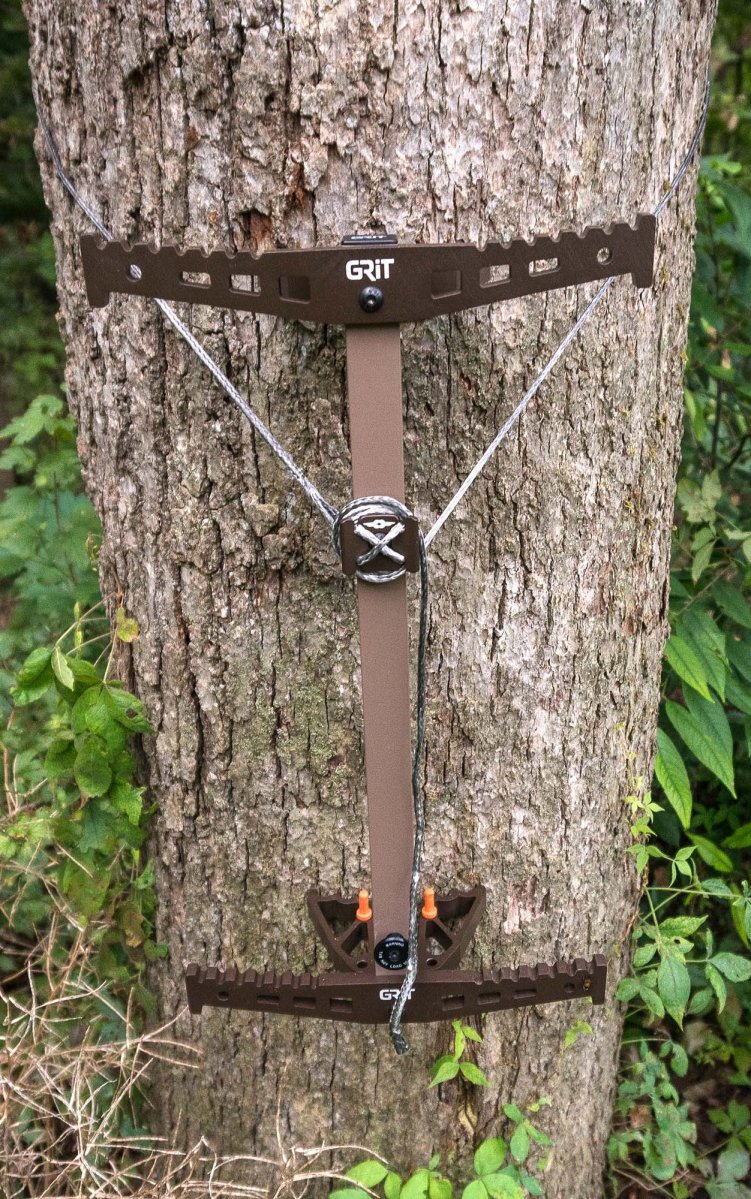
The new Grit lineup includes features from premium Tethrd products into a more affordable offering. The Workhorse climbing sticks utilize the same DynaLite amsteel rope, integrated StickLoc pin system, and RCS (Rope Containment System) you’ll find in the Tethrd One Sticks, but at a fraction of the price.
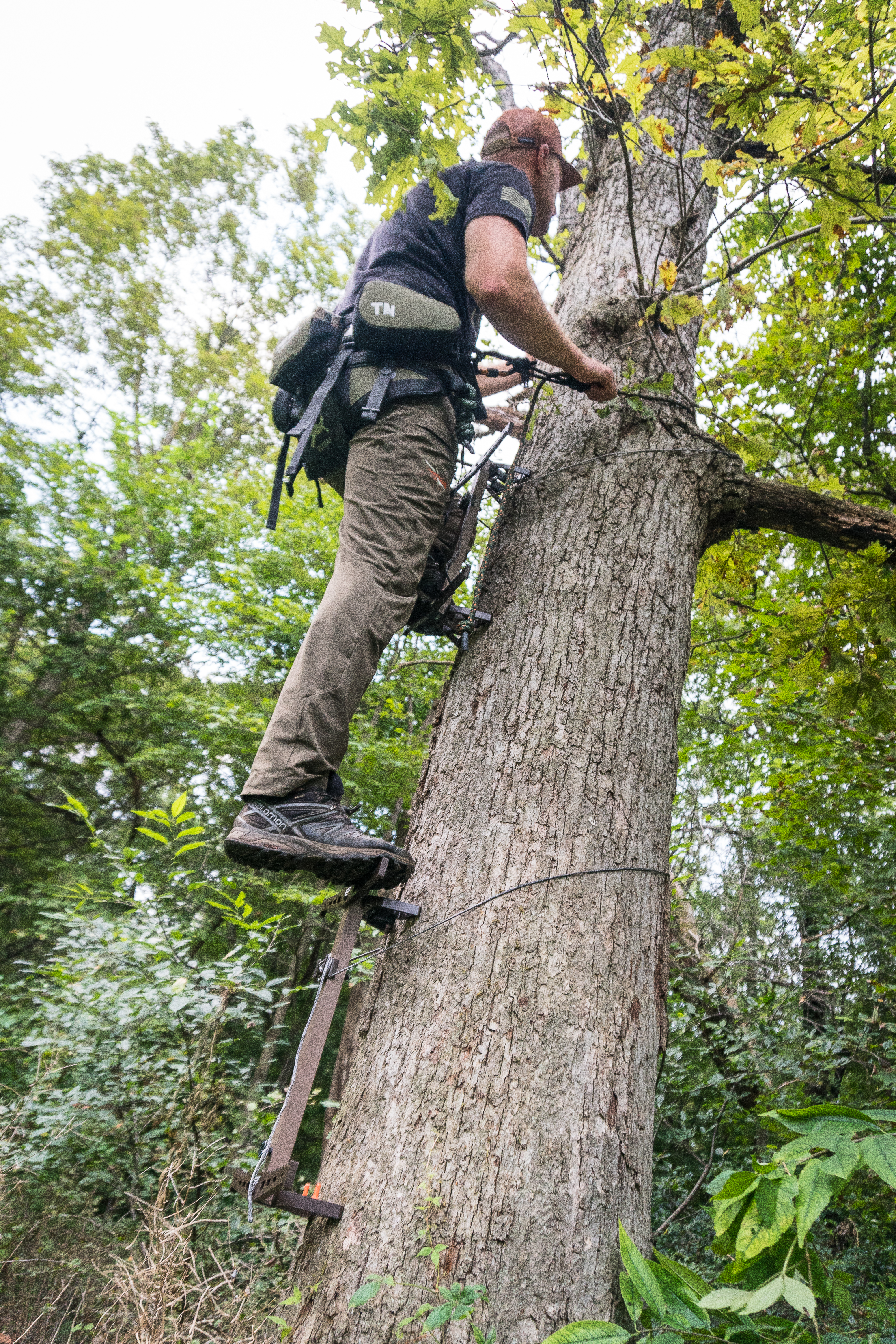
At a glance, I saw many similarities to the Tethrd One Sticks compared to the Grit Workhourse. However, there’s a few differences to be mindful of. The stick’s overall weight is most notable, weighing in just shy of 2 pounds per stick, almost twice as heavy as the Tethrd One Sticks. Also, unlike the One Sticks that utilize StickLoc pins at the top and bottom, the Workhorse sticks only include them on the bottom steps with a clip system on top. Be careful when nesting the clip into another stick, as it’s easy to force them together and produce loud metal-on-metal contact.
A little extra weight and few adjusted features are a small penalty to accept for a 4-pack of highly capable climbing sticks at $199.
Latitude Outdoors Carbon SS
See It
Pros
- Metal free design
- Carbon fiber material
- 106” Amsteel attachment provides enough length for large trees
Cons
- Don’t nest together snugly, and require a buckle to prevent rattling
Key Features
-
Weight:
3 lbs 9 oz -
Length:
17” (step to step) -
Stackability Score:
4 -
Attachment:
106” Amsteel -
Material:
Carbon Fiber -
Noise Score:
3 -
Climbing Comfort Score:
3 -
Price:
$249.99 (3 sticks), $334.99 (4 sticks)
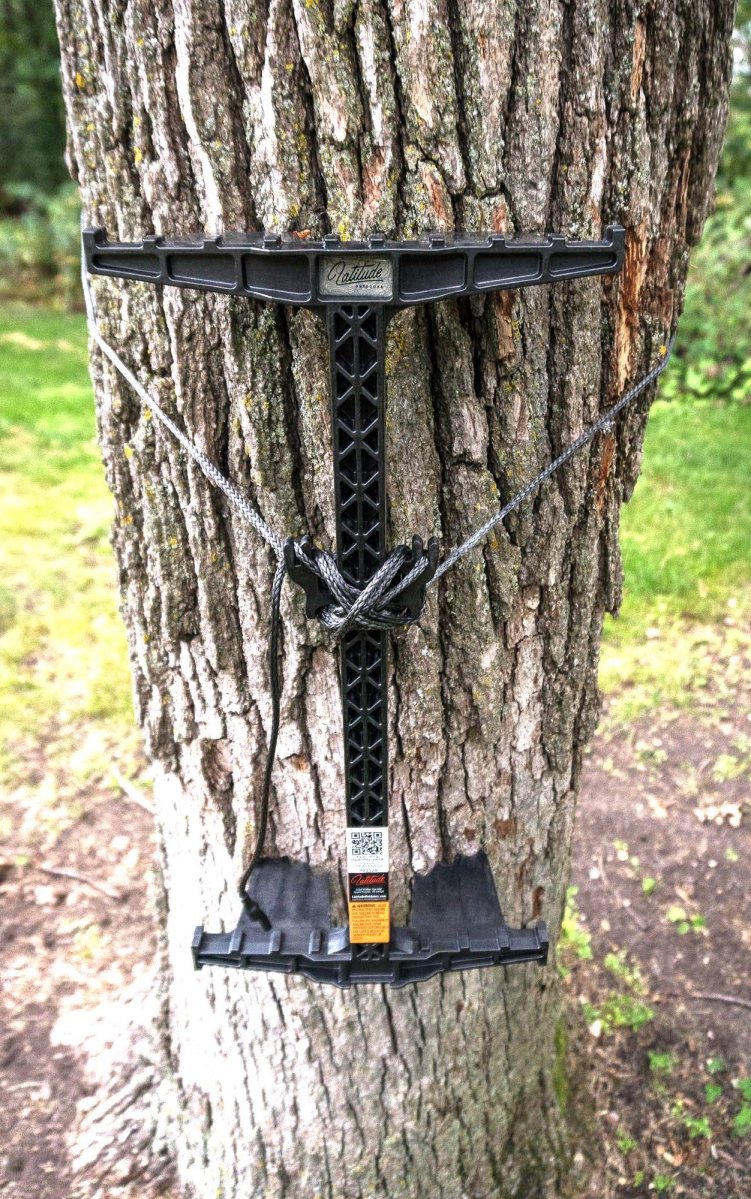
The Latitude Outdoors Carbon SS climbing sticks are made from a single piece of carbon fiber material. This means you won’t have to worry about any loose bolts.
The Carbon SS climbing sticks stack flat against each other, but I wish they nested more snugly. The included rubber strap helps cinch the sticks tightly together, but they rattled around more than I liked during the test.
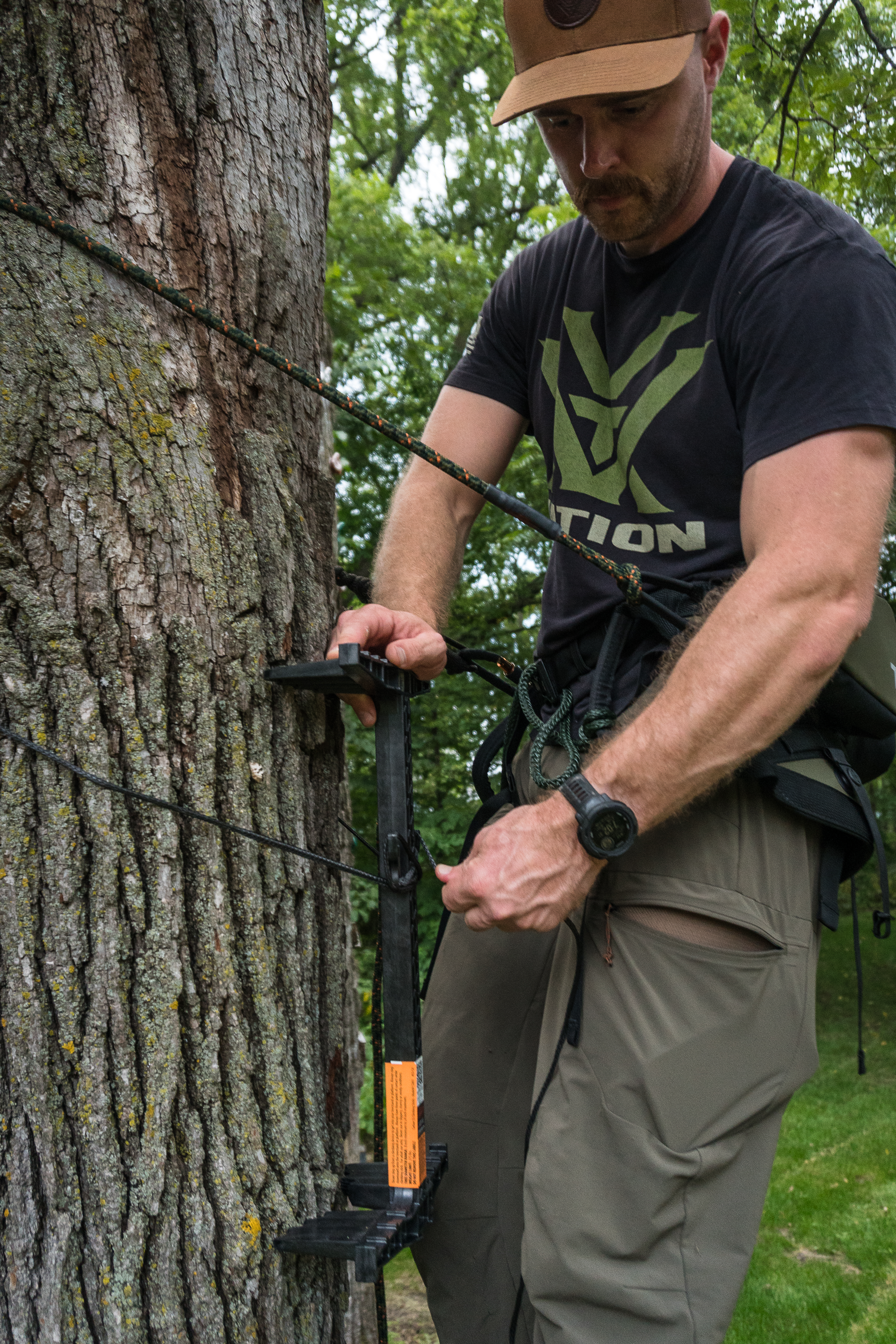
However, it’s important to consider that carbon fiber produces a completely different sound than metal-on-metal contact. In fact, they sound more similar to rattling antlers than a foreign, man-made sound, which likely won’t ruin your hunt if you accidentally bounce a climbing stick off another.
The sticks utilize 106-inches of amsteel rope to attach to a tree, which is the longest attachment method of any sticks featured in the test. This is an important detail to be mindful of if you’re hunting in areas with large diameter trees. While using other climbing sticks, I found myself wishing for longer attachment methods a few times, especially when chasing whitetails in western river bottoms full of enormous cottonwood trees.
If you’re searching for an alternative to traditional aluminum climbing sticks and want to try carbon fiber, don’t overlook the Carbon SS. They’re less expensive than other carbon fiber climbing sticks on the market purpose built for mobile whitetail hunters.
Tethrd One Stick
See It
Pros
- Lightweight
- Plenty of amsteel rope to climb large trees
- Pack together tightly and silently
Cons
- Require aftermarket solutions to reduce noise
Key Features
-
Weight:
4 pounds 3.8 ounces (four sticks); about 1 pound 1 ounce per stick -
Length:
17 5/8 inches (step to step) -
Packed Dimensions:
22-inches long, 7 ½-inches high, and 9-inches wide -
Attachment:
103 ½ inches of Amsteel DynaLite rope -
Material:
Titanium and aluminum -
Stackability Score:
4 -
Noise Score:
3 -
Climbing Comfort Score:
4
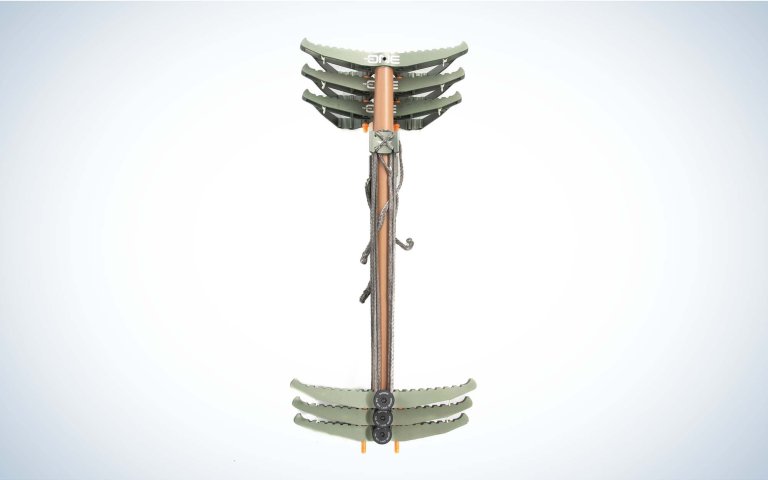
Tethrd prides itself on eliminating the “fiddle factor” in bowhunting, which is evident in the Amsteel DynaLite rope attachment method of their sticks. With more than 100-inches of material to grip the tree, this system makes it possible to climb trees significantly larger than what’s possible with stock offerings from other manufacturers. This method is versatile, silent, and easy to use.

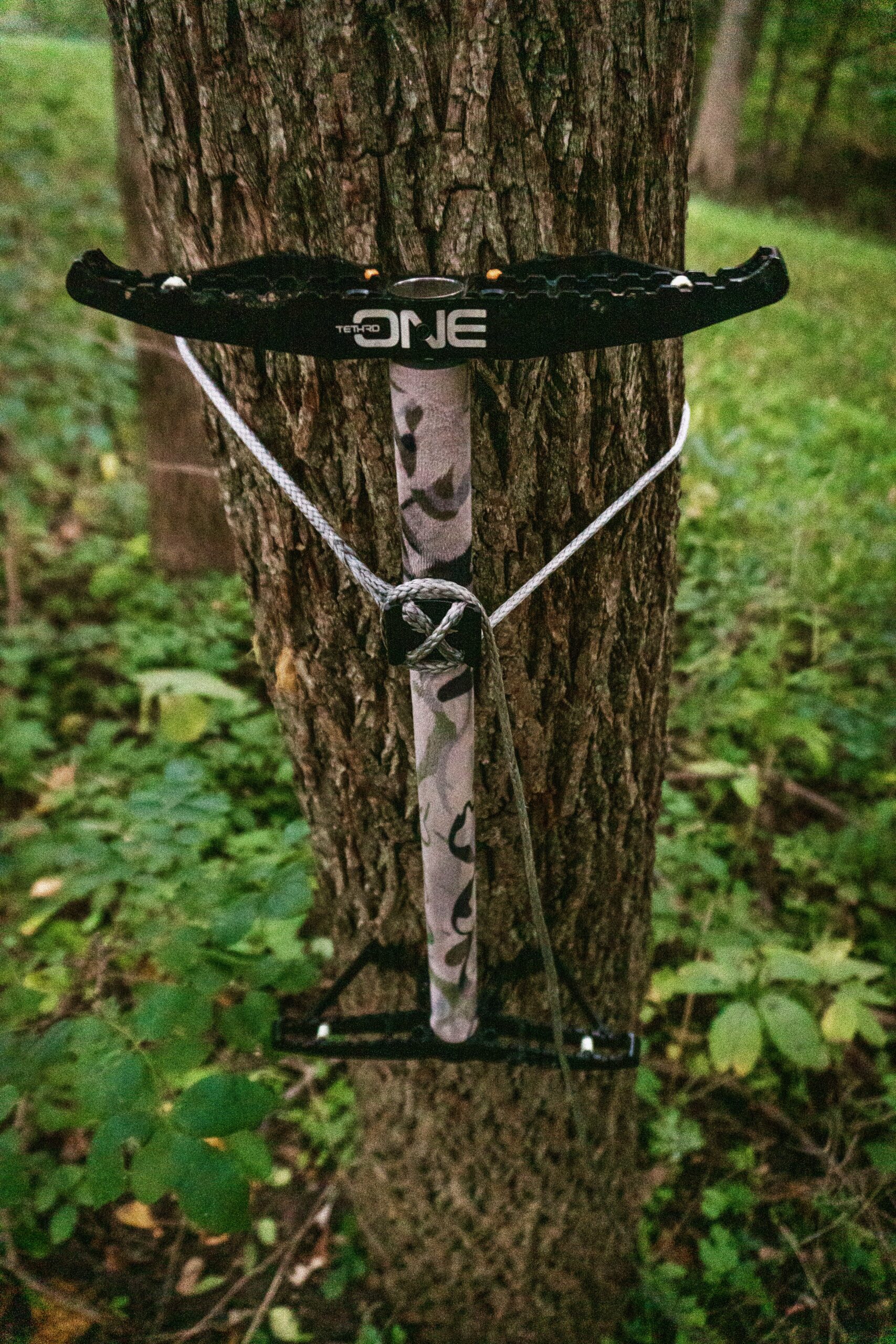
While testing stackability, I found the StickLoc pin system kept the sticks snug and silent during transport, and easy to pack. Simply align the pins into the corresponding receiver slots and snug them together and sneak out of the woods silently.
The Tethrd One sticks were a bit louder out of the box than other sticks, but that’s to be expected of a 1-pound metal climbing stick. Stealth Strips can be purchased from Tethrd directly, pre-cut to match the One stick’s design. If you want to go crazy, you can do plenty of modifications to make them even quieter.
Best Budget: XOP X2 Climbing Stick
See It
Pros
- Affordable
- 5-inch standoff for easy climbing
- Side-Lock system stacks sticks side by side for silent transport
- Includes predrilled attachment points for amsteel aiders
Cons
- Included cam strap buckles are heavy (four buckles weigh 1 pound 12 ounces)
Key Features
-
Weight:
6 pounds 12 ounces (four sticks); 1 pound 11 ounces per stick -
Length:
17 inches (step to step) -
Packed Dimensions:
22-inches long, 5 5/16-inches high, 10 13/16-inches wide -
Attachment:
77 inches of cam strap buckle -
Material:
6061, 7075 aluminum -
Stackability Score:
4 -
Noise Score:
4 -
Climbing Comfort Score:
5 -
Price:
$179 (4 sticks), $132 (single stick)
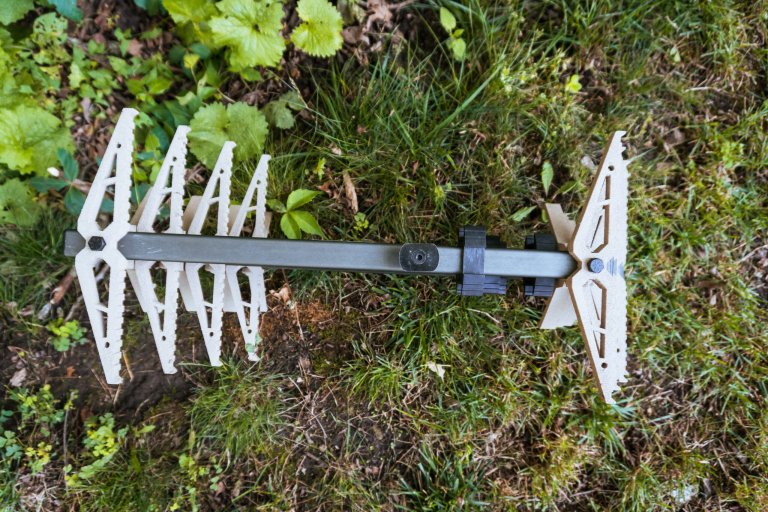
In testing, the XOP X2 Climbing Sticks hit the sweet spot of performance and affordability, which made it my pick for the best climbing stick for the money. At 6 pounces 12 ounces and $180 for a four-pack the X2 has a great price to weight ratio.
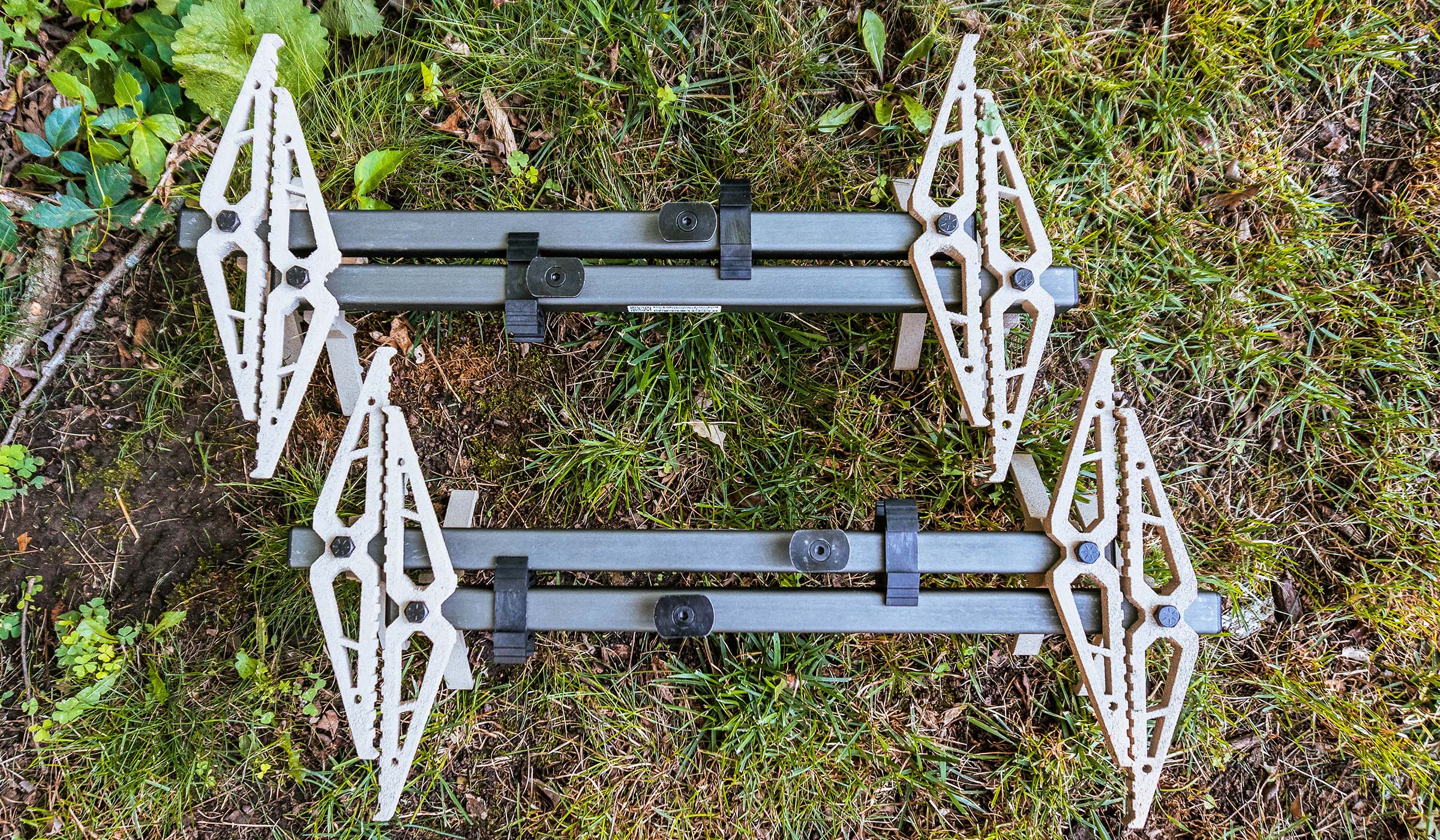
The Side-Lock attachment system is unlike other attachment method on the market, stacking the X2 sticks side-by-side for a flat, sleek profile. Just over 5-inches high when packed in the Side-Lock system, the X2 packs to a lower profile than any other stick in the test. The sticks easily slide in and out of the Side-Lock bracket, making for easy setup or takedown, especially in the dark. It’s important to note, you cannot stack a complete set of four X2 sticks side-by-side. Instead, the Side-Lock system combines two sets of pairs, which you’ll store separately (or attach to your stand, specifically made to integrate with the XOP Cold World and Retrograde treestands). The X2 sticks also stack vertically, but won’t lock in place as they would with the Side-Lock system.
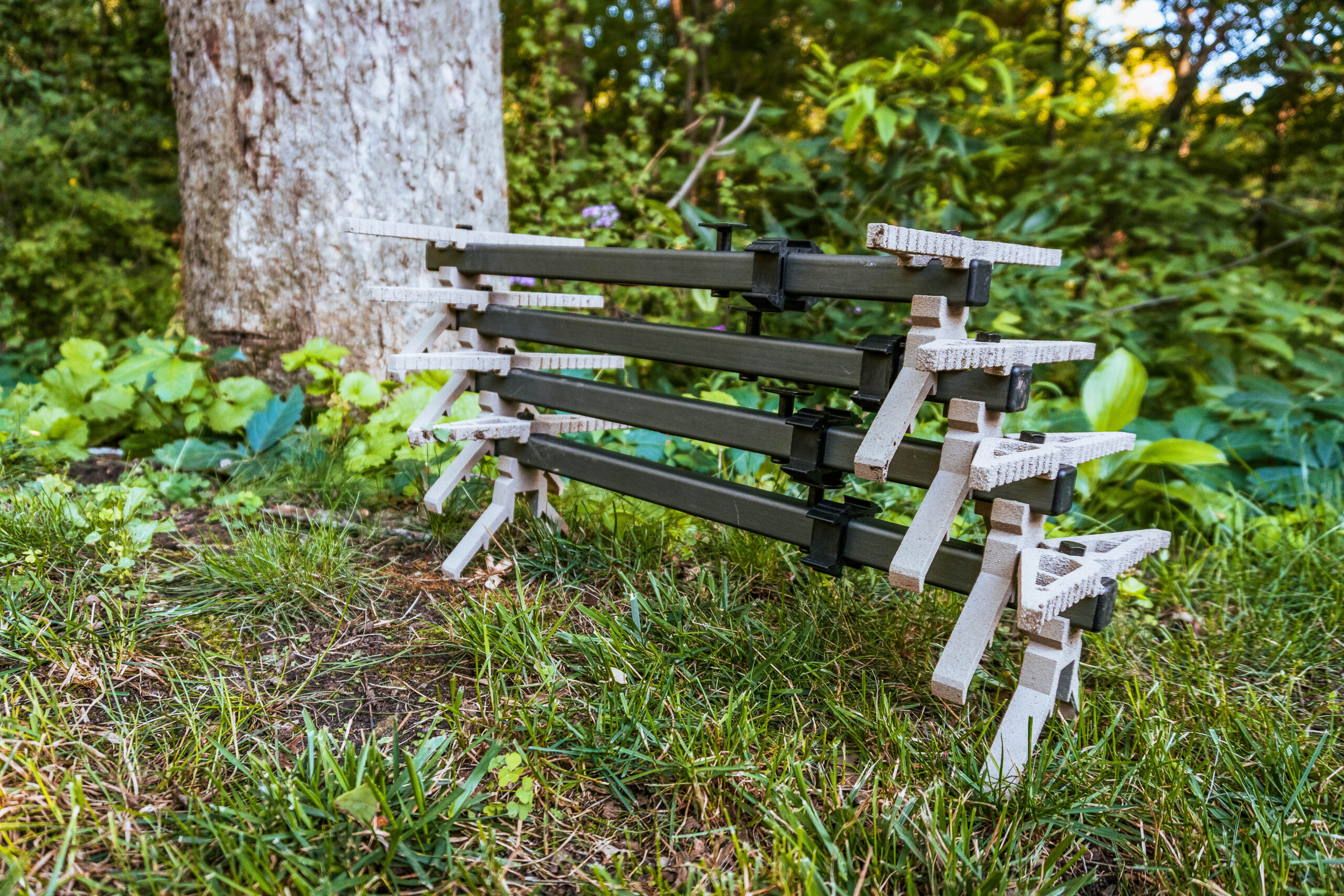
The 5-inch standoff makes the X2 comfortable and easy to climb, even with bulky insulated boots. I found the Dura-Grip Traction, a sand imbedded powder coat, to be the most abrasive and tacky exterior coating of all sticks featured in the test. The added traction allowed me to climb confidently, knowing the X2 will provide a better climbing experience than other sticks, especially if rain or snow are in the forecast.
Most Quiet: Timber Ninja C2 Climbing Stick
See It
Pros
- Carbon-fiber design
- Magnetic stick stacking for silent transport
- Roomy, 4 1/2” standoff
- Made in USA
Cons
- Expensive
- Steps can be slippery
Key Features
-
Weight:
5 lbs. 5.3 oz. -
Length:
18 1/4” (step to step) -
Stackability Score:
4 -
Packed Dimensions:
20 1/8” long, 10 1/4” high, 9” wide -
Attachment:
72” of Amsteel cord -
Material:
Carbon fiber -
Noise Score:
5 -
Climbing Comfort Score:
5 -
Price:
$499.99 (4 sticks), $139.99 (single stick)
Founder and designer Jason Redd takes great pride in building all of Timber Ninja’s gear in the USA. A hardcore backcountry hunter and whitetail fanatic himself, Redd brings over 30 years of hunting experience to his fast-growing small business to meet the demands of mobile hunters.
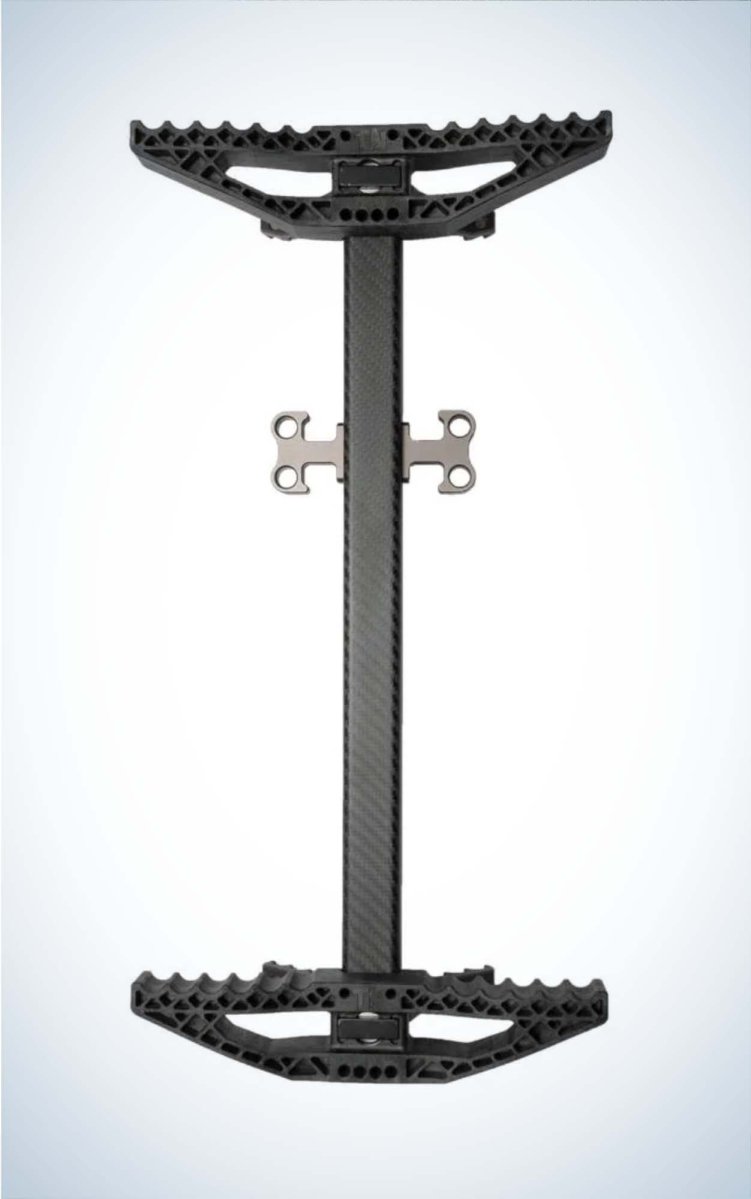
The C2 climbing stick from Timber Ninja brings intentional upgrades over the previous C1. Like any carbon-fiber climbing stick, the C2 stays warm to the touch, even in subzero conditions. It also dampens noise much more efficiently than other aluminum or titanium designs. If anything, the hollow “clack” of two C2 sticks knocking together sounds more like a pair of rattling antlers than the foreign noise whitetails would otherwise associate with danger.
The C2 uses a magnetic stick-stacking system that locks the sticks securely in place. When I say secure, I mean it — this magnet is strong! It took a bit of tinkering to get the hang of quietly detaching the sticks from each other, but after some practice, I could do it easily. I added Stealth Strips to the cleats, the only metal components on the stick. Specifically, make sure you add silencing material to the underside of each cleat where the magnet attaches, to dampen the sound of the metal pieces connecting.
The steps on the C2 have a slight “U-shape” on each side of the post. This helps provide a class-leading 4 1/2-inch standoff, leaving plenty of room for even the bulkiest boots. I hunted with the C2 last December during a subzero cold snap in northern Wisconsin. I could easily climb down while wearing my insulated boot covers, thanks to the generous standoff room.
While the standoff is comfortable to climb, I’d like to see a more aggressive tread on the steps. Other climbing sticks in this test offer more traction for your boots while climbing.
Arsenal Carbonlite
See It
Pros
- Carbon fiber design
- Easy to stack when packing up
- Extra wide 9 ½” aluminum steps
- Angled step geometry cradles your foot as you climb
- Compact, stackable design (only 6 ½” high when packed)
- Integrated glow-in-the-dark markers
Cons
- Expensive
- Aluminum steps can create metal-on-metal contact while stacking
-
Weight:
3 lbs, 3 oz -
Length:
17” (step to step) -
Stackability Score:
5 -
Packed Dimensions:
18 1/2” long, 6 1/2” high, 9 1/2” wide -
Attachment:
84” of Amsteel Cord -
Material:
Carbon fiber post, aluminum steps -
Noise Score:
4 -
Climbing Comfort Score:
5 -
Price:
$359.99 (3 sticks), $129.00 (single stick)
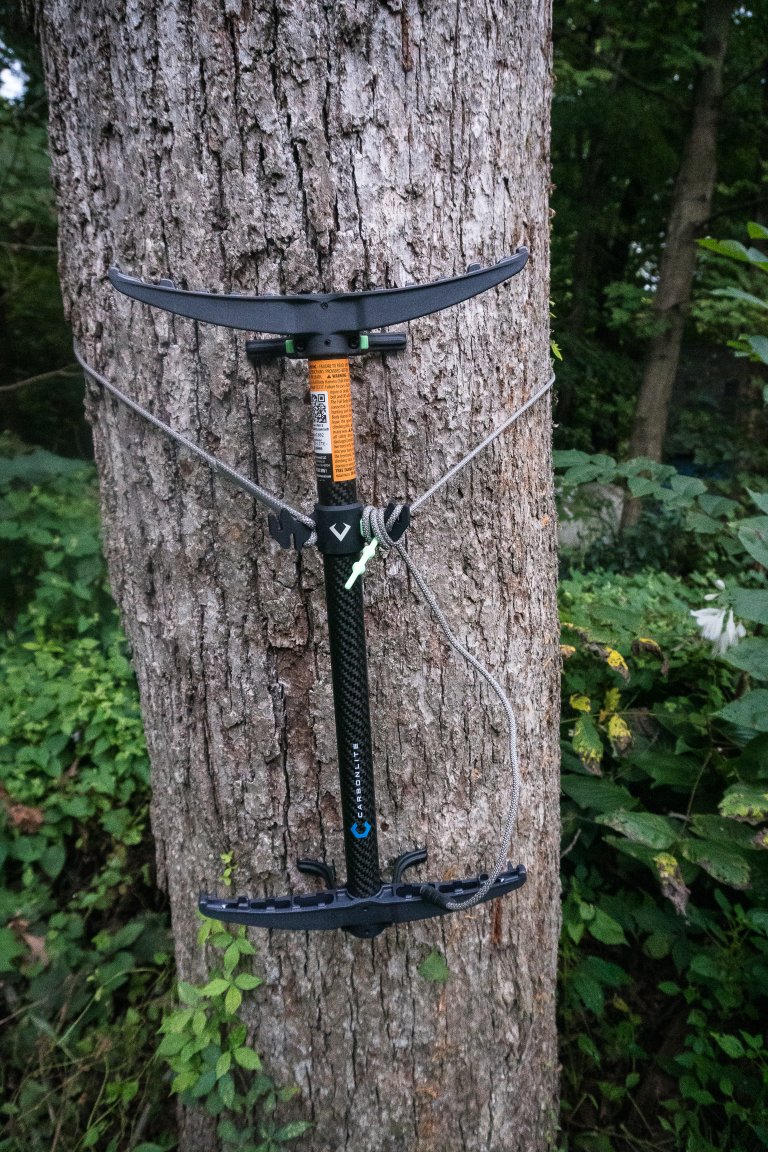
Arsenal’s Carbonlite climbing sticks are brand-new for 2026 and loaded with features that make them one of the lightest sticks in this year’s test that retains incredible climbing comfort and confidence. When packed, the Carbonlite’s use Arsenal’s AXIS Stack System to nest each stick perfectly aligned with the rest. At just 6 ½” high when stacked, the Carbonlite’s are the most compact and packable carbon climbing stick on the market (3 Carbonlite’s have nearly the same stacked height as 2 Latitude Carbon Synergy, and is just slightly higher than 2 Timber Ninja C2 sticks). This equates to a climbing stick that occupies less room than the competitors when strapping to a backpack and slipping through thick brush when accessing your favorite spot. The stacking system is solid and eliminates any noise during transport. A rubber tensioner built into the stick’s bracket secures the sticks together for even more security while moving through the woods.
When it comes to climbing the tree, there isn’t a lightweight climbing stick that creates a climb that’s as comfortable as Arsenal’s Carbonlite. Other carbon fiber climbing sticks in the test have flat steps. Unlike the rest, Arsenal uses Aluminum steps built with a 10-degree contour to cradle your foot during the climb, naturally bringing it into the center of the stick. I grossly underestimated how significant this feature is. I immediately took notice of how easy and comfortable these sticks are to climb. At 9 ½” wide, the steps have plenty of room.
Arsenal went above and beyond with integrated features built into the Carbonlites. Rubberized glow-in-the-dark tabs are a nice touch that makes it easier to descend your tree (especially when you’re trying to climb down undetected without your head lamp). My greatest gripe with premium products is when the extras that are “nice to have” aren’t included – that isn’t the case with the Carbonlite sticks. Even considering the $359 price tag, you’re still getting a great value.
Best for Semi-Permanent Sets: Summit Aluminum Folding Climbing Sticks
See It
Cons
- At 37-inches long when packed, they’re not ideal for mobile hunting
Key Features
-
Weight:
10 pounds 5 ounces (three sticks); 3 pounds 7 ounces per stick -
Length:
28 inches (step to step) -
Packed Dimensions:
37-inches long, 8 1/4-inches high, 5-inches wide -
Attachment:
74 ¼ cam strap buckle -
Material:
Aluminum -
Stackability Score:
1 -
Noise Score:
3 -
Climbing Comfort Score:
5 -
Price:
$169.99 (three sticks)
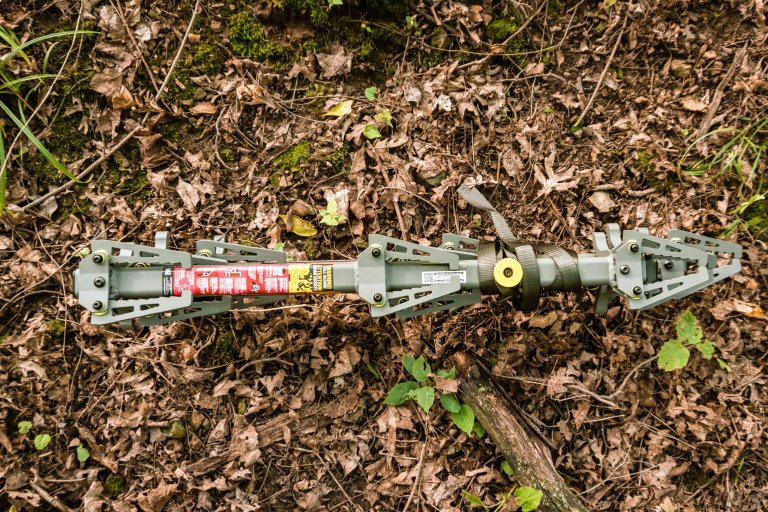
The Summit Aluminum Folding Climbing Sticks are quiet and easy to climb once attached to your favorite tree. If you’re looking for a run-and-gun setup, there are better alternatives to consider. However, the Summit Aluminum Folding Climbing Sticks are an excellent choice if you have several permanent stand locations and want a quiet, comfortable climbing stick.
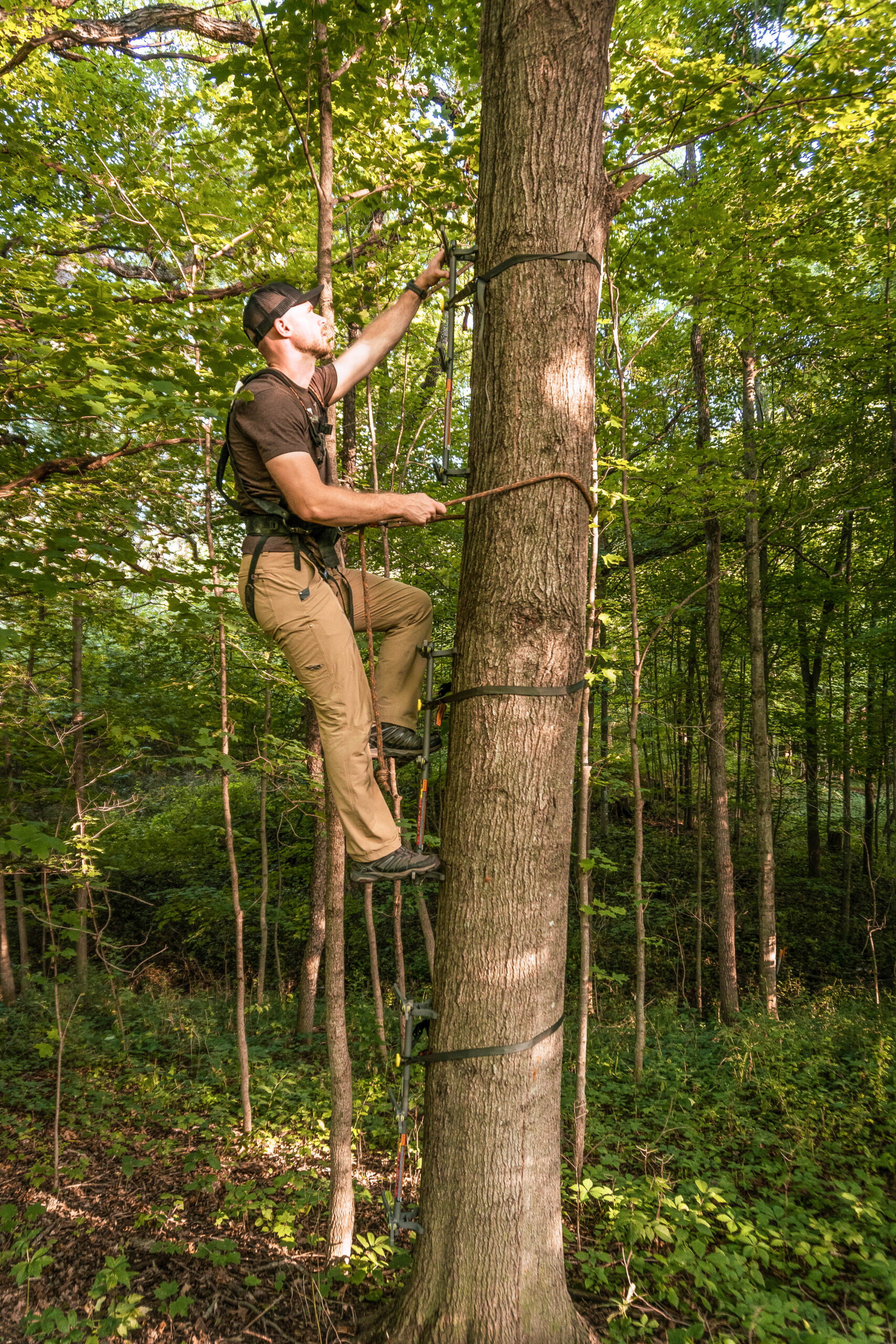
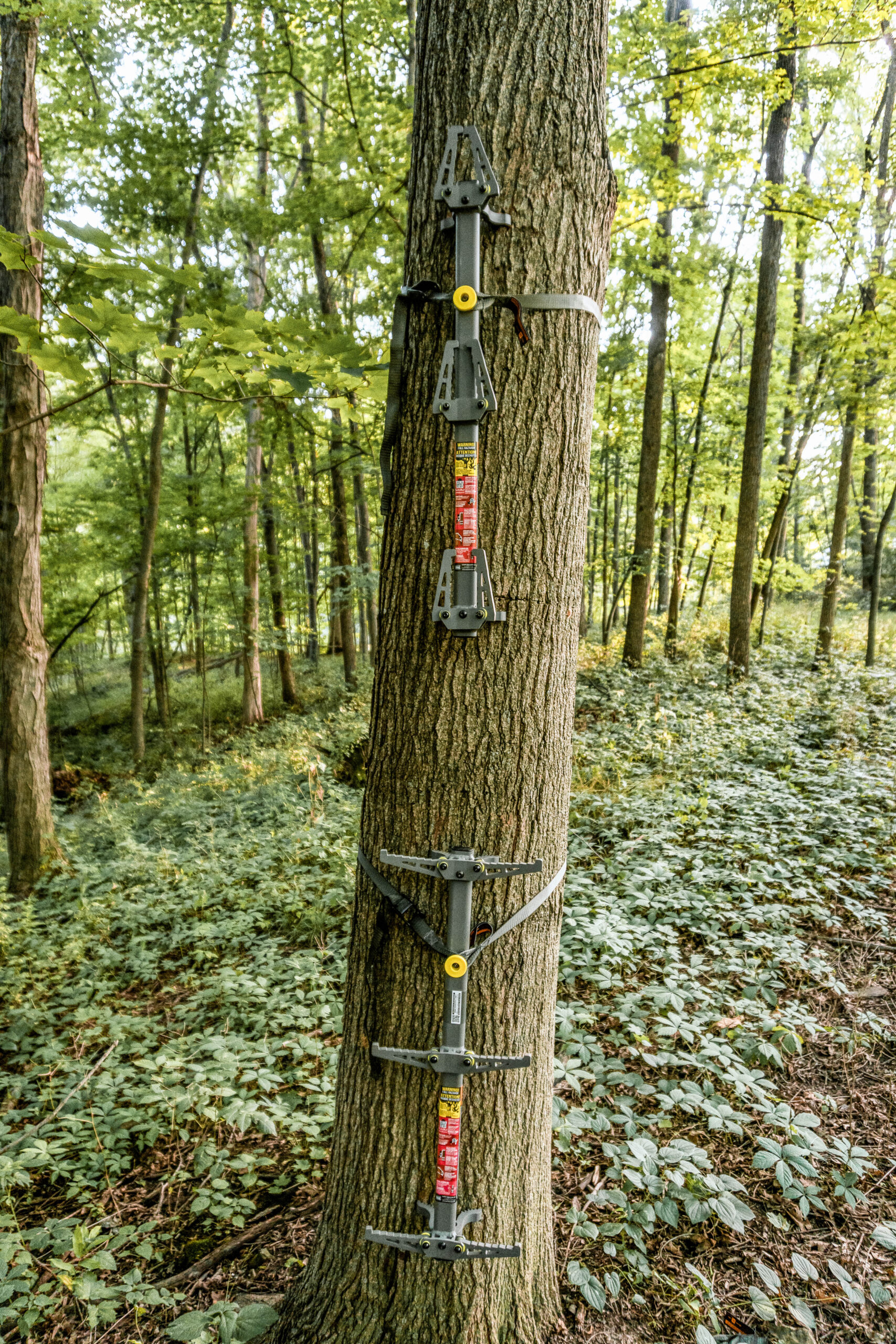
While mobile hunting seems to be the latest trend in bowhunting, many of us have our favorite spots we frequent year after year. At $170, the Summit Aluminum Folding Climbing Sticks won’t break the bank when compared to other three-step sticks featured in the test. Steps fold from 4 3/8 inches to 11 inches, which allows for plenty of room to ascend or descend with confidence, even in the dark. At 28 inches from the bottom step to top, the three-step design is plenty to reach optimal bowhunting height with just three sticks. While they can be stacked together when a minor adjustment is necessary, I wouldn’t recommend long treks or using them for frequent hang and hunts.
See It
Pros
- Affordable
- Pack together tightly and silently
- Folding double-step design
Cons
- Heavier than most other sticks tested
Key Features
-
Weight:
8 pounds 7 ounces ( Four sticks); about 2 pounds 2 ounces per stick -
Length:
18 ⅞ inches (step to step) -
Packed Dimensions:
26 ¼-inches long, 9-inches high, 6 ¼-inches wide -
Attachment:
98 inches of Amsteel DynaLite Rope -
Material:
Aluminum -
Stackability Score:
3 -
Noise Score:
3 -
Climbing Comfort Score:
4
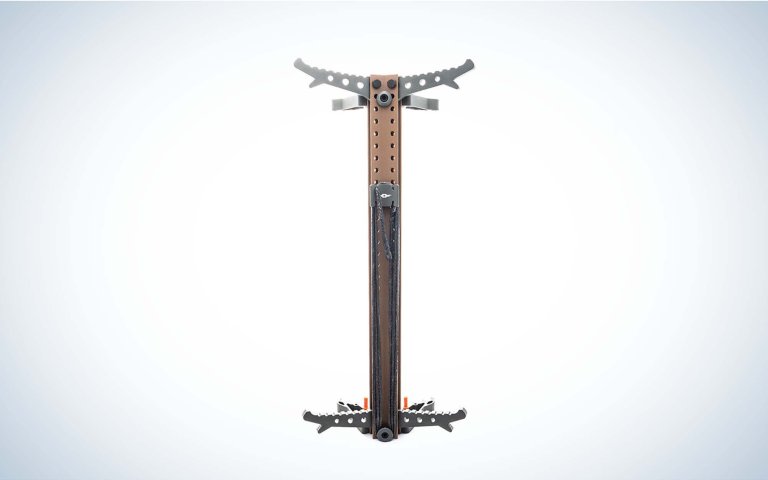
The Tethrd Skeletors feature an Amsteel DynaLite rope attachment method, offering versatility to climb a wide range of tree diameters. A folding double-step design means the steps pivot 90 degrees for streamlined transportation. You’ll find the same proven StickLoc pin system from the One sticks, but with an added Rope Containment System to easily stow your DynaLite rope when transporting your sticks.
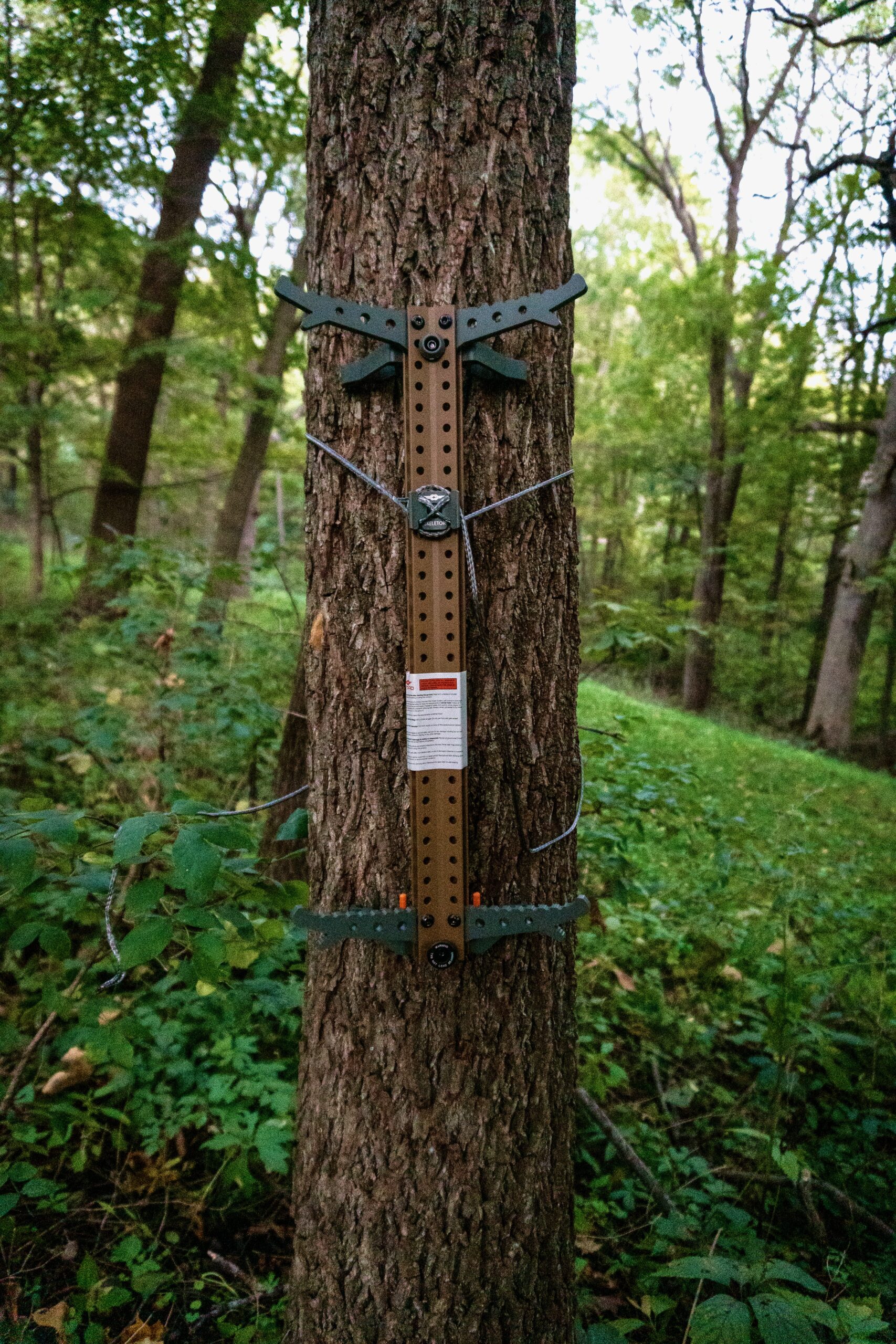
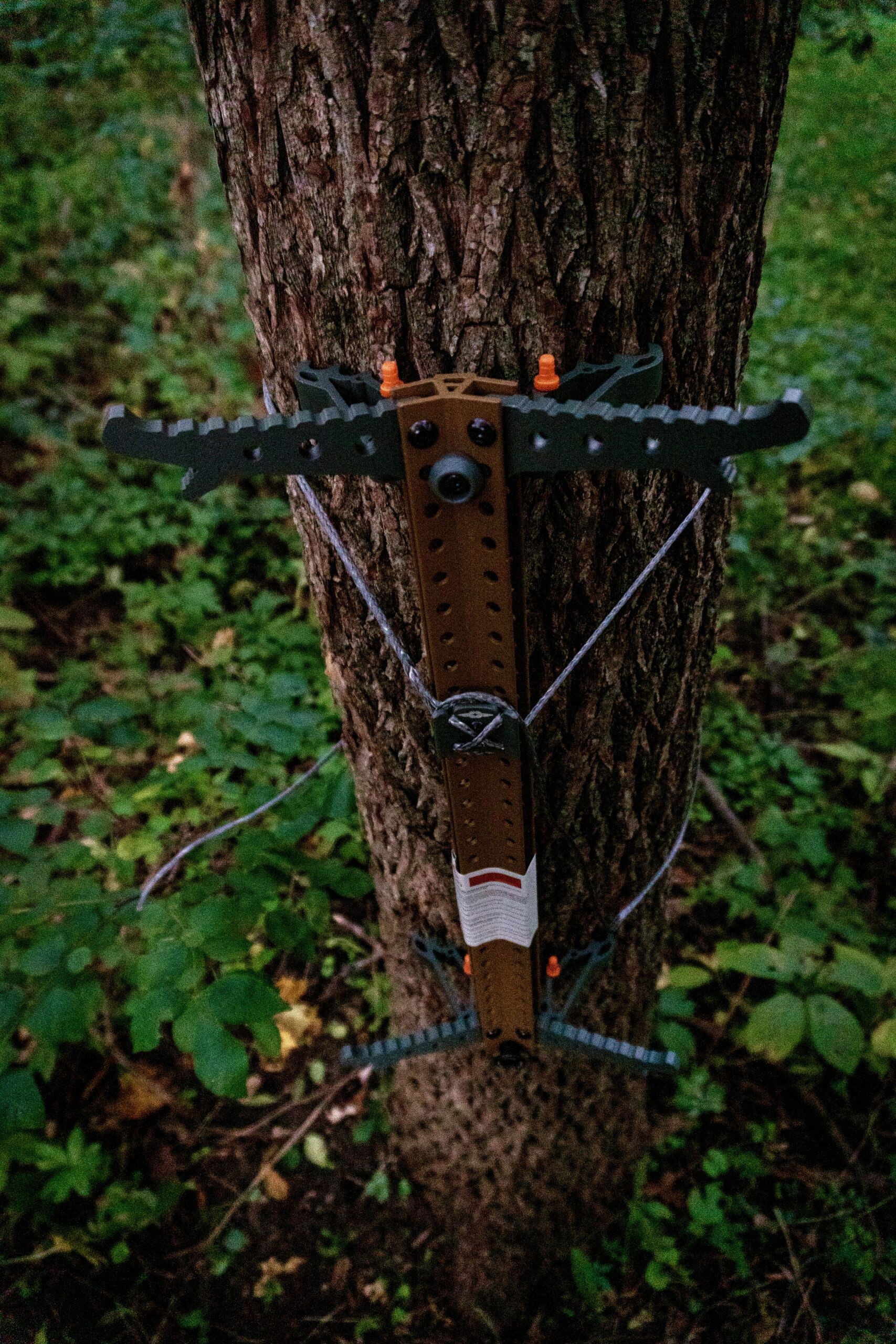
You get a lot of features for the money, but there is a trade off—weight. An all-aluminum design means the Skeletors are roughly double the weight of the One sticks, weighing in at just over 2 pounds per stick. If you don’t mind carrying an 8 pound four-pack, the Skeletors are a feature-rich option for the mobile bowhunter.
How to Choose Climbing Sticks
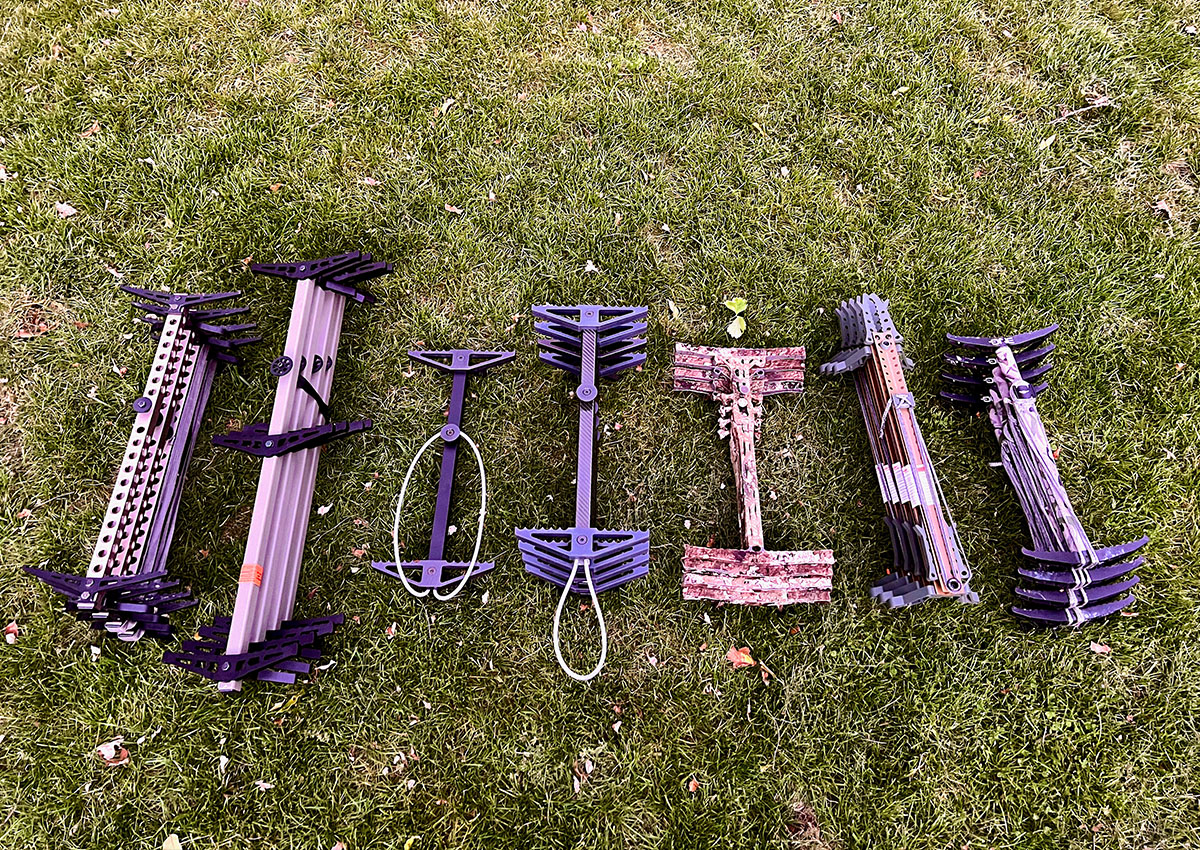
Consider your primary hunting style before you choose a climbing stick. If you find yourself trekking far from the parking lot, weight will likely factor into your decision more than if you’re creeping into a pre-hung stand location.
Another thing to consider is the attachment method. Cam buckles are fast to set up, easy to use, and able to grip the tree incredibly well. But they add extra weight and bulk. Rope and cord attachment methods are silent, but require some knot tying practice and aren’t fool proof.
Final Thoughts
Mobile hunting gear keeps getting better with each passing year—especially sticks and stands. The best climbing sticks are quiet, packable, and instill confidence as you ascend your perch. All of the sticks in this test fulfill these requirements and can help you hunt more effectively.
Read the full article here