

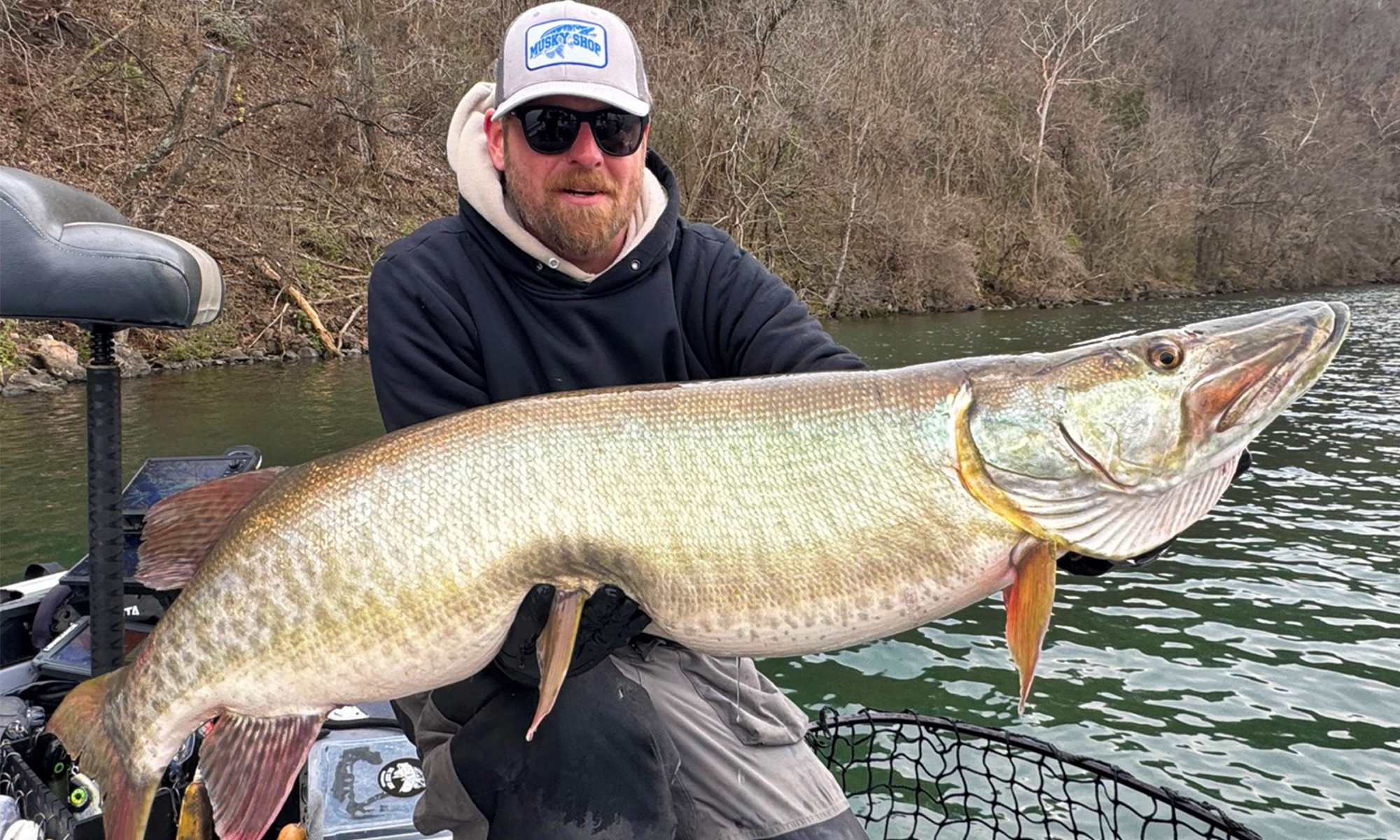
Few presentations in muskie fishing are as effective—or as unforgiving—as a live sucker. Done correctly, fishing with a live sucker can trigger muskies that ignore every lure in the box. Done carelessly, it can kill the very trophies we value. This is not a casual technique. Fishing for muskies with live bait is a discipline of precision, preparation, and responsibility.
Fall and winter are the key seasons for targeting muskies with live suckers. With that in mind, here’s how to do it in a way that maximizes your success on the water and, just as important, minimizes your impact on the fish.
Begin with the Right Bait

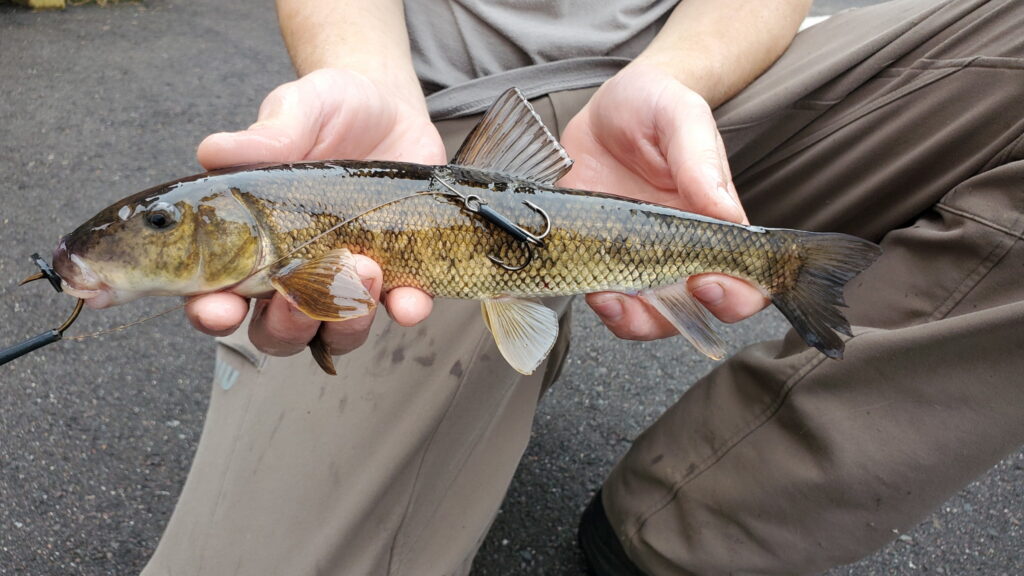
Live suckers are the go-to live bait for muskies, as they are part of the fish’s natural forage base and they stay active in cold water. Match your bait’s size to the forage in the lake, not your dreams. If muskies are feeding on 10- to 12-inch prey, rig a sucker in that range. Oversized live bait often draws looks without producing strikes.
Always check state, local, and lake-specific regulations on live-bait use, collection, possession, and transport. Buying from a licensed local dealer reduces risk but does not replace knowing the rules.
Related: How to Catch Fall Muskies: Go Big or Go Home
Sucker Care Requires Finesse
Healthy, active suckers catch muskies. Maintain heavy aeration, clean water, and cold but stable temperatures during transport both on and off the water. Condition chlorinated water, avoid rapid temperature swings, and never overcrowd the tank. A dedicated insulated bait tank is far easier to manage than a boat’s livewell that can be contaminated by sunscreen, bug spray, or fuel residue.
The suckers that generate strikes swim strongly all day. Keeping them healthy and spry is one of the most overlooked parts live-bait fishing for muskies. Never release unused suckers into the water. Dispose of them according to all applicable regulations.
Quick-Strike Rigs Are a Must
The practice of allowing a muskie to swallow a sucker belongs in the past. In a study published in Environmental Biology of Fishes, Wisconsin DNR biologist Terry L. Margenau tested the traditional single-hook method. Adult muskies were caught on live bait with 10/0 hooks and allowed to become stomach hooked. The leader was cut and the fish were monitored for up to a year. Twenty two percent of hooked fish died within 50 days. Eighty three percent died within one year. Necropsies showed extensive trauma and systemic bacterial infections. Margenau concluded that mortality at that level was unacceptable for trophy muskellunge management.
The lesson is clear. If you intend to target muskies with live bait, a quick-strike rig is a nonnegotiable for both conservation and ethical angling. My preferred rig is a Smity Titanium Quick Set, a compact two-treble system with one treble placed at the top of the sucker’s mouth and the second just behind the dorsal fin. This allows you to control the sucker without excess hardware, and it puts the hooks where the fish commonly strike. Muskies will often grab the bait headfirst, so the forward hook placement improves hookup rates. Other well-designed two treble or nose-rig systems can work well, too, if they allow an immediate set and if the hooks tear freely from the sucker.
Quick-strike rigs are meant to be used as the name implies: quickly. There is no counting, no waiting, and no guessing which way the fish is facing. When the clicker sounds and the rod loads, it’s time to set the hook.
Top Gear for Live-Bait Muskies
An 8- to 8½-foot heavy-action musky rod has the backbone to drive the hooks of a quick strike-rig home without becoming unwieldy during casting and figure-eighting. Pair it with a line-counter reel equipped with a clicker, and spool the reel with 80-to-100-pound braided line.
The line counter lets you return the sucker to a precise depth every time. The clicker alerts you to a strike when your attention is elsewhere. Keep the sucker rod within immediate reach, just outside the path of incoming casted lines and clear of motors. Poor placement creates crossed lines and missed fish.
Keep the drag of your reel moderately loose while the sucker is active. This allows a muskie to take the bait without feeling heavy resistance that might cause it to drop the sucker, while still giving you control of depth.
Best Places to Target Muskies with Live Bait
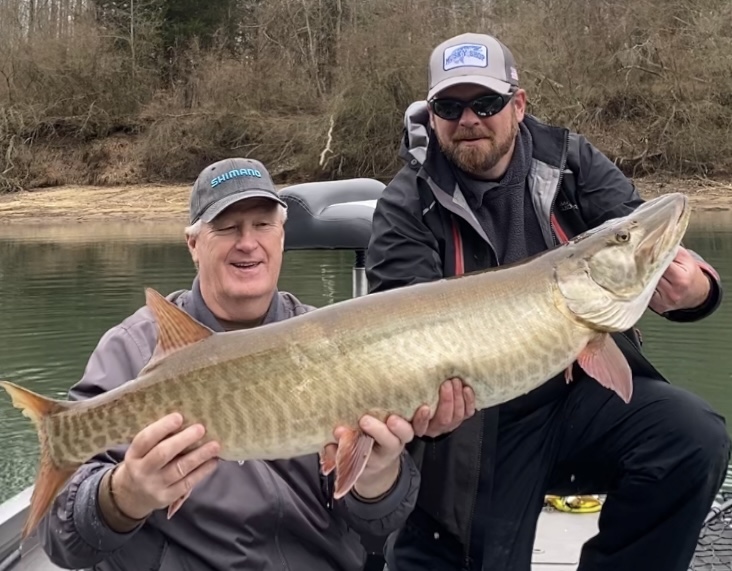
Identify the structures muskies are using while remembering to track forage, and understand how light penetration affects hunting depth. Major breaks, rocky points, and main basin humps are prime from early fall through ice up. Vertically oriented structures such as dam faces and rock walls can also be productive when forage is present. Focus on areas that combine mid-depth structure with quick access to deep water.
To set initial depth, lower the sucker beside the boat and note where it disappears from view. Start with the bait about 3 feet below that point, then adjust with the real-time location of forage on sonar or live imaging. Bright conditions often require deeper placement. Dark skies and stained water require the sucker to sit higher in the column.
Adding weight to your rig controls both depth and movement. One or 2 ounces of lead positioned about 2 feet above the sucker holds it tightly at a selected depth. Less weight gives the sucker more freedom. Active muskies often respond to suckers with room to move. Neutral fish can be easier to trigger when the sucker is kept on a shorter leash.
Related: Best Live-Bait Rigs for Fall Fishing
Never Fish Live Bait Passively
A sucker is not something to hang beside the boat and forget about while you cast. Instead, plan your casting-lure retrieves so that the artificial bait passes near the live bait alongside the boat. In the final feet of the retrieve and throughout the figure-eight, work the lure so that it leads following muskies to the sucker.
Muskies will often break away from a retrieved lure to engage the sucker, or they’ll strike the sucker after losing interest in a lure during the figure-eight. The sucker is part of the overall presentation and works best in tandem with a lure, not as a separate unattended line.
Wind, current, and boat control affect how a sucker tracks and moves in the water. Adjust line length, rod position, and rod holder angle to keep the bait properly placed with natural movement. Consistent success requires constant attention to these details.
Live imaging reveals how often suckers freeze when a muskie approaches. A short pull on the line can restart its movement and trigger a strike. Brief pulses from the trolling motor can also force a reaction from muskies that are inspecting or shepherding a live target. Keep those movements short and controlled. Create vulnerability without moving the sucker too far or too fast.
Related: Muskie Fishing 101: A Beginner’s Guide
Make the Hookset Automatic
When your rod loads or the reel’s clicker sounds, execute this sequence without hesitation:
- Grab the rod immediately
- Lower the tip briefly if needed to create a moment of slack
- Crank the drag down tight
- Reel until you feel tension
- Drive a hard upward hookset
Excitement causes anglers to fumble with rod holders or forget to tighten the drag. Practice the sequence until it is automatic. A powerful hookset is critical because the hooks must tear free from the sucker and penetrate the muskie’s jaw in one continuous motion.
Hesitation gives muskies time to swallow the bait or reject it. Many missed fish come from weak sets, dull hooks, poor hook placement, or overly complicated rigs. They do not come from failing to know which direction the muskie is facing. Once the muskie has the sucker, your job is simple: Drive the hooks home. Hard!
Conservation Is the Price of Admission
Live bait for muskies is best reserved for cold-water periods, particularly late fall and winter. Suckers are easier to keep healthy in cold water, and the presentation mirrors the slower feeding behavior of muskies during these seasons. Water temperatures in the 50-degree range and below generally provide the best conditions. Once temperatures climb into the upper 50s and low 60s, bait care becomes harder and responsible catch and release more difficult.
Have a large muskie net, long-handled pliers, jaw spreaders, and heavy-duty hook cutters within immediate reach. Even with a proper quick-strike rig and an immediate set, deep-hooking can still occur. When it does, being prepared can mean the difference between a clean release and a badly injured fish.
Keep netted muskies in the water while removing hooks. If a hook cannot be removed quickly and cleanly, cut it to reduce handling time and stress. Prioritize cutting hooks near the gills, eye, or other critical areas. Limit air exposure to the absolute minimum. Have your camera ready before lifting the fish, support the muskie horizontally with both hands, take the photo, and return it to the water immediately.
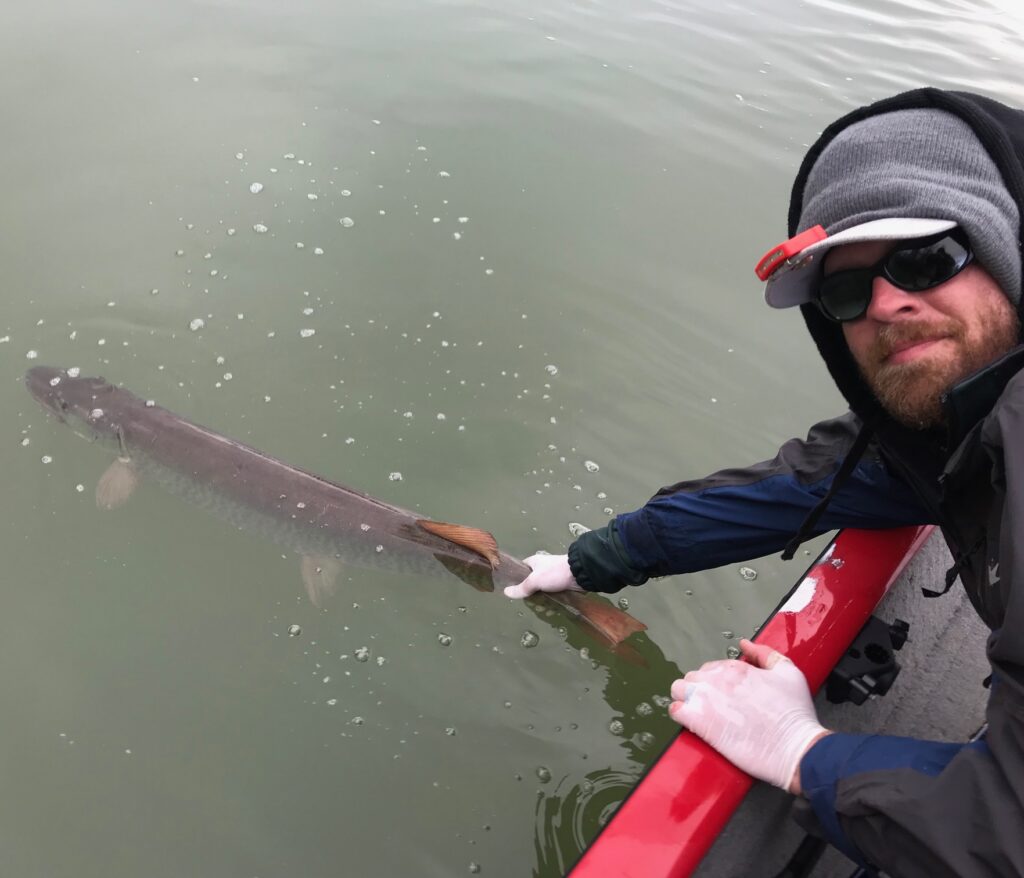
For the release, keep the muskie upright in the water and lightly support it until it regains balance and strength. In current, point the fish into the flow so fresh oxygenated water passes across the gills. Do not aggressively pump or rock the fish. Give it time to regain its balance, oxygen levels, and swim away under its own power.
Live bait is not a shortcut. It is a discipline built on preparation, precision, and respect for the resource. Fish it carelessly and the consequences can be permanent. Fish it correctly and a live sucker can produce one of the most unforgettable muskie encounters of your life while still giving that fish the chance to be included someone else’s story years down the road.
content_pike-muskie-fishing

EXCITING NEWS
Membership Now Includes

Recommended Products
Read the full article here