
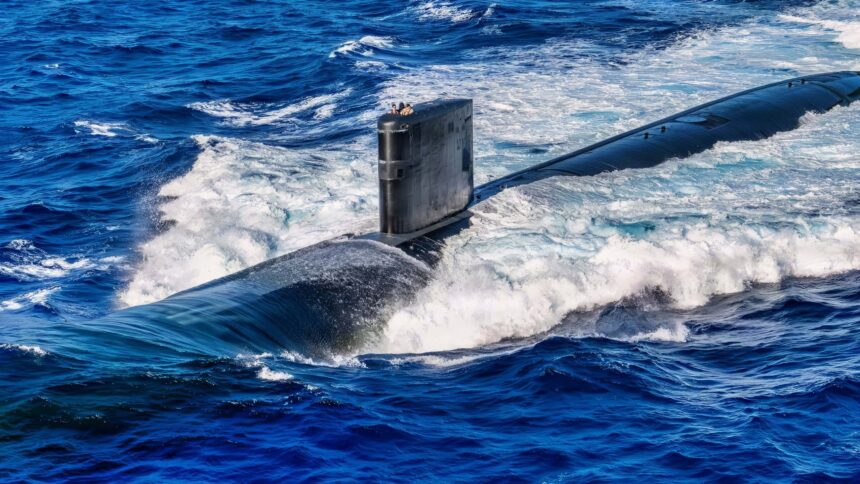
Summary and Key Points: HMS Illustrious knew the submarine was coming. That was the point of the exercise. In September 2013, in the Gulf of Oman, the 22,000-ton Royal Navy carrier moved through a narrow stretch of water screened by the Type 23 frigate HMS Westminster, the American destroyer USS Bulkeley, and 2 support ships, with 3 anti-submarine helicopters in the air — Merlins with dipping sonar off the carrier, a Seahawk off the Bulkeley, a Lynx off the Westminster. A single Merlin Mk 1 cost British taxpayers £39,000,000 and roughly £42,000 for every hour it flew. The USS Dallas, a 6,143-ton Los Angeles-class attack submarine with 127 crew and 4 torpedo tubes, got inside all of it and conducted simulated torpedo attacks.
USS Dallas Nuclear Attack Submarines vs. a Royal Navy Aircraft Carrier
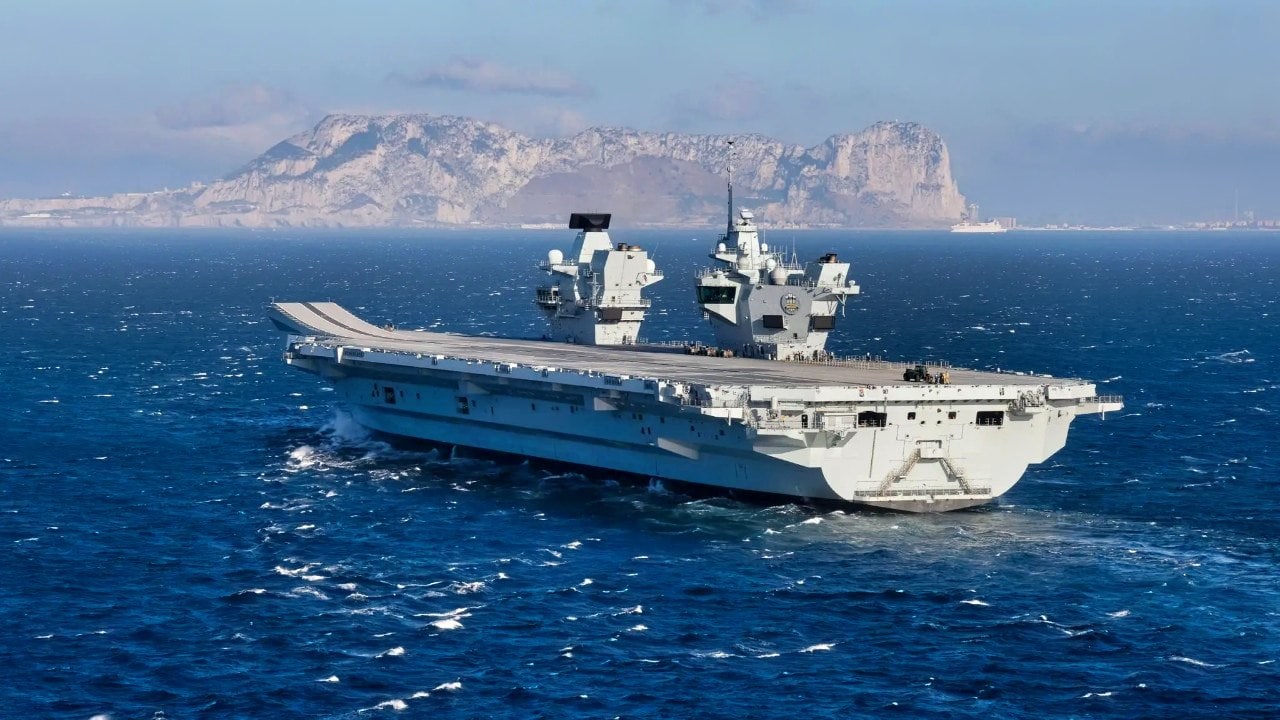
Queen Elizabeth-Class Royal Navy Aircraft Carrier. Image Credit: Creative Commons.
HMS Prince of Wales Royal Navy. Image Credit: Royal Navy.
The USS Dallas is a legendary American nuclear-powered submarine (made famous for its appearance in the Hunt for Red October).
One of those successes occurred in September 2013, when the Dallas, which was participating in NATO war games, successfully “sank” a British Royal Navy aircraft carrier in the Gulf of Oman.
The carrier had escorts. It possessed anti-submarine helicopters, too.
The carrier had advanced sonar — and it even knew the American submarine was coming for it.
Yet, the USS Dallas still got within firing range and successfully conducted simulated torpedo attacks against the HMS Illustrious.
While the US Navy claims the simulated kill during the exercise, the official narrative does not include the kill.
It remains something of an urban legend among US Navy submariners.
The chances are high that the American submarine did get a simulated kill shot on the British carrier, simply because aircraft carriers are increasingly vulnerable to the kind of attack the Dallas subjected the Illustrious to.
The USS Dallas: A US Navy Nuclear Submarine with Some Fame
Commissioned on July 18, 1981, the USS Dallas was the thirteenth Los Angeles-class nuclear-powered attack submarine built for the US Navy.
Yes, this is the same USS Dallas in the Hunt for Red October.
The submarine measured about 362 feet long and had a displacement of 6,143 tons, carrying a crew of 127 officers and enlisted personnel.
A single S6G nuclear reactor powered the submarine, giving it effectively unlimited cruising endurance.
The Navy listed the Dallas’ top speed at more than 25 knots.
The Dallas had four 21-inch torpedo tubes capable of launching heavyweight Mk 48 torpedoes.
On the other hand, the HMS Illustrious (R06) was a much larger vessel than the Dallas.
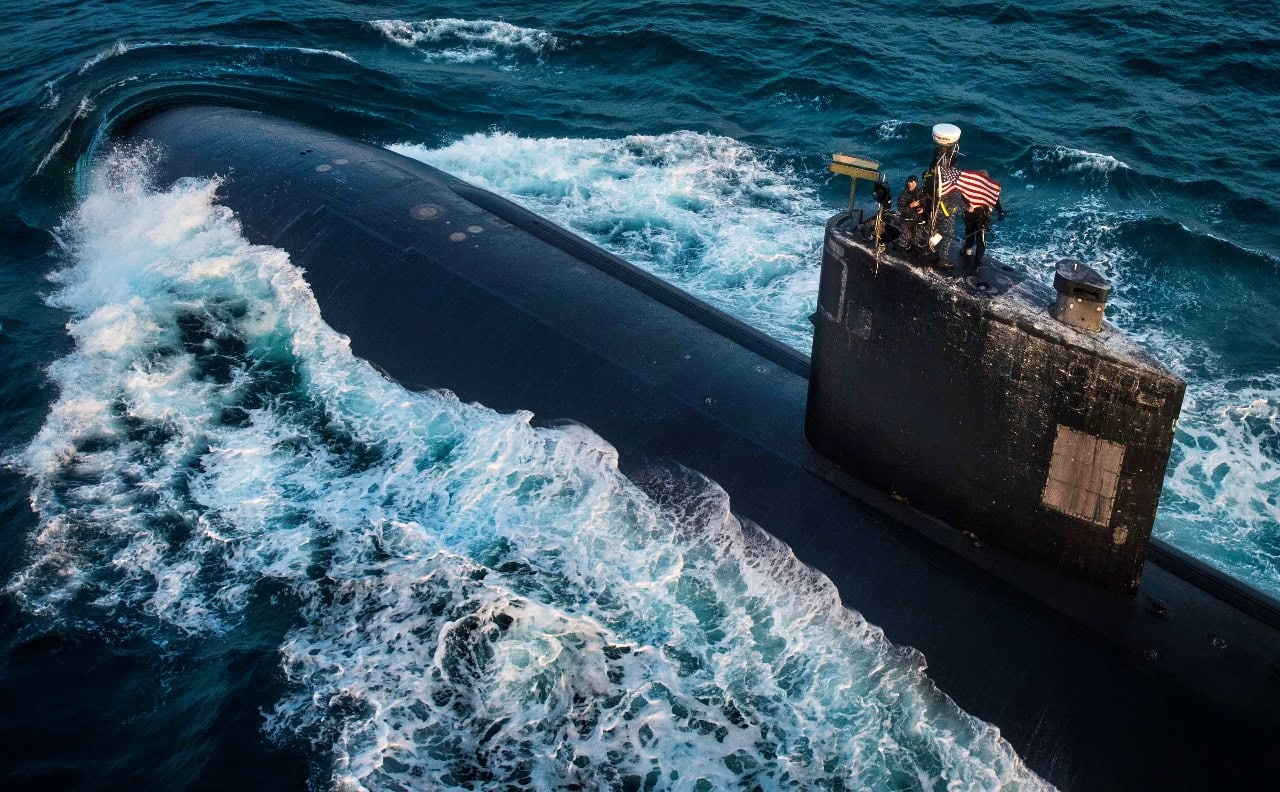
Los Angeles-Class Submarine. Image Credit: Creative Commons.
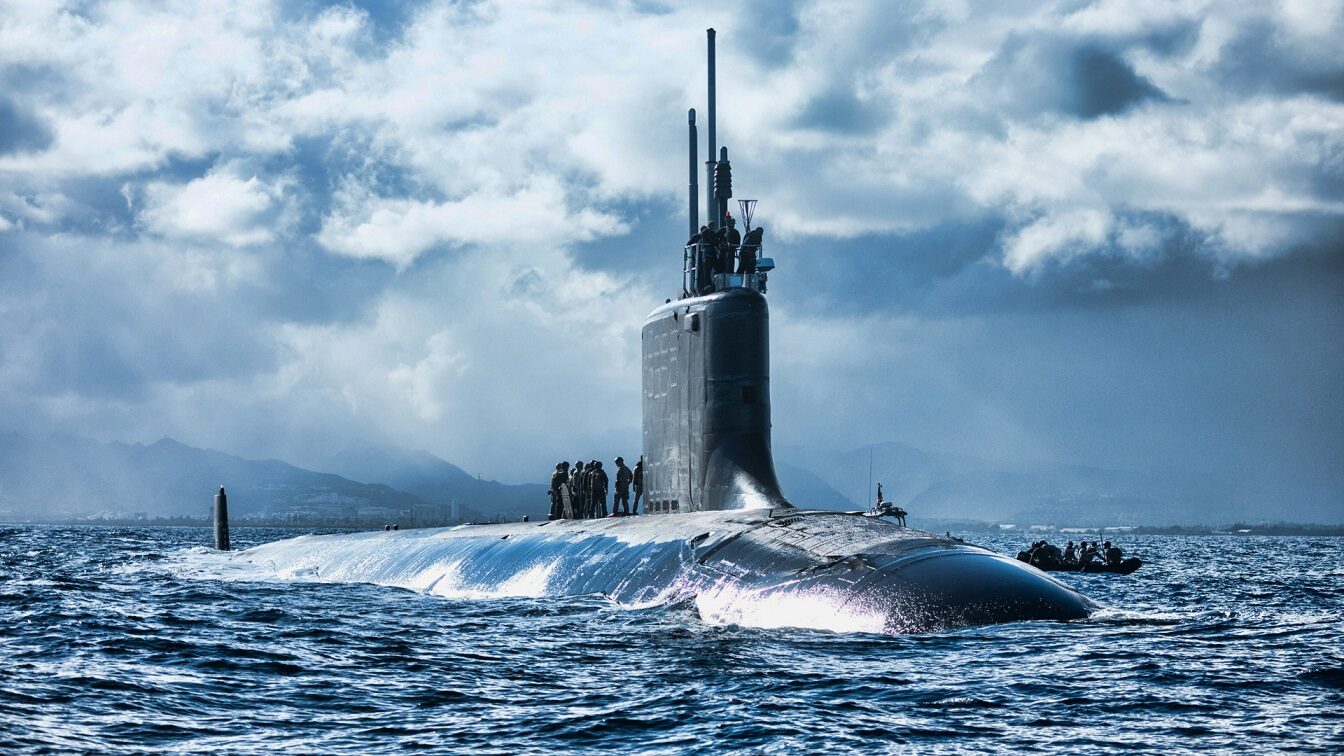
Los Angeles-Class. Image Credit: Creative Commons.
The Illustrious was nearly 700 feet long, and she displaced around 22,000 tons.
Four Rolls-Royce Olympus gas turbines produced around 97,000 horsepower, pushing the carrier to about 28 knots. Her crew complement could exceed 1,000 sailors and aircrew.
The HMS Illustrious
The carrier was laid down in 1976, and its specific purpose was to conduct anti-submarine mission sets for the British Royal Navy (and NATO).
It was launched in December 1978 and commissioned in June 1982.
She cost upwards of 185 million pounds to build. In 2010, the Illustrious underwent a 40 million pound refit to convert the ship into a helicopter landing carrier.
She was ultimately decommissioned in 2014 and later sold as scrap to a Turkish recycling firm for around two billion pounds.
London estimated annual operating costs at around £ 87 million, including contractor support periods. Before her 2010 refit, the Illustrious operated Britain’s iconic Sea Harrier warplanes from her flight deck.
But in 2006, the Royal Navy retired its Sea Harrier force.
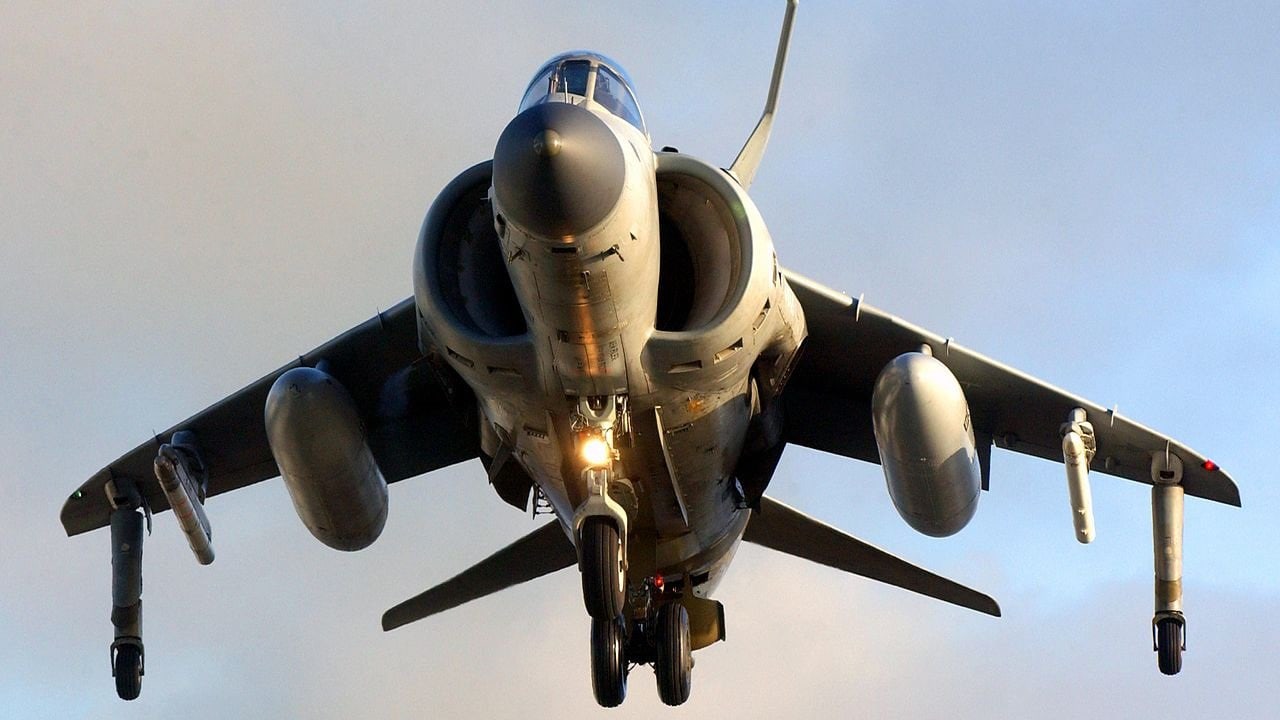
A Sea Harrier FA2 of 801 Squadron is seen hovering above the deck of HMS Illustrious. 801 Naval Air Squadron (NAS) was the last Fleet Air Arm squadron to operate the Sea Harrier FA2. After a very successful drawdown and decommissioning ceremony, the final Sea Harrier was withdrawn from service on 31 March 2006 at RNAS Yeovilton and the Squadron disbanded. 801 NAS will be recommissioned in October 2006, to operate the Harrier GR7 and GR9 from RAF Cottesmore. 801 NAS will be joining the recently commissioned 800 NAS as well as 1 and IV (AC) Sqns RAF to complete the formation of Joint Force Harrier (JFH). Organization: Royal Navy Object Name: VL05_0420_065 Keywords: 801 NAS, HMS Illustrious , FA2, Sea Harrier, Joint Force Harrier, Aircraft carrier, Sunshine Country: UK
Four years later, in 2010, the British government retired its entire Harrier fleet to offset costs imposed by the 2008 Great Financial Crisis.
The Harriers were sold to the United States Marine Corps for spare parts in 2010.
Sub-hunting helicopters replaced the Harriers. When the Illustrious participated in the exercise in 2013, it was specifically primed for anti-submarine warfare.
A Difficult Mission
Indeed, a surviving British Ministry of Defense (MOD) photograph from the 2013 Operation Kipion/Cougar exercises in the Middle East shows the Dallas’ periscope rising out of the water beside the HMS Illustrious.
Many point out that the Gulf of Oman is a difficult place to conduct anti-submarine warfare because the water is warm and relatively shallow.
That creates a more challenging acoustic environment for anti-submarine warfare units.
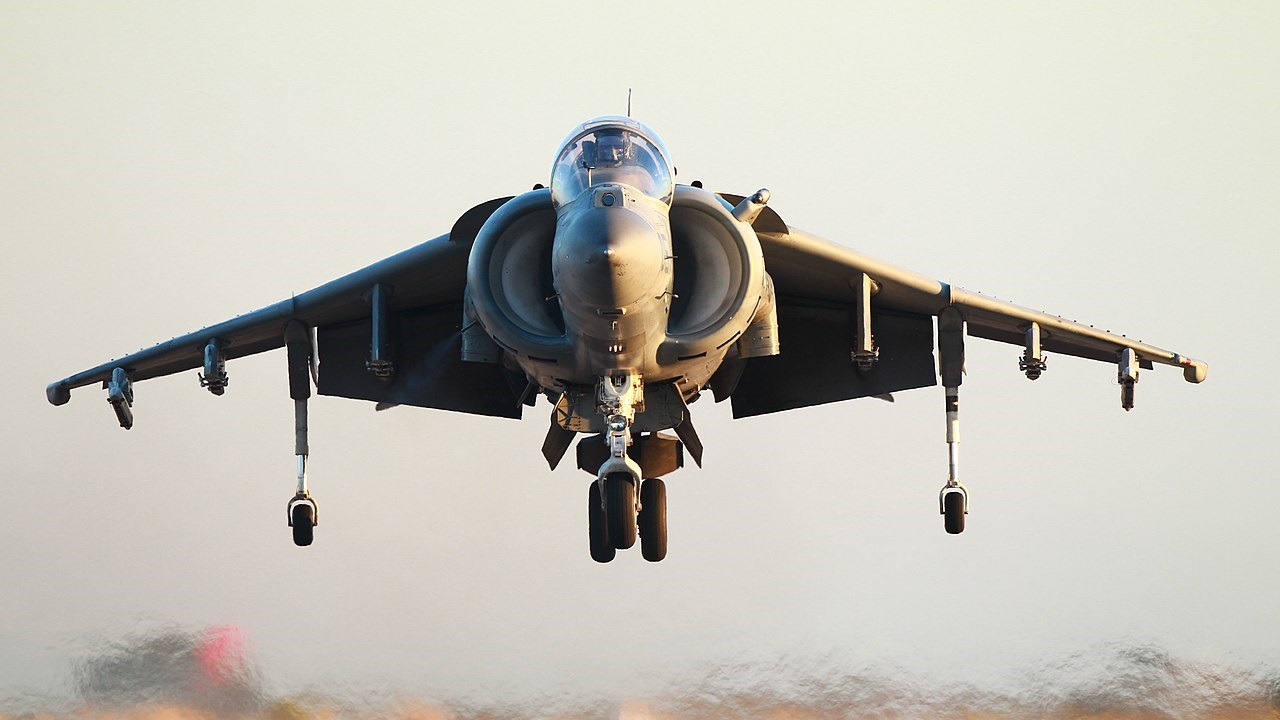
An AV-8B Harrier hovers over the flight line during the Marine Corps Community Services (MCCS) sponsored annual Air Show on Marine Corps Air Station (MCAS) Miramar, San Diego, Calif., Oct. 13, 2012. The MCAS Miramar Air Show showcases not only the aerial prowess of the Armed Forces but their appreciation of the community’s support and dedication to the troops. (U.S. Marine Corps photo by Cpl. Jamean Berry/Released)
Of course, given how pervasive Western military involvement in the Middle East has been, and how critical the Gulf of Oman is for those Western navies to operate, that is hardly an excuse.
More shockingly, though, was the fact that warships surrounded the British carrier.
She had the Type 23 frigate HMS Westminster, the American Arleigh Burke-class guided-missile destroyer USS Bulkeley, and two support warships.
Aircraft were supporting the submarine hunt, too.
Specifically, the Illustrious deployed her Merlin anti-submarine helicopters, which were equipped with advanced dipping sonar. Bulkeley added to the submarine hunt by deploying its MH-60 Seahawk.
HMS Westminster had its Lynx Mk 8 helicopter assisting the submarine hunt as well.
In fact, the Merlin helicopter itself was an extraordinary machine.
The Royal Navy Merlin Mk 1 cost British taxpayers 39 million pounds per chopper.
These birds also had an estimated operating cost of nearly 42,000 pounds per flying hour.
Despite these assets being present–and actively hunting the USS Dallas–the American submarine still got within firing range of the Illustrious.
The Exercise
The exercise itself was planned in three phases in the Gulf of Oman.
First, the ships and submarine operated from known positions.
This allowed the crews to measure the platforms’ performance and acclimate to Gulf of Oman conditions.
Second, the HMS Illustrious was designated as the “Mission Essential Unit.” The escorts had to move the 22,000-ton carrier through a tight passage of water while preventing the USS Dallas from acquiring a firing solution on the great ship. The Dallas was required to avoid detection and conduct simulated torpedo attacks.
Here’s where the account starts to differ, though.
The Royal Navy confirms the Dallas conducted simulated torpedo attacks on the HMS Illustrious.
At the same time, though, the Royal Navy account never provided the classified detection timeline, the firing solutions involved, or the final umpire assessment.
Thus, no publicly available Royal Navy document declares the USS Dallas the victor in the game.
Regardless, the US Navy’s iconic USS Dallas demonstrated a devastating capacity to get within the protective envelope of a carrier and sink major force combatants with relative ease.
This system, while advanced, is relatively cheap when compared to the costs of the carrier and its battle group.
Carrier Woes in the Age of A2/AD
And while the Royal Navy clearly doesn’t want to officially demonstrate how the Dallas got within kill range of the carrier, the exercise itself demonstrated the awful mathematics for any nation (or alliance) employing aircraft carriers: an attacking submarine only has to get it right one time, whereas the carrier and its battle group must constantly defend — and get it right every time.
Not only are carriers more expensive than submarines (even nuclear-powered submarines), but defending them is a ghastly affair. In the modern age, when most nations use denial strategies, the carrier’s economics no longer add up.
About the author: Brandon J. Weichert
Brandon J. Weichert is the Senior National Security Editor at 19FortyFive.com. He also manages The Weichert Brief on Substack. Weichert also hosts “National Security Talk” on Rumble. He is the author of four bestselling national security books, the most recent of which is A Disaster of Our Own Making: How the West Lost Ukraine (Encounter Books). Follow him via Twitter/X @WeTheBrandon.