

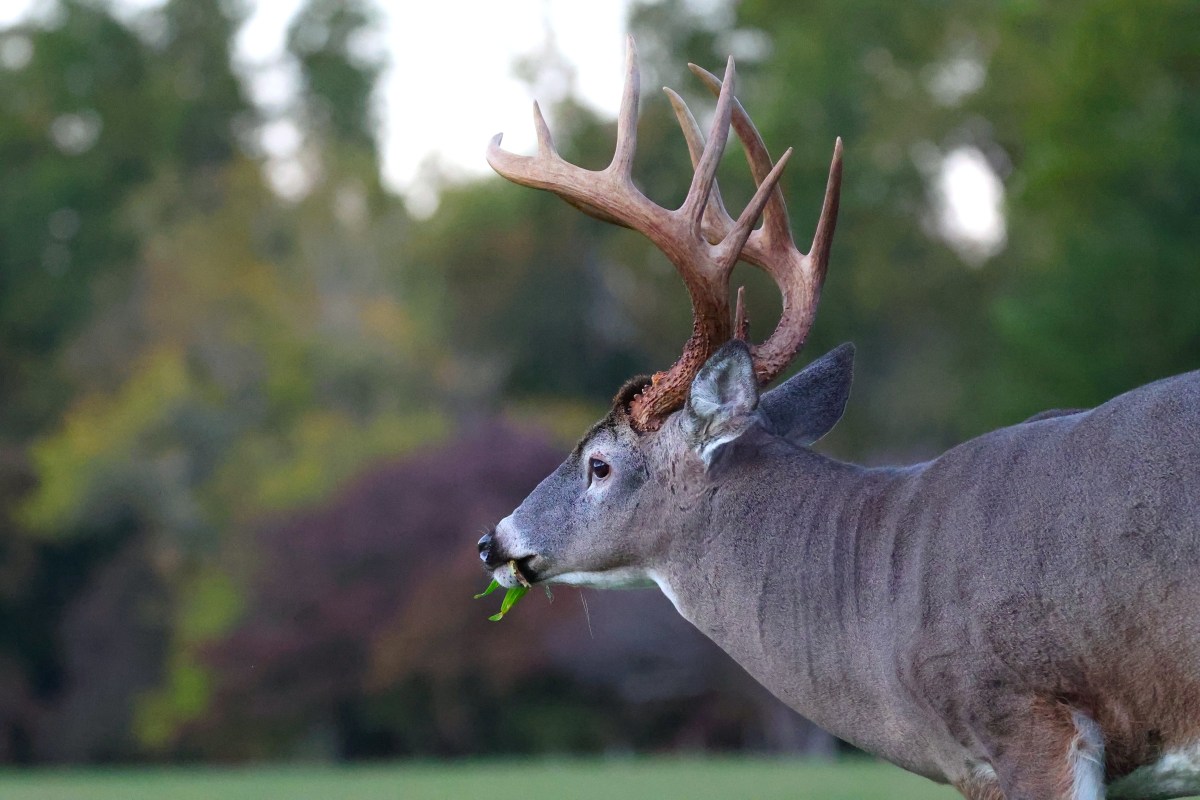
While the South has plenty of excellent hunting and fishing opportunities, most of us still look at it as the little brother of the whitetail deer hunting world. Many even rank it below the Northeast region, let alone the Midwest, where big bucks seem to lurk around every cornfield. But is that an accurate assessment? If you analyze the deer harvest data, the conversation changes. A variety of metrics show the South is making big strides in whitetail hunting.
So has the South dethroned the Midwest as the new king of whitetail country? Have southern deer and deer hunters unseated the heavyweight champ of cervids? Let’s dive into it.
Antlered Whitetail Buck Harvest Data
Both the Midwest and Southeast are unique places with unique whitetail herds. The Midwest is home to four subspecies of whitetails, including the Dacotensis deer (Upper Midwest), Macrourus subspecies (Iowa, Kansas, Missouri, and Nebraska), Texanus whitetail (parts of Kansas and Nebraska), and Borealis subspecies (parts of Illinois, Indiana, Iowa, Michigan, Minnesota, Ohio, and Wisconsin).
Without question, the Midwest is the region deer hunters look to in terms of big, old whitetails. Rightfully so, because it has more deer in the record books than all other regions combined. Still, there’s more in play than meets the eye.
The Southeast is home to 10 subspecies of whitetails. The Virginianus (Alabama, Georgia, Kentucky, Mississippi, North Carolina, South Carolina, Tennessee, Virginia, and West Virginia), Hiltonensis (Hilton Head Island in South Carolina), Nigribarbis (Blackbeard Island in Georgia), Taurinsulae (Bull Island in South Carolina), Venatorius (Hunting Island in South Carolina), Macrourus (Arkansas, northern Louisiana, and eastern Texas), Mcilhennyi (southeastern Texas and southern Louisiana), Osceola (southern Mississippi, southern Alabama, and western Florida), Seminolus (Florida), and Clavium (southernmost Florida), which is commonly known as the Florida Keys deer.
While the Southeast doesn’t have nearly as many record-book whitetails, it is producing older deer. More southern hunters now are passing bucks, seeing older whitetails, and hanging some ancient bucks on the wall.
For the 2022-23 deer season, the National Deer Association (NDA) reported that, in the Southeast, 42 percent of all harvested antlered bucks were 3 ½ years old or older. In contrast, only 26% were 1 ½ years old.
According to the 2026 NDA Deer Report (2024 harvest data), the Southeast is making a real push to climb the ranks of the deer hunting world.
The top states for antlered buck harvest totals were Texas (425,529), Pennsylvania (175,280), Wisconsin (162,336), Michigan (157,204), and Alabama (144,828).
Analyzing on a level playing field, the antlered buck harvest per square mile was Pennsylvania (3.9), Maryland (3.3), Louisiana (3), South Carolina (3), and Wisconsin (3).
The greatest antlered buck harvest per 100 deer hunters was entirely dominated by the Southeast in a top five with South Carolina (70), Florida (68), Louisiana (62), Alabama (61), and Georgia (61).
Studying year-over-year improvements, the greatest antlered buck harvest increases (2024 vs. the five-year average) included Florida (35%), Alabama (18%), Rhode Island (16%), Georgia (15%), and Ohio (15%).
Studying the regions as a whole, the percent change in the 2024 antlered buck harvest compared to the five-year average shows more improvement for the Southeast than any other region in the nation. The Southeast has seen a 6% increase, Northeast 4% increase, and Midwest a 6% decrease. That’s a 12% total swing when comparing the Southeast and Midwest.
Consistently producing and shooting older bucks has a direct correlation with passing younger ones. In this category, the South reigns supreme. During the 2024 season, the top states with the lowest percentage of yearling bucks in the annual harvest were Florida (7%), Mississippi (10%), Oklahoma (10%), Alabama (11%), Arkansas (11%), and Louisiana (11%). It comes as no surprise that the highest percentage of 3 ½-plus-year-old bucks in the harvest came from virtually the same states — Oklahoma (81%), Mississippi (80%), Louisiana (75%), Texas (70%), and Arkansas (67%).
In contrast, the states with the highest percentage of yearling bucks in the 2024 harvest were all north of the 37th parallel. These included Iowa (42%), Wisconsin (42%), Maryland (39%), Maine (38%), and Illinois (36%). Incredibly, three of the top historical record-book whitetail states, and the many years of management and culture these have invested, still manage to shoot the highest percentage of yearling bucks. There’s nothing right or wrong about that, but it’s interesting that the three states with arguably the best three reputations in big buck hunting also shoot some of the smallest bucks.
Buck harvests aside, overall deer population trends also show the South is on the rise. The top states with the highest estimated populations include Texas (5 million), Wisconsin (2.1 million), Missouri (1.7 million), Mississippi (1.6 million), Georgia (1.3 million), and Virginia (1.3 million). Furthermore, the greatest increases in deer populations in recent years saw Louisiana taking the top spot and Virginia at No. 5.
Public Land Availability and Improvement for Whitetails
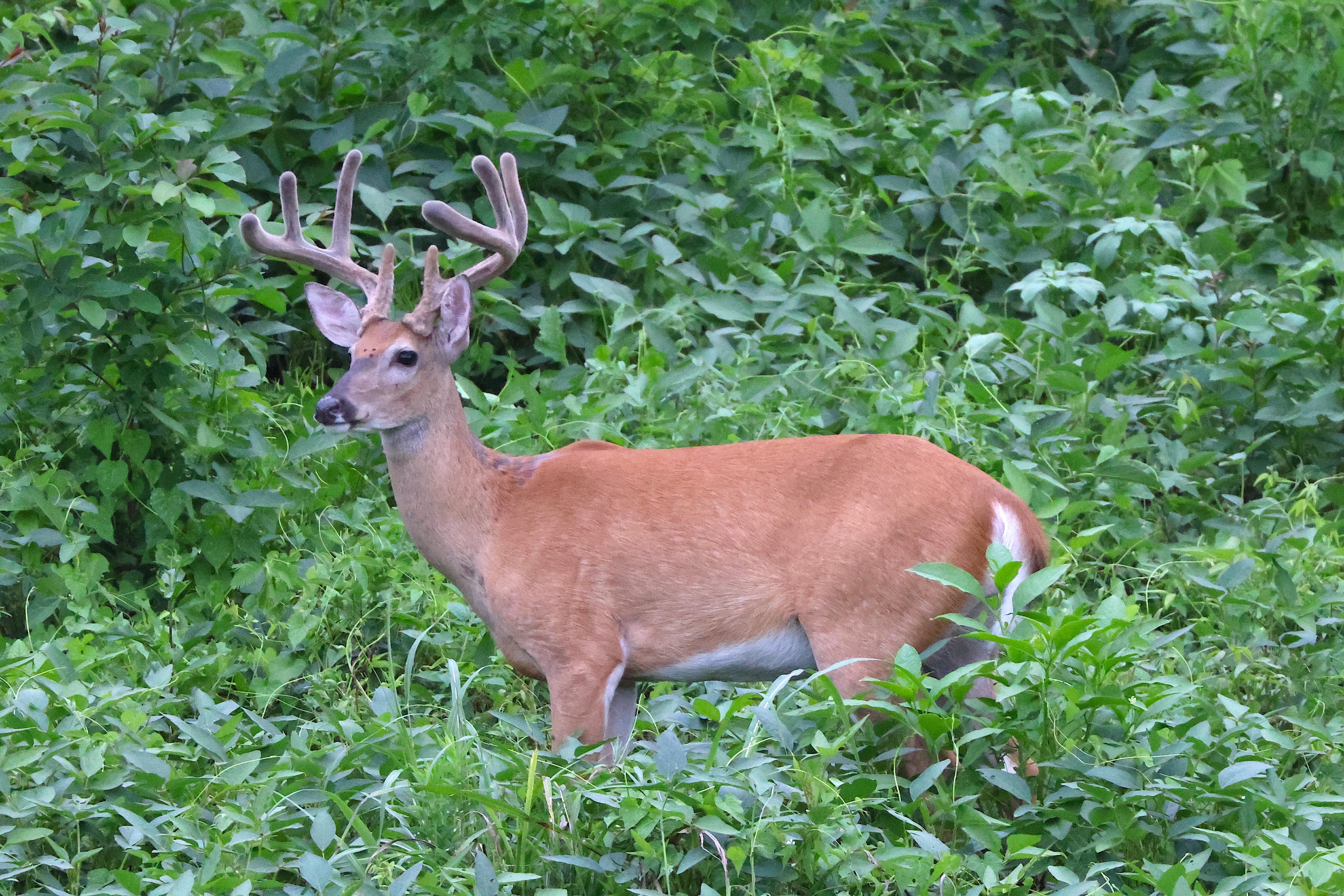
The South is making more headway in improving deer habitat on its public lands. For example, the Cherokee National Forest is undergoing numerous projects to enhance early successional habitat, which is an ever decreasing characteristic (and increasing problem) on public ground.
This is a trend throughout much of the region. More habitat work is being done in the South than anywhere else in the nation, including the Midwest. As this continues, more habitat improvement will lead to increased deer populations (in areas that need it), even older age classes of bucks, and better deer hunting opportunities.
Whitetail Record Book Entry Data
The Midwest continues to produce more record-class whitetails than any other region. That’s unlikely to change, as the variables associated with top-end whitetails are largely confined to the Midwest.
These include:
- Post ice-age glacial paths created mineral-rich soil throughout the Midwest, effectively resulting in larger antlers. The limestone-rich ground easily transfers macro minerals to plants to whitetails to antlers.
- More nutritious (and more abundant) agricultural food sources, such as corn, soybeans, sorghum, wheat, etc., which are high in carbohydrates and protein.
- Better overall antler genetic quality, which at this point, is firmly ingrained in each region’s respective deer herds.
- Better tag structures, and oftentimes, one-buck limits (e.g.: Ohio, Indiana, Kansas, etc.).
When studying the total number of Boone and Crockett (B&C) and Pope & Young (P&Y) entries, there really is no comparison between the regions. The Midwest still reigns supreme.
Is the South the New King of Whitetail Country?
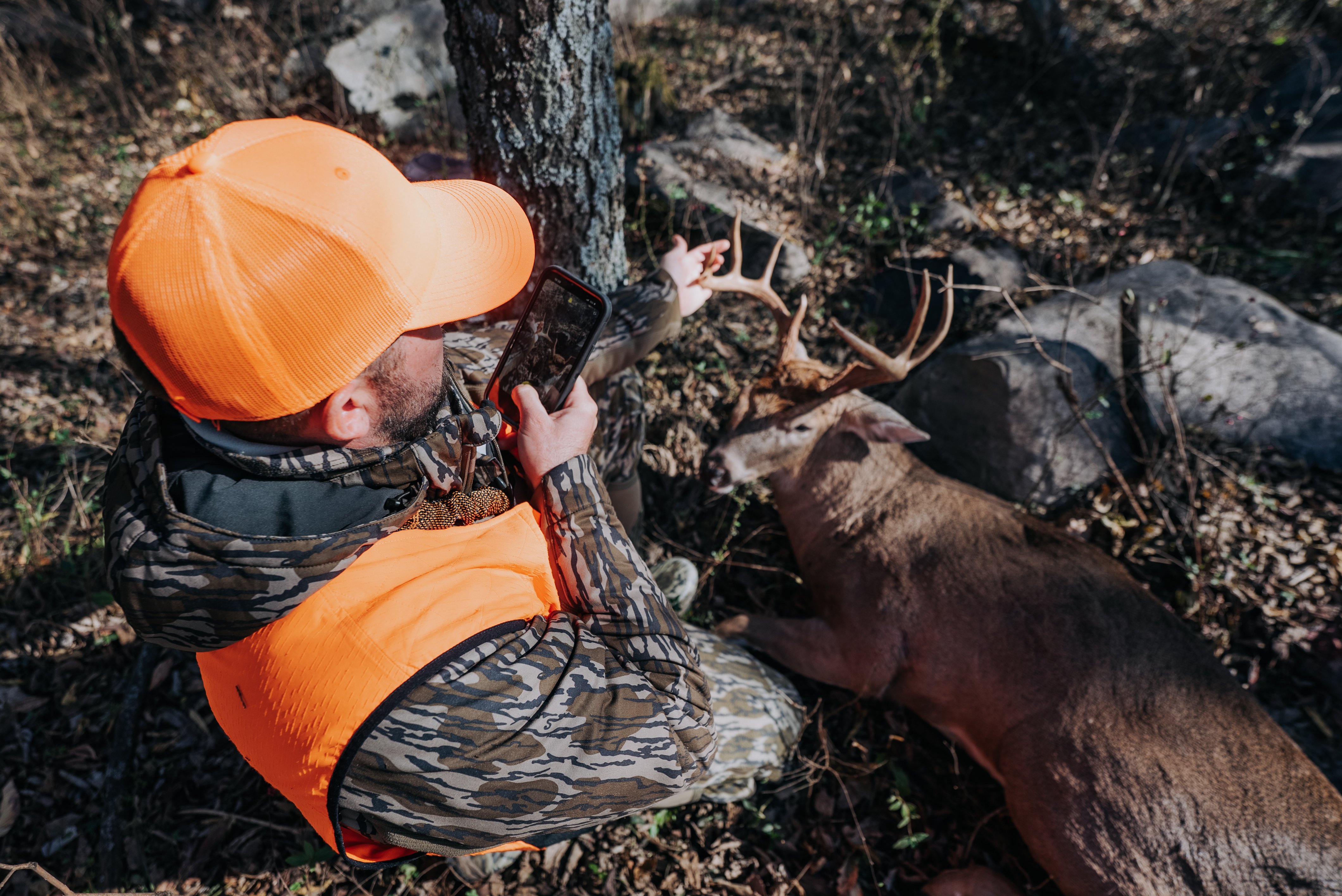
The short answer is yes and no. Yes, the South has become a powerhouse in terms of high deer numbers and older whitetail bucks. Undeniably, mature buck management is unparalleled there.
“The Southeast consistently produces the largest percentage of mature bucks in the nationwide harvest,” says Kip Adams, chief conservation officer with the NDA. “During the 2024-25 deer season, 34% of the Northeast buck harvest, 36% of the Midwest buck harvest, and a whopping 58% of the Southeast buck harvest was at least 3 ½ years old.”
“The Southeast does this even while averaging the longest hunting seasons and highest buck bag limits,” Adams says. “Southeast hunters were the first to have antler point restrictions designed to protect yearling bucks. Dooly County, Georgia, enacted APRs in 1993, Mississippi went statewide with them in 1995, and then other Southeastern states followed. Thus, hunters in the Southeast were among the first to realize the benefits of passing young bucks and harvesting mature deer. They continue that trend today by passing young bucks more often than hunters in other regions and consistently harvest the highest percentage of mature bucks.”
All said, no, the South is not the leader in terms of top-end antler score, and likely never will be. The Midwest continues to dominate the B&C and P&Y record books. Simply put, a mature Midwest buck has a better chance at growing a trophy rack than a mature Southern buck.
There are six major reasons that the South is capable of producing so many older bucks, but so few record-class studs. These include soil quality, food source abundance, food source quality, genetic foundations, Bergmann’s Rule (which focuses on body mass but also translates to antlers), and lower buck bag limits in the Midwest.
Ultimately, it depends on a hunter’s goals and values to determine what region is “best” for them. Do you want larger deer herds and older bucks, or a shot at record book glory? Choose your deer hunting destination accordingly.
The Golden Age of Deer Hunting
In both regions we’re mostly seeing bigger deer herds, older buck age structures, and increased antler sizes. Sure, EHD and CWD are hitting harder than ever, and habitat destruction is increasingly a concern, but yes, this is the golden age of deer hunting.
According to Adams, throughout the nation, more bucks are reaching older age classes than in years past. Additionally, more hunters are managing their land for improved wildlife habitat. This leads to more and greater food sources.
Adams says that, generally, yearling bucks grow 15-25% of their overall antler growth potential, 2 ½-year-olds produce 25-50%, 3 ½-year-olds deliver 50-75%, 4 ½-year-olds crank out 75-90%, and 5 ½-plus-year-olds reach 100% of their genetic potential.
A key stat in recent NDA Deer Reports is that yearling bucks are comprising less of the annual buck harvest than any time before. Adams notes that hunters are capitalizing on more balanced age structures nationally, but especially so in the Southeast region.
Read Next: Indiana Is Now the Top Trophy Whitetail State. Here’s Why
Regardless of individual states and regions, the nation continues to grow bigger, older deer. In 1989, 62% of all harvested bucks were 1 ½ years old. By 2023, that number dropped to 23%. Hunters are managing for older whitetails and more balanced deer herds. Nowhere is a better example of that than the South.
Read the full article here