
Pronghorn antelope are the ultimate archery hunting challenge. These big-game animals are extraordinarily fast, have incredible eyesight, and live on wide-open plains. They’re also extremely difficult to get within bow range—but it’s not impossible.
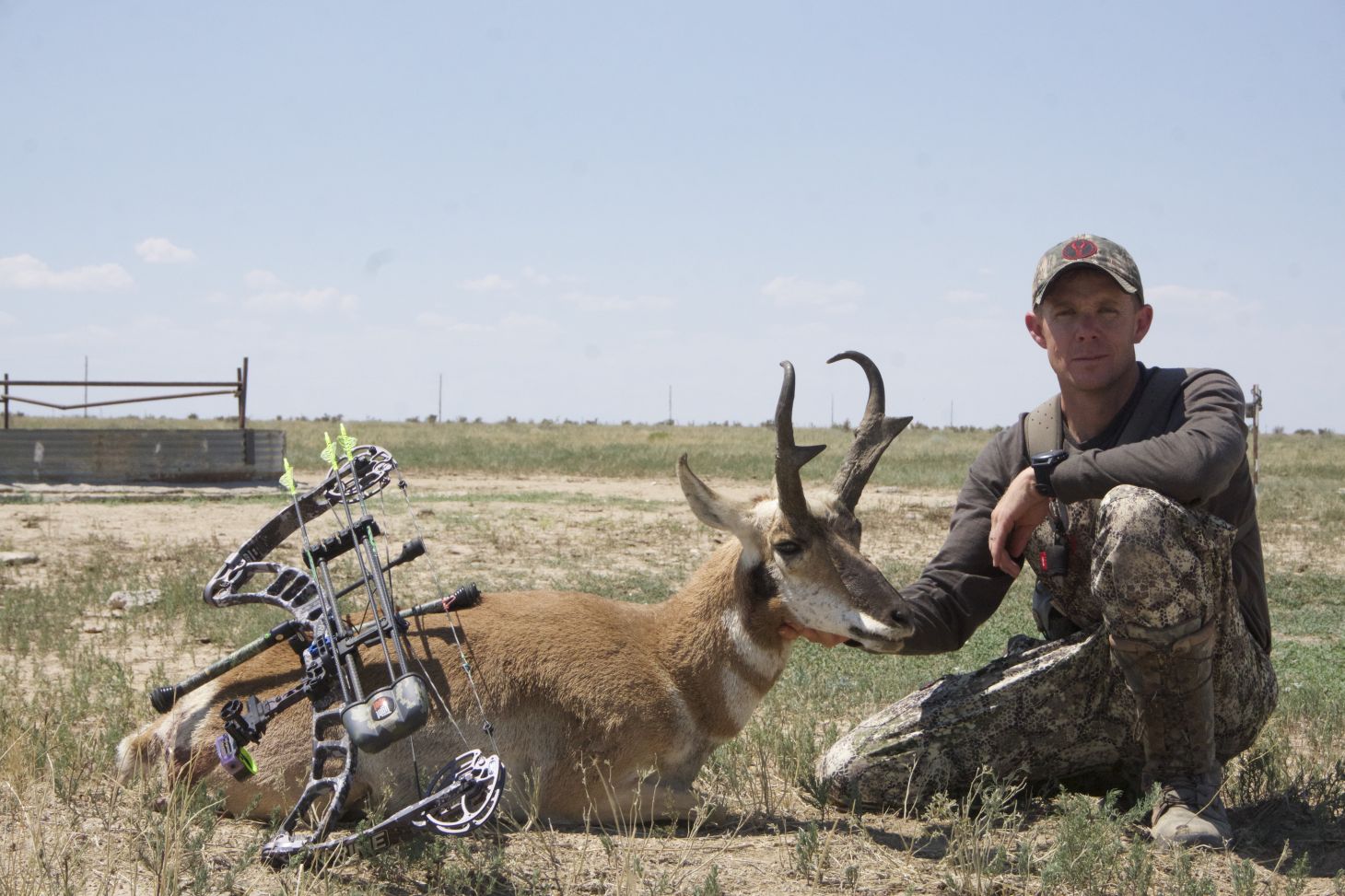
Successfully bowhunting antelope requires patience and strategy. I’ve been chasing speed goats with my bow for 25 years, and during that time, I’ve taken 26 pronghorn bucks. Over those two-plus decades, I’ve relied on three main strategies for killing antelope with my bow. I’ve outlined each method below to improve your chances of punching a tag this August and September. Each technique works best during a specific part of the season, and knowing when to switch strategies can significantly increase your odds of killing a buck.
1. Hunt Over Water
Like with other Western big game species, hunting over water can yield excellent success with pronghorns. Since pronghorn habitat is so vast and open, it can be difficult to pinpoint where speed goats may be. Start by locating water sources via a quality digital mapping app like HuntStand. Pin all likely water sources in your area, including springs, stock tanks, artificial ponds, and natural ponds.
Next, zoom out on your hunt area and look at locales with the fewest water sources. Fewer water sources limit where pronghorn can go. During your water search, understand pronghorn prefer to drink from water on the ground, meaning a pond, spring, or stock tank with water spilling over the side. They will drink from stock tanks that don’t spew water over the top, but cattle ranchers and government officials tend to keep the water on these tanks well below the top to prevent spillage. This means pronghorn have to lower their heads below the rim of the tank to drink, compromising their number one defense: their eyes.
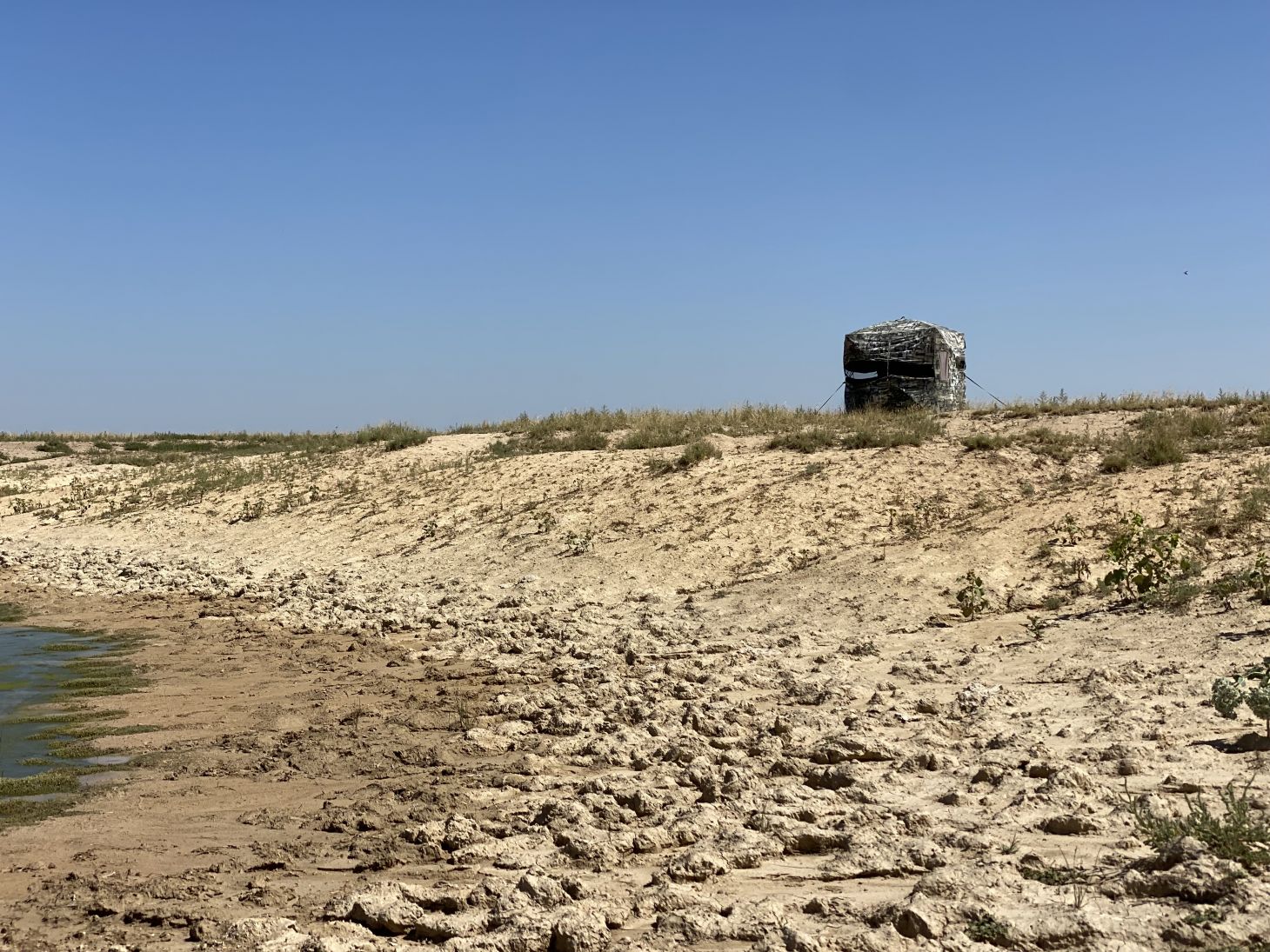
Upon arrival, visit areas with limited water first. Next, inspect natural water sources and artificial ponds. Save the stock tanks for last. While scouting for water, you’re looking for live goats, tracks, and scrapes in the area. A pronghorn scrape is a pawed-out area of the earth with urine and poop in it. Bucks do it a lot, and if you find several scrapes near water, you’ve likely discovered their refreshment stand.
After looking at all water sources, pick the one with the most tracks, scrapes, and activity. Then, if legal, hang trail cameras on at least two others. If the spot you pick is a bust, you’ll have right-now intel on other water sources.
Don’t believe what you’ve heard about pronghorn not being bothered by a hub-style blind. Often, it takes a few days for antelope to get used to them. Set your blinds and give the goats a day or two to accept them. If time is of the essence and you must perform a same-day hunt, put the blind 35 to 40 yards off the water source. Pronghorn don’t like to be crowded by new objects while they drink. Check your weather forecast and set your blinds up so the estimated wind blows into the blind. Wear black, get in the blind before daylight, and don’t leave until after dark. You must commit to a 15-hour sit to ensure success.
2. Be Aggressive
Spot-and-stalk hunting is my favorite way to chase pronghorn. It is exciting, challenging, and requires strategy. It is also one of the best bowhunts, for all of the reasons mentioned above, in North America. Here’s how to do it.
Start with the best optics—binos and a spotter—you can afford. Next, use your vehicle and legs to cover as much ground as possible. Because pronghorn terrain is often pancake-flat, I do tons of glassing from my truck bed. Throw an excellent blind chair in your truck and a tripod to add glassing stability and comfort.
Look for any rises in the landscape: hills, plateaus, ridges, etc. You’ll be able to see far in every direction, and any elevation gain will boost your visibility and glassing success. Now, don’t stalk every buck you see. Though tempting, because pronghorns are so visible, only embark on high-percentage stalks. I look for lone bucks bedded near a hill, dry creek bed, a patch of sunflowers, or in spotty, silver-tipped sage. I also often watch goats from a distance, predict their path, and use the terrain to get into position long before they arrive.
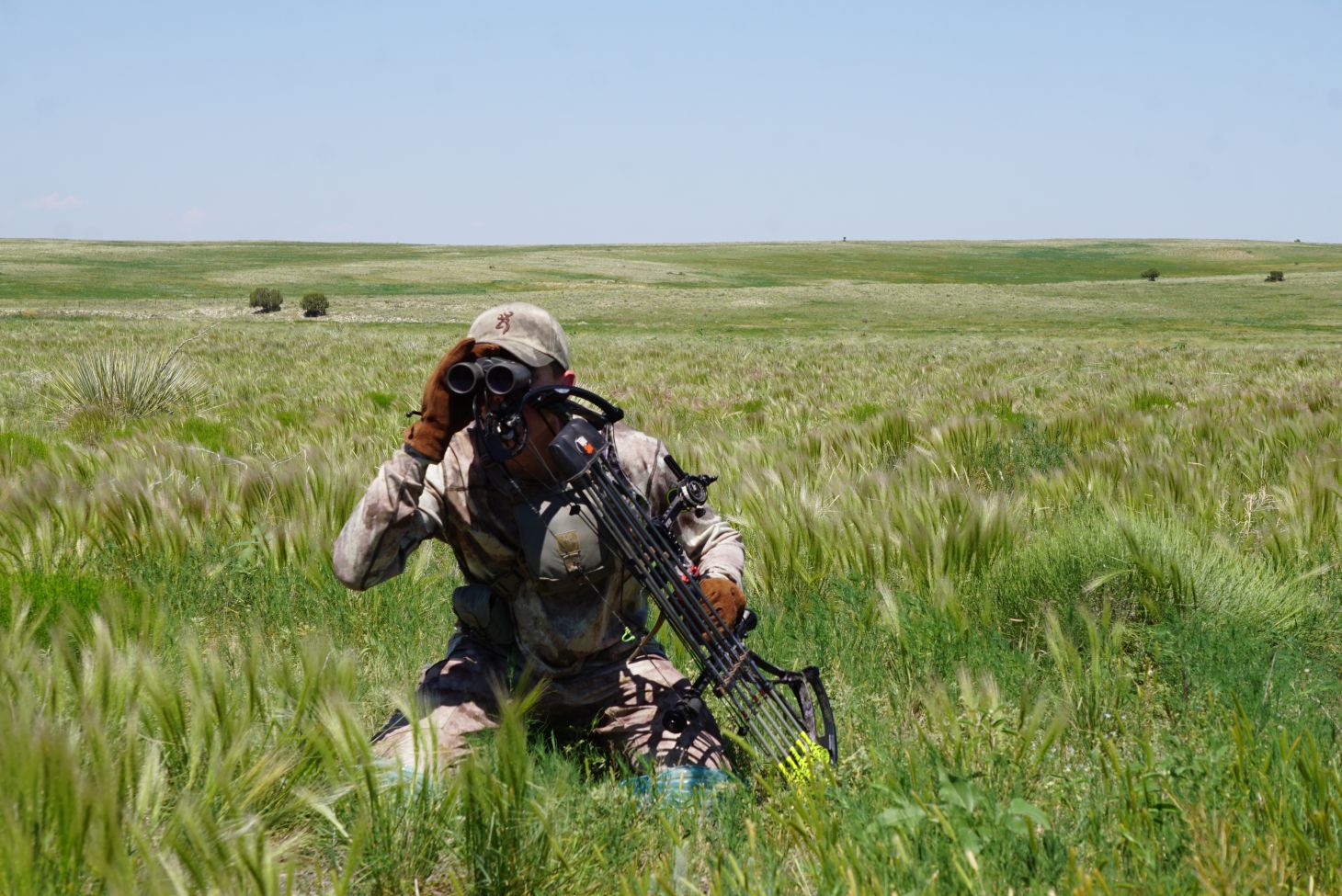
Before embarking on a stalk, mark your and the animal’s positions on your digital hunting app. This way, you can keep tabs on your approach without inching your head up every few minutes and getting picked off. I also pick out as many distinguishable landmarks as possible and take photos and videos of them on my smartphone.
When stalking, you must crawl on your hands and knees, inching like a worm on your belly. Slithering like a snake, set your bow out in front of you, crawl to it, extend your arm, and set it out in front of you again. If possible, stalk during periods of low light. Pronghorn vision isn’t as sharp in the early morning and late evening hours. Also, casting clouds creates shadows, and shadows will be your best friend. I often wait for clouds to cover the sun if I need to make a risky move.
Come prepared and ready to be lethal at 60 yards, and if you’re ultra-confident in your equipment and shooting, 70 is even better. My average spot-and-stalk distance on pronghorn is 52 yards.
3. Use a Decoy
What I love about sitting at waterholes and spot-and-stalk hunting is that both methods work any time of the year. Decoying, unless you’re trying to create a curiosity response rather than a testosterone-filled rage reaction, is limited to a short window of the season: The rut.
Bucks are susceptible to a decoy from roughly September 8 through the first week of October. When you start seeing dust tails in the distance on the prairie, you know it’s a buck chasing another buck or a buck chasing does. This is the time to break out a decoy.
My go-to decoy is Ultimate Predator Gear’s bow-mounted Stalker Pronghorn Buck. This decoy features a lifelike image of a lesser pronghorn buck, weighs less than 10 ounces, straps around a bow’s limb pockets in seconds, and has a sizeable shoot-through window.
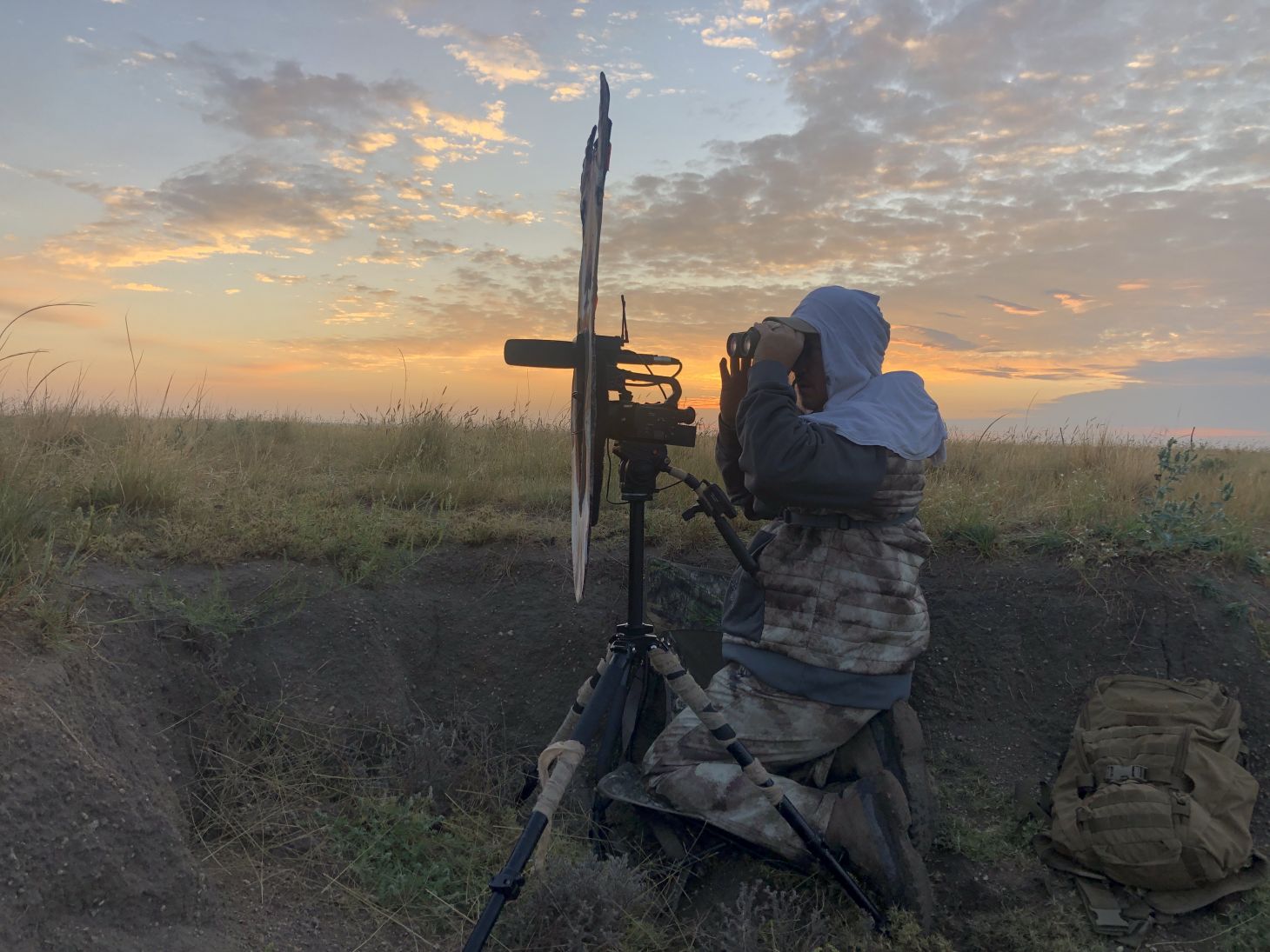
Often, herd bucks will spring from their group at the first sight of a subdominant buck and chase the lesser buck a long way. If multiple satellite bucks are in the area, others won’t hesitate to slip in when they see the herd buck go on a high-speed chase. When the chaser returns to his girls and sees another rooster heading to the hen house, his reaction is typically even more aggressive. My goal is to be that second satellite buck.
When the buck approaches the decoy, it’s often fast and furious. Your adrenaline will skyrocket when the buck slides to a stop like a cutting horse at 30 yards. Remember, the dominant buck expects movement from the sub-dominant buck (you). Hold your bow straight out in front of your body and draw fluidly; the buck will be none the wiser. Usually, when you hit full draw, the buck will turn and offer you a broadside or quartering-away shot.
Bonus Decoy Tip
Do the following to boost your decoy success:
- Wear a white long-sleeved shirt and bring a white towel
- White looks excellent behind a bow-mounted decoy, and the color seems to help keep the antelope coming closer
- If the animals or animals hang up, tuck the white towel into your pants and crawl around a bit, exposing your white butt to the goats in the distance. You won’t believe how well this works
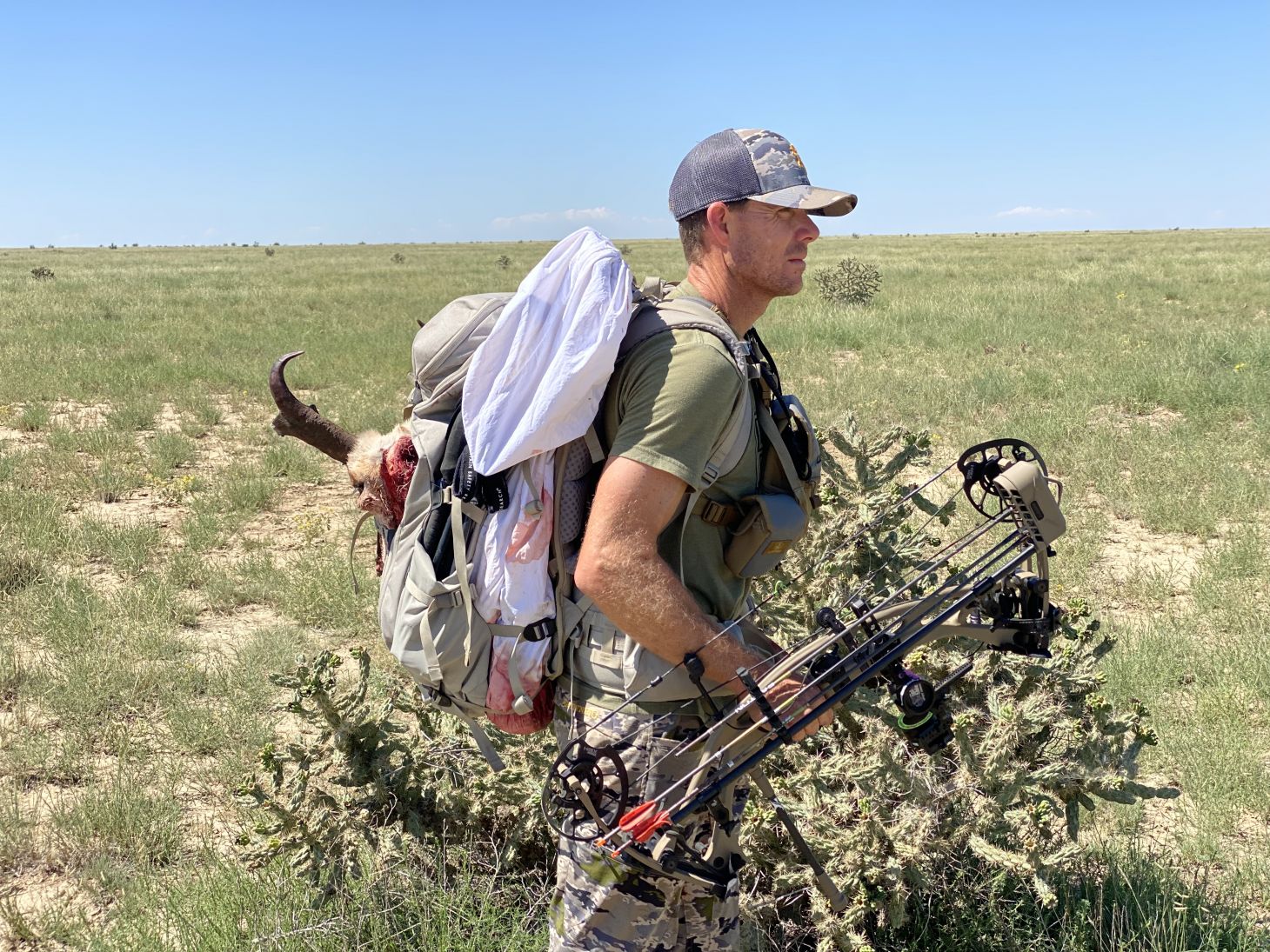
Stay Versatile to Kill Your First Speed Goat
Flexibility consistently kills pronghorns. If you show up at your hunt area with a water plan and every pothole, mudhole, and dry creek on the prairie is full of water, punt. If you show up and bucks are chasing, get after them with the decoy. Spot and stalk is always an option and can be done at any time of the day and any time during the season. If you stay flexible, motivated, and determined, then you’ll find yourself at full draw on a pronghorn buck this season.
The post 3 Tips to Kill Your First Archery Pronghorn appeared first on Field & Stream.
Read the full article here