
For most hunters wanting a versatile bolt-action at a reasonable price, the Tikka T3x Lite Roughtech is the top pick. For budget-conscious buyers, the Glenfield Model A wins on value. Hunters heading into big-bore or dangerous-game territory should look at the Lipsey’s Ruger Alaskan Bush Rifle. Western backcountry hunters prioritizing weight will find their answer in the Weatherby Backcountry Guide Ti or Savage 110 Ultralite.
- Tikka T3x Lite Roughtech scored 94.20 — highest overall in the 2026 test — with tack-driving precision and an adjustable trigger.
- Glenfield Model A is the best value pick for hunters who want proven performance without premium pricing.
- Lipsey’s Ruger Alaskan Bush Rifle leads for dangerous or heavy game — built for hunters who need a serious big-bore option.
- Tikka T3x Lite Roughtech carries a three-round magazine limit and runs heavier than its ‘Lite’ designation implies.
- 2026 field average of 1.19 inches across all tested rifles signals that factory rifle accuracy has meaningfully improved across the category.
We may earn revenue from the products available on this page and participate in affiliate programs. Learn more
Throughout the year, I test the best new rifles as soon as I can get my hands on them so that by summer, I’ve scrutinized and reviewed just about every new option available to hunters for the coming season. That done, I pool all the test data together so that anyone looking for a new rifle has all the information they need to make a great choice, all in one place. That, in a nutshell, is what you’ll find below—a comprehensive summary of the rifles I’ve tested during the last 12 months, with links to the full and detailed reviews of each.
On the whole, 2026 is a good year for new rifles. Three of the guns in this year’s test scored in the top 10 of all the rifles I’ve reviewed during the last five years. Additionally, the overall average five shot group fired from every rifle I tested was only 1.19 inches. Rifle manufactures are without question refining their craft. Hunting rifles and hunting ammunition just keeps getting better. No matter how you hunt or what species you’re after, there’s plenty to get excited about in the 2026 crop of new rifles.
Best Rifles of 2026
The Best of the Rest
best overall

Tikka T3x Lite Roughtech
Total Score: 94.20
Pros
- Affordable
- Adjustable trigger
- Tack-driving precision
Cons
- Limited capacity
- Heavy for a “Lite” rifle
Specs
- Length: 44.5 inches
- Weight: 7.1 pounds (6.9 actual)
- Action: 70° bolt-action
- Capacity: Three-round detachable magazine
- Chamberings: 223 Remington, 243 Winchester, 6.5 Creedmoor, 6.5 PRC, 270 Winchester, 270 WSM, 7mm-08 Remington, 7mm Remington Magnum, 7mm PRC, 308 Winchester, 30-06 Springfield, 300 Winchester Magnum, 300 WSM, 350 Legend, 450 Bushmaster
- Price: $1,229
Why It Won Best Overall: When we totaled up all the scores, it was close, but the Tikka T3x Lite Roughtech came out on top. It shot great, performed flawlessly, and was not overly expensive. This describes the kind of rifle most hunters are looking for.
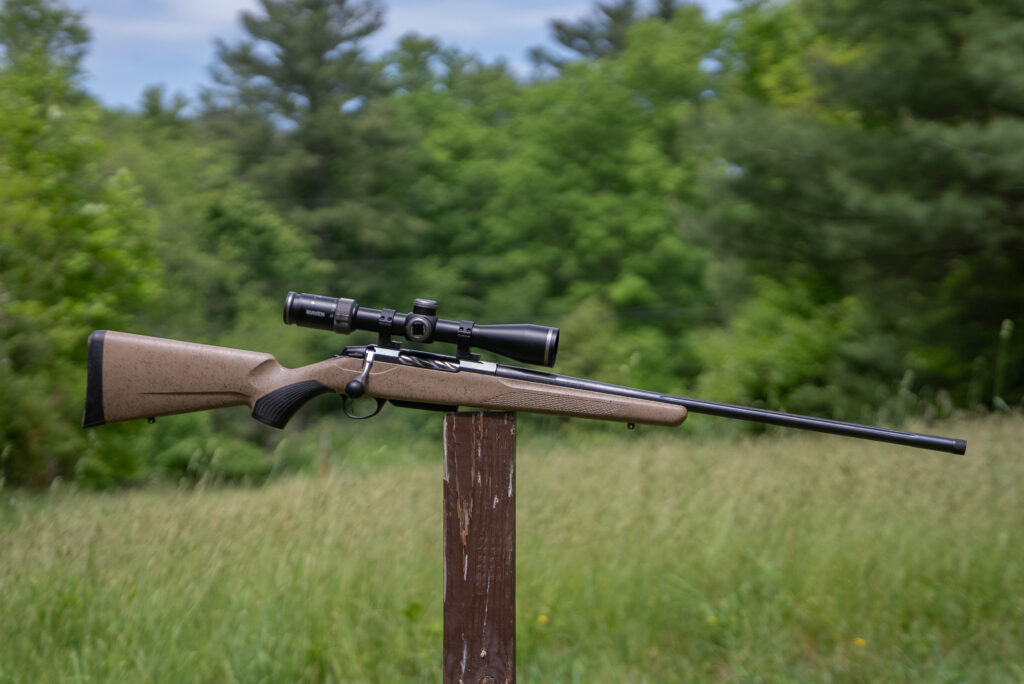


Overview: This rifle is built on the Tikka T3x action. The spiral-fluted bolt has a 70° throw, a plunger ejector, and a Sako-style extractor. It’s outfitted with a two-position safety that locks the bolt when in the “safe” position. The action has an integral rail for Sako/Tikka Optilok rings, but it is also drilled and tapped for conventional scope mounts. Barrel length will vary depending on chambering, but all barrels are cold-hammer-forged, threaded, and free floated inside the traditionally styled polymer stock, which has a modular grip section. The trigger guard, bottom plate, and three-round magazine are polymer as well. The rifle ships with a radial-port muzzle break installed, and the exceptional trigger consistently broke at 2.75 pounds.
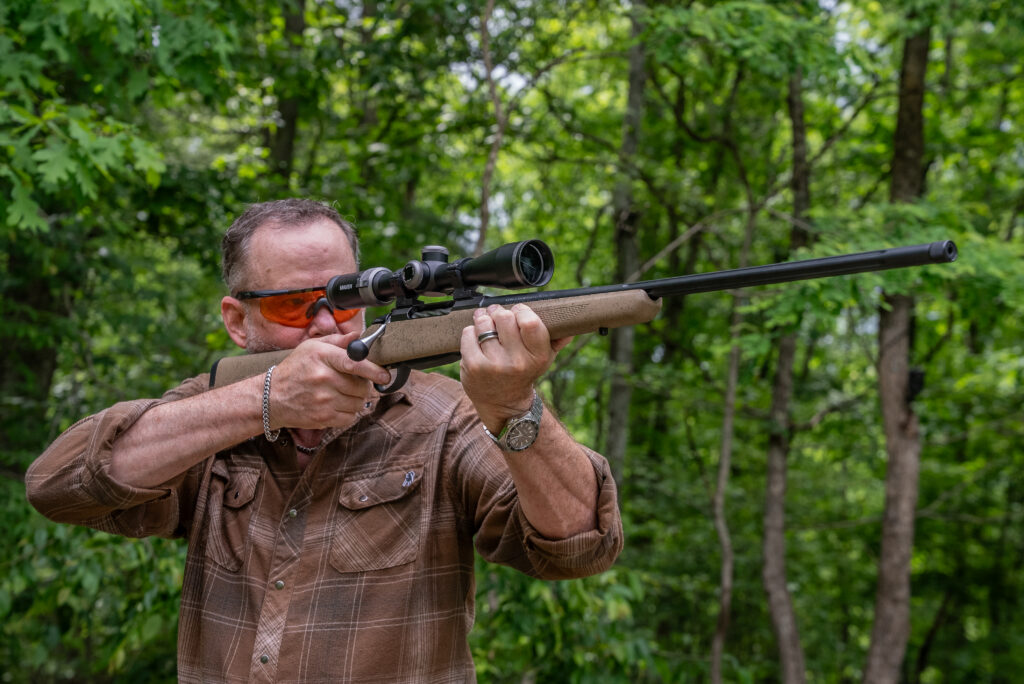
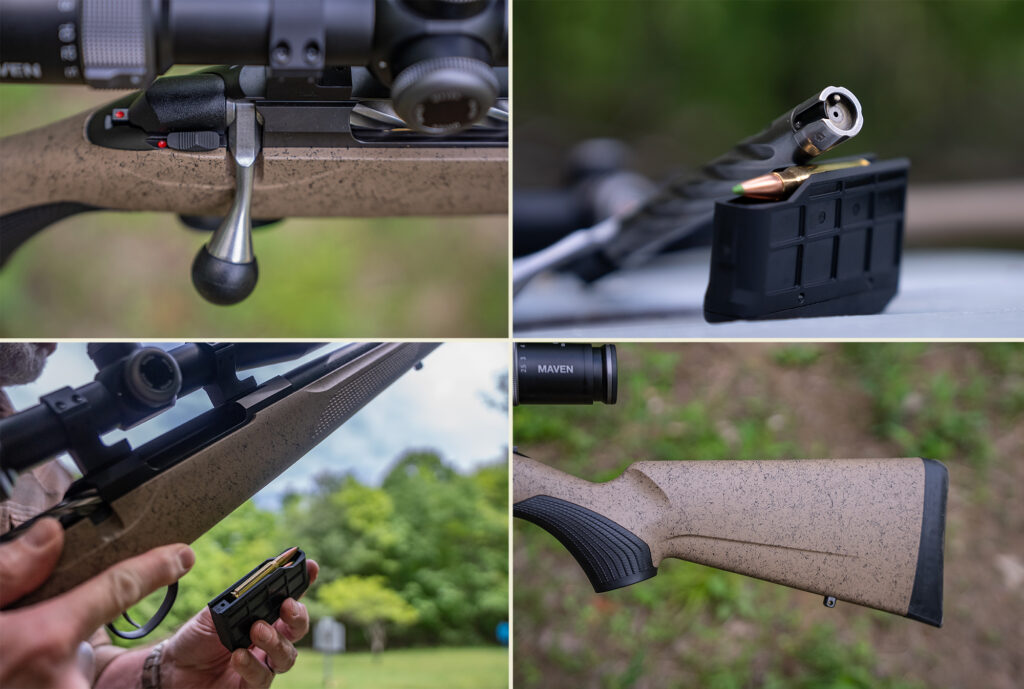
Bottom: Closer looks at the Roughtech’s 70-degree-throw bolt handle and two-position safety; spiral-fluted two-lug bolt with Sako-style extractor; polymer single-stack magazine; and removable grip section and butt pad. (Photos/Sabastian “Bat” Mann)
Test Notes: This rifle should appeal to many hunters because of its features, performance, and cost. It is an all-around excellent rifle that shot incredibly well. The action is top notch, the trigger was great, and functioning was flawless. The Roughtech is also very reasonably priced—it had the second-best value score of any rifle tested—and there are a lot of different chamberings to choose from. It is a tad on the heavy side, but it shoots so well you won’t mind carrying it. And even though the magazine has limited capacity and appears to be for a rifle costing half as much, it worked perfectly. It’s been a long time since our pick for Best Overall rifle cost less than two grand.
Related: Read a full review of the Tikka T3x Lite Roughtech here.
best value
Glenfield Model A
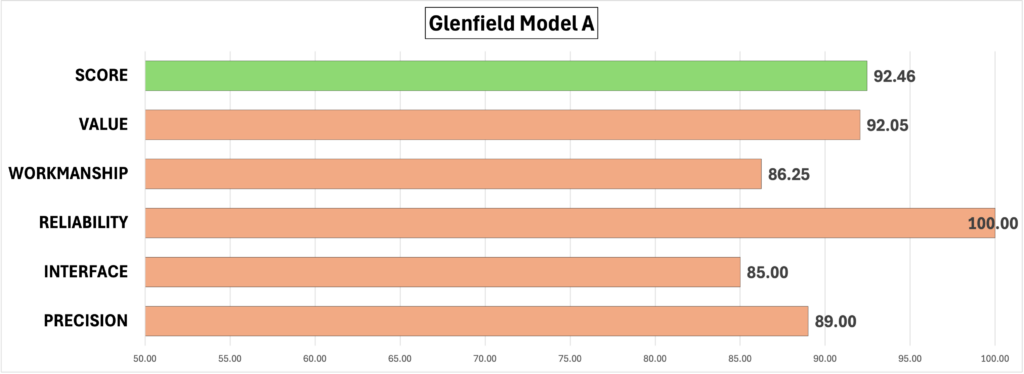
Total Score: 92.46
Pros
- Affordable
- Adjustable trigger
- Reasonably light
Cons
- Low comb height
- Safety does not lock bolt
Specs:
- Length: 40 inches
- Weight: 6.30 pounds
- Action: Glenfield/Ruger American
- Capacity: 4+1 (varies with chambering)
- Chamberings: 243 Winchester, 6.5 Creedmoor, 270 Winchester, 308 Winchester, 30-06 Springfield, 350 Legend, 450 Bushmaster
- Price: $529
Why It Won Best Value: There wasn’t really any contest. The Glenfield Model A earned the best value award because it functioned perfectly, weighed in at less than 6.5 pounds, came with a threaded muzzle, shot remarkably well, and you can pick one up for right at $500.
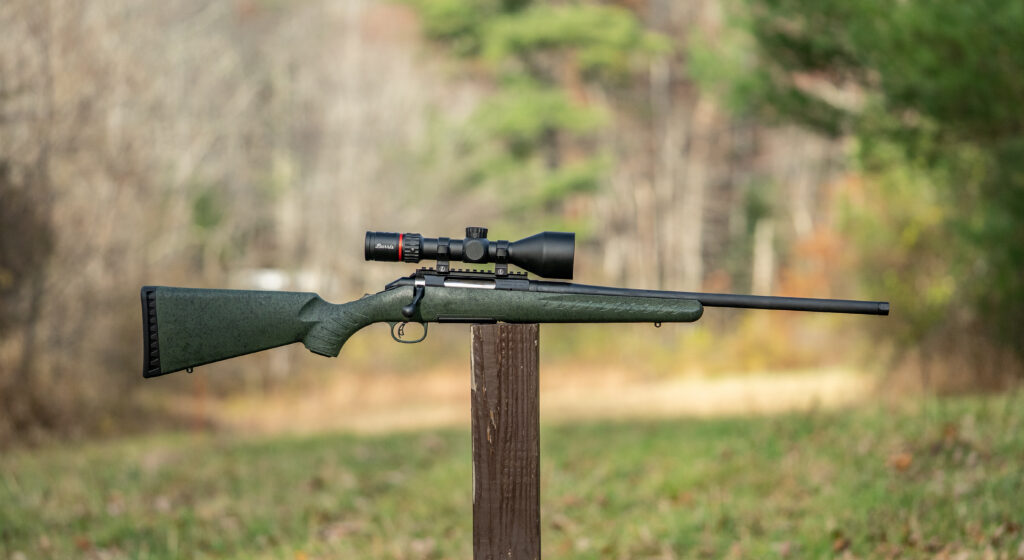

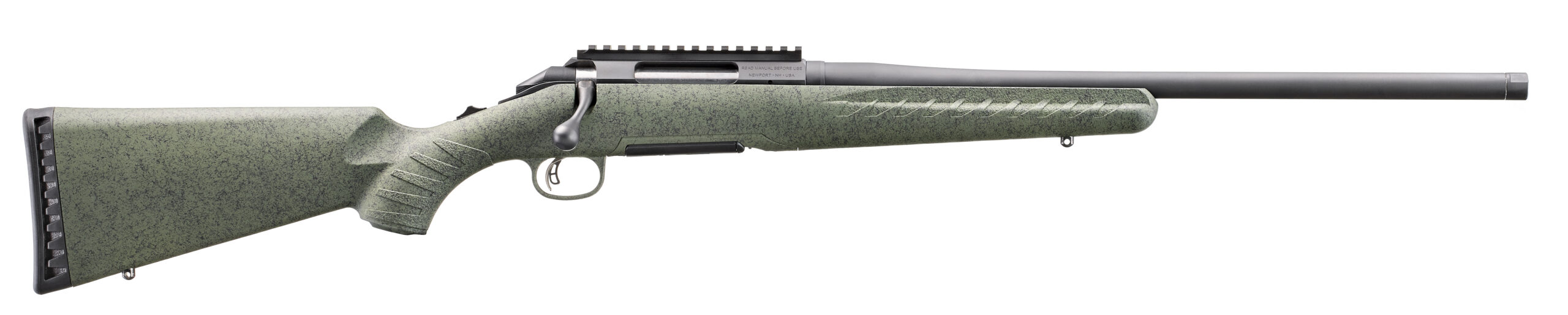
Overview: The Glenfield brand is an old one once used by Marlin to offer less-expensive versions of their rifles for sale in department stores. It has been revived by Ruger, which now owns Marlin. The Glenfield rifle is really nothing more than a more affordable version of the original Ruger American rifle, which is built around a three-lug bolt action with a 70° throw. The rifle has a two-position tang safety, a cold-hammer-forged 20-inch barrel, and wears a synthetic stock with a splatter-green finish and two steel bedding blocks. The trigger is adjustable, and the rifle ships with a one-piece scope rail already installed.
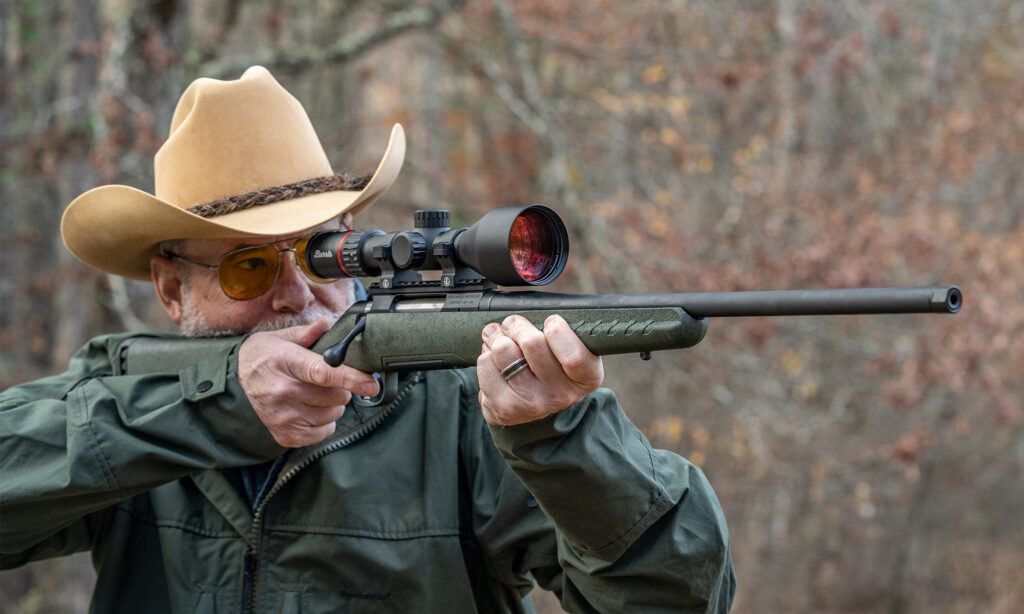

Bottom: Closer looks at the Model A’s three-lug bolt, adjustable trigger with passive safety lever, polymer magazine, and integrated Pic rail. (Photo/Sabastian “Bat” Mann)
Test Notes: You would not expect a rifle that only costs about $500 to be as lightweight and shoot as well as the Glenfield Model A. But of course, it is essentially a Ruger American rifle, which has the same reputation. But the original Ruger American has been phased out for the newer Ruger American Gen II, which is another great-value hunting rifle. If you cannot swing the $769 for the American Gen II, then as far as we’re concerned, the Glenfield Model A is the next best thing. Those who grew up in the 70s and were used to seeing Glenfield guns for sale at JC Penny will be glad to see the brand returned, especially since it has done so with such a good-preforming rifle at such a great price.
Related: Read a full review of the Glenfield Model A here.
coolest rifle

Springfield Armory Heatseeker
Total Score: 94.11
Pros
- Compact
- Adjustable trigger
- Tack driving precision
Cons
- Limited chamberings
- Heavy for size
Spec
- Length: 35.5 to 39 inches
- Weight: 7.43 pounds
- Action: Springfield Armory Model 2020 bolt action
- Capacity: Five-round detachable AICS magazine
- Chamberings: 6.5 Creedmoor (tested) or 308 Winchester
- Price: $2,355
Why It Won Coolest Rifle: Well, just look at it. This Springfield Armory Heatseeker might remind you of something out of a futuristic movie, but more importantly, it’s less than a meter long, suppressor ready, built on a chassis, and it will drive tacks.



Overview: The new Heatseeker from Springfield Armory is built on the same action as their Waypoint, Redline, and Boundary rifles, but instead of a traditional stock, the Heatseeker utilizes a Sharps Brother’s chassis machined from 6061-T6 aluminum that weighs only 19 ounces. It’s also outfitted with a M-Lok forend, a B5 Systems grip, and a carbon-fiber-wrapped barrel with a capped and threaded muzzle. It only comes in 6.5 Creedmoor and 308 Winchester, and with a 16-, 20- or 22-inch barrel. Additionally, a Trigger Tech adjustable trigger, detachable AICS magazine, and a 0.75-MOA precision guarantee are standard. The Heatseeker is on the heavy side, and the two-position safety is hard to reach with a shooting grip, but the M-Lok forend pairs nicely with various shooting support adapters.

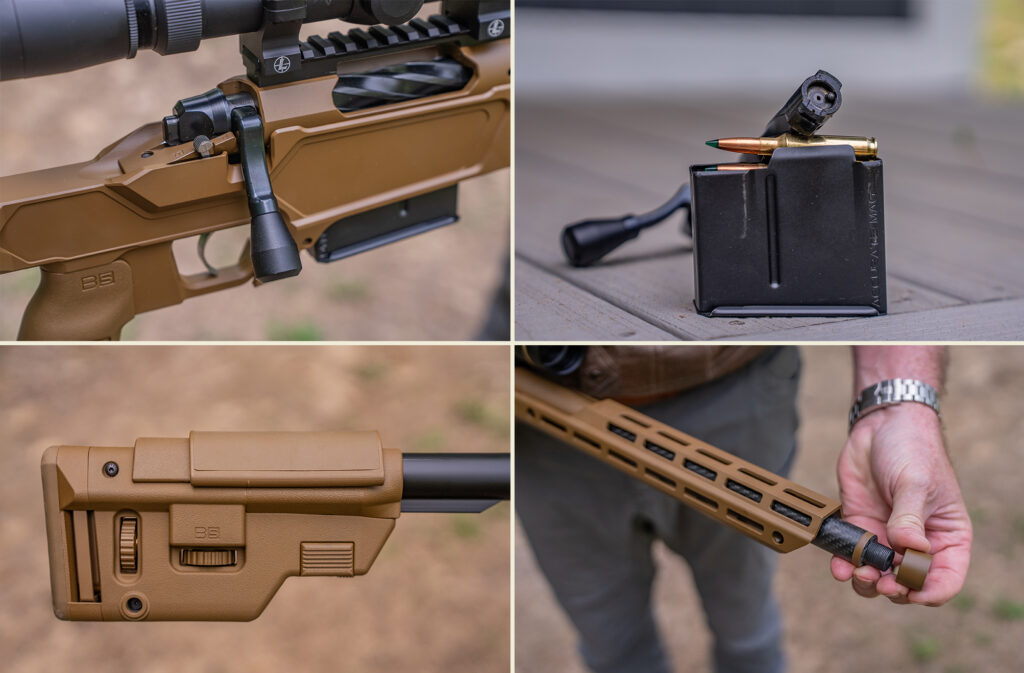
Bottom: Closer looks at the rifle’s action, two-position safety, and integrated rail; five-round AICS magazine and two-lug, push-feed bolt; adjustable B5 Systems butt stock; and threaded muzzle. (Photo/Sabastian “Bat” Mann)
Test Notes: Hunting rifles have been trending toward this type of configuration for some time now, sort of replicating the rifles that predominate in PRS competition. But also, for hunters, short barrels that are more suppressor friendly are becoming popular as well. Granted, short barrels can reduce cartridge performance, but out of the 16-inch barreled Heatseeker Federal’s 130-grain 6.5 Creedmoor +PEAK load had a muzzle velocity of 2905 fps. This makes the Heatseeker a compact and powerful suppressed rifle option for a hunter, if they can stand the near 10-pound weight once a rifle scope and suppressor are attached. Regardless the weight, you can be sure all the cool kids will be lining up to get their own Heatseeker.
Related: Read a full review of the Springfield Armory Heatseeker here.
Best light rife (Tie)

Weatherby Backcountry Guide Ti
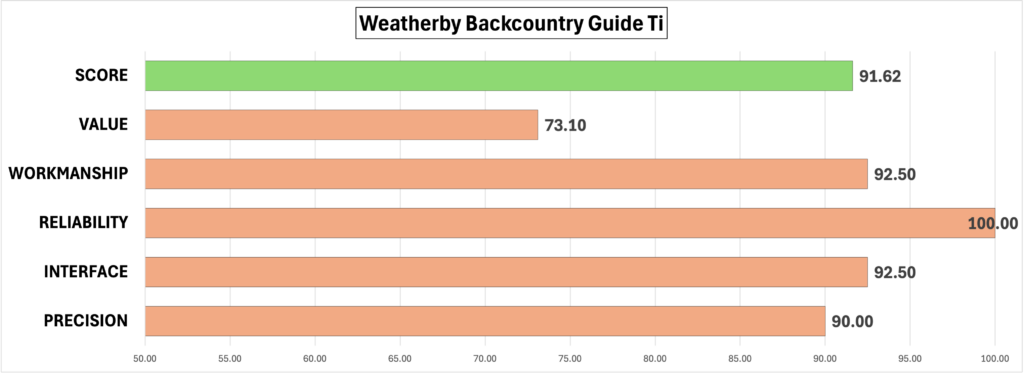
Total Score: 91.62
Pros
- Lightweight
- Bolt locking safety
- Dual Spartan MagnaSwitch sockets
- Left- or right-handed
Specs
- Length: 42 inches
- Weight: 5.58 pounds
- Action: Weatherby Mark V 6-lug
- Capacity: 4+1
- Chamberings: 6-lug Mark V action: 243 Winchester, 240 Weatherby Magnum, 25 Creedmoor, 25 Weatherby RPM (tested), 6.5 Creedmoor, 6.5 Weatherby RPM and 280 Ackley Improved. 9-lug action: 257 Weatherby Magnum, 6.5-300 Weatherby Magnum, 7mm Backcountry, 7mm PRC, 300 PRC, 300 Winchester Magnum, and 300 Weatherby Magnum.
- Price: $3,799
Why It Tied for Best Light Rifle: It came down to the Weatherby Backcountry Guide Ti and the Savage 110 Ultralight in this category. If you leave price out of the equation, the Backcountry Guide Ti scores better, is a better-made and better-configured rifle, and it weighs 3.52 ounces less than the Savage.
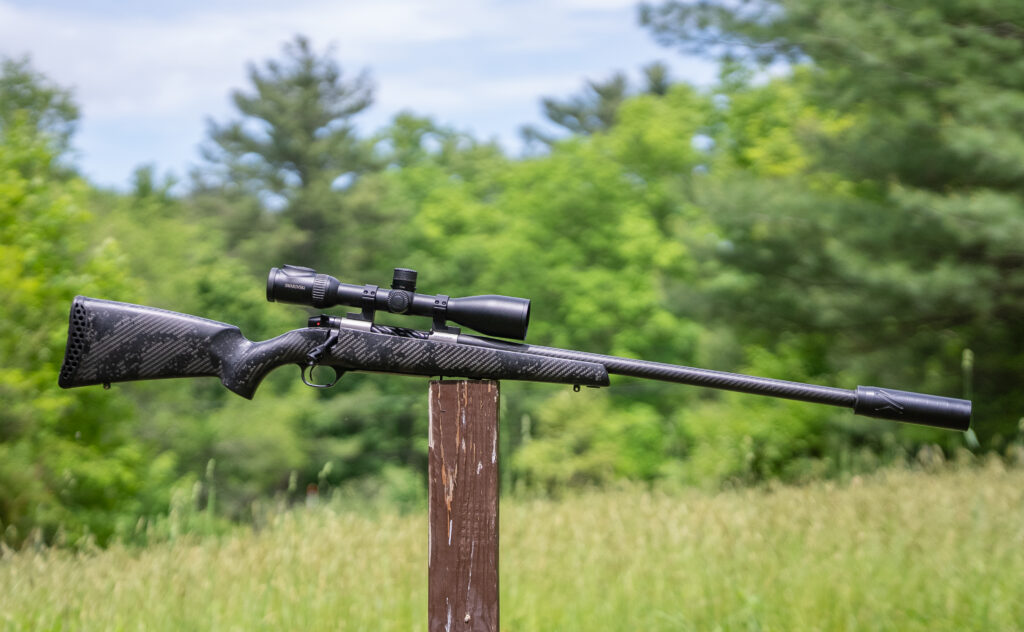
Overview: This Backcountry Guide Ti is so light primarily because of its BSF carbon-fiber-wrapped barrel and its 20-ounce PEAK 44 Blacktooth stock, which has a carbon bedding block and a black sponge finish. The rifle is built around a titanium version of Weatherby’s Mark V 6- or 9-lug action that features a Graphite Glack Cerakote finish. With either, the bolt body and knob are spiral fluted, and the two-position safety locks the bolt in the “safe” position. It has a plunger-style ejector and a Sako/M16-style extractor, and a Trigger Tech trigger is standard. One of the coolest features of this rifle are the two Spartan MagnaSwitch adapters located on the bottom of the forend, which will interface with Spartan’s lightweight line of shooting supports.
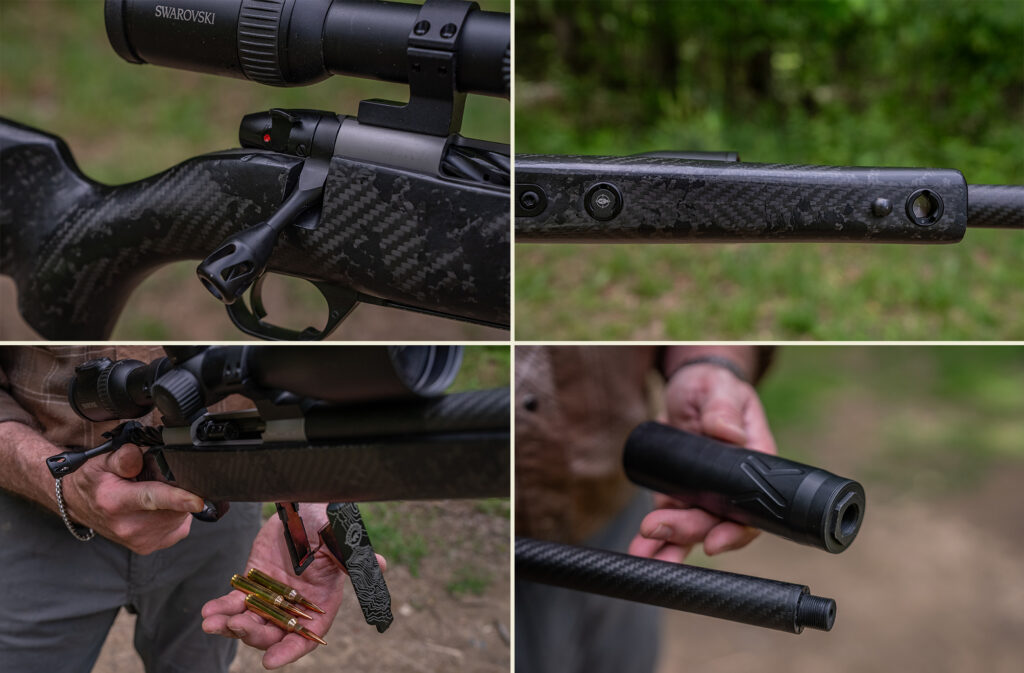
Bottom: Closer looks at the rifle’s skeletonized bolt and thumb safety; forend with Spartan adapters; hinged-floorplate mag; and threaded muzzle. (Photos/Sabastian “Bat” Mann)
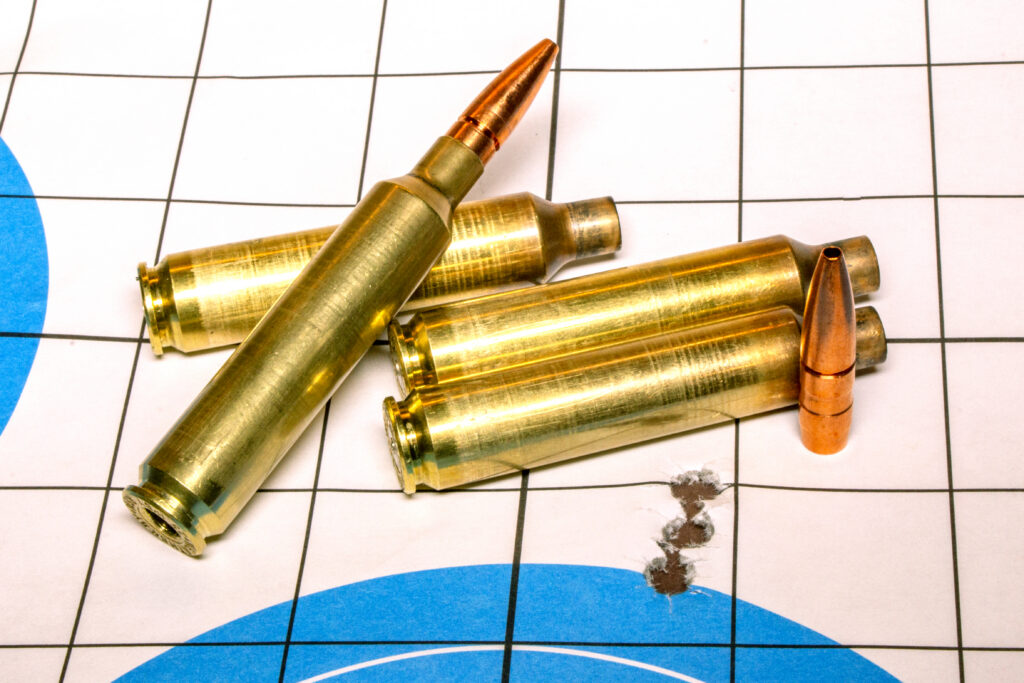
Test Notes: What makes the 25 RPM chambering so appealing in this rifle is that you get magnum-like performance from a rifle that’s lighter than one built on the 9-lug Mark V Weatherby action. The rifle really didn’t like one of the pre-production factory loads, and if you take that load out of the mix, it’s overall five-shot group average was less than an inch. If you hunt on your feet and need a powerful rifle to stretch the distance, the Weatherby Backcountry Guide Ti is a fantastic option. This is one of the few rifles I tested that I actually got to hunt with, and it delivered on several whitetails at distance. It’s pricey at $3800, and there are lighter-weight options out there, you just won’t find them chambered for the same high-performance cartridges.
Related: Read a full review of the Weatherby Backcountry Guide Ti here.
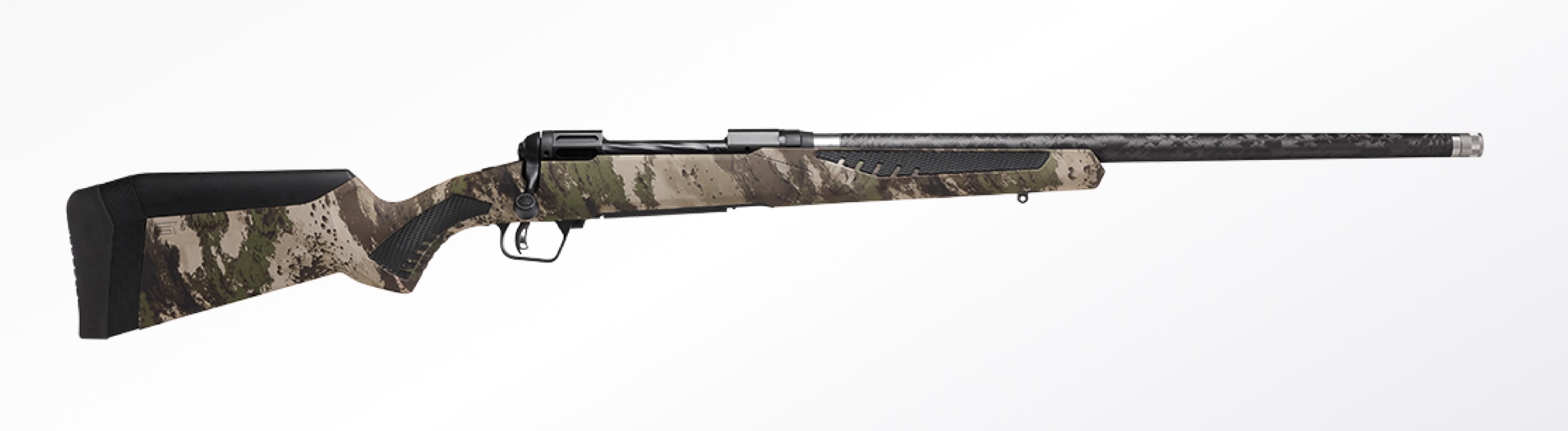
Savage 110 Ultralite
Total Score: 93.98
Pros
- Reasonably light
- Adjustable stock
- Adjustable trigger
- Very precise shooting
Cons
- Limited capacity in some cartridges
- Sticky buttpad
Specs
- Length: 41.5 to 44.5 inches
- Weight: 5.8 pounds
- Action: Savage 110 bolt action
- Capacity: 4+1 (as tested) varies with chambering
- Chamberings: 308 Winchester, 6.5 Creedmoor, 30-06 (4), 28 Nosler, 6.5 PRC, 7mm PRC (2)
- Chamberings: 6.5 Creedmoor, 6.5 PRC, 28 Nosler, 7mm PRC, 308 Winchester (tested), 30-06 Springfield
- Price: $1,739
Why It Tied for Best Light Rifle: Overall (value included) the Savage 110 Ultralite outscored the Weatherby above. The main reason it didn’t win Best Light Rifle outright is because it has already been updated and replaced by the Ultralite Pro, which should be very similar but we have not yet tested.



Overview: To keep the weight down on this rifle, Savage made some relief cuts to their legendary 110 action and went with a stainless-steel Proof Research carbon-fiber-wrapped barrel with a threaded and capped muzzle. They dropped this barreled action into their well-designed AccuStock that utilizes a replaceable butt and comb and has rubber overmold sections on the grip and forend. The built-in modularity of the stock allows you to customize the rifle to fit your length of pull and to help position your head perfectly behind the riflescope with a good cheek weld no matter how high the scope is mounted. The 110 Ultralite feeds from a detachable box magazines and Savage’s adjustable AccuTrigger is standard. This rifle is offered in a good selection of short- and long-action cartridges suitable for big-game hunting.
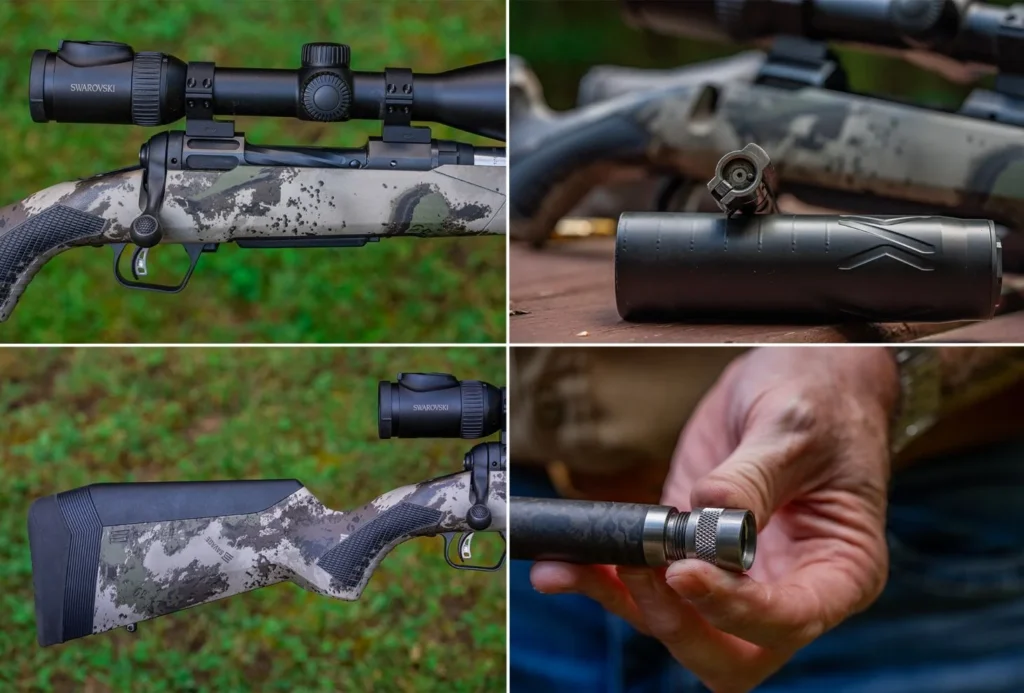
Bottom: Closer looks at the rifle’s action; two-lug, push-feed bolt with plunger extractor; Savage’s adjustable AccuStock; and threaded muzzle with cap. (Photos/Sabastian “Bat” Mann)
Test Notes: I liked the 110 Ultralite more than any Savage rifle I’ve tested in a long time, because it shot very well and because it was not too heavy. Generally, when you find a rifle that weighs less than 6 pounds and is capable of consistent sub-MOA precision, prices start well north of two grand. When you combine those two features with a rifle that sports the modular adjustability of the AccuStock, a three-position safety, and the trusted 110 action, there is a lot there for a hunter to like. For a Savage rifle, $1700 may seem expensive, but in the case of the Ultralite, that $1700 goes a very long ways. It’s not every day you can shoot a five-shot group that measures 0.19-inch with any rifle regardless of what it costs. As mentioned, this rifle has been replaced with the “PRO” version, sporting a more modernized stock. The good news is that 110 Ultralite rifles are still on dealers shelves, and you might find a great deal on one.
Related: Read a full review of the Savage 110 Ultralite here.
best Heavy-game Rifle
Lipsey’s Ruger M77 Alaskan Bush Rifle
Total Score: 90.61
Pros
- Very handy
- Superb open sights
- Integral scope mounts
Specs
- Length: 40.5 inches
- Weight: 7.75 pounds (6.9 as tested)
- Action: Ruger M77 bolt action
- Capacity: 4+1
- Chamberings: 35 Whelen (tested), 9.3×62
- Price: $1,579
Why It Won Best Dangerous-Game Rifle: The Lipsey’s Ruger M77 Alaskan Bush Rifle is rugged and has the power and looks, to boot. It’s serious and it means business.



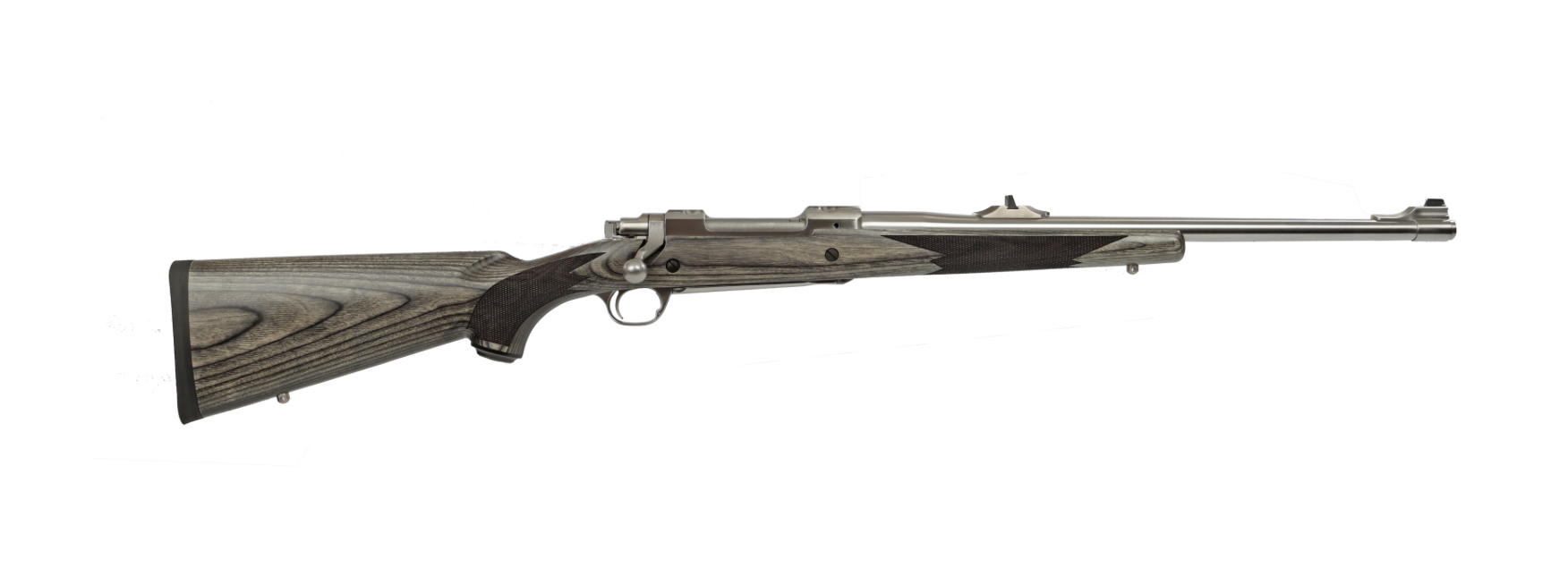
Overview: This rifle is only available through Lipsey’s, and even though it is an exclusive offering, it is priced similarly to cataloged Ruger Hawkeye rifles. It’s built on the famous M77 action, features Ruger’s integral scope mounts, the Mauser-style bolt action with a non-rotating extractor, and a bolt-locking three-position safety. It comes with 1-inch stainless-steel, medium-height scope rings. All the stainless steel has a brushed finished, and the medium contour barrel is 20-inches long. The barrel has a banded front ramp and a white bead front sight that pairs with a black express V sight mid barrel. The traditionally configured stock is laminated hardwood outfitted with a ¼-inch recoil pad.

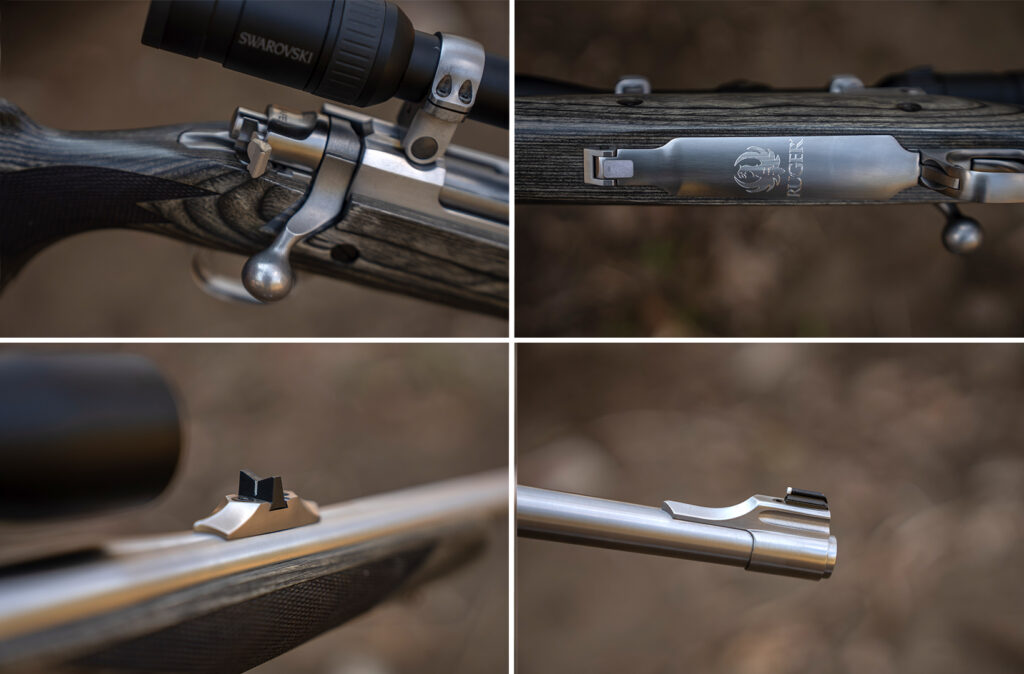
Bottom: Closeup looks at the Alaskan’s control-feed action and three-position safety; stainless-steel floor plate, and excellent open sights. (Photos/Sabastian “Bat” Mann)
Test Notes: Sometimes you just need and want a rifle that’s rugged enough for any situation and powerful enough to deal with any critter. This rifle will hammer a pissed off grizzly at spitting distance, drop an elk at 300 yards, or knock the slobbers off a rutting whitetail buck. And this rifle handles like a dream. The open sights are superb, and when you pull the trigger, you know something in addition to your shoulder is going to suffer. This is all the gun anyone hunting anywhere in North America could ever need, and if you’re like me, you’re going to want it even if you don’t need it.
Related: Read a full review of Lipsey’s Ruger M77 Alaskan Bush Rifle here.

Franchi MULE
Total Score: 92.20
Pros
- Dual, backup open sights
- Versatile optics rail
- Multiple sling attachment points
- M-Lok compatible
Cons
- Only available in 223 Remington and 308 Winchester
- On the heavy side
Specs
- Length: 38.25 inches
- Weight: 7.08 pounds (as tested)
- Action: Three-lug, Franchi Momentum bolt action
- Capacity: 8+1 (308) 10+1 (223) with provided magazine
- Chamberings: 223 Remington, 308 Winchester (tested)
- Price: $1,599
Why We Reviewed It: It’s not every day a new rifle is introduced with the broad range of general purpose application as the Franchi MULE, which is a perfect name for a hard working rifle well suited to any reasonable application.
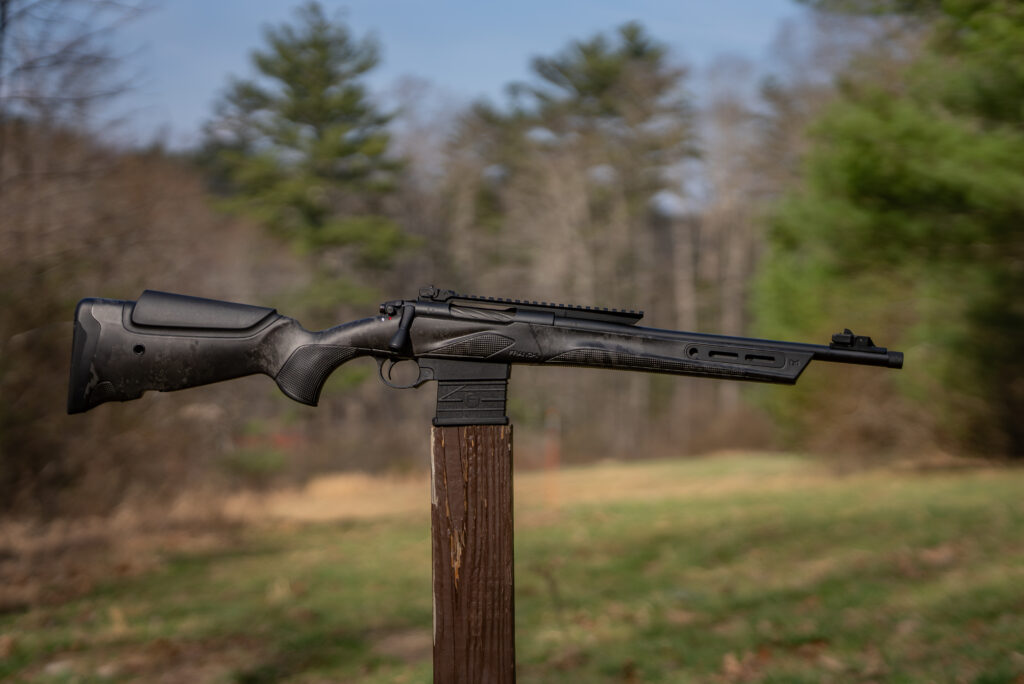
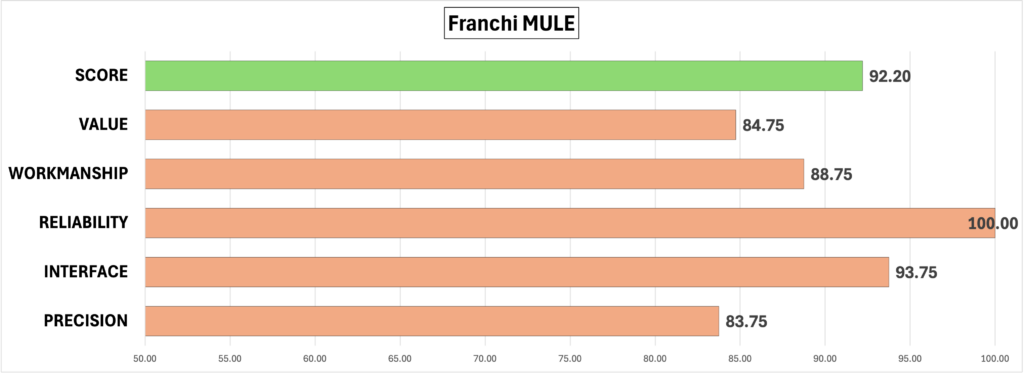

Overview: The MULE (Momentum Utility Lite Elite) rifle from Franchi is essentially a shorter barreled version of their Momentum All Terrain Elite rifle. It’s built on the same Momentum three-lug action with its short 60° bolt throw. The MULE has a 16-inch barrel with a threaded muzzle and a protective cap, and it comes standard with a 21-slot optics rail that extends out over the barrel like—but in the opposite direction of—a cantilever scope mount for a shotgun. It is uniquely fitted with two sets of open sights, that include a rudimentary notch and post and a flip-up and adjustable aperture and post. The flip up sights allow for the same check weld when using an optical sight. The synthetic stock features six quick-detach receptacles for sling attachment and numerous M-Lok rails on the side and bottom of the forend.


Test Notes: The hallmark of the Franchi MULE is versatility. Much like the Scout Rifle Jeff Cooper conceptualized, the only thing the MULE does exceptionally is doing a good job at a lot of different things. It reminds me of the quote, “Jack of all trades, master or none, but oftentimes better than master of one.” And while the MULE does not meet Cooper’s full definition of a Scout Rifle, it does embody his emphasis on versatility over specialization. Though quite heavy when decked out with an optic and suppressor, and only available in two chamberings, the MULE could be a great one-rifle companion for a lot of hunters and shooters.
Related: Read a full review of the Franchi MULE here.

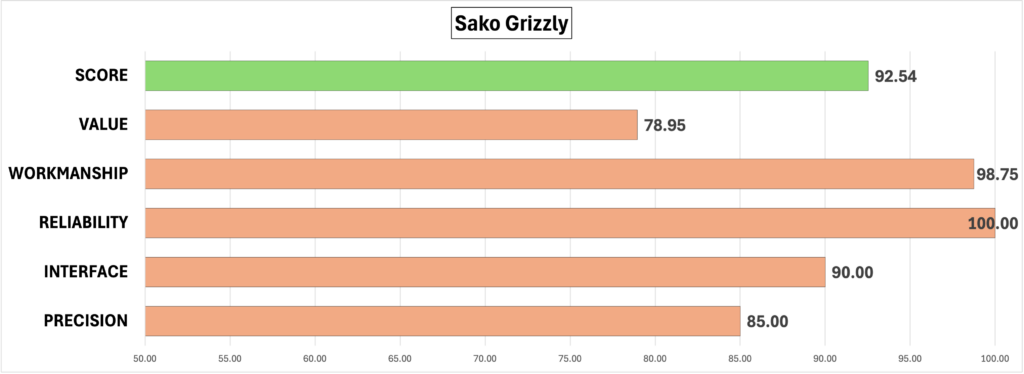
Sako Grizzly
Total Score: 92.54
Pros
- Elegant appearance
- Outstanding craftsmanship
- Great trigger
- Integral scope mounts
Cons
- Heavy and heavier than advertised
- Limited chamberings
Specs
- Length: 40.50 to 42.90 inches
- Weight: 6.80 to 7.30 pounds
- Action: Sako Model 90 bolt action
- Capacity: 5+1
- Chamberings: 6.5 Creedmoor, 308 Winchester (tested), 30-06 Springfield, 8×57, 9.3×62
- Price: $2,999
Why we reviewed it: We tested the Sako Grizzly because it has a gorgeous wood stock, but also because it effectively melds traditional looks with modern features.
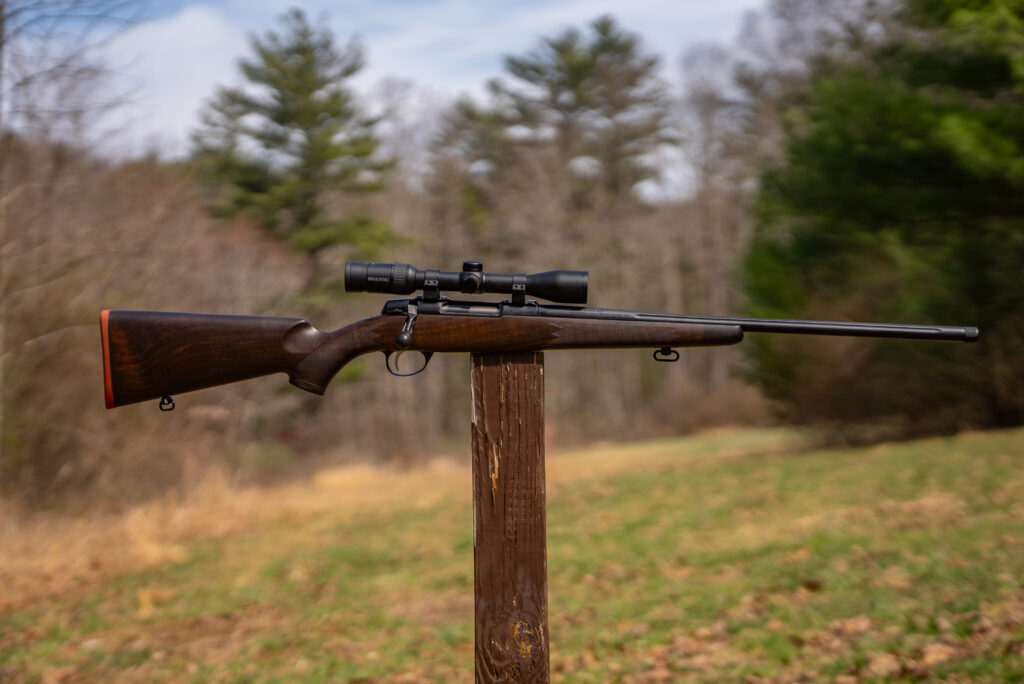

Overview: This rifle is built on a stainless steel version of Sako’s Model 90 action, which has a short throw bolt, dual plunger ejectors, and Sako’s wonderful extractor. Integral to the action—behind and forward of the ejection port—there are Picatinny rails for scope mounting. The rifle is offered with either a 20- or 22-inch barrel and it’s threaded and comes with a protective cap. The trigger is excellent, and the two position safety locks the bolt in the “safe” position, but there is also a bolt release button. The dark walnut stock has good figure and includes a rosewood forend tip and grip cap, and a thin retro style recoil pad. It feeds from a detachable, flush-fitting, five-round magazine, that has a special pressure release system to prevent accidental loss. It’s also equipped with quick-detach swivels instead of old style studs.

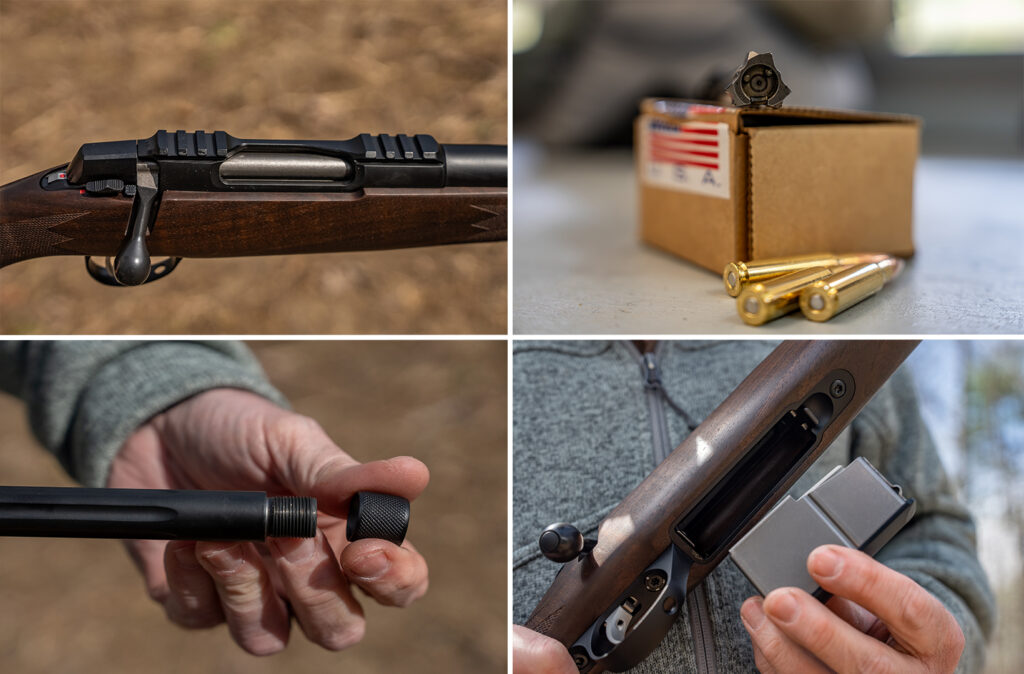
Bottom: Closer looks of the Grizzly’s action with integral Pic rail; three-lug bolt with Sako’s famous extractor and dual plunger ejectors, threaded muzzle with cap, and detachable magazine. (Photo/Sabastian “Bat” Mann”)
Test Notes: This is a very well designed and good looking rifle, and without question, from a workmanship standpoint it was the best rifle we tested this year. The only thing preventing the Sako Grizzly from being our top pick was price. A hunter would not be embarrassed to pull this rifle out of a case anywhere in the world, and he could also depend on it to serve him well, anywhere in the world. The test rifle was a bit finicky when it came to the ammunition it liked, but two of the loads tested delivered precision right at the MOA mark. In a day an age where it seems every new rifle has either a synthetic or chassis style stock and a carbon fiber wrapped barrel, the Sako Grizzly offers hunters an elegant bit of nostalgia. Yes, it’s pricy but the very, very best rifles always are.
Related: Read a full review of the Sako Grizzly here.
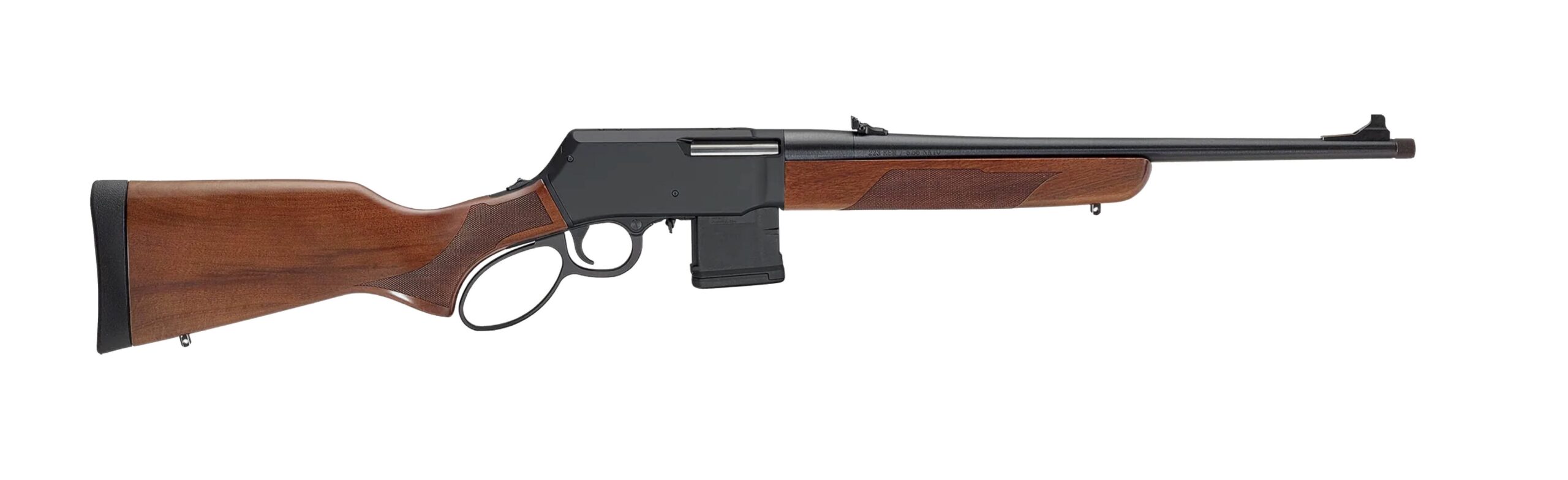
Henry Lever Action Supreme
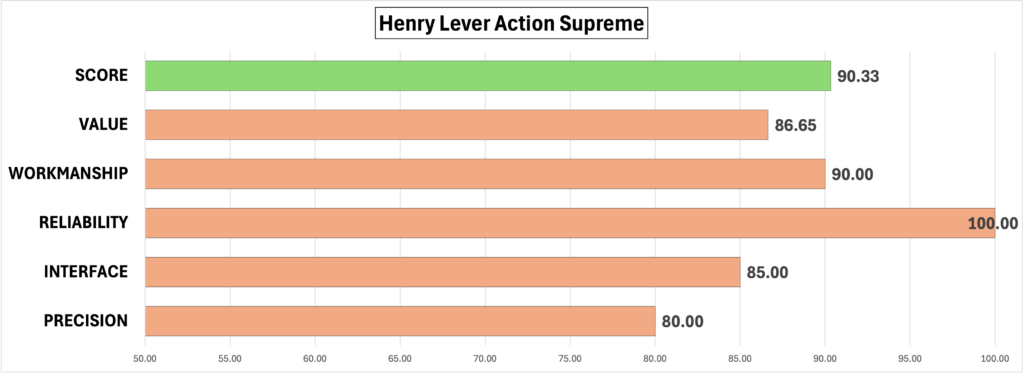
Total Score: 90.33
Pros
- Adjustable trigger
- Great for jurisdictions unfriendly to ARs
- Compact and reasonably light
- Fun to shoot
Cons
- Magazine makes rifle uncomfortable to carry at balance point
- Limited chamberings
Specs
- Length: 38.14 inches
- Weight: 6.70 pounds
- Action: Henry H23 (LSAR)
- Capacity: 10+1
- Chamberings: 223 Remington (5.56 NATO), 300 Blackout, 450 Bushmaster
- Price: $1,360
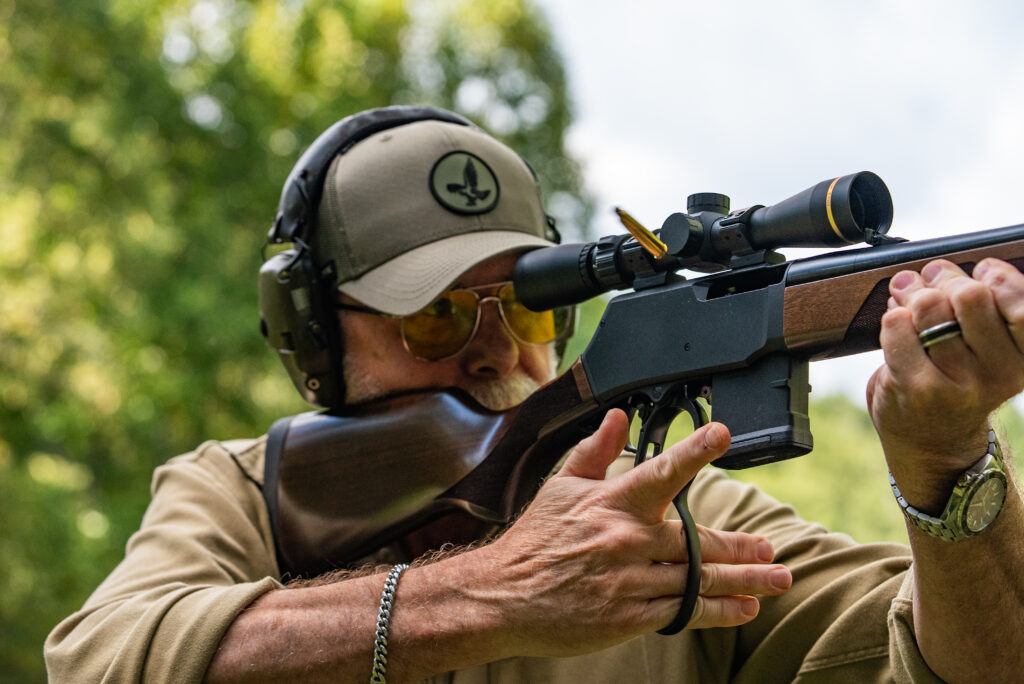
Why we reviewed it: Lever action rifles have never gone out of style, and we could not ignore the Lever Action Supreme from Henry which radically modernizes the lever gun.
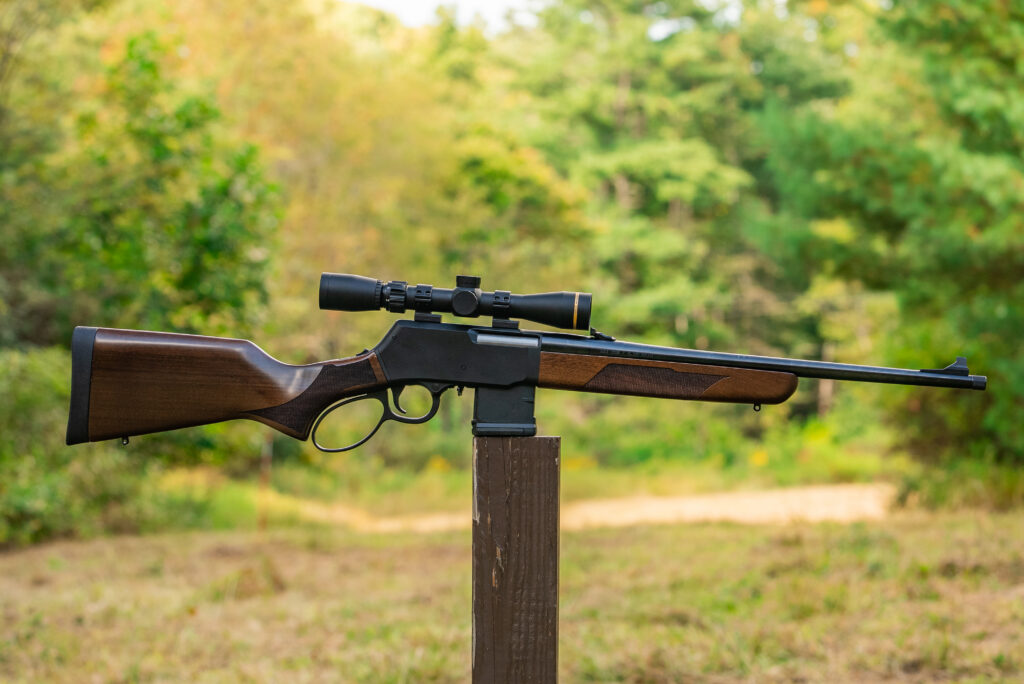

Overview: Though this rifle slightly resembles Henry’s Long Ranger rifle, this is an entirely new design. Similar to an AR, it has a bolt carrier and an M16-styled extractor, and it feeds very smoothly from AR15 magazines. All the meatal work is blued steel, and the two-piece stock is crafted from American walnut. The rifle comes drilled and tapped for scope mounts and with a fully adjustable rear sight. Oddly, for a lever action rifle, the Lever Action Supreme has no external hammer. Instead, in the location where you would expect to find a hammer there is a trigger blocking safety. Barrel lengths vary with chambering, with an 18-inch barrel for the 223 Remington and a 16-inch barrel for the 300 Blackout. Since we originally tested this rifle in September 2025, Henry has added an 18-inch barrel model chambered for the 450 Bushmaster.
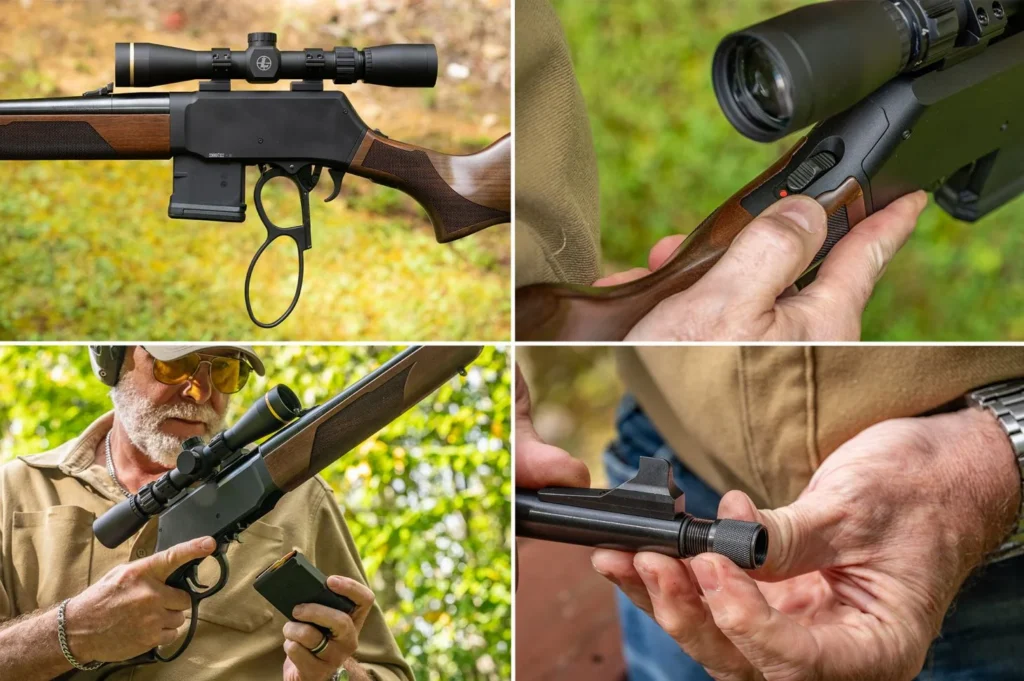
Bottom: Closer looks at the rifle’s action; thumb safety; extended detachable magazine that’s compatible with an AR15; and threaded muzzle with protective cap. (Photo/Sabastian “Bat” Mann)
Test Notes: The rifle is well balanced, but the comb is a bit low for use with an optical sight. However, this is a fun rifle to shoot, partly because it is a lever gun, but also because it opens the lever action platform up to three cartridges not traditionally found in lever actions. It’s not too heavy, has enough precision to take you out several hundred yards, and its suppressor ready. It has practical application as a hunting rifle, ranch rifle or truck gun, and is a great alternative to the semi-automatic AR platform in locations where that can be an issue. Traditionalist might scoff at a lever action rifle that looks like this, but don’t let that deter you; from a performance standpoint there’s nothing wrong with the Lever Action Supreme.
Related: Read a full review of the Henry Lever Action Supreme here.
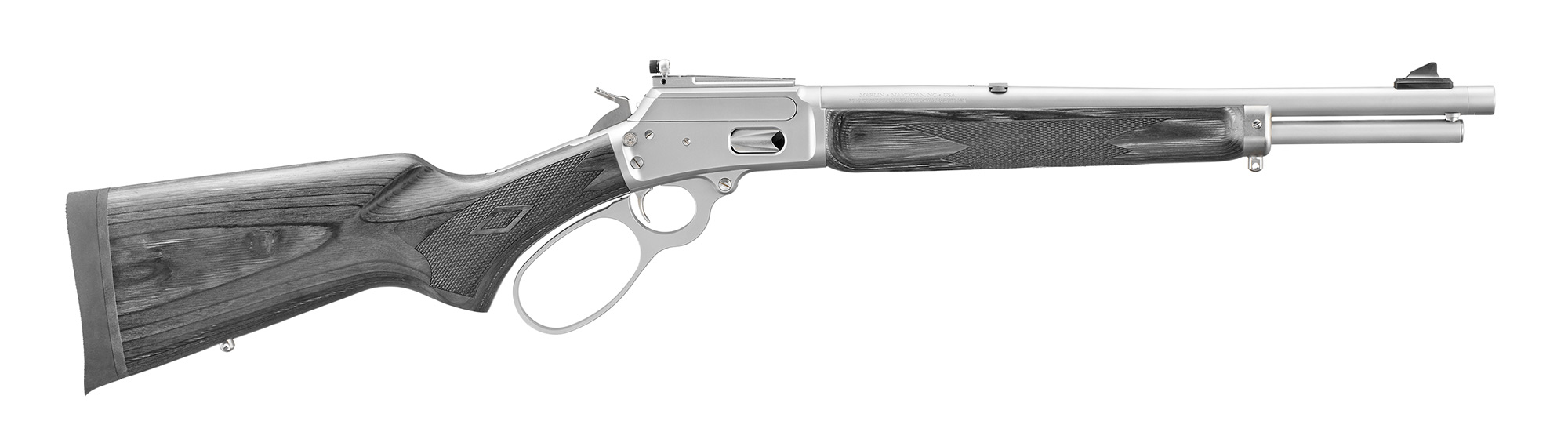
Marlin Trapper 10mm
Total Score: 90.21
Pros
- Compact and lightweight
- Only lever gun available in 10mm
- Practical sights
Cons
- A bit finicky with feeding and ejection.
Specs
- Length: 33.25 inches
- Weight: 6.30 pounds
- Action: Marlin 1894
- Capacity: 10+1
- Chamberings: 10mm Automatic
- Price: $1,599
Why we reviewed it: The Model 1894 Marlin lever gun has been around for a long time, but it—nor any other lever gun—has ever been chambered for the 10mm Automatic pistol cartridge until now. It is a true “pistol” cartridge carbine.
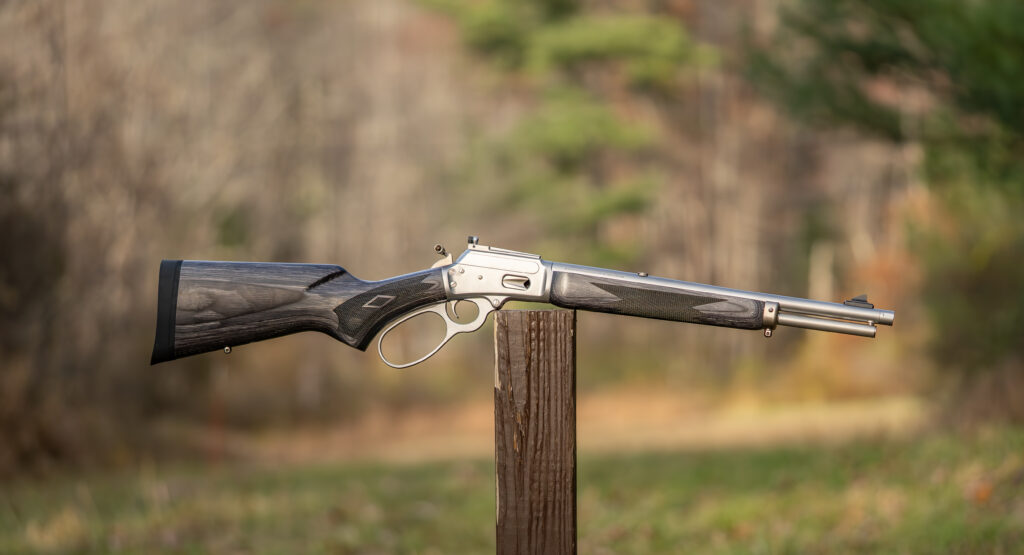


Overview: The Trapper represents Marlin’s most compact lever action rifle and the 10mm version is really no different than the other carbines in this line that we’ve reviewed before. This is a stainless steel carbine with a laminated wood stock so it should be reasonably resistant to the elements. It’s outfitted with an aperture rear and post front Skinner sights, and it has an enlarged lever. From a precision standpoint, the 100 yard targets were nothing to brag about but from a practical standpoint this is really a 100 yard or less rifle, because the 10mm Auto cartridge just does not benefit as much from a longer barrel as revolver cartridges like the 357 and 44 Magnum do. Fit and finish were consistent with other lever guns from the now Ruger owned Marlin.


Bottom: Closeup looks at the rifle’s adjustable Skinner rear aperture sight; white-striped Skinner front sight; enlarged lever hoop; and tubular mag and loading gate. (Photo/Sabastian “Bat” Mann)
Test Notes: When this rifle was initially tested right after its release, the sample I received experienced some feeding and ejection issues with some loads. However, several months later we got to test another one of these rifles of later manufacture and it performed flawlessly. Maybe Marlin corrected an issue or maybe the first rifle we tested just had some issues. Regardless, this is a very compact and handy rifle, and while as a stand-alone lever gun an 1894 in 357 or 44 Magnum probably makes more sense, when paired with a 10mm Auto handgun like the Dan Wesson Kodiak it would allow ammunition sharing. This could be a great camp gun, trail gun, or short range hunting carbine.
Related: Read a full Review of the Marlin 1894 Trapper 10mm here.
How We Test and Score the Rifles
With every new test rifle, I mount a quality riflescope and fire multiple five-shot groups from a bench rest at 100 yards using a variety of loads. I chronograph every load and measure every group. Then I subject the rifle to various shooting drills to appraise shooter interface. If the rifle has a threaded muzzle, I do most of the shooting with a suppressor, and if features provide for interface with bipods or tripods, I test the rifle from those as well. My goal is to become familiar enough with each rifle so I can grade it in terms of precision, shooter interface, reliability, and workmanship.
After all the testing is complete, I score each rifle from 1 to 100 in those four categories, but I base the points awarded not so much on how one rifle stacks up against another, but on how each rifle performs within a intended-use category. For example, you can’t compare a lever-action rifle chambered for a pistol cartridge to a precision bolt-action rifle chambered for a high-velocity rifle cartridge. Once all the rifles are scored in those four categories, the total is entered into a formula with the rifles suggested price for a value score that’s based on features and performance. Here are the things I look for in each scoring category:
- Precision: Average on target precision at 100 yards from a benchrest.
- Interface: This encompasses adjustability, comfort, length and weight, operation, safety, and design
- Reliability: Either the rifle works every time, or it doesn’t.
- Workmanship: Fit and finish, quality of materials, practicality of features, and design innovation make up this category.
- Price: Cost compared to features and performance.
Why Trust Us
For more than 125 years, Field & Stream has been providing readers with honest and authentic coverage of outdoor gear. Our writers and editors eat, sleep, and breathe the outdoors, and that passion comes through in our product reviews. You can count on F&S to keep you up to date on the best new gear. And when we write about a product—whether it’s a bass lure or a backpack—we cover the good and the bad, so you know exactly what to expect before you decide to make a purchase.
content_rifles

THE 1871 CLUB
Recommended Products
Read the full article here