


EDGEFIELD, S.C. — Every summer, wild turkey hens across the country begin one of the most challenging periods of their annual cycle: raising a brood.
Poult survival during those first few weeks of life is key to the long-term health of wild turkey populations. Brief sightings along roadways, in forest openings and green meadows can reveal far more than a successful hatch. They provide critical insight into recruitment — the process by which young turkeys survive long enough to join the population.
For decades, state wildlife agencies have relied on summer brood surveys to help monitor wild turkey populations. By recording observations of hens with and without poults through brood surveys, biologists can track annual productivity and inform long-term population trends. Increasingly, those efforts depend not only on agency personnel but also on hunters, landowners and outdoor recreationists who spend time on the landscape during the summer months.
These observations represent one of the most valuable forms of citizen science in wild turkey conservation.
Wild turkey populations are influenced by a variety of factors, including adult survival, nesting success, weather, predation and habitat conditions. However, one of the strongest drivers of population growth is poult survival.
Research has shown that nest success often averages around 25%, while poult survival through the first month of life can average near 30%. Those first few weeks are among the most dangerous in a turkey’s life. Predators, weather events, poor habitat conditions and limited food resources can all reduce survival.
Because of this, many wildlife agencies monitor poults-per-hen ratios as an index of annual productivity. Simply put, when more poults survive, more birds are available to enter the population the following year. In many regions, an average of about 2.0 poults per hen is considered a break-even point, meaning reproduction is generally replacing birds lost to natural mortality and hunting. Ratios that consistently fall below 2.0 can signal a declining population, while averages above 2.0 suggest enough young birds are surviving to support population growth. Understanding what influences those outcomes is critical for effective turkey management.
While many factors influence whether a poult survives, habitat is one of the few that landowners and managers can directly improve.
During their first weeks of life, poults depend heavily on early successional habitat. These areas typically consist of knee-high grasses, forbs and herbaceous vegetation that provide overhead cover while remaining open enough for poults to move freely beneath the canopy. Just as importantly, they are often rich in insects — a critical food source during a poult’s first several weeks.
Creating diverse habitat can provide the food, cover and mobility poults need to reach adulthood. Broods commonly use areas with greater grass and forb coverage while avoiding dense woody vegetation that can restrict movement and reduce visibility, highlighting the importance of maintaining a mosaic of open, herbaceous habitat across the landscape.
Prescribed fire, timber stand improvement, grazing management and other disturbance-based practices can help create the diverse plant communities poults depend on during this critical stage of life.
Recognizing the importance of nesting and brood-rearing habitat, the NWTF launched its Habitat for the Hatch Initiative, a 10-year effort focused on improving more than one million acres of habitat across the Southeast. The initiative specifically targets the creation of quality nesting and brood-rearing habitat in close proximity, creating the conditions research suggests are needed to improve recruitment.
Understanding how habitat conditions influence recruitment across an entire state or region is a much bigger challenge. Wildlife agencies have long relied on summer brood surveys to monitor productivity, but collecting enough observations to confidently detect trends can be difficult. Research suggests that approximately 200 observations of hens with or without poults may be needed within a management area before managers can reliably identify changes in productivity over time.
For many agencies, reaching that threshold using staff observations alone is difficult, and that’s where citizen science becomes invaluable.
Every summer, hunters checking trail cameras, landowners working fields, birdwatchers driving rural roads and outdoor enthusiasts recreating on public lands collectively spend far more time on the landscape than agency personnel ever could. These observations help biologists better understand annual productivity and reach desired sample size while filling important gaps across private lands and other areas that may be difficult for agency personnel to monitor consistently.
Why Your Observation Matters
A single brood sighting may seem insignificant, but when hundreds of observations are combined, important patterns begin to emerge.
Biologists can evaluate annual productivity, identify regional differences in recruitment and better understand how weather, habitat conditions and management practices may be influencing turkey populations. Citizen-submitted observations also help document where broods are successfully using the landscape and where habitat improvements may be needed.
Importantly, brood surveys are most effective for identifying trends rather than producing precise population estimates. Some studies have found differences between observations collected by agency staff and those submitted by the public, suggesting observer type can influence results. However, research consistently shows that citizen science data can provide reliable information about recruitment trends and brood distribution when incorporated into well-designed survey programs.
In many ways, summer brood surveys represent conservation at its most accessible.
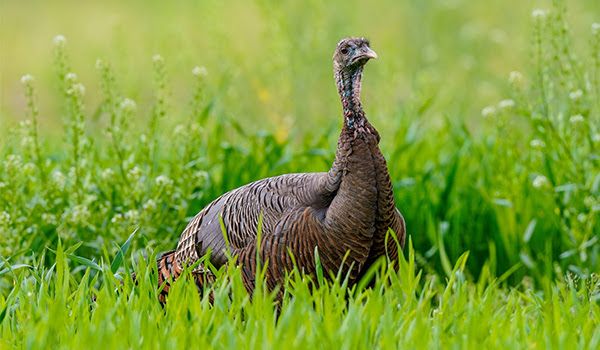
From habitat projects on private lands to large-scale conservation initiatives across public landscapes, the future of the wild turkey relies on people who care enough to contribute. Summer brood surveys provide one of the simplest ways for hunters, landowners and conservation-minded citizens to become part of that effort.
The next time you observe a hen, whether she’s leading a line of poults through a forest opening, pasture or food plot edge or seen without poults, consider reporting your sighting if your state offers a brood survey program. Both successful broods and hens observed without poults provide equally important insight into reproduction, nest success and overall wild turkey productivity.
That sighting represents far more than a memorable summer encounter. It is a data point that helps biologists better understand recruitment, habitat quality and the future health of wild turkey populations. And when thousands of people contribute those snapshots across the country, the result becomes far more powerful.
Read the full article here