

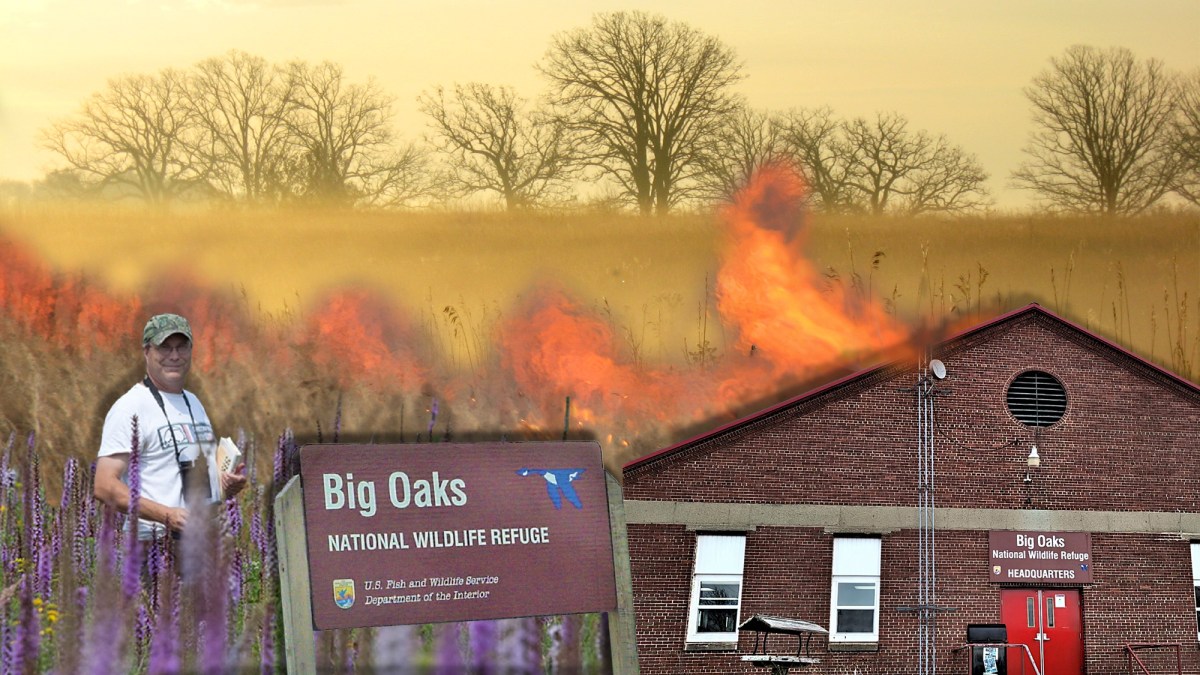
The largest national wildlife refuge in Indiana could close to public use if the U.S. Fish & Wildlife Service choses to scrap its real estate agreement with the Department of Defense, which owns the former aerial gunnery range that’s now managed as Big Oaks National Wildlife Refuge.
The 50,000-acre property in southern Indiana is the state’s second-largest parcel of public land and offers limited but prized deer and turkey hunting and varied habitats that are regularly used by rare and even endangered species of birds, amphibians, and invertebrates.
Refuge users, elected officials, and nearby communities have been animated by news this month that the U.S. Fish & Wildlife Service, citing staff and budget cuts, may sever its agreement with defense agencies and walk away from a 99-year commitment to manage the property for wildlife and public-recreation benefits.
A rally last Saturday in the nearby town of Madison focused attention on the possible closure of the refuge. Meanwhile, an online petition calling for the restoration of funding and continued public access on the property has collected 3,600 signatures.
Big Oaks National Wildlife Refuge has been operated since 2000 as what’s called an “overlay” refuge under a joint agreement with the U.S. Army, Air Force, and USFWS. Under a 99-year agreement renegotiated in 2020, the property is owned by the Army but managed as one of the nation’s 573 national wildlife refuges managed by USFWS. The sprawling property just north of the Ohio River was formerly known as Jefferson Proving Grounds, and was used as an air-to-ground gunnery range during World War II and for several decades afterward. The Indiana Air National Guard currently uses about 1,000 acres adjacent to the refuge for aerial gunnery exercises.
Related: Here’s Where the Trump Administration Plans to Open Hunting, Fishing Opportunities on Refuge and Park Service Lands
Because of the previous and current military use, parts of the Big Oaks Refuge are off-limits to public access, and all visitors must undergo a brief orientation session and sign in and out of the property.
While the managed access limits public use of the facility, it’s been a popular destination for Hoosier State deer and turkey hunters. Big Oaks hosts about 6,000 deer, squirrel, and turkey hunters and anglers annually in addition to thousands of bird-watchers from around the world, according to former refuge manager Joe Robb, who retired last year.
Following Robb’s retirement, refuge staff were cut from five employees to a single off-site manager. And last month, local conservation groups were notified that the USFWS was considering a 180-day notice to sever the 2020 memorandum of understanding with the Army. That action could close the refuge altogether and end its management as a national wildlife refuge.
A USFWS spokesman was quoted in the local Madison Courier as confirming the Service is “engaged with representatives from the Jefferson Proving Ground about the current Memorandum of Agreement.” But the public information specialist noted last month that “it would be pre-decisional at this point to share further information.”
The U.S. Fish & Wildlife Service declined to speak with Outdoor Life about the topic.
“We have no additional information to share at this time,” said an agency spokesperson this week.
Meanwhile, Indiana’s congressional delegation is monitoring the situation.
“I think bottom line is Big Oaks is not closing, but there are active negotiations that could affect the way it operates in the future,” Congresswoman Erin Houchin, whose district includes the refuge, told IndyStar last month.
Beyond Big Oaks NWR
The uncertainty over the future of Big Oaks National Wildlife Refuge is complicated by its status, owned by the Department of Defense but managed for its wildlife and public-recreation values. The impasse is amplified by the Department of the Interior staffing and budget cuts.
According to the National Wildlife Refuge Association, an independent non-profit that advocates for refuge funding, the agency is in a spiraling “staffing crisis,” because of budget cuts, retirements, and personnel reductions by DOGE, the Department of Government Efficiency.
“No national wildlife refuges [currently] are fully staffed, and more than half have zero staff on-site, leaving many refuges closed to the public and completely unmanaged,” according to the association.
The USFWS lost more than 800 classified staff positions — a 30 percent reduction — between 2010 and 2024, according to the Boone and Crockett Club. That was before the DOGE reductions. Equally concerning to conservation advocates, the Trump Administration in its 2026 budget has requested a $538 million reduction from the $1.68 billion FY2025 agency budget. That deep cut would further reduce refuges’ ability to sustain both fish and wildlife management and visitation.
Related: The President’s Budget Proposal Slashes BLM Staff, Refuge and Migratory Bird Funding, and Much More
Meanwhile, America’s national wildlife refuges have never been more popular with visitors. Visitation to refuges has increased nearly 40 percent over the past decade, with wildlife observation, hiking/walking, and bird-watching as the most popular activities. The USFWS has reported that refuges support regional economies “to the tune of $3.2 billion per year and support more than 41,000 jobs.”
Is Refuge Divestment Coming?
One way to read the future of Big Oaks refuge is that it’s an aberration among public lands. The overlay status of the land itself makes it problematic for the USFWS, and the property-specific complications — unexploded bombs and artillery shells littering the hardwoods plus intensively managed visitation — make it even less desirable as a hallmark wildlife property.
Considered through that lens, a cash- and staff-strapped federal agency might justifiably divest itself of the property. After all, the refuge is open to public visitation for only a few days per week and for only a few months of the year. Staff must manage each visitor’s experience. Maybe the property is a better fit for the state’s Department of Natural Resources or another agency or entity to manage. It’s simply a problematic property to manage for public purposes.
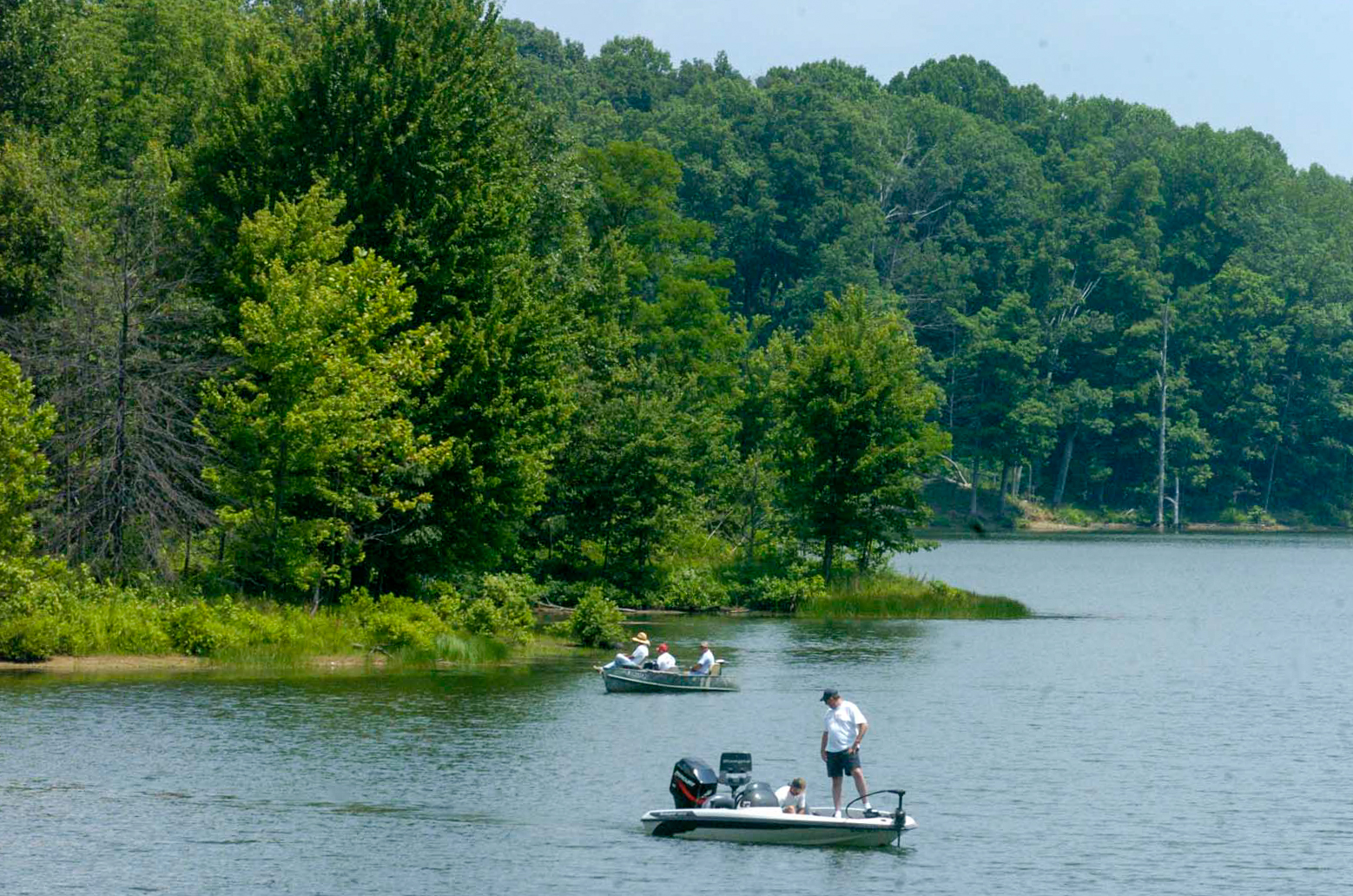
That conclusion is further amplified by Big Oaks’ specific maintenance backlogs, which include historic stone bridges, unmaintained interior roads, and a derelict dam that holds back Old Timbers Lake, a 165-acre reservoir constructed by volunteer Army forces for recreation purposes that’s been classified as a “high-risk” structure.
Given the USFWS’ national deferred maintenance backlog, estimated at $35 billion for the entire Department of the Interior and $2 billion for USFWS alone, shouldering legacy maintenance obligations isn’t a high priority.
But another way to read the Big Oaks situation is as a case study for a strategy to clear the National Wildlife Refuge System of expensive or intensively managed properties, according to the Indiana chapter of Backcountry Hunters & Anglers, which has been actively seeking clarity over the future of Big Oaks refuge. That wider reconsideration of refuges was implied by Brian Nesvik, the director of the Fish & Wildlife Service in statements to Outdoor Life in January.
“Our purpose is simply to confirm that [each] refuges’ original purpose still aligns with the Service’s current mission,” Nesvik told Outdoor Life shortly after he announced that the USFWS would reconsider the Service’s refuge portfolio. “People have assumed that means we’re looking for ways to sell land. That is not the intent. The intent is to make sure we’re still doing those things that were intended when the refuge was created but also to make sure that things aren’t completely askew from our current mission.”
Divestment of Big Oaks has actually been anticipated through the America’s Wildlife Habitat Conservation Act, sponsored by House Committee on Natural Resources Chairman Bruce Westerman (R-Arkansas) and introduced in Congress in 2024. The act would “empower states and local communities to use proven practices to restore and maintain habitat.” More critically for Big Oaks, the bill, which didn’t advance out of the last Congress, would have authorized “Good Neighbor Authority for the U.S. Fish and Wildlife Service, allowing the agency to partner with states, tribes and counties to better manage their lands, placing it on par with other federal land management agencies.”
Chronic underfunding of wildlife refuges combined with a congressionally-approved hand-off to other entities could be the future of America’s premier wildlife properties. And it could be the justification for the USFWS’ ultimate decision to walk away from the Big Oaks MOU with the Army, suggests former refuge manager Joe Robb.
A Wildlife Gem
Big Oaks belongs in the USFWS’s refuge inventory, maintains Robb, largely because its habitat and wildlife values transcend anything elsewhere in the Midwest.
“Not only is it one of the largest conserved landscapes in the region, it’s a globally important bird area, and a stronghold of the [endangered] Henslow’s sparrow,” he says. “Every time we went out in the field, we’d find a new native species. The Nature Conservancy called Big Oaks a ‘portfolio site,” because it had everything you’d want in a conservation portfolio.”
“Every time we went out in the field, we’d find a new native species. The Nature Conservancy called Big Oaks a ‘portfolio site,” because it had everything you’d want in a conservation portfolio.”
—Joe Robb, former big oaks refuge manager
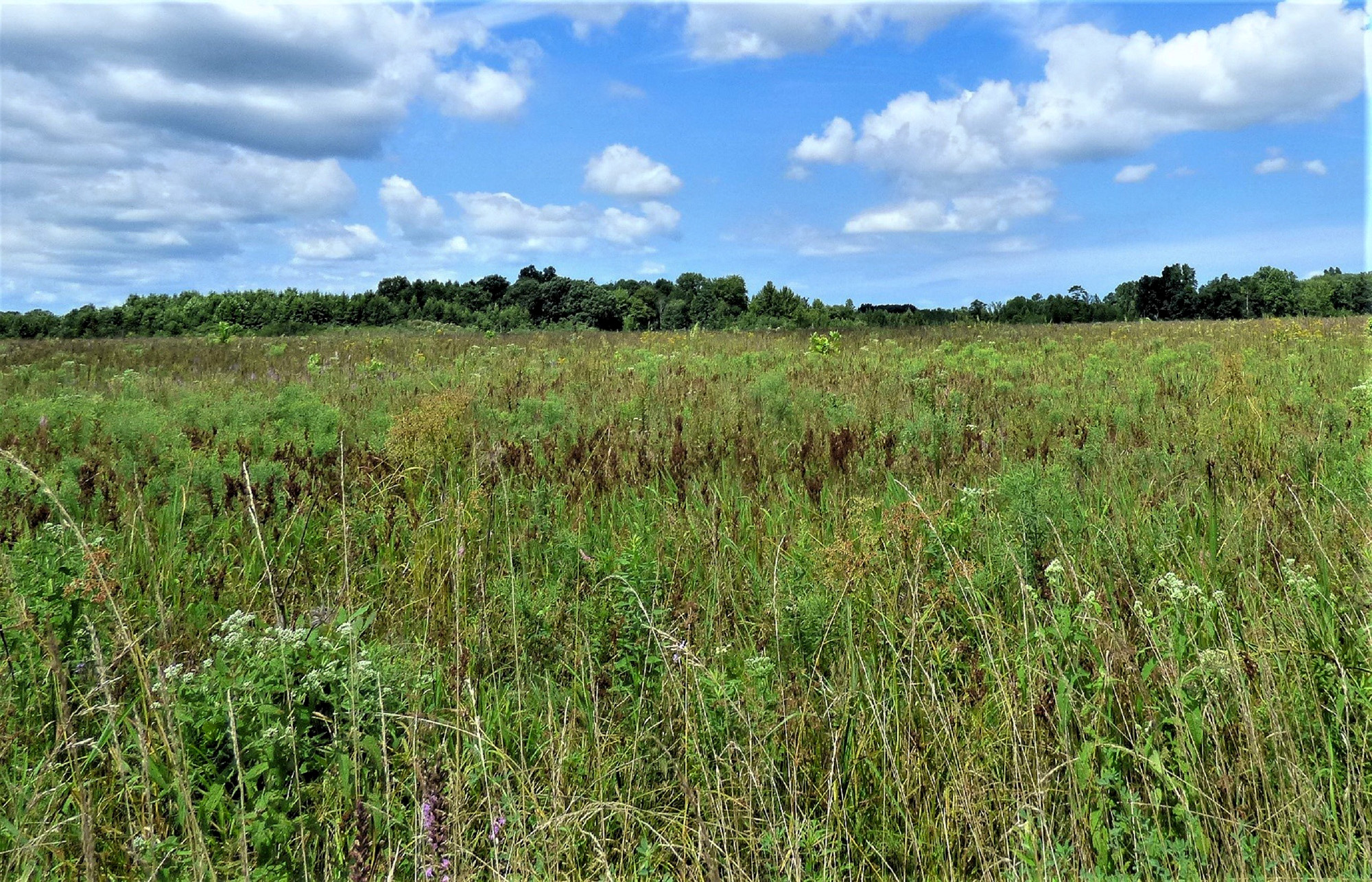
That includes grassland savannas managed through periodic prescribed burning, secluded bogs, old-growth oak stands and hardwood ridges, over 80 caves that provide habitat for rare bats, and secluded streams that hold a variety of fish and amphibians. Drawing a Big Oaks deer tag is one of the coveted hunting opportunities in Indiana. Even the previous use, as a bombing range, has benefitted wildlife.
“The bomb craters create a mosaic of ephemeral wetlands used by [endangered] crawfish frogs, salamanders, and other frog species,” notes Robb, who doesn’t think those wildlife values would be as well-managed by an entity other than the U.S. Fish & Wildlife Service.
He bases the conclusion on the habitat erosion that started soon after federal wildland fire crews were removed from the property in 2025.
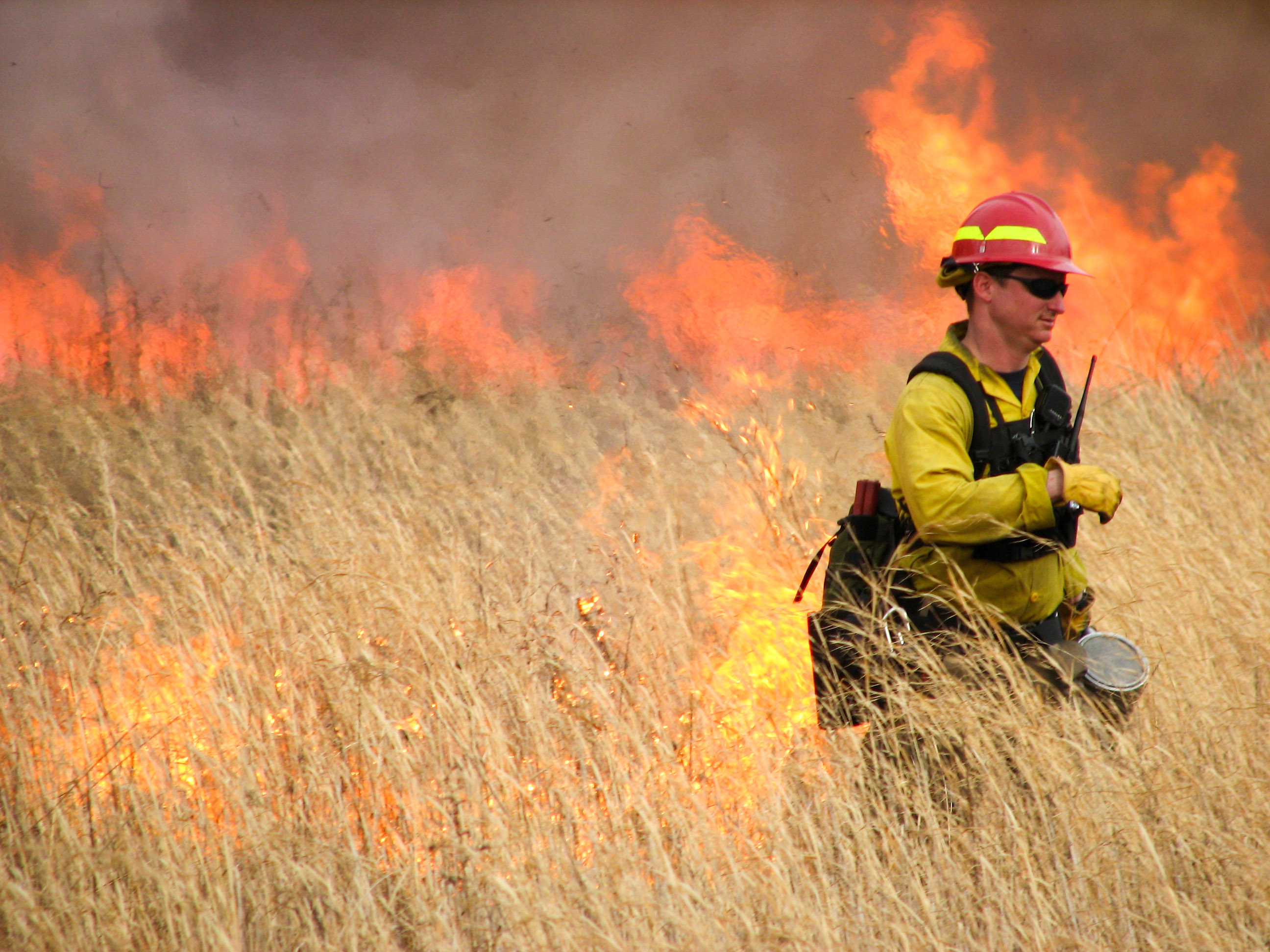
“Periodic burning has been critical to maintaining and improving habitats,” he says. “We typically burned between 8,000 and 12,000 acres a year,” but the creation of the U.S. Wildland Fire Service earlier this year removed agency-specific crews from specific properties. Robb says that deprived Big Oaks of its resident fire-management team.
“I think the FWS is trying to walk away and have another entity take over the public use,” says Robb. “That might be the state, but Indiana’s DNR has its own budget restrictions. The Army doesn’t care much about public use. Best case: The FWS could mothball it and have a caretaker status with minimal public use, but ultimately it’s up to Congress to fund the refuge system. If we’re going to have a system, it can’t run on air.”
Robb says other refuge actions, from drilling in previously closed National Wildlife Refuge lands in Alaska to the USFWS’s controversial trade of high-value refuge land on the Texas Gulf coast near Space X’s rocket-launching facility, are an indication that the FWS is eager to either shed properties or degrade refuge wildlife values.
“These properties are national treasures for a reason,” says Robb. “Refuges are the wildlife equivalents of our national parks. They’re the best and the rarest habitats we have for wildlife and fisheries and for people who love them. We shouldn’t be in a hurry to divest them from our national real estate portfolio.”
Read the full article here