
- Montana’s corner-crossing debate intensifies. Tension rises between private property rights and public access, with landowners threatening to withdraw from access programs.
- Legal clarity remains elusive. Despite a federal ruling in Wyoming that legalized corner crossing in six states, Montana’s stance remains unclear.
- Citizen council explores solutions. The PLPW is tasked with balancing landowner concerns and public access, and is considering pilot programs and compensation.
- Public opinion favors legalization. The majority of Montanans support legalizing corner crossing, highlighting the need for resolution. Very few (7 percent) think it should be illegal
Bottom line: Montana faces a heated debate over corner-crossing, balancing private rights and public access with legal clarity and public opinion.
In Montana this week the friction around access to corner-locked public land ratcheted up. Some landowners threatened to withdraw from established access programs and the director of Fish, Wildlife & Parks called the tension a collision of two “cornerstone Montana values” — private property rights and public access.
Meanwhile, a citizen council this week was charged with resolving the complicated realities of accessing corner-locked public land with a pilot program to field-test various administrations of state-managed access.
The wider discussion around corner crossing is framed by three recent developments on opposite ends of the issue. The first was a statement in March by FWP Director Christy Clark that corner crossing is illegal in Montana, upending years of uncertainty over the practice of entering “checkerboarded” public land at the corners where public parcels meet at a vanishingly narrow point. The topic has been hotly debated in the West since a federal court last year ruled the practice of corner crossing legal in Wyoming. That ruling affects the six states in the 10th Circuit Court of Appeals, but doesn’t apply to Montana or other states in the 9th Circuit.
Related: We Corner Crossed the Wyoming Ranch That Started It All. Accessing Those Public Lands Is Still Complicated
Without judicial-branch guidance, Clark’s statement was a stern reiteration of FWP’s long-standing policy, that while corner crossing is technically illegal, and game wardens might level criminal trespass charges against corner-hoppers, it’s up to county attorneys to prosecute offenders. So far, no Montana case has been tested by the courts, leaving the access issue a legal gray area.
Montana contains some 870,000 acres of corner-locked public land, according to a 2022 analysis by the digital mapping company onX.
Following Clark’s statement, Montana’s Republican lieutenant governor, Kristen Juras, gave a wide-ranging presentation in May to an influential interim legislative committee. In it she stressed that corner crossing without permission of adjacent private landowners is outright illegal because crossers pass through the private airspace of adjacent landowners. Juris, who previously taught property law at the University of Montana, acknowledged no court has tested that thesis.
“It is important to note this, even though the trespasser causes no damage whatsoever to the property, a trespass still occurs because what you’re protecting is the damage to that right to exclude,” Juras told the Environmental Quality Council.
A day after Juras’s presentation, which was denounced by critics as an opinion rather than citing any Montana law, a pair of sportsmen’s groups sued FWP, seeking legal clarity on the issue. Backcountry Hunters & Anglers and the Public Land Water Access Association jointly filed the legal complaint in district court in Montana.
Citizens Try to Tackle Access
That’s the context for this week’s gathering of a citizen council that advises FWP on a wide range of access programs. It’s the Private Land/Public Wildlife Advisory Committee, and in an 11th-hour assignment from FWP Director Clark, the 13-member group was charged with recommending solutions to what’s emerging as a corner-crossing impasse in the state.
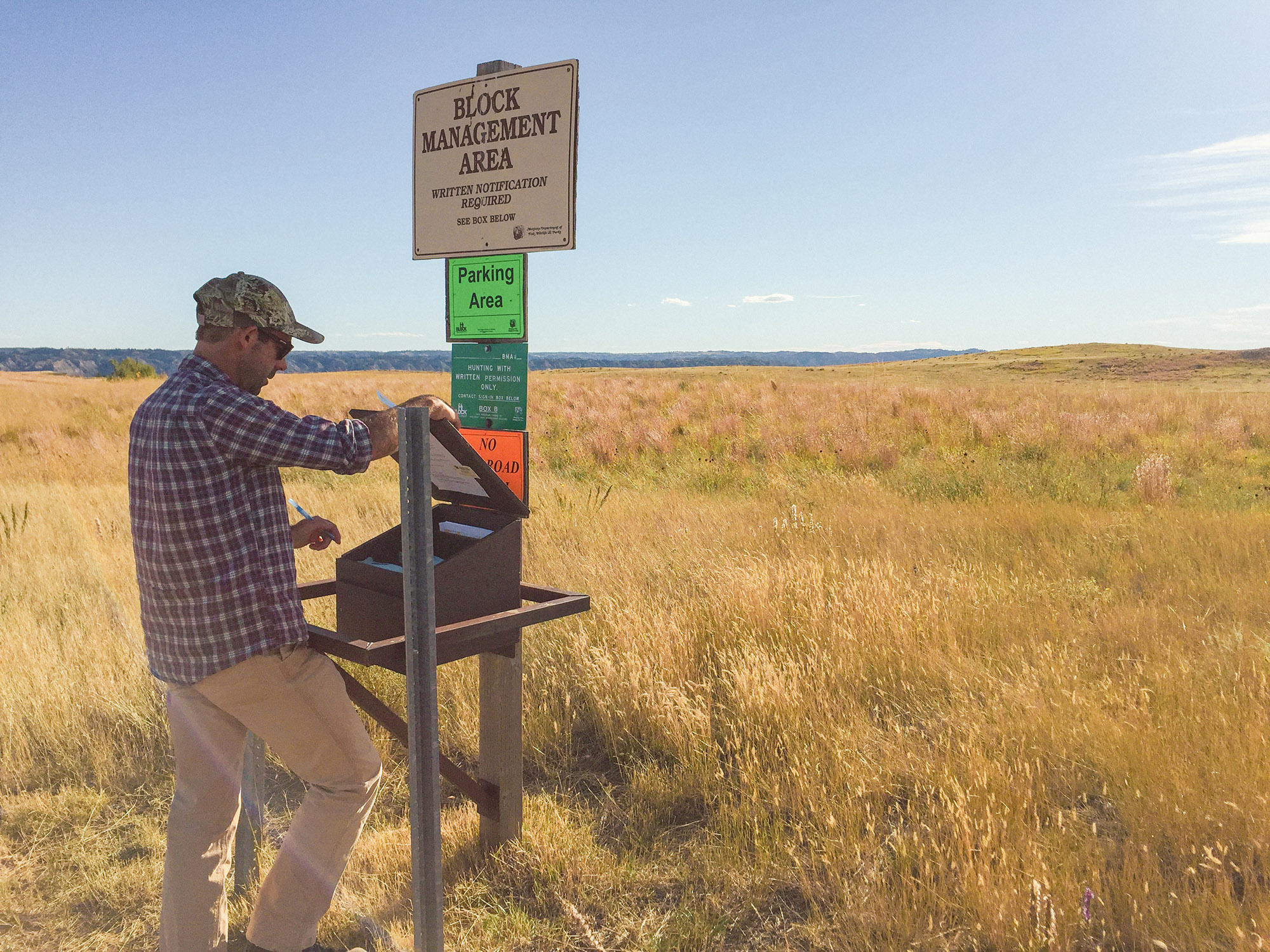
PLPW Chair Ed Beale, a Helena business owner, tasked members with expanding the scope of existing access programs to accommodate corner crossing, attempting to balance the concerns of adjacent landowners with the access expectations of hunters and other recreationists. Among the access programs the PLPW oversees are the popular Block Management program that provides public hunting access to private land and a catalog of Public Land Access Agreements that open or improve free public access to isolated parcels of state or federal land.
“We are not going to be making decisions on what the law says or doesn’t say,” Beale said of corner crossing. “That’s not in our perusal. But we do have a great host of programs that since 1995 have been providing access in as many ways as possible. What are the parameters of these programs that might be applicable [to corner-to-corner access]?”
Council members noted that corner crossing is neither as simple nor as frictionless as it’s been portrayed by those who describe it as simply passing over a survey stake, often called a monument, that identifies section-line corners across much of the West.
“In my experience, the majority of two-section corners are monumented, but not all of them have a 4-inch USGS post in the ground,” noted PLPW member Dale Tribby, a former BLM resource manager. Some “have rocks or other ways of marking a corner” that aren’t easily recognized or crossed. Meanwhile, section corners identified by digital mapping services like onX Hunt aren’t precise enough to find the specific spot where corners meet.
Tribby, of Miles City, noted that, absent a court ruling that defines the legality of corner crossing in Montana, the PLPW council should consider access corridors rather than single-point access to a tiny corner that might be on a steep sidehill or monumented by a tree.
“If you’re pulling a game cart or you have a hunting dog or a horse, trying to step over a finite point might not be feasible,” Tribby said. A narrowly defined corridor might lead access-seekers to a nearby gate instead of a problematic corner.

PL/PW Day 1
Some Montana hunters balk at the notion that corner-crossing needs to be defined, at all. They have quietly accessed corner-locked public land without calling attention to the action, partly because of its undetermined legality but also because they don’t want corner-crossing to be popularized. Any state-sponsored program that highlights the accessibility of corners risks calling attention to remote and wildlife-rich locations.
“The best part of these [corner-touching] quarters is their secluded nature,” says Justin Schaaf, a sportsman from Glasgow, in the remote northeast corner of Montana, the site of this week’s PLPW council meeting. “My fear about a state-administered program is putting more dots on the map, and bringing more people out here.”
Compensation for Providing Public Access?
Meanwhile, landowners on the council said they were unlikely to participate in any access program without compensation, and that topic proved as divisive as the larger issue of whether corner crossing is legal or not. Should a public-land grazing leasee be compensated for providing access to public land at all, but especially state or federal land that’s already accessible via standard corner-hopping? What if the two sections of corner-touching public land are leased by different entities? Who should be compensated, and by how much?
The discussion reveals the intricacies of administering access to these contested corners. Meanwhile, many of Montana’s landowners consider the entire discussion flawed, because corner-crossers could upset a precarious balance between agricultural producers and sportsmen.
“As there continues to be this public push for access and we continue to see this poor behavior with people utilizing these [FWP access] programs, there are consequences,” said Raylee Honeycutt, executive vice president for the Montana Stockgrowers Association. Honeycutt noted that “with the heightened conversation about corner crossing in the last weeks, we’ve received phone calls from members saying they do not intend to renew their Block Management enrollment.”
About 1,200 Montana landowners enrolled some 6.8 million acres of private land in Block Management in 2025, the last year for which numbers were available. Meanwhile, a majority of Montanans think corner crossing should be legal. According to a poll conducted by Montana Free Press, 59 percent of state residents think the practice should be legalized, while just 7 percent think it should be illegal.
By the end of its two-day meeting, the PLPW committed to identifying landowners who control public-land leases whose property — both leased from a public land-management agency and privately owned — might be useful pilot projects to field-test the idea of corner-crossing access easements.
The test properties could be enrolled in a one-year contract. That short time line anticipates a decision by district courts on the lawsuit challenging the legality of corner crossing. A future judicial ruling would likely guide FWP’s direction. If corner crossing is determined to be legal, then compensation to leasees is unlikely to gain much public or agency support. But if corner crossing is determined to be illegal, then FWP’s access programs could take on renewed relevance as hunters and landowners scramble to define — and fund — access to corner-locked public land.
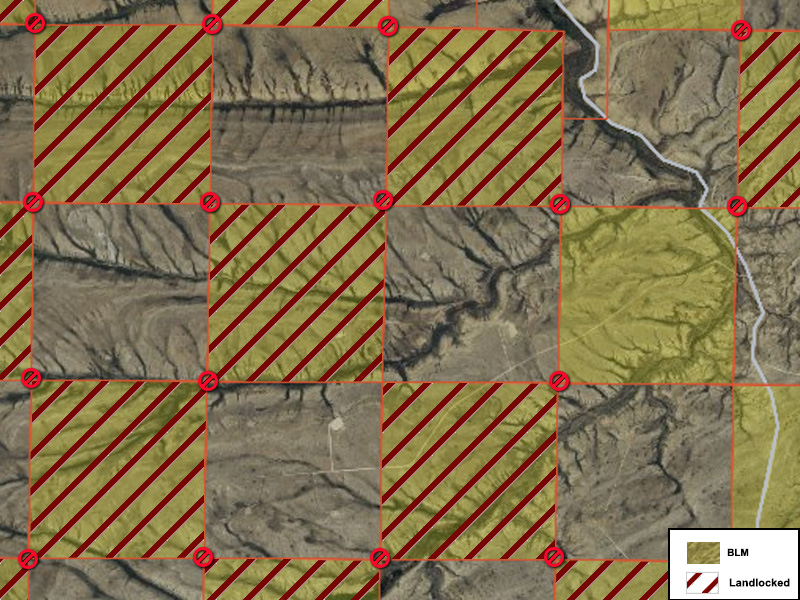
FWP staff told PLPW members that the agency doesn’t have infinite capacity to add resources to access programs. But Kevin Farron, representing the Montana Wildlife Federation, told the council that the state’s Department of Natural Resources land-banking program could be an important funding source.
The program is intended to use revenue from the sale of inaccessible state lands to purchase new, accessible state lands. But Farron noted that “not a penny has been spent since 2018. There is between $41 and $43 million sitting in that account right now, and if it doesn’t get spent in 10 years, it gets diverted. We need to put that money to good use and quickly.”
The True Scale of Corner Crossing in Montana
While FWP and its council consider various ways of accommodating access to corner-locked public land, Ryan Callaghan says the actual issue is relatively narrow. Practically speaking, it affects relatively few corners that provide meaningful access to wildlife-rich public lands
“The conversation right now has lost sight of the fact that corner-crossing has been going on for decades and it hasn’t been an issue,” says Ryan Callaghan, president and CEO of Backcountry Hunters and Anglers, the organization that sued the state of Montana to define corner crossing. He says the lawsuit was an attempt to get FWP to finally define corner-crossing just as Clark and Juras were re-framing the issue as a crime.
“The state really wants people to know they’re pro access,” says Callaghan. “But at the same time they’re going to have to explain why they’ve been cranking up – at their own admission – the language around corner crossing, moving it from a gray area that’s undefined to ‘Hey, this is illegal, which has ramifications on 870,000 acres of Montana public land.’”
Callaghan says that FWP has abundant records of citations written to corner-crossing hunters, but none have been resolved, legally.
“People do this — corner-cross — every single season,” he says. “But we don’t know how many. Let’s figure out what the numbers actually are. How big is this issue to landowners, really? Let’s get all the affected folks in some listening sessions to figure it out.”
“The conversation right now has lost sight of the fact that corner-crossing has been going on for decades and it hasn’t been an issue.”
—Ryan callaghan, president and CEO of BHA
Meanwhile, the BHA lawsuit is competing with draft legislation that might be considered by the Montana legislature, which convenes in January. At least two of those draft bills, by Bozeman legislators Josh Seckinger and Ellie Boldman, would define corner crossing as fully legal in Montana.
Just as ranchers don’t want a pile of hunters rushing to corners to access corner-locked public land, neither do hunters want to popularize these spots, says Callaghan.
“We think there’s a great way of doing this in Montana, which is the attorney general sends out a quiet memo that says we’re not prosecuting corner-crossing. That’s great with us. The people who want to make the choice [to corner-cross] can do it, but it keeps those corners quiet.”
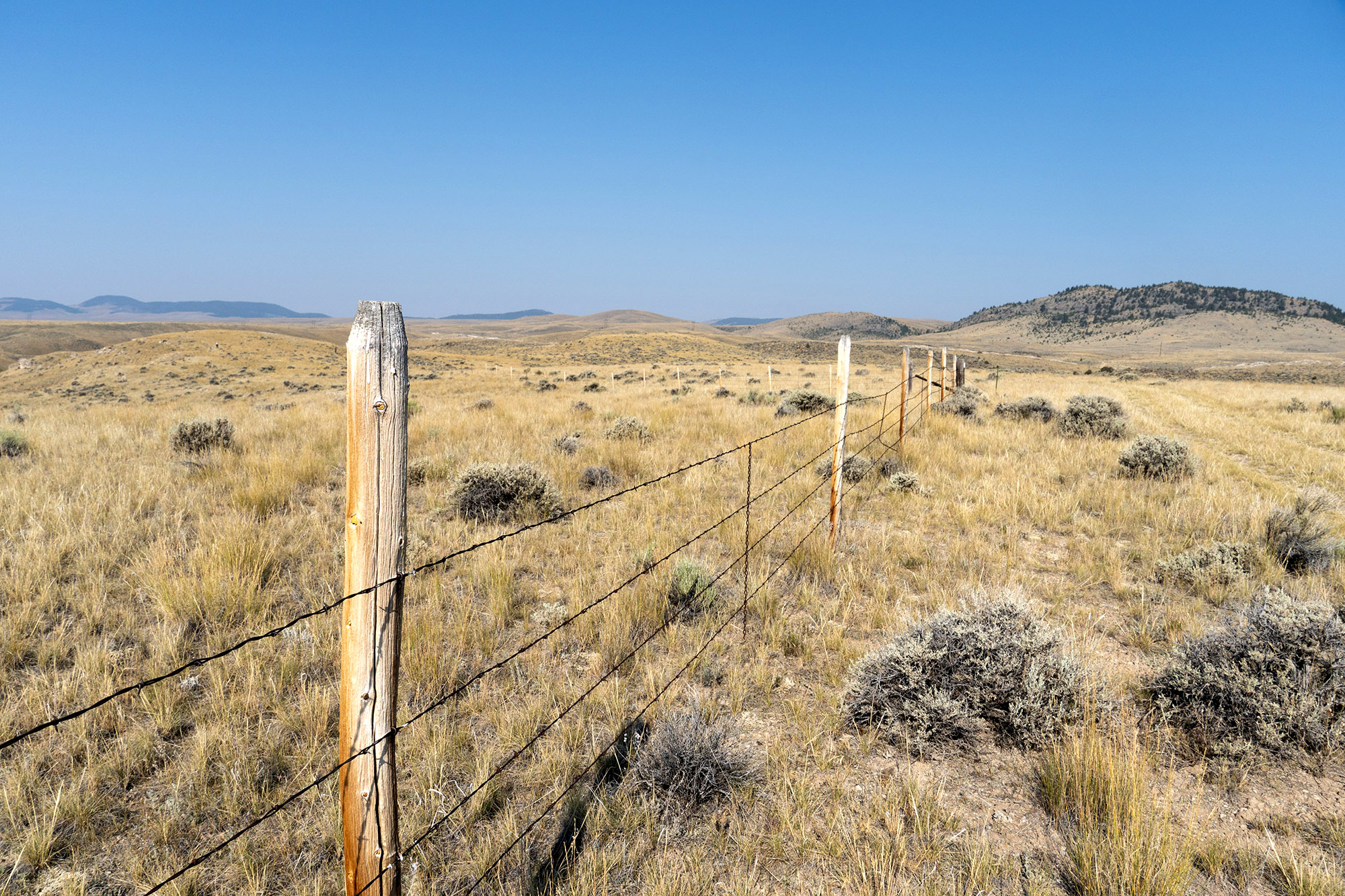
Callaghan notes that there have been bad actors around the corner-crossing issue, on both sides of the fence and all sides of the corner post.
“I know trespassing is a real thing, and there are plenty of lazy hunters out there,” he says. “You’re coming back at night and you have to come back to this arbitrary point on the map instead of straight-lining it a quarter-mile to the pickup. Unfortunately, some hunters make that choice and mess things up for everybody.”
Enforcement of inappropriate corner crossing will continue to be difficult for FWP, but Callaghan notes that enforcement is only one part of the relationship balance that FWP Director Clark noted between private property rights and public-access rights.
“The rest of the relationship is social,” says BHA’s Callaghan, whose organization is surveying Montanans to identify particularly problematic public-land corners. “That’s a social contract and we as hunters or access-seekers of any sort need to step up exercise with landowners consistently to make people understand what’s expected of them. It’s not to take something of value from landowners.”
If the PLPW can’t recommend a Montana-based outcome that balances the competing values of landowners and public-land hunters, then BHA’s lawsuit may recommend some solutions.
Read Next: Here’s Where the Trump Administration Plans to Open Hunting, Fishing Opportunities on Refuge and Park Service Lands
“But if there’s some solution that’s written into statute before that lawsuit comes to a head, then I’m happy to have that conversation then,” says Callaghan.
Any corner-crossing access recommendation from PLPW is likely to go to the state’s Environmental Quality Council for consideration, probably this fall.
Read the full article here