
We may earn revenue from the products available on this page and participate in affiliate programs. Learn more
Spend any time outside this summer and there’s a good chance you’ll see a Turtlebox speaker somewhere nearby. Rather, you’ll hear it somewhere nearby. The waterproof speaker has been popping all over social media—and on boats, at campsites, and even in duck blinds and deer camps. To find out what makes Turtlebox different than your average outdoor speaker, we talked to the founders. The four friends—Jonathan McKenzie, Will Bradley, Reagan Fincher, and Jeff Bezner—shared everything from how it was built to why it’s so expensive (but worth it!). In their words: “Nothing is as loud and enjoyable with the ability to literally take anywhere.”

Why Turtlebox Was Created in the First Place
Like with most startups, the idea for Turtlebox started with a problem. While living in Houston and spending much of their free time on a shared sailboat in Buffalo Bayou and the bay, the founders kept running into the same issue: portable speakers couldn’t survive the outdoors. After breaking multiple speakers, they realized there wasn’t a product that could handle the conditions they encountered regularly.
“We needed something to be loud, but also could get water all over it,” they recall. Beyond that, it had to withstand saltwater exposure, which meant using marine-grade components throughout. “It needed to be waterproof, but also needed to be totally salt-proof.” Instead of settling for products that failed in real-world conditions, they set out to build one that could withstand them.
How the First Turtlebox Was Built
In 2012, the first Turtlebox took shape in a garage as a marine-grade, waterproof Bluetooth speaker. Looking back, it’s remarkably similar to the product the company sells today. At the time, though, there were no plans to start a speaker company. As the founders put it, “That product was never meant to be a business. We needed it for us.”
The speaker quickly became a constant companion on boating trips, days on the water, and outdoor adventures. Before long, other people started asking where they could get one. Demand continued to grow, and one of the founders’ roommates eventually suggested they take the idea seriously. “People want to buy this thing,” he told them. From there, they found an initial investor, and launched the company.
What Makes Turtlebox Different
The founders are quick to point out that Turtlebox wasn’t designed to be just another portable speaker. From the beginning, the goal was to create something that could survive real outdoor use while delivering the kind of volume and sound quality most portable speakers struggle to achieve.
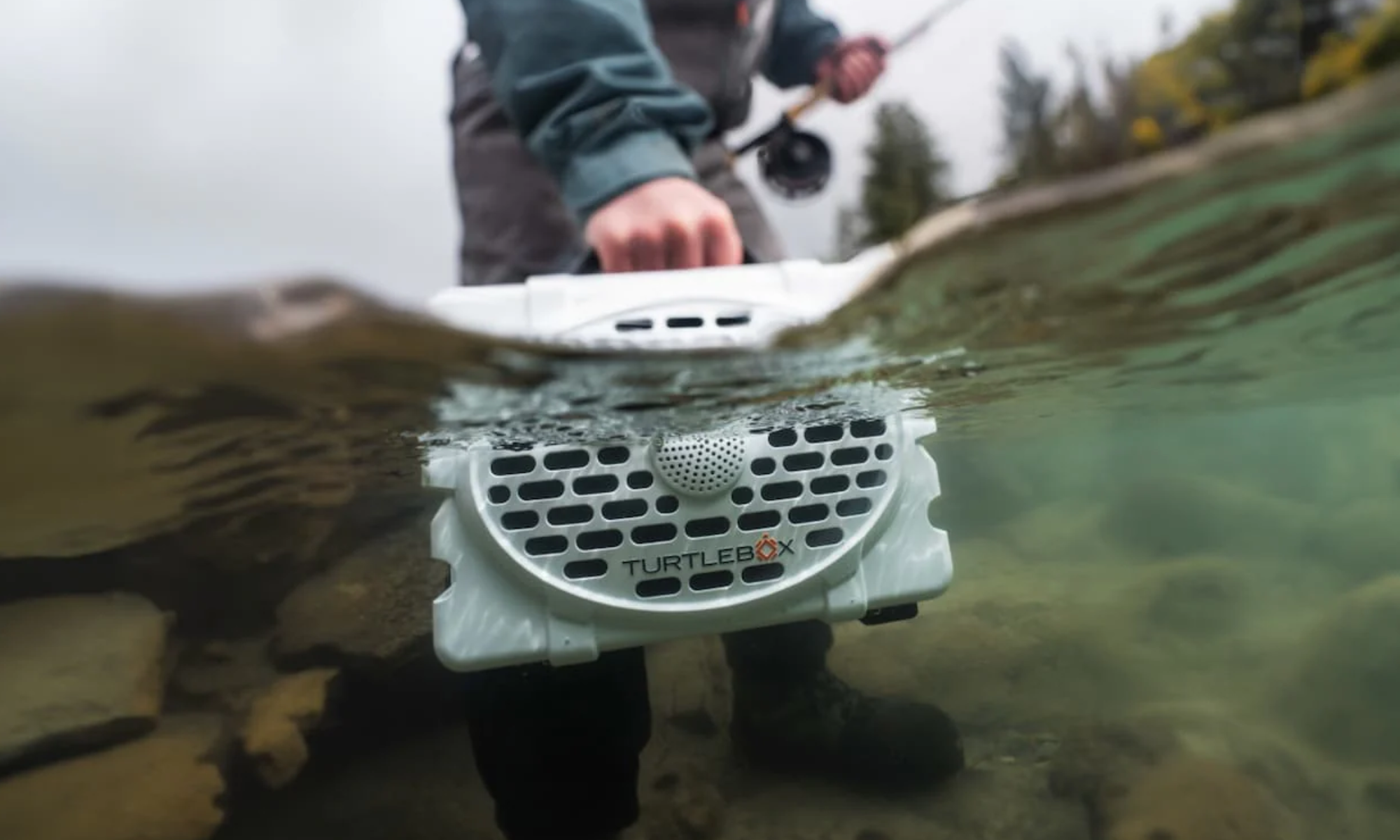
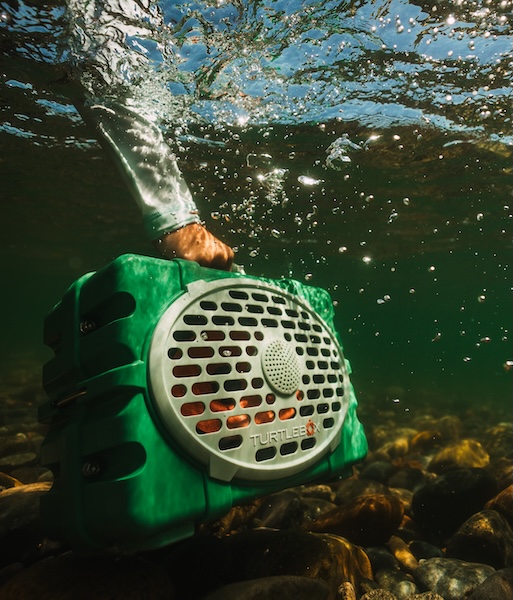
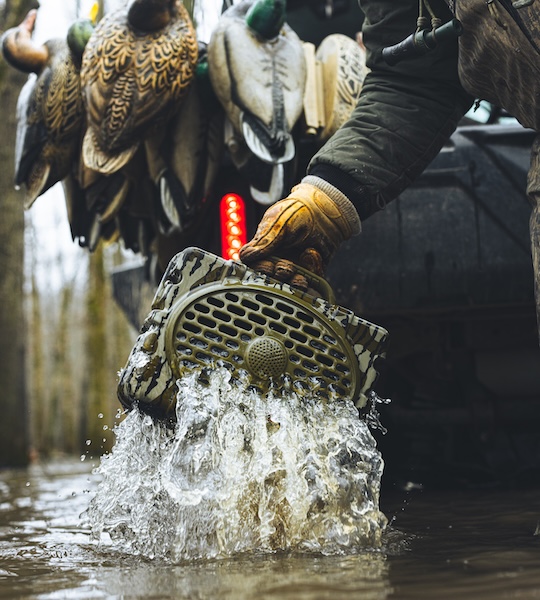
That starts with durability. When Turtlebox says its speakers are waterproof, the company means it. As the friends explain, “Waterproof means waterproof. Put it under water and find out.” The secret is an airtight design that prevents air from entering the speaker. Since air molecules are smaller than water molecules, keeping air out = keeping water out.
Cool side note on that: One of the founders told us a story about a boat that sank off the coast of Alaska. Months later, beachgoers discovered a Turtlebox that had drifted at sea before washing ashore. They turned it on, and it still worked (!!). While most speakers aren’t likely to face a test that extreme, the story highlights the level of durability Turtlebox aims to build into every product.
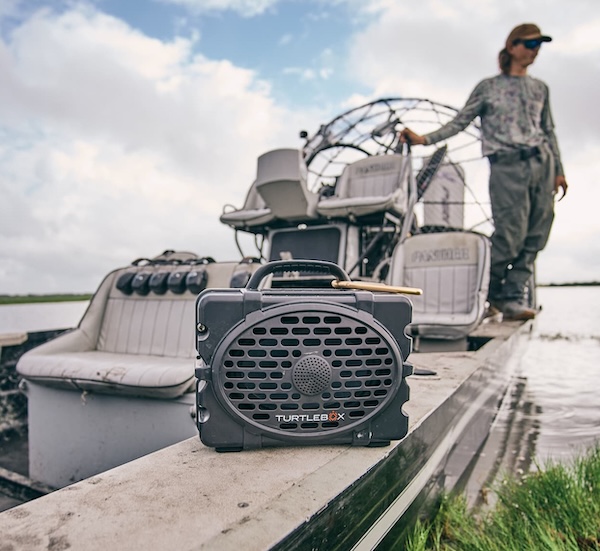
Turtlebox also set out to solve one of the biggest challenges in outdoor audio: producing serious volume without sacrificing sound quality. According to the founders, that comes down to “intentional design and the components inside the speaker.” Every model uses Class D digital amplifiers, which are more efficient and run cooler than many alternatives. That’s important because heat is often the enemy of loud, clean sound. By controlling temperatures inside the speaker, Turtlebox can push higher volumes without overstressing the components or compromising audio quality.
Just as importantly, the company doesn’t want loudness to come at the expense of the listening experience. The founders describe themselves as “sound nerds” who love live music, and their goal has always been to recreate the feeling of an outdoor concert. “It’s not just loud, but it’s pleasant to listen to,” one founder says. Striking that balance between volume and clarity has required countless hours of tuning, but it’s one of the qualities that continues to set Turtlebox apart from other outdoor speakers.
Why It Costs What It Costs
At $430 for the Gen 3 model, Turtlebox sits well above most portable speakers on the market, but the founders say that price reflects what goes into building something designed for real-world outdoor use rather than casual listening.
As one of them puts it, “The whole is greater than the sum of the parts.” He explains that if you take into account every component, every hour of design and engineering, and all the testing and sound tuning that goes into the product, “our prices feel like a deal in comparison.”
How Turtlebox Is Tested
Turtlebox’s testing process blends formal engineering with a hands-on, real-world approach. Over time, the company has developed more structured and “scientific” testing methods, but the founders still rely heavily on what they call old-school, common-sense durability checks. As one founder explains, “Drop it from a ladder, tie it to a weight and leave it at the bottom of a pool for three days, cook it in your oven, freeze it in your deep freezer next to the meat—I personally used to do these things, and still do sometimes.” The goal is to push the product far beyond normal use conditions to see where it breaks.
While those extreme tests aren’t recommended for customers—and would void the warranty—they reflect the standard Turtlebox holds itself to. “I don’t advise our customers to cook their Turtlebox,” the founder notes, “But you can use the product with confidence knowing that we did.” That same philosophy carries into how the speaker is tuned. Instead of relying only on controlled lab environments, the team constantly adjusts the sound curve outdoors, using real-world conditions like road noise and ambient sound to ensure the speaker can still be heard clearly from distance even outside.
content_outdoor-gear

THE 1871 CLUB

Recommended Products
Read the full article here