
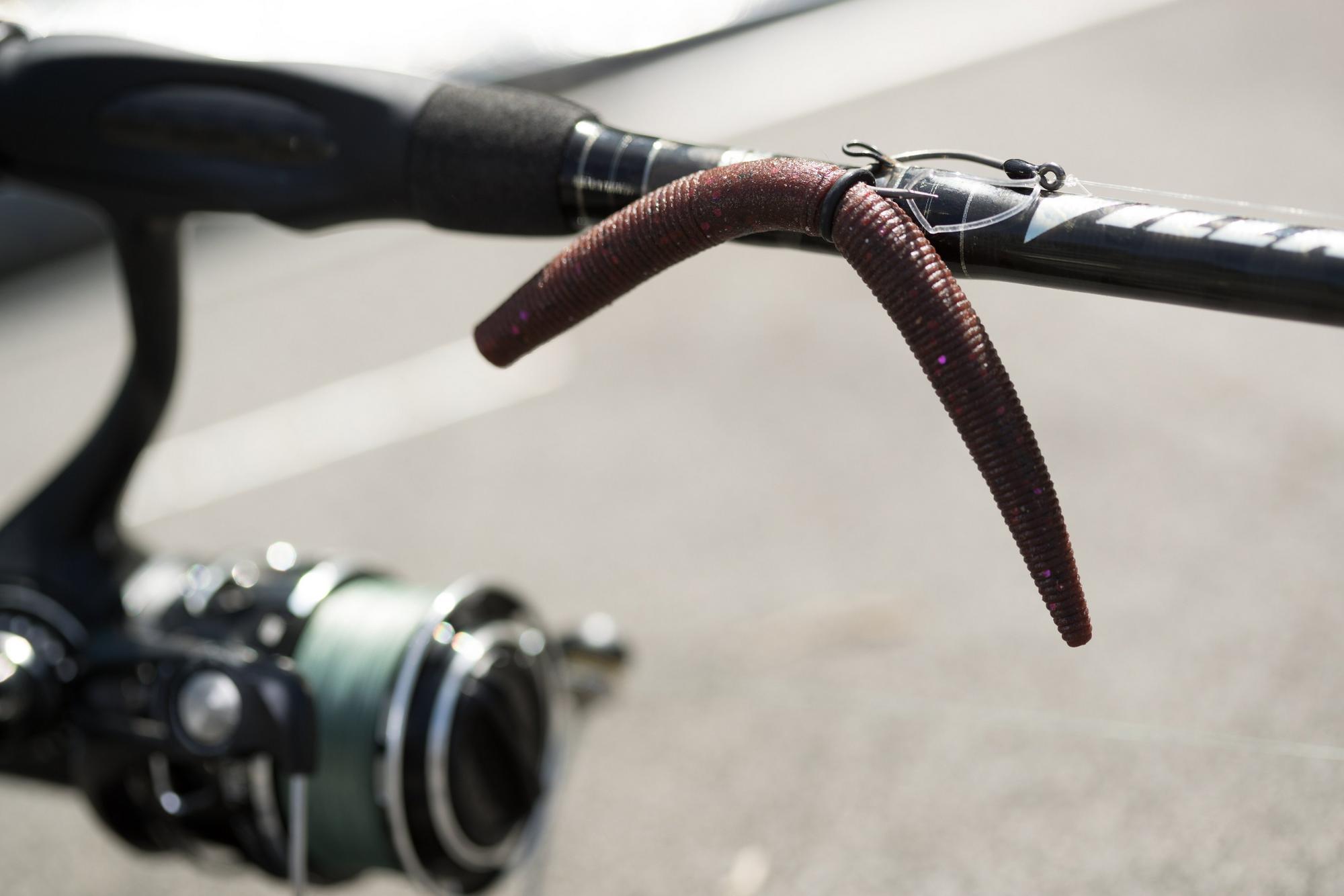
A wacky rig is one of the most effective techniques for enticing reluctant bass to bite. It is also one of the best finesse presentations for shallow-water fish and for suspended bass near the surface and around cover. The subtle movements and slow falling action of a wacky rig make it hard for a bass to resist. And the ease with which it can be skipped underneath docks, bushes, pontoons, and other cover makes it a deadly rig. This technique is simple enough for the beginner to pick up while also being a popular tactic on the pro tour. Anyone can catch a fish on a wacky rig; thus, everyone should know how to rig it and fish it.
What Is a Wacky Rig?
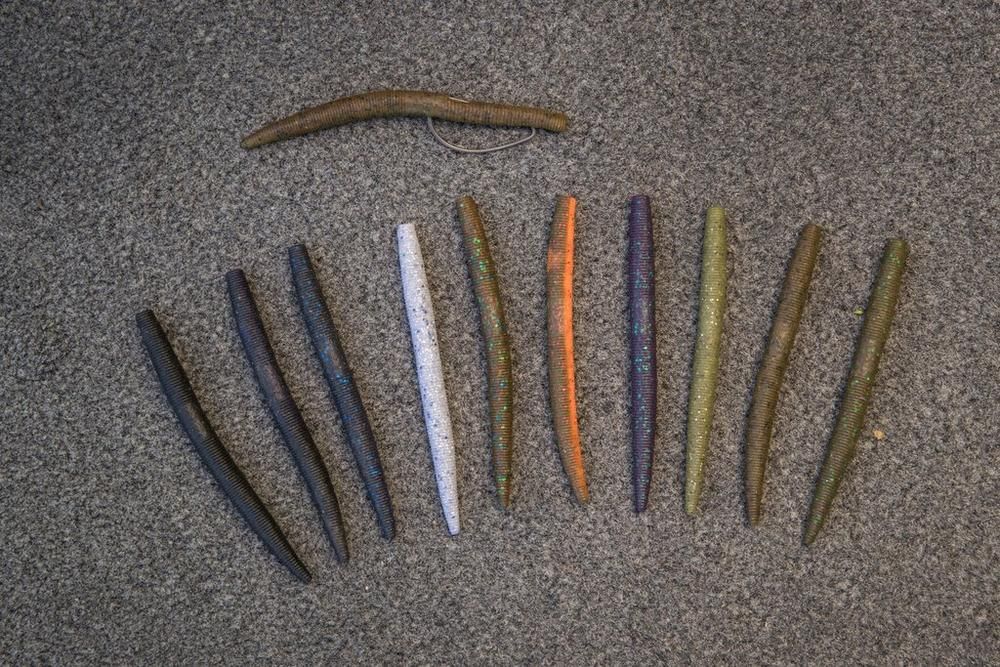
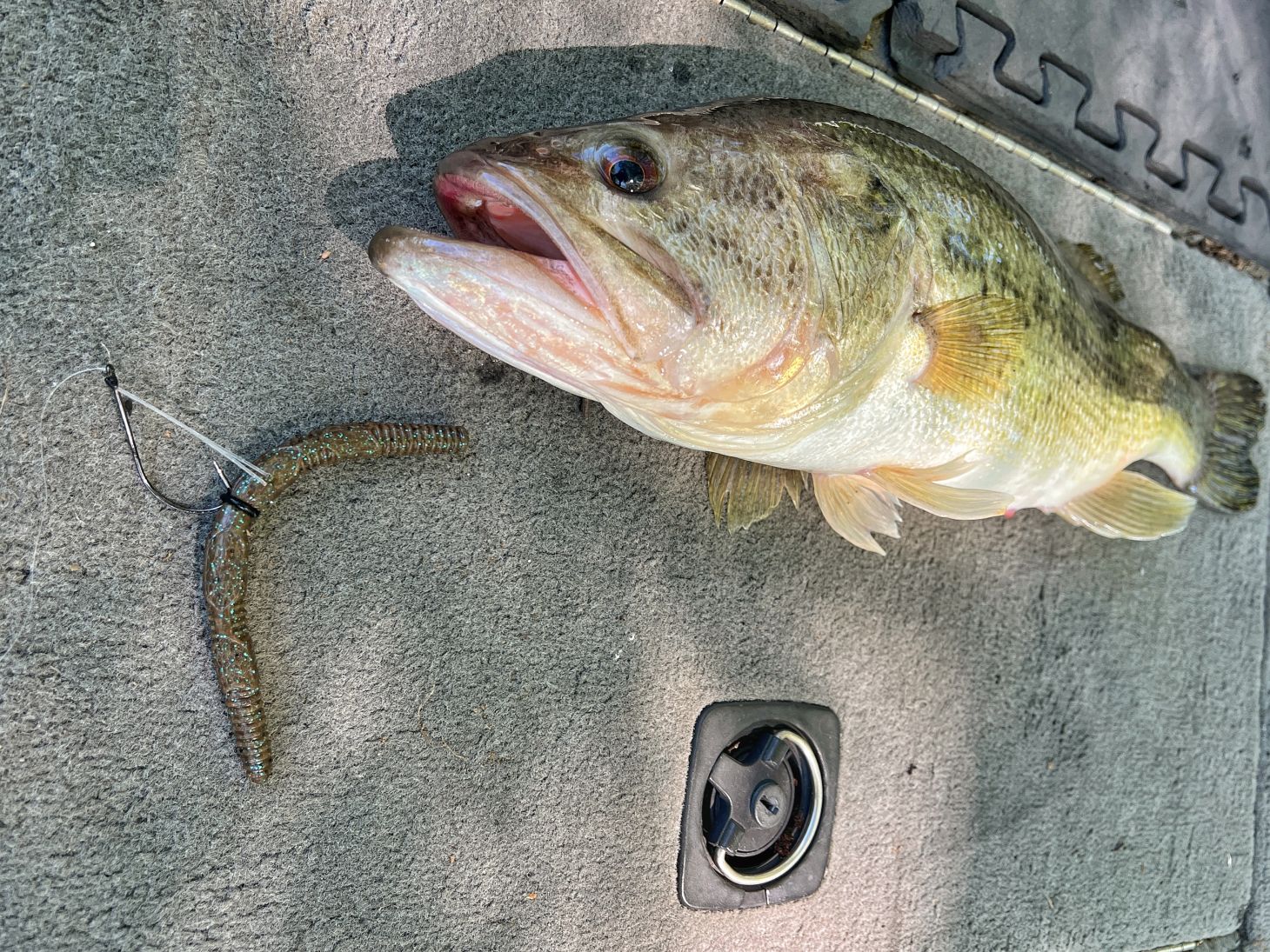
A wacky rig, in its simplest form, consists of two parts: a hook and a soft plastic worm. We’ll incorporate one more element into the rigging section as an option. But for now, if you have a soft plastic trick worm or Senko-style bait and a small wacky or Neko hook, you have all you need to build a wacky rig. Just tie the hook on your line, and then run the hook through the center of the bait. In doing this, you’ve created a rig that will fall through the water very slowly as the worm maintains a horizontal orientation. As the worm falls, both ends rock back and forth. This movement is tantalizing and just slow enough to unlock the jaw of a bass that isn’t in the mood to bite.
How to Rig a Wacky Rig: Step-by-Step
Step 1: Pick a soft plastic trick worm or Senko-style stick bait (green pumpkin is the gold standard) and a Neko or wacky hook (1/0 is a good all-around size).
Step 2: Tie on the hook using your favorite knot.
Step 3: Hold the soft plastic bait and locate its center of gravity. Most soft plastics are not fished with a weight, so the middle of the bait is the center of gravity. Typically, the bait will be a little heavier towards the head than the tail.
Step 4: Once you’ve located the center of gravity on the bait, run your hook point through the center of the bait, which will orient it perpendicular to the length of the worm.
Step 5: Now, toss your worm in the water. If your bait falls horizontally, you’ve rigged it well. If one end falls faster, slip the hook out of the bait and adjust it. Test the rig again to ensure that it is now falling horizontally. If it still isn’t, repeat this step.
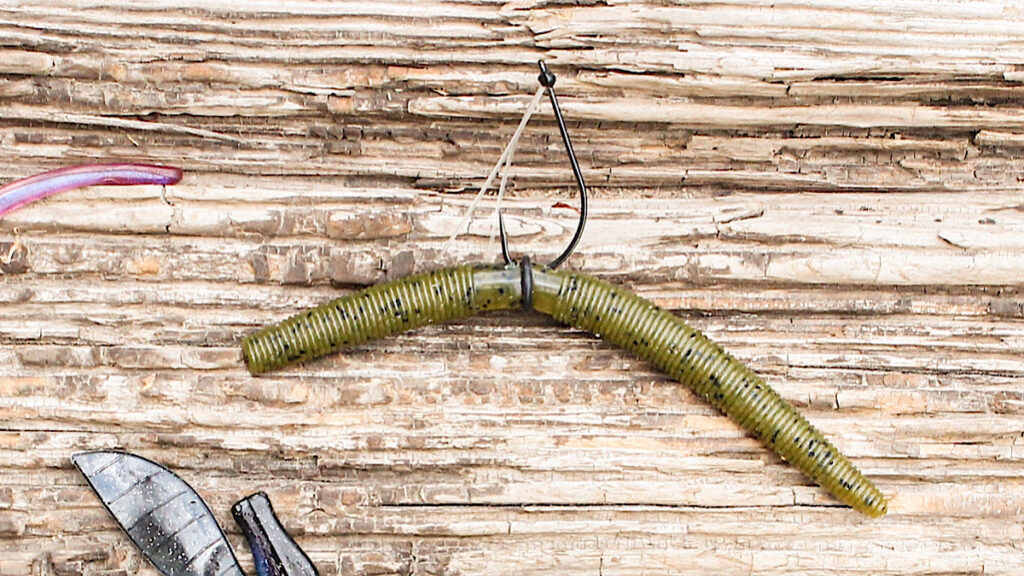
For an alternate rigging method, you can use a wacky rig tool to put an O-ring (see above) on your worm. Adding an O-ring creates a more secure connection between the soft plastic bait and the hook. This is the preferred method for most anglers because it dramatically reduces bait loss.
To add an O-ring, simply slide your bait into the tool, then roll an O-ring onto the worm. Slide (or roll) the O-ring until it is at the center of gravity of the bait. Then take your hook and run it through the O-ring. Note that the hook runs in line with the bait when rigged with an O-ring, rather than perpendicular to it, as with the basic wacky rig. It’s important to still catch a little of the material of the bait with the hook when rigging it with an O-ring to prevent the worm from sliding out of the O-ring. This can be an issue with thinner finesse worms and trick worms.
You can also use two O-rings on a bait to create an X, then run your hook through the bait while passing it through the bottom and out the top of the X to create an even more secure connection.
Where and When to Use a Wacky Rig
Wacky rigs fall slowly, so you don’t want to use them in deep water. They also have to be fished very slowly by nature, so you don’t want to use one if fish are aggressively feeding. Instead, wacky rigs are better suited for shallow water when the fish are in a finicky mood. The late pre-spawn, spawn, and early post-spawn are all great times to use a wacky rig since the fish are shallow and can be a little hesitant to feed. Wacky rigs are also great options year-round whenever overhanging cover is present, whether the fish are biting or not. If you are fishing around docks, bushes, pontoons, or any other type of cover that you need to skip back under, a wacky rig is an invaluable tool.
How to Fish a Wacky Rig
Most anglers prefer to fish a wacky rig on spinning gear, as these rods and reels are better suited to handling lightweight baits and finesse presentations. You’ll want your reel set up with a braided mainline in the 15- to 20-pound range, with an 8- to 12-pound fluorocarbon leader, depending on how heavy the cover you’re fishing around is.
To skip a wacky rig, make a sidearm or roll cast, and release your bait close to the surface of the water. The goal is to have it ricochet along the surface like a flat rock would if you skipped it across a pond. In the same way, letting that bait go low and near the surface will allow it to skip better and farther. I typically prefer to have my bait make first contact with the water about halfway between me and the cover.
Whether skipping your bait or just casting it out, you want to pause after the cast before starting your retrieve. Just let your bait work for you as it falls slowly through the water. Bass under cover will typically eat it on the fall. Once you let it fall for a few seconds, you can twitch it back up towards the surface and then let it fall for a second or two again. Do this a few times until you’re out of the cover, then reel it in and cast again.
If you’re casting the bait in a shallow pocket—another great way to fish a wacky rig—you want to work it a little more. Still, let it fall initially, then pump the bait a few feet and let it fall again. Continue to do this most of the way back to the boat, or to the bank if you’re fishing from shore, then reel your bait in and make another cast a few feet to the left or right of where you just threw. Methodically working an entire shallow water area like this is a great way to catch finicky bass that are shallow but not actively feeding.
Whether you’ve been at it a while or are just getting started, a wacky rig is a presentation every angler should have experience with. This is one of the best baits for catching hard-to-catch fish. And it’s one of the best baits for skipping. So take this tool, learn how to fish it, and start catching more bass.
content_bass-fishing,content_freshwater-fishing,content_fishing,content_stories

THE 1871 CLUB

Recommended Products
Read the full article here