
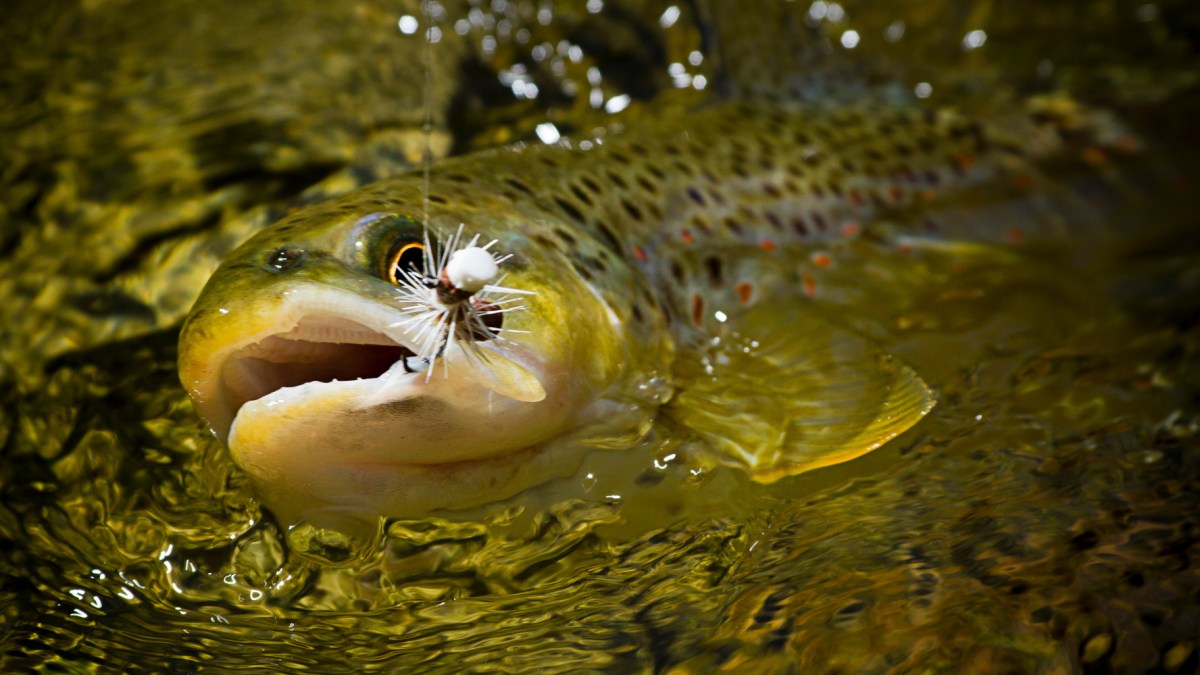
Some people say dry fly fishing for trout is angling in its purest form. You’re imitating a tiny aquatic insect drying its wings on the surface, delivering it to the mouth of a fish eager to sip. But while the premise is simple enough, anyone who has ever dabbled with dry flies or become proficient at using them will tell you it’s a complex game.
Your cast, presentation, and drift all must perfectly harmonize, especially when you’re dealing with wise, spooky trout that may only give you one shot. None of those critical elements matter, though, if your dry fly isn’t, well, dry and floating along the surface. While making sure this happens might seem like a minor part of the equation, it’s not — especially considering the amount of gels, shakers, and powders on the market to keep dry flies up can be overwhelming to newcomers.
To break it all down, I reached out to my buddy Sean Witman, who guides on several rivers in New York’s Catskill Mountains, which are known for being bug factories. How you choose to dress your bugs will vary based on the pattern and situation. Seeing that Witman is the one in charge of bug care for his clients, he’s more than qualified to weigh in. He also has a simple trick that will dry a fly in a snap.
Listen to this week’s episode of Quick Strike on Apple, Spotify, or wherever you get your podcasts.
Gel Floatants
One of the oldest forms of dry fly floatant comes in gel form. In fact, there are recipes for making it at home dating back to the early 1900s that include everything from paraffin wax to Vaseline to lighter fluid. These days, many companies produce the goopy juice, and the good news is, it all works pretty much the same. You rub a drop between your fingers and then gently work it into your fly, preferably before fishing so it has time to dry. But Witman stresses that the tiniest dab (in exactly the right places) will do you.
“You don’t want a whole glob of this stuff on your fly,” he says. “You want just a minimal amount that you’re going to work into just the fibers that actually create the flotation on the fly. So, maybe you have a fully dressed hackled fly or a parachute post. Just work the gel into the hackles, post, and maybe the tail as well. You could do that right before fishing, or if you’re a prepared angler, you could do that the night before.”
Witman also points out that flies that lean on sturdier material like elk hair, deer hair, and stiffer feathers benefit from gel. Conversely, light, fluffy feathers like CDC that trap air naturally for buoyancy will sink if you slather them in gel. You can also smear a little gel on the first few inches of your tippet to keep that fly floating longer.
Powders & Shakes
Dry fly powders like Frog’s Fanny and shakers like Shimazaki Dry-Shake are as common in fly shops as gel floatant. Unlike gel that requires a little time to dry and can be used to treat flies and leaders ahead of time, however, shakes and powders are for on-the-water application. Their purpose is to quickly absorb water like a sponge.
“Powders that come with a brush in the cap are my favorites,” Witman says. “These brush applicators are great, especially on flies that use CDC because you can utilize that brush to really work that powder into the materials and bring them back to life that much better in my opinion than one of those shake canisters.”
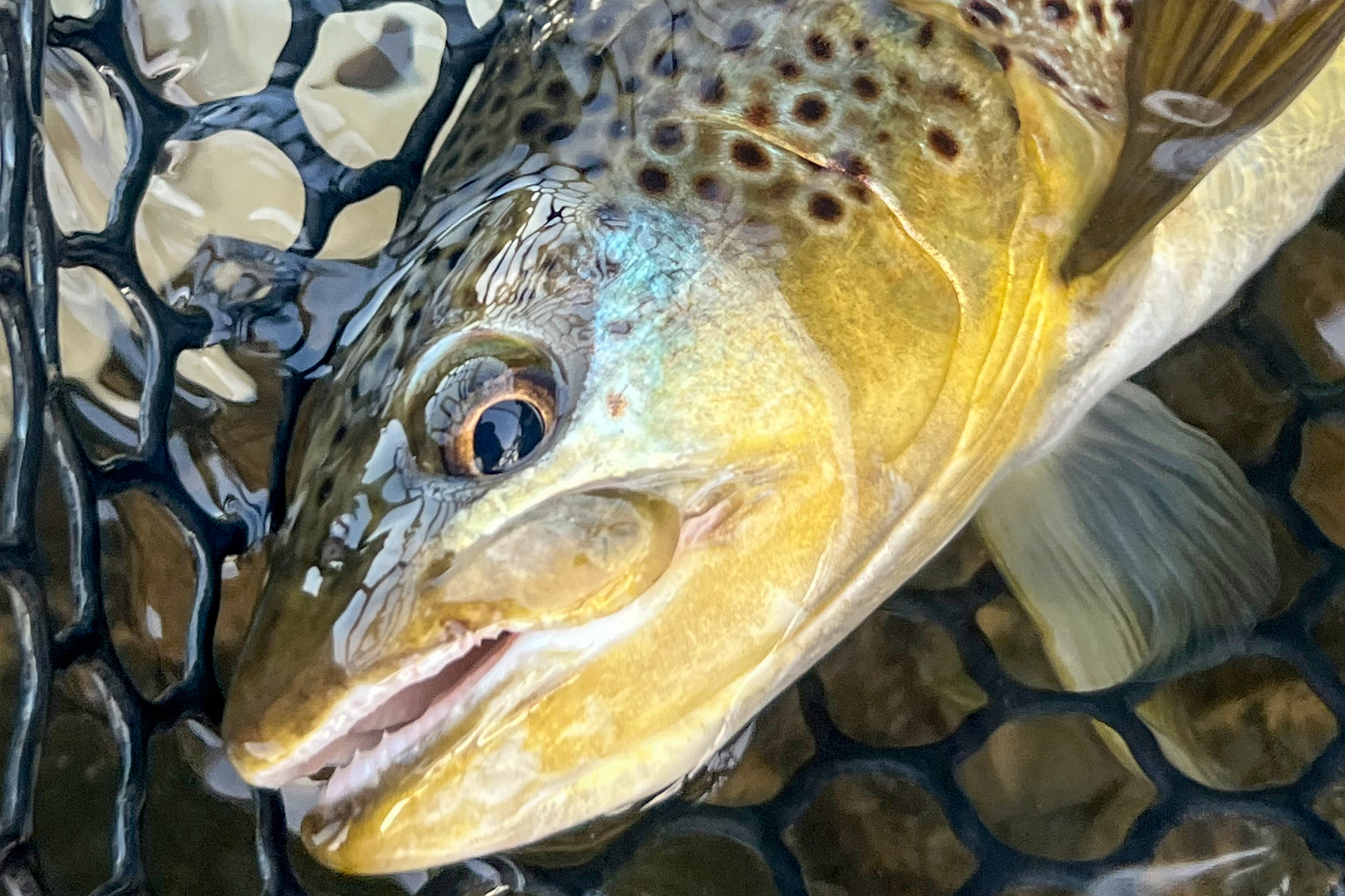
Where shakers do shine, according to Witman, is when you’re having a really good day on the river. Slime from trout mouths will gunk up and weigh down a dry fly as much — if not more than — the water. Brushing powder over them can ruin the brush or taint the entire vial of powder, but the powder inside shakers tends to be made up of coarser grains that will easily remove slime along with general moisture.
The Rubber Band Trick
Gels and powders are terrific for dehydrating and waterproofing your bug, but, in the heat of the moment, Witman uses a trick that doesn’t require him to root around in his boat or pack for little bottles. Flies will also shed their moisture if vibrated very intensely, and all you need to do that is a rubber band.
“What I do is grab a portion of the rubber band with my dominant hand while holding onto the tippet a few inches above my fly with my other hand,” Witman says. “I’m going to pull that rubber band down around the bend of the hook and pull my hands in opposite directions to create tension. Then you just start strumming the rubber band like it’s a guitar string.”
According to Witman, this will create rapid vibration that will make the fly shed water very fast. He also notes that Silly Bandz are his preferred rubber band for this trick. They’re made of silicone, which makes them stronger, and they come in all kinds of food and animal shapes, which he says provides a little extra fun when a client has to choose his or her drying band for the day.
Read the full article here