

Estimated reading time: 6 minutes
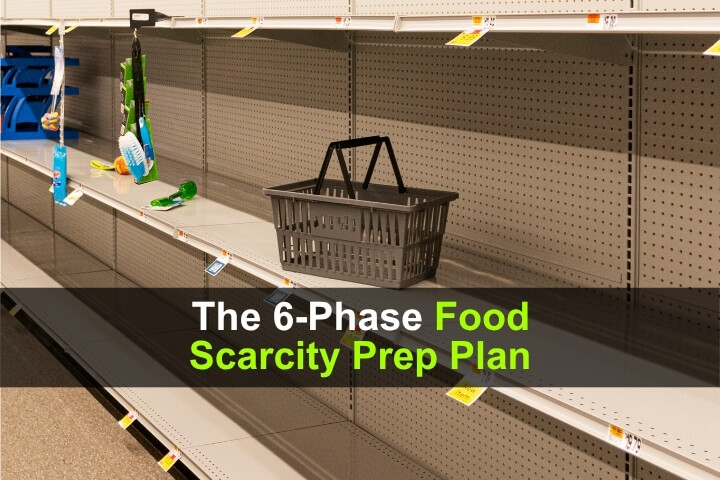
If you’ve been to a grocery store lately, you may have noticed that prices are rising faster again. The war with Iran and the closure of the Strait of Hormuz is causing the biggest energy crisis in history, which will affect the price of everything.
Food prices are going to rise particularly fast due to the lack of fertilizer being exported from the gulf. Currently, farmers are using less fertilizer than usual, and that will affect the price of food significantly come harvest season. So what do we do?
First of all, don’t panic-buy. Instead, what you want to do is buy strategically. Stocking up ahead of price hikes means you lock in today’s prices before they climb even higher. It’s the same logic as filling your gas tank before a hurricane hits. The people who wait until shelves are thinning out end up paying a premium or going without.
Fortunately, building a solid food supply doesn’t require a bunker or a massive budget. It just requires a plan. Recently, I came across a great guide from Morgan over at the YouTube channel, Rogue Preparedness. She explains how any household can get ahead of food scarcity and inflation in six straightforward phases.
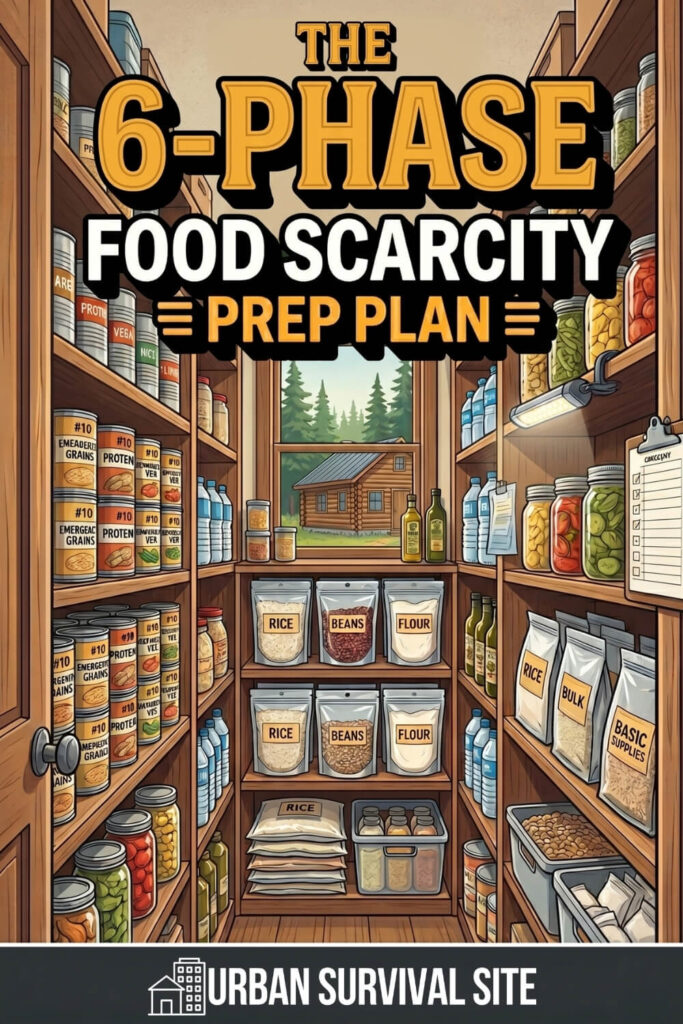
Want to save this post for later? Click Here to Pin It On Pinterest!
You can watch her video and read the six phases below.
Phase 1: Take Inventory of What You Already Have
Before you spend a single dollar, open your pantry, cabinets, and freezer and take a full physical inventory of what you already own.
Write it all down. You may discover you have a surplus of one thing and almost none of another. Maybe you’ve got plenty of canned fruit but zero protein. Maybe you have MREs you’ll never touch but no everyday staples. Check expiration dates while you’re at it.
This step matters because it shows you the gaps, and those gaps are what you’ll be filling. The goal isn’t to stock up on foods you’ll never eat. It’s to build a supply of things your household actually consumes. If you rotate through what you store, nothing goes to waste and you’re essentially shopping at today’s prices for food you’d buy anyway.
Phase 2: Build a Three-Day Supply First, Then Expand
Once you know what you have, start small. The immediate goal is a solid three-day supply of food including breakfast, lunch, and dinner for every person in your household.
Focus on ready-to-eat or minimally prepared foods at this stage. Canned goods are ideal: they’re nutritious, affordable, shelf-stable, and require little to no cooking. Canned meats, peanut butter, fruit, vegetables, and soups are all solid starting points. You don’t need anything exotic or expensive.
Once you have three days covered, work toward two weeks. The key rule here: only stock what your family will actually eat. If your kids won’t touch something now, they won’t want it during a stressful emergency either. Keep it familiar.
Phase 3: Add Long-Term Calorie-Dense Staples
After your short-term supply is in place, it’s time to layer in longer-shelf-life foods that provide serious calories and versatility. Think:
- Rice (white rice stores exceptionally well)
- Pasta
- Dried beans and lentils — whatever variety your family actually likes
- Flour
- Instant or freeze-dried potatoes
These are high-calorie, affordable, and mix well with almost anything. For longest shelf life, store them in Mylar bags with oxygen absorbers, which can keep staples like rice and flour good for many years.
Again, stick to what you’ll eat. Don’t buy pinto beans if nobody in your house likes pinto beans. Get the ones you enjoy. The best food storage is food storage that gets used and rotated.
Phase 4: Don’t Forget the “Invisible” Foods — Spices and Seasonings
This phase is the one most people skip, and it’s a mistake. Plain rice and beans cooked without seasoning is unpleasant. Seasoned well, it’s a perfectly satisfying meal.
Stock up on:
- Salt (historically one of the most valuable commodities on earth — stock plenty)
- Black pepper
- Garlic powder
- Onion powder
- Your favorite spices and herbs
- Cinnamon — it adds flavor to oatmeal, coffee, and baked goods, and has the added benefit of helping regulate blood sugar
Spices are cheap, lightweight, take up almost no space, and dramatically improve morale when you’re eating from your food storage. Add them to your stockpile now.
Phase 5: Invest in Off-Grid Cooking Options
By Phase 4 you’ve introduced foods that require actual cooking — rice, beans, pasta, flour. That creates a dependency on your stove. Phase 5 is about solving that.
Even if you have a gas stove, power outages and fuel disruptions happen. Invest in at least one or two off-grid cooking alternatives:
- Rocket stove (very fuel-efficient, can be DIY or purchased)
- Hobo stove (simple and inexpensive)
- Coleman propane camp stove
- Alcohol stove
- A basic fire pit in your backyard
Stock the appropriate fuel for whatever method you choose, then test it before you need it. Cook a real meal on it. Learn how your setup works, how long things take, and how much fuel you burn. Don’t wait until an emergency to figure this out.
Phase 6: Store Everything Smartly and Build a System
Having food is only half the battle. The other half is knowing what you have, where it is, and how to use it.
Storage tips:
- Metal shelving units are ideal — sturdy, easy to organize, and can hold a surprising amount
- Use closets, under-bed storage, bins, and cabinets to spread your supply around
- Label everything and track expiration dates
- Rotate your stock — newest purchases go to the back, oldest to the front
More importantly, build a system. Know which foods are ready to eat, which require cooking, and how you’ll prepare each one. A lot of people stock food but have no plan for actually using it. Don’t be that person.
Don’t forget water. You cannot cook rice, beans, or pasta without water. Stock water alongside your food at every phase:
- Buy extra gallon jugs whenever you buy groceries
- Fill dedicated water storage containers
- Consider a rainwater collection system
- At minimum, have a water filter on hand
One Last Tip: Find Your Local Food Sources
Don’t rely entirely on grocery stores. Supermarkets are deeply dependent on long, fragile supply chains. Start building relationships with local alternatives now:
- Farmers markets
- Local farms and CSAs (Community Supported Agriculture)
- Local ranchers for beef and other meats
- Neighbors and community gardens
And consider growing something yourself, even on a small scale. Microgreens, sprouts, and container gardens can supplement your supply and reduce your dependence on the store. Morgan notes she’s lived everywhere from Alaska to Arizona, and there are local growers in every region. You just have to look.
The Bottom Line
You don’t need 10 years of food stored in a warehouse. You need a realistic, rotating supply of foods your family actually eats, a system for cooking them when the power is out, and water to go alongside all of it. Start with three days. Build to two weeks. Keep going from there.
The people who stock up before a crisis hit get to shop at today’s prices and stay out of the chaos. The people who wait end up competing for whatever’s left on the shelf at whatever price is being charged.
Get ahead of it now, while the options are still good and the shelves are still full.
Like this post? Don’t Forget to Pin It On Pinterest!
You May Also Like:

Read the full article here