
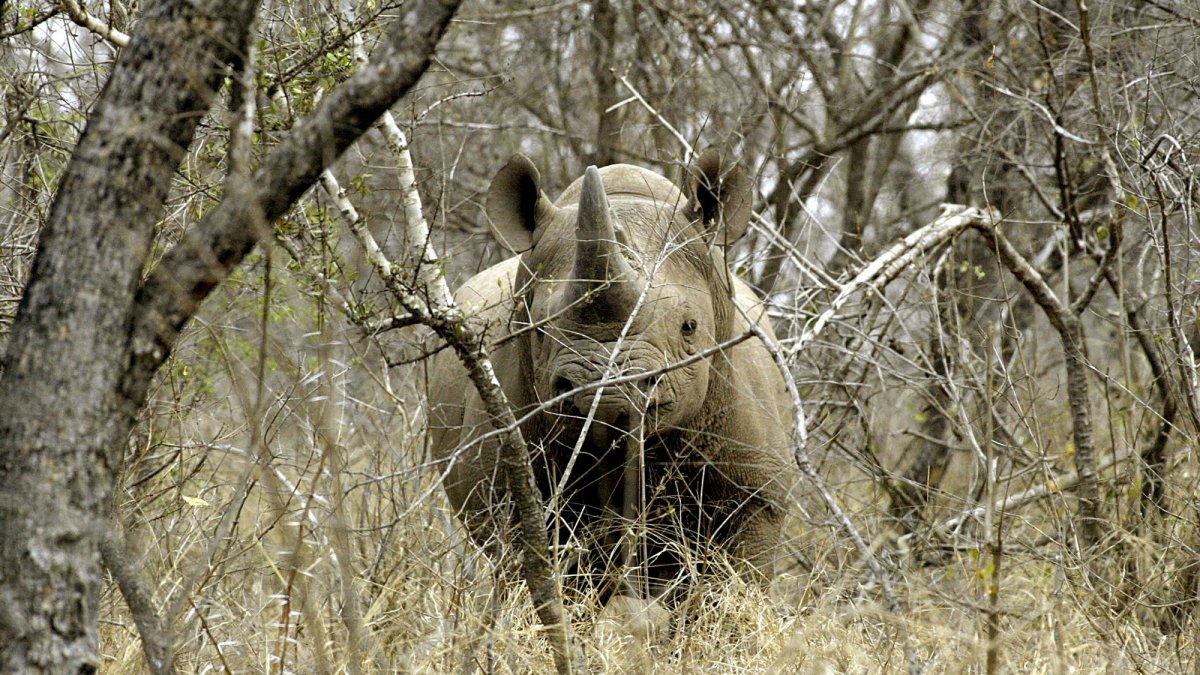
South Africa’s community of wildlife advocates and conservationists are mourning the loss of a key fighter, Schoeman Van Jaarsveld, who died Thursday while on patrol as an anti-poaching ranger. He was 58. Van Jaarslveld’s death is especially poignant as he was killed by a black rhino, the same animal he spent his career protecting.
“His loss has been deeply felt among the anti-poaching community,” a friend of Van Jaarsveld told reporters over the weekend. “It is even more tragic that his life was taken by the very animal he was trying to keep safe.”
The incident occurred around 10:30 a.m. on April 23 in the Samara Karoo Reserve, a privately-owned wildlife reserve in the Great Karoo region. As the director of Milk River Security, which provides anti-poaching and rhino protection services for the reserve, Van Jaarsveld, was patrolling on foot that morning with other rangers, according to a spokesperson at Samara Karoo. The group was tracking a black rhino fitted with a GPS device when the rhino charged out of the brush and impaled Van Jaarsveld with its horn.
“Something went very wrong and they came face to face and my friend was badly gored,” a field ranger who worked with Van Jaarsveld told The Sun. “There were no shots fired. The rhino was not hurt. Schoeman was a very good man.”
The Samara Karoo spokesperson confirmed in a statement with the news outlet that Van Jaarsveld’s injuries were severe, and that emergency services were called but unable to help him in time. They noted that another member of the security team was “slightly injured” and that a full investigation into the incident is underway.
Several other friends and colleagues have shared their own tributes to Van Jaarsveld. One called him a dedicated professional who was “very tough and bush-wise.”
Career rangers like Van Jaarsveld play a heroic role in protecting Africa’s wildlife, and especially its rhinos, amid an ongoing poaching crisis. Because of the value of rhino horn, which is worth more per pound than cocaine or gold, rhinos are some of the most commonly targeted animals by poachers. These rhino poachers are often connected to organized criminal gangs or corrupt officials, who help smuggle and sell the horns internationally on the black market.
This continental crisis goes beyond South Africa’s borders, and it is often likened to a wildlife war. It’s one that has been ongoing since the early 2000’s, and which has created the need for more anti-poaching rangers in national parks and on wildlife reserves. Some national parks have militarized their ranger forces to combat poachers, while private reserves typically pay private security companies like Milk River to keep their rhinos safe.
Regardless of whether they work in a park or on a preserve, the work that anti-poaching rangers do is often thankless, and it is always incredibly dangerous. Armed conflicts and shootouts with poachers happen every year. And between buffalo, rhinos, and other dangerous game, there are many other ways to die in the bush.
Read Next: Hunting for Poachers Amid South Africa’s Bloody Wildlife War
Wildlife at Risk International estimates that between September 2024 and September 2025, 64 wildlife rangers lost their lives while working in African countries. (A past estimate by the International Fund for Animal Welfare puts that annual average closer to 100.) According to the Game Ranger Association of Africa, at least 384 wildlife rangers were killed in action there between 2012 and 2020.
“It must be remembered that these figures only reflect those deaths reported,” the GRAA notes. “Actual estimates are thought to be significantly higher.”
Read the full article here