
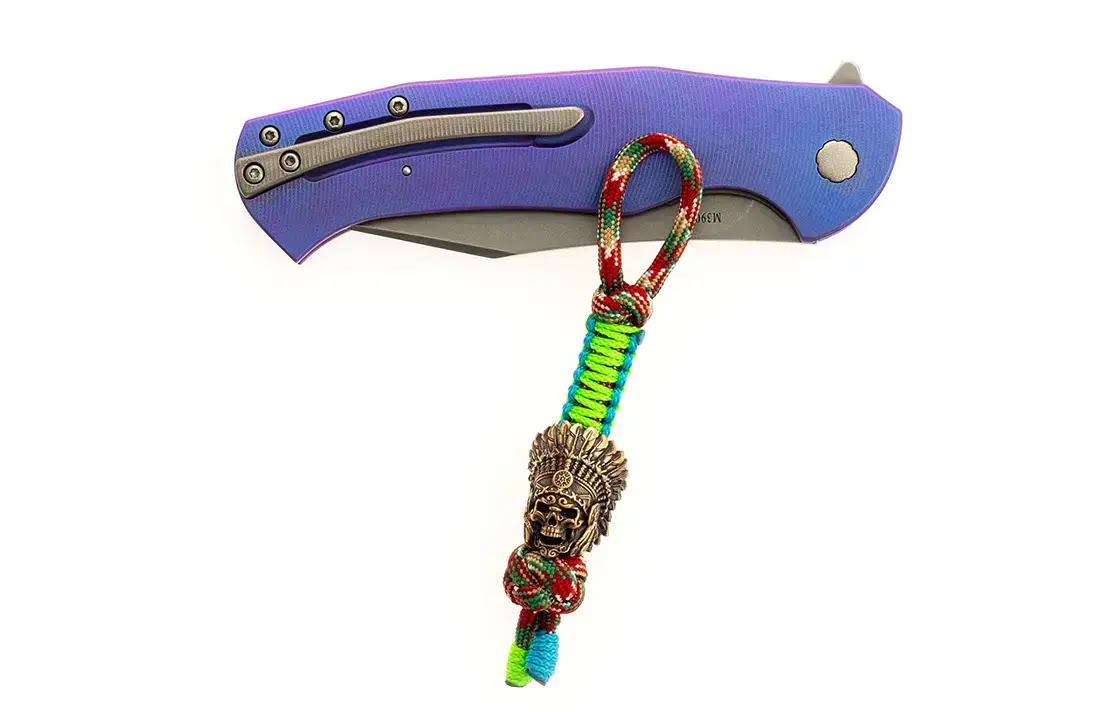
Photo credit: Noblie Paracord Beads
A paracord bead is a tiny detail, but it changes more than people expect. On a knife lanyard, it can give you a better pull point, a little more grip, and a cleaner finished look. On a flashlight or keychain, it can make a small tool easier to find and easier to grab. It can also make a setup worse if the bead is too heavy, too large, or drilled for the wrong cord.
That is the part buyers often miss. A good bead is not just the one that looks interesting in photos. It is the one that fits the cord, suits the tool, and helps the carry instead of getting in the way. For knife users, that matters more than theme, finish, or character design.
What Are Paracord Beads?
Paracord beads are small pieces with a hole through the center, made to slide onto cord and become part of a lanyard or pull. In knife circles, the terms paracord bead, lanyard bead, and knife bead often overlap. The name changes with the use. Put one on a pocketknife lanyard and it becomes a knife bead. Put the same piece on a flashlight or zipper pull and now it is an EDC bead.
The basic idea is simple. The bead gives the cord structure and adds a solid point to grab. Sometimes that is purely practical. Sometimes it is mostly visual. Usually it is a little of both.
Why People Add Beads to Knife Lanyards and EDC Gear
There are three common reasons.
The first is grip. A short lanyard with a bead is often easier to pinch than bare cord, especially when your hands are wet, cold, or wearing gloves. On a smaller folding knife, that extra purchase can make retrieval from the pocket more controlled and less fussy.
The second is indexing. A bead gives your fingers a clear point to find without looking. That matters more on gear you use repeatedly, such as a small flashlight, a compact folder, or a zipper pull on a pouch.
The third is style. Knife people are not shy about personal details. Handle material, clip finish, bead shape, paracord color, and even knot style all become part of the carry setup. There is nothing wrong with that. The mistake is pretending style does not matter, or pretending style is all that matters.
Paracord Beads vs. Plain Lanyards: What Changes in Real Use
A plain lanyard already solves one problem: it gives you more material to grab. That alone can help with pocket retrieval, especially on knives with a deep carry clip or a slick handle.
A bead changes the feel of that lanyard. It adds a stop point. It gives the cord a little weight and shape. Your fingers find it faster. On some setups, that makes the knife or flashlight feel easier to draw.
But there is no free lunch. Add too much bead for too little tool and the setup starts to feel awkward. A bead that is too large can print in the pocket, snag on the seam, or bang against the handle. A bead that is too heavy can make a small folder feel unbalanced and overbuilt. A plain lanyard is quieter and lower profile. A beaded lanyard is more intentional. Whether that is better depends on the tool and the way you carry it.
How to Choose the Right Bead Size for 550 Paracord
This is the first thing to get right.
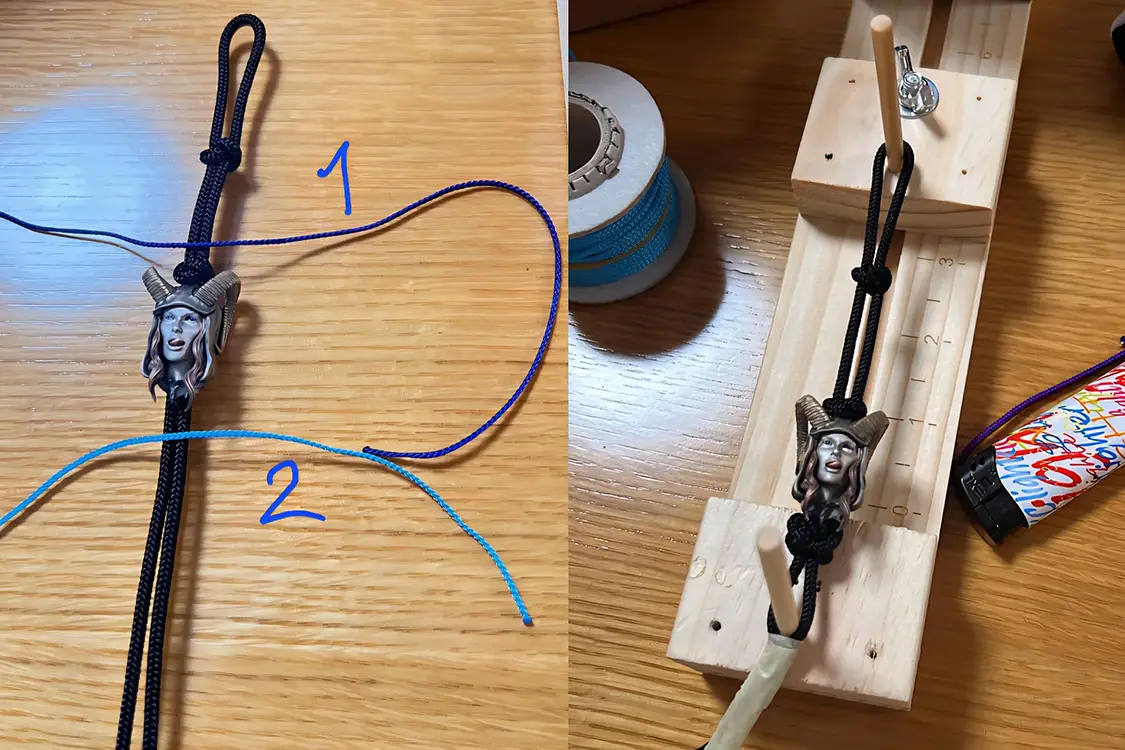
Standard 550 paracord is about 4 mm thick, but real-world fit is never just about the official cord diameter. Cord varies slightly by maker. Some cord compresses more easily than others. Some people use full cord, some gut it, and some run a doubled setup through the bead.
That means the hole size, or bore size, matters more than many listings admit.
If you are using a single strand of 550, you can get away with a tighter bead hole. That gives a cleaner and more compact look, but threading can still be annoying if tolerances are close.
If you want to pass two full strands of 550 through the bead, or you want extra room for knots and easier assembly, you need more clearance. This is where buyers get frustrated. A bead advertised as fitting paracord may technically work, but only with patience, thinner cord, or a stripped-down setup.
As a rule, think in setups rather than labels:
A bead for one clean strand is not automatically a bead for a bulkier two-strand lanyard.
A bead that works with gutted 550 may be too tight for full 550.
A bead that fits on the bench may still feel too cramped when you try to rethread it later.
The smart move is to buy the bead for the cord setup you will actually use, not the one you imagine in theory.
Best Materials for Lanyard Beads
Material changes the character of the bead more than most people expect. Not just visually, but physically.
Titanium
Titanium is popular for good reason. It is strong, light for its size, corrosion-resistant, and well suited to modern EDC gear. A titanium bead usually makes sense on lightweight folders, flashlights, and titanium-heavy carry setups where too much added weight would feel wrong. It also works well for users who want a technical rather than old-world look.
Bronze and Brass
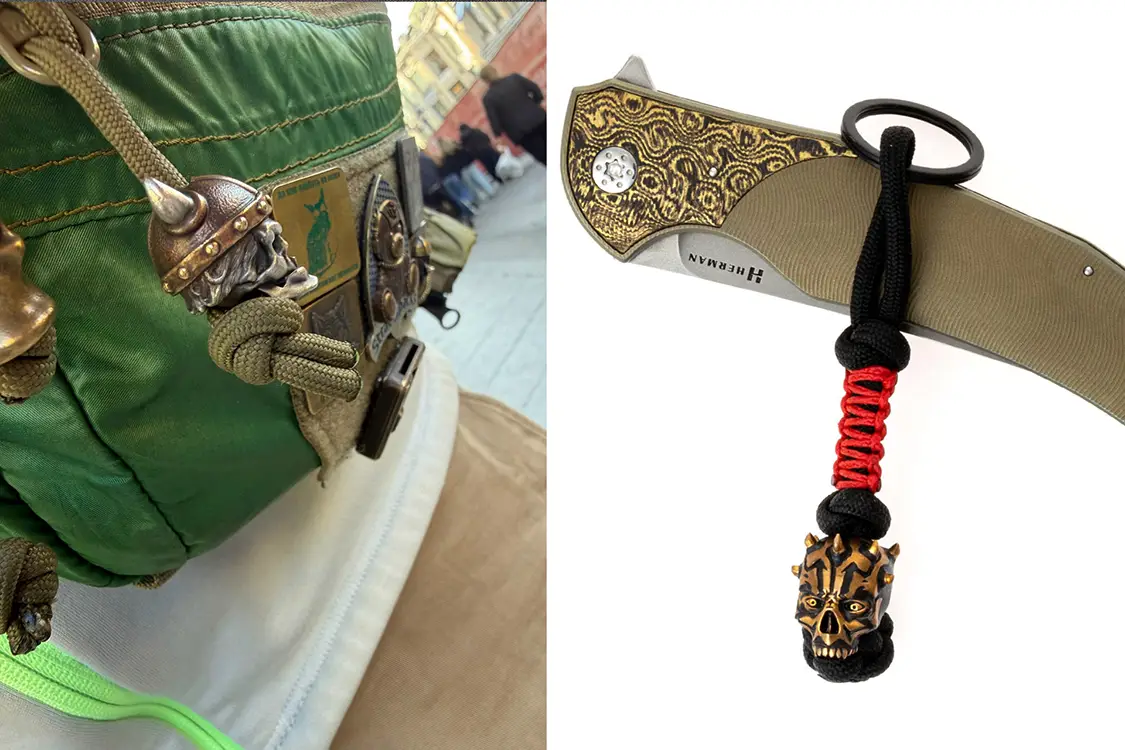
Bronze and brass have more heft and more presence. They feel warmer and denser in hand, and they tend to suit traditional knives, fixed blades, and darker cords well. They also develop character with use. Some people love that lived-in look. Others want a cleaner, more stable finish. Either preference is fair. The important thing is knowing that these metals do not disappear into the carry the way titanium often does.
Stainless Steel
Stainless sits in a useful middle ground. It can be simple, clean, durable, and less theme-heavy than cast bronze or brass designs. It is not always the most exciting choice, but that can be a strength. On a work knife or a restrained EDC setup, plain stainless often makes more sense than something louder.
Lightweight Synthetic Options
Synthetic beads are easy to underestimate. On very small tools, zipper pulls, or casual lanyards, lightweight materials can be the better answer because they add visibility without adding much swing or bulk. Not every bead needs to feel like a miniature paperweight.
Weight, Grip, and Pocket Carry: What Matters Most
This is where a bead either earns its place or gets exposed.
A bead should help you grab the tool more easily. That sounds obvious, but plenty of beads are chosen only for appearance. In use, they end up too smooth, too small, or too oversized to be comfortable.
Weight is the next issue. A heavy bead on a compact folding knife can make the whole lanyard feel like an afterthought that grew too large. On a fixed blade or a larger pouch pull, the same bead may feel exactly right. Scale matters.
Grip texture matters too. Deep grooves, carved shapes, faceting, or even a slightly matte surface can make a bead more useful than a polished cylinder. A smooth shiny bead may photograph well, but in actual use it can feel slippery and vague.
Pocket carry is the final test. If the bead catches every time the knife comes out, or if it creates a lump in the pocket that annoys you by noon, it is not a good bead for that knife. The best bead is often the one you stop noticing until the moment you need it.
Best Uses for Knife Beads, Lanyard Beads, and EDC Beads
Folding knives
This is probably the most common use. A short lanyard with a bead can make a clipped knife easier to draw, especially if the knife sits deep in the pocket or has a compact handle. On small folders, restraint is important. Too much bead can overwhelm the knife.
Fixed blades
Fixed blades usually tolerate larger, heavier beads better. A bead can help pull the knife from a sheath, especially when the lanyard is short and the handle shape does not offer much extra to grab. On outdoor and hunting knives, simple practical shapes often work better than highly decorative ones.
Flashlights
Small flashlights benefit from beads more than many people expect. A bead adds a quick grip point and makes the light easier to find in the pocket or bag. Since many lights are already small and slick, this is one of the most practical bead applications.
Keychains and zipper pulls
This is where beads cross fully into general EDC. On a keychain, the bead can add quick identification and a little style. On a zipper pull, it can make a pouch or jacket easier to use with gloves or cold fingers. If you want to see how broad the category has become, even a retailer like Noblie shows how paracord beads can range from simple functional pieces to more sculptural, collector-leaning designs.
How Many Beads Should You Use on a Knife Lanyard?
Usually, one.
One bead is enough to create a grab point and finish the lanyard visually. It is the cleanest answer for most folders and many fixed blades. Two beads can work on longer lanyards, larger knives, or more decorative builds, but once you go past one, the risk of clutter rises quickly.
More beads mean more bulk, more swing, and more chances for the lanyard to stop feeling purposeful. Unless you have a clear reason for using more than one, simplicity wins.
Common Mistakes When Buying Paracord Beads
The first mistake is buying by appearance alone. That is how people end up with beads that look good on a desk but feel wrong on the knife.
The second is ignoring bore size. This is the fastest way to turn a small accessory into an irritating project. If you are using full 550 cord, especially in a two-strand setup, do not assume every bead marketed for paracord will feel equally workable.
The third is choosing too much weight for the tool. A heavy bronze bead on a small lightweight folder often feels forced. A large synthetic or hollow bead may actually work better.
The fourth is making the lanyard too long. A bead can improve retrieval, but an overlong lanyard turns into a snag point. A little extra cord is useful. Too much becomes self-parody.
The fifth is forgetting the purpose of the setup. Ask a plain question: does this make the knife easier to use and carry, or did I just add it because the bead looked cool in a photo? Sometimes the honest answer is the second one, and that is fine, as long as you know it.
Final Thoughts: Choosing the Right Paracord Bead for Your Setup
The best paracord bead is rarely the most elaborate one. It is the one that fits the cord properly, feels right in hand, matches the size and character of the knife or tool, and improves the carry without becoming a nuisance.
That is why the right way to choose a bead is not to start with theme or finish. Start with the tool. Then think about the cord setup. Then think about weight, grip, and pocket behavior. Style comes after that.
Get those details right, and a bead stops being a trinket. It becomes part of the tool.
The post Paracord Beads for Knives and EDC: How to Choose the Right Lanyard Bead appeared first on Knives Illustrated.
Read the full article here