
I stepped out of the rental house at sunrise and shuffled across the backyard, toward the patio deck overlooking the Miami canal. A pair of invasive Muscovy ducks flushed when I peered into the water, and so I stood on the deck, sipping coffee while their commotion settled. The water was clear, making it easy to spot a brilliant orange fish with a bulbous growth on its head swimming into view and then positioning itself near the rungs of an algae-coated ladder. It was a male Midas cichlid, another invasive species, and an odd one at that.
But to see something odd is half the reason for visiting South Florida. A flock of feral chickens, wild as the wind and led by a black, banty rooster, pecked their way across a lawn on the opposite bank of the canal. A plumed basilisk—native to Central America and often called the Jesus Christ lizard for its ability to run on water—skittered along the concrete flood wall underneath the patio. And down in the water, beyond the lizard and not far from the cichlid, I spotted a fish I was hoping to see: A butterfly peacock bass. I set my coffee cup down and picked up a spinning rod.
From Pet Shops to Canals
South Florida’s drainage canals were built in the 1920s, and they snake their way from southern Lake Okeechobee through the Everglades, and out into the populous coastal areas, including downtown Miami. The inland canals are mostly freshwater, but with some tidal influence closer to the coasts. Some of the canals, especially those dug into rock and coral banks, are quite clear, while others, like the Tamiami Canal, have a more tannic color.
Related: How to Hunt for Iguanas in Florida
Depending on the canal, you can expect to see a variety of native fish including largemouth bass, gar, bowfin, redfish, snook, and juvenile tarpon. But it’s the invasive species—both aquatic and terrestrial—that arguably get the most attention these days. Various cichlids, tilapia, bullseye snakeheads, clown knifefish, Oscars, and other invasives lurk in canal waters. The shorelines are full of nonnative reptiles, from the notorious Burmese pythons wreaking havoc on the Everglades to the 5-foot green iguanas that sun by the dozens on the canal banks.
The tropical climate in tandem with Miami’s pet shop industry creates this perfect storm of invasives. There are a bunch of pet shops in Miami, and it seems that a lot of critters are simply released once people are tired of feeding them. In most of the country, an orphaned python would freeze to death. But in South Florida, they thrive and breed.
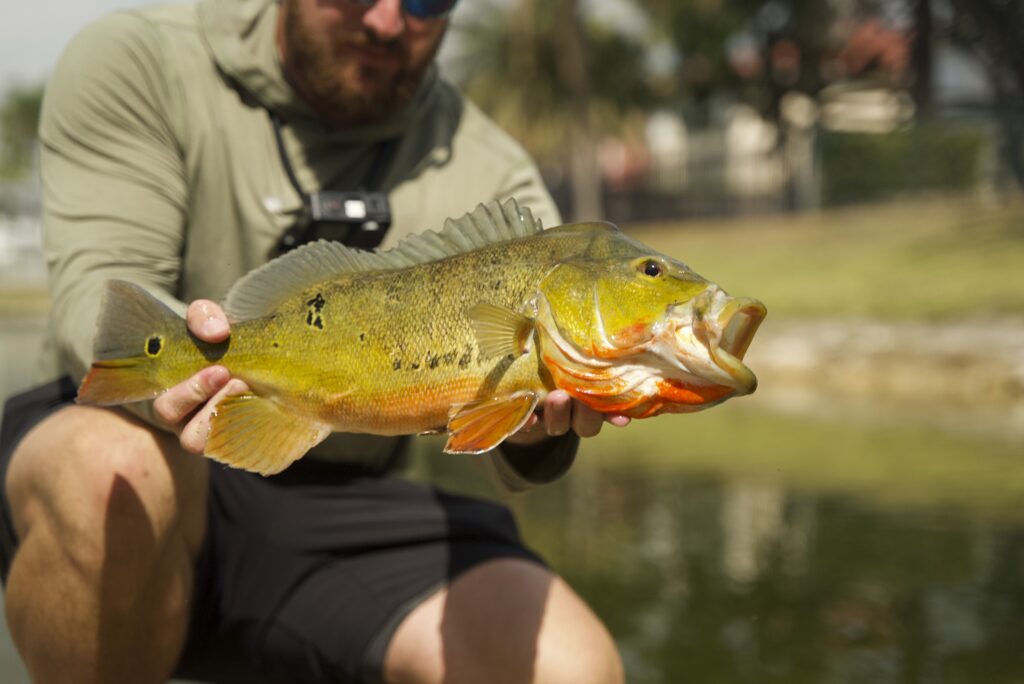
Peacock bass aren’t native to South Florida either, but they were stocked in the ’80s as a way of controlling other invasive fish. The peas, as local anglers call them, are aggressive, voracious predators, and the Florida Fish and Wildlife Conservation Commission (FWC) regards them as sportfish, with a limit of two per day, only one of which can exceed 17 inches.
I was in Florida sharing an Airbnb with a group of YouTube anglers as a part of Field & Stream’s inaugural Florida Fish Camp. Our assignment was to sample whatever opportunity South Florida had to offer, but I’d always wanted to catch a peacock bass. These aspirations had admittedly involved throwing a wood chopper to the banks of some remote Amazon tributary, but I wasn’t above drowning a live shiner next to a submerged shopping cart, either.
Several of the YouTubers were from South Florida, and they assured me the shiner plan was the best bet for landing a peacock bass. It looked like I’d get my first chance right in the backyard of the rental house. I borrowed an ultralight spinning setup, hooked a shiner through the lips, and freelined it over the rails of the deck. The 2-pound pea that I’d spotted rose and sucked in the shiner, resulting in a flashing fight of yellow and orange.
F&S videographer David Cox and restauranteur and camp chef Will Levatino (host of Cooking with Clams on YouTube) stepped out to join me. Soon, Levatino was hooked up with a peacock bass of his own. We caught three or four peas off the deck, and truthfully, I would’ve been content to sit right there the rest of the day, freelining shiners and heckling the Muscovy ducks. But there was more of Miami to see.
I hitched a ride with Brent Schirmer (See Ya Dude), Tyler Wald (Sun’s Out Fishing), and videographer Andrew Redwine, and we left the rental house for a day of canal hopping. Our first stop was behind a Winn-Dixie grocery store to check a canal that was full of fish—along with dozens of iguanas sunning themselves along the canal bank. I dropped an onX Hunt pin on the spot, and then turned my attention to the fishing.
Catching the peacock bass was straightforward and fun; you could sight-fish for them or toss the shiners in and around likely cover. Culvert drains were especially productive, and if you could put a shiner in front of a pea before it saw you, the strike was almost guaranteed. I’m not the sort to adjust quickly to city life, but that urban fishing was a blast, and I dropped a few more pins during the day, just in case I ever made it back to town with a fishing rod in hand.
Knives Out
The next morning was a change of pace. I left at daybreak for a two-hour drive north, to West Palm Beach. Along with Ryan Izquierdo (Ryan Iz Fishing), Mike Loughran (FishlikeMike), and videographer Adrian Paluszkiewicz, I’d be joining local guide Ricky Martes, a South Florida native and owner of FL Largemouth Charters, LLC.
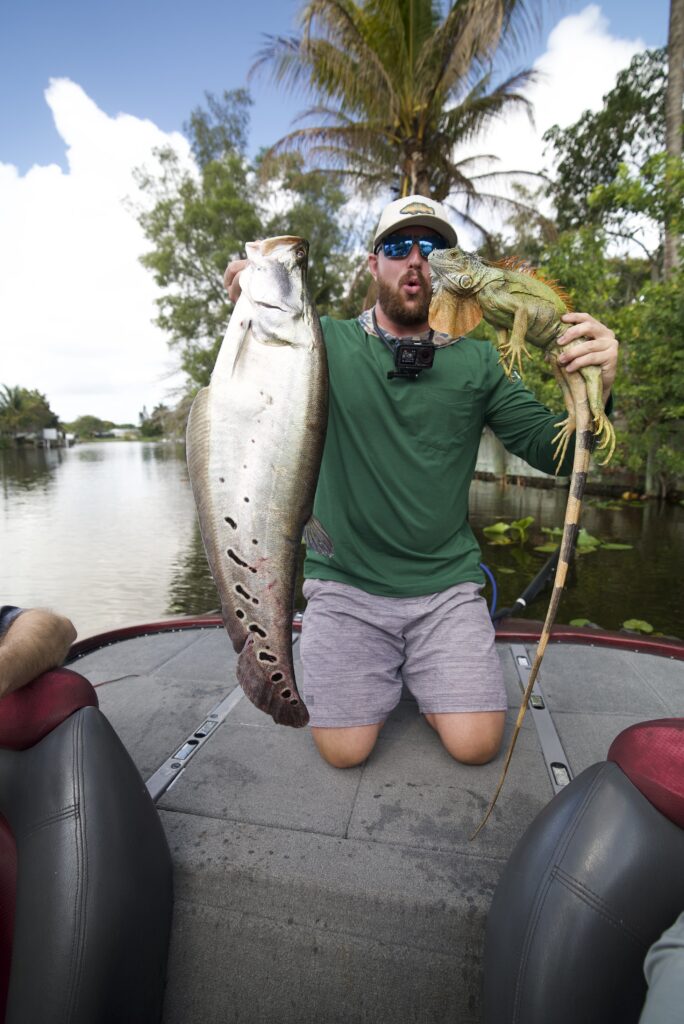
Martes fishes for largemouth and peacock bass, but his specialty target is the clown knifefish, a large, nocturnal predator native to Southeast Asia. The toothy, eel-like fish are notoriously hard fighters, and though the Florida rod-and-reel record is just under 10 pounds, Martes believes there are bigger ones out there.
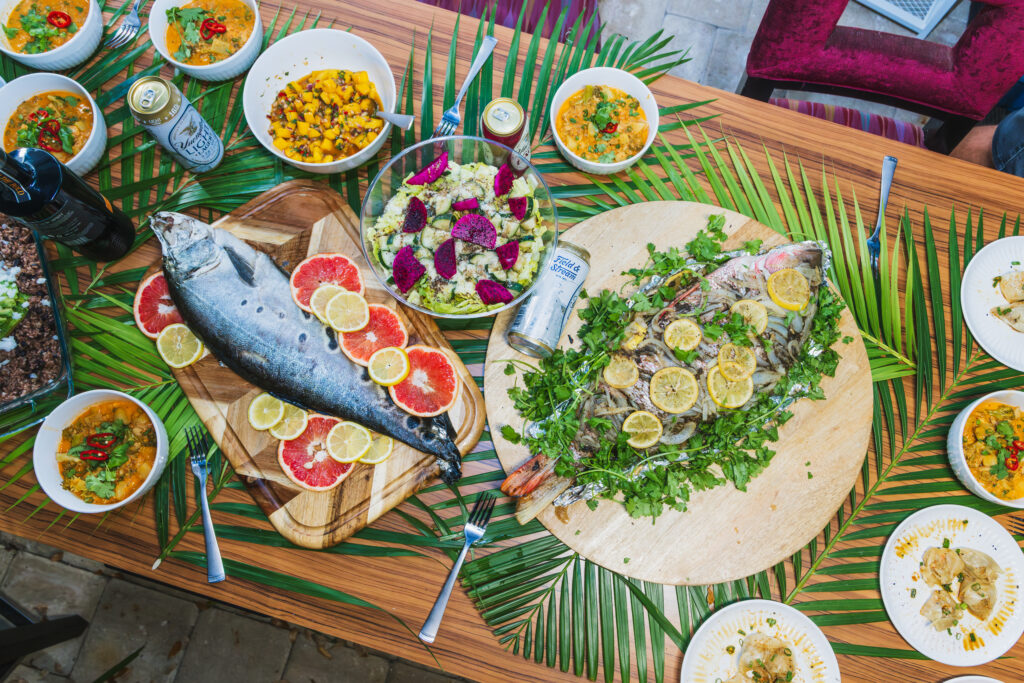
We left the ramp, and Martes anchored his 20-foot Ranger underneath a busy overpass, a low-light area where he said the knifefish often continue feeding well into the morning. We freelined live shad toward the bridge pillars, with a stout wind quickly sweeping most casts behind the boat. Ryan hooked into a nice largemouth bass right away, followed by a couple of chunky white bass. Forty minutes later, his rod bowed again; something hefty peeled drag before snapping the line. Martes was certain it was a knifefish, and he tossed a net full of shad into the water around the boat in hopes of sparking some additional feeding activity. Ryan quickly hooked up again, and this time brought a nice clown to the net. As he was admiring his catch, I felt a thump on my own line, took up the slack, then fought in another hefty specimen. We took pictures and then iced the fish for Levatino to cook later at camp. I’d never eaten clown knifefish, but was willing to try it.
By then it was midmorning and the bite was slowing, but the sun was warming the shorelines, causing the Florida reptiles to stir from their hides. Martes asked if we’d like to try a little iguana hunting before calling it day, and, of course, we did. He kept an air rifle in the boat, but his go-to tool for snatching the big lizards from the shoreline was a makeshift snare affixed to the end of a collapsible, 20-foot aluminum flagpole.
The lizards were easy to spot, sunning themselves in lawns and on floodwalls, and apex predatory skills weren’t exactly required to catch them with Martes’s system. Once snatched in the noose, the iguanas could be dispatched—per Florida law—with a pellet gun or knife. I enjoyed it, and began making lizard hunting plans of my own for some of the canals I’d pinned the day before.
A DIY Lizard Pole
The next morning began with a trip to Home Depot, where I bought a 10-foot piece of 3/4-inch PVC pipe, some hose clamps, and paracord to fashion my own iguana catch pole. We were supposed to switch rental houses that evening, to a new one in Fort Myers, and the plan was for Cox, Levatino, and I to take my rental truck west for the 3-hour drive. Levatino suggested we take the long route, along the Tamiami Trail and through the Everglades, and do some fishing as we went, and iguana hunting too. It seemed like a perfect day of bumming around South Florida to me, and so we loaded a bucket of fresh shiners into the truck, along with the iguana pole, some spinning rods, and all of our luggage.
Before we left town, we went back to the Winn-Dixie parking lot, where I was sure of putting on a clinic of invasive iguana killing. Levatino was more interested in fishing than lizard hunting, and he wasted no time in hooking into a nice pea that was holding under a drainage culvert. Down the bank, a man was outstretched on a piece of newspaper, apparently sleeping off the night before, and he stirred just enough to admire Levatino’s fish before rolling over and nodding back off in the sunshine.
Meanwhile, I snuck along the canal bank with Cox behind me, filming, as one iguana after another leapt in terror out into the water. The city lizards were smart. Getting to within 15 feet of them was easy—but 10 feet, the length of my catch pole—was another matter. Cox, a Tennessee native, said the effort reminded him of a very unsuccessful frog-gigging mission, and I agreed.
We snuck to the end of the mowed and maintained canal bank, where a tiny foot path continued on through unkept growth, stuff that was plenty thick enough to hide some exotic, invasive pit viper or a discarded needle, or both. I was thankful to have worn my Crocs instead of flipflops. But the concealing cover instantly provided the hunting advantage we needed. Within a short distance, I spied a pair of iguana heads poking from under the brush just 9 feet away.
I played out the PVC pipe a foot at a time, until my noose was dangling over the lizard’s head, fattened and cocky as it was on the easy life it had found in downtown Miami. I pulled tight and snatched the iguana, and it thrashed and twisted until I grabbed it about the back of the head. I felt like a conquistador, and for a minute I thought of carrying the lizard back down the bank, to show to Levatino and perhaps to the man asleep on the newspaper as well. Instead, Levatino came walking around the bank at almost that very minute, looking dejected because he hadn’t caught another fish, and because I’d also spooked every single iguana on the levee except for that one. “I think it’s time we get the hell out of here and go to the Everglades,” I said.
The Trail Home
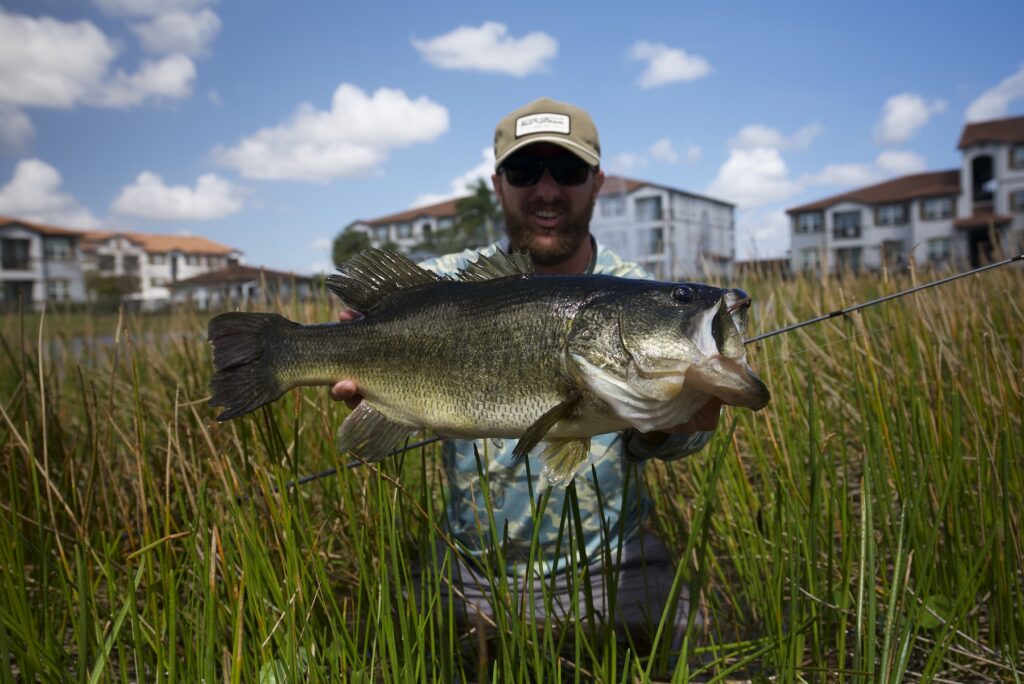
Although there were fewer people along the Trail than in Miami, it was still a busy stretch of road. We pulled onto a shoulder with sounds of the highway behind us, and a relentless coastal wind. Levatino and Cox walked westward along the canal bank, tossing shiners out ahead of them. I stepped to the edge of the water and peered in, and spotted a small school of 15-inch largemouth bass, the largest native fish I’d seen since arriving in South Florida. Our shiners were still plenty spunky, and I was sure that my prospects of catching a Florida bass were good.
I tossed the baitfish in front of the school and kept the spinning reel’s bail open, feeding the struggling shiner line as needed. The water was stained enough that I couldn’t see much detail, but I could tell one of the bass was eyeing my offering. Suddenly, there was a thump on the line, and I flipped the bail, and the rod loaded. After a brief fight, I pulled a writhing, orange fish onto the bank, a foreign creature the size of a nice crappie that I hesitated to lip, because I wasn’t sure if it had hidden teeth somewhere. I carried it down the bank, and Levatino identified it as a Mayan cichlid, another invasive species that’s common in the canals and, supposedly, good to eat.
Whatever the case, it had scared away my bass. I dropped it back into the water, and then reached into the bait bucket for another shiner. There was an alligator sunning itself on the opposite bank, and probably a python not far away. I knew the next cast might yield a largemouth or a big peacock bass. There were some mangrove trees down the way, and perhaps a snook or baby tarpon would be waiting under them. I flipped the bail and tossed out the shiner, readied myself for a strike, and eyed the shoreline for another iguana.
Read Next:
content_fishing,content_stories

THE 1871 CLUB

Recommended Products
Read the full article here