

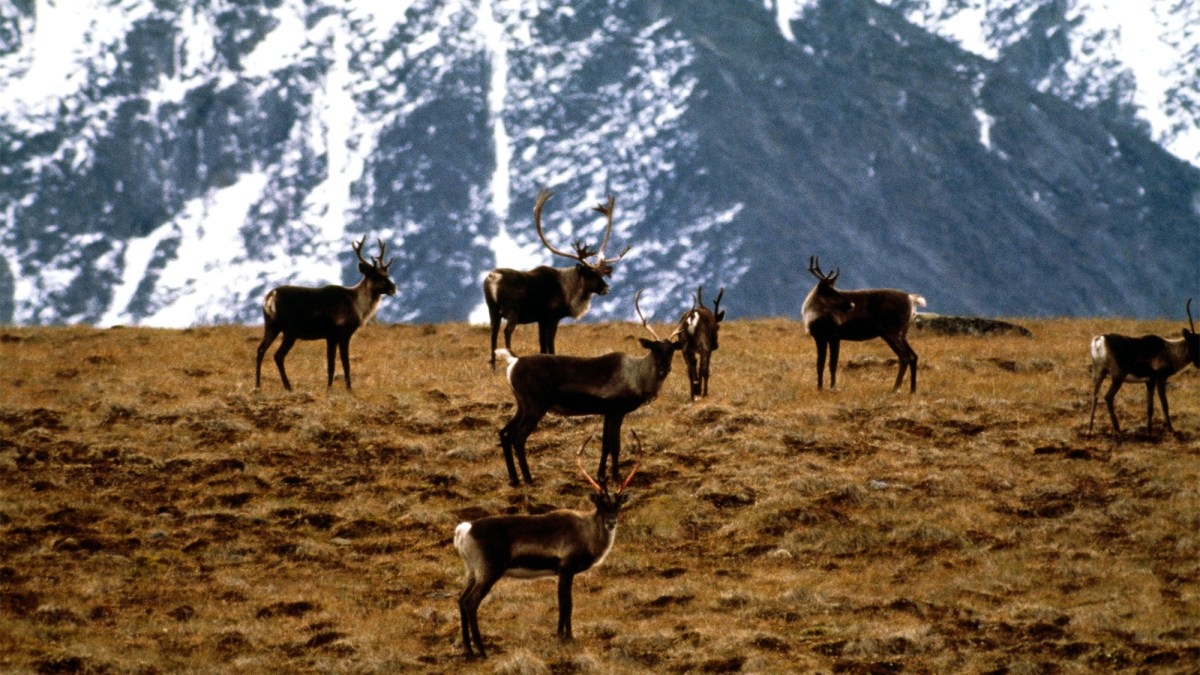
A First Nation in the Yukon Territory has declared a caribou herd to be a living person. This declaration expands on a novel legal theory that could give the herd the same legal rights as a human, at least in some respects. The Ross River Dena Council says the Finlayson Caribou Herd is “central to [their] life, identity, and continuity,” and that the only way to properly protect the herd is to grant it personhood in the eyes of the law.
“RRDC hereby declares the Finlayson Caribou Herd to be a living ecological person possessing inherent rights that must be recognized, respected, and upheld by all governments, corporations, and peoples,” the First Nation said in a public statement released on March 26. “The declaration reflects both our own Kaska laws and the growing global recognition that nature and its constituent beings possess intrinsic rights that exist independently of their utility to humankind.”
The idea of extending human rights to natural resources has been gaining steam around the world. In 2017, the New Zealand government passed a law recognizing the Whanganui River as a legal person. That same year, a High Court in India granted the same “living entity” status to the Ganges and Yamuna Rivers.
Similar to the New Zealand law, which appoints the Māori people as the Whanganui’s guardian, the RRDC says its declaration would make the First Nation the caribou herd’s guardian. This would allow it to bring legal action in the herd’s name.
Today, Indian Tribes in the American Southwest are taking the same approach in recognizing the Colorado River as a living being. Similar discussions are also being had among First Nations and Alaska Natives along the Yukon River, according to the Canadian Broadcasting Corporation.
Speaking with the CBC on Thursday, a Canadian legal expert said this is still a novel concept in Canada, and that the RRDC’s declaration, if recognized by the federal government, would be the first time that a group of animals has received the recognition of legal personhood.
This concept is rooted in a legal theory that has been percolating since at least the 1970s, when American legal scholar Christopher Stone suggested that giving natural resources rights would also give their defenders legal standing to sue in court. Which isn’t much of a stretch considering that in America, corporations are already considered people under the doctrine of corporate personhood.
The American idea that for-profit corporations are people with legal rights, and thereby protected under the Constitution, is not exactly new. But it was cemented in 2010 by the U.S. Supreme Court as part of its decision in Citizens United v. FEC.
The RRDC did not immediately respond to a request for comment from Outdoor Life, and it’s unclear whether territorial or federal governments will recognize the caribou herd as a living person. The Council demanded in its recent statement, however, that “all governments, corporations, and persons within the Kaska Nation Territory must respect and uphold the rights recognized” in its declaration.
The First Nation says that as its last remaining native food source, the Finlayson Caribou herd needs protection now more than ever. The herd is part of the larger Northern Mountain woodland caribou population, which is listed as a “species of special concern” under the federal Species at Risk Act (the Canadian equivalent of the Endangered Species Act).
According to the Yukon Fish and Wildlife Branch, the Finlayson herd has been declining since around 1990, when its population was around 6,000 strong. The herd’s numbers had dropped to around 2,700 by 2017. The government’s latest herd assessment in 2022 showed an estimated population of 3,359, which it says is the first time since 1990 that the herd “has not exhibited a decreasing population trend.”
To be clear, the RRDC intends to continue hunting caribou and harvesting animals from the herd after this declaration.
The RRDC says the Finlayson Herd now faces ongoing threats from industrial development, including a proposed mine in its traditional lands known as the Kudz Ze Kayah mine — which translates to “caribou country” in the Kaska language. Yukon wildlife officials have drawn the same conclusion.
“With development projects such as the Kudz Ze Kayah mine proposed to occur within the herd’s range and ongoing interest in mineral exploration, there are concerns about cumulative effects and the long-term persistence of Finlayson caribou,” the Yukon Fish and Wildlife Branch noted in its 2022 herd assessment.
Read Next: The Ambler Road Project Would Jeopardize One of the Last Great Wilderness Hunts in America
With these concerns in mind, the RRDC sued the Yukon and Canadian governments in 2022 for failing to consult with the tribe on the mining project. The lawsuit was taken up in 2024 by the Yukon Court of Appeal, which ordered additional consultation with the First Nation, according to the CBC. BMC Minerals, the company behind the Kudz Ze Kayah project, is now awaiting a decision on permits as the RRDC moves forward with its own legal strategy.
“For decades Yukon and Canada have approved — and continue to approve — industrial projects in our Tū Łī́dlini area without any proper assessments on the cumulative effects on the Finlayson Caribou herd,” RRDC’s Chief said in the March 26 news release. “This cannot continue.”
Read the full article here