
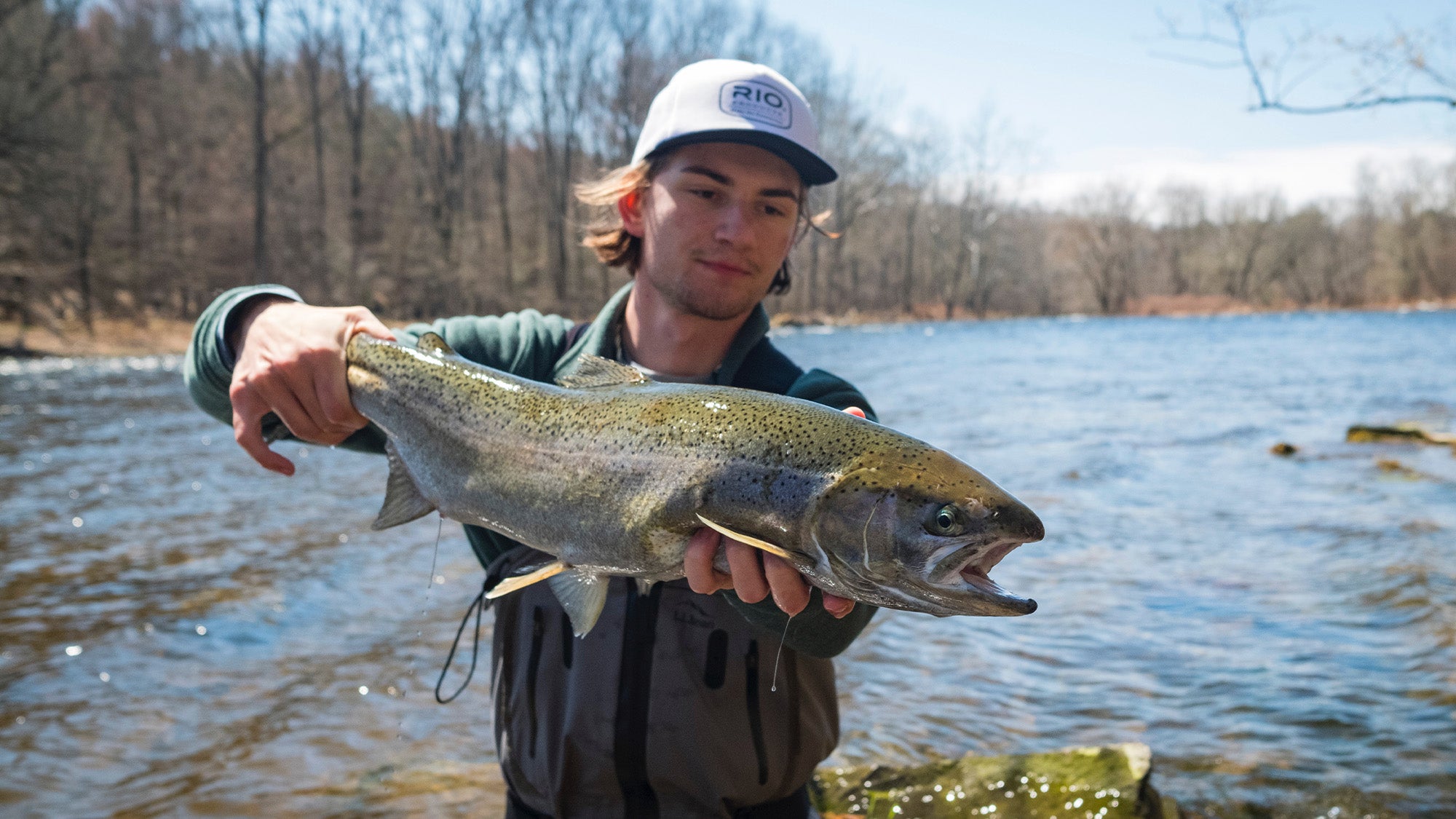
Great Lakes steelhead are adfluvial fish, meaning they migrate from big lakes into rivers to spawn. This annual migration starts in the fall and ends in the spring when they return to the lakes to spend the summer. For most anglers, Great Lakes steelhead fishing means cool fall mornings, crowded rivers, and fresh fish. But from March until May, spring steelhead, also known as drop-backs, offer anglers one more chance at swinging flies and floating nymphs.
Tributaries from New York to Minnesota support healthy steelhead populations. During the spring, drop-backs readily take flies on their way back to the big water. For whatever reason, steelhead fishing in the Great Lakes region is less popular in the spring than in the fall, resulting in fewer crowds and more water to fish. So, if you live in the Northeast, get your fly rod and hit the water—there are still steelhead to be caught.
1. Target Slow-Moving Water
After a long winter of dodging anglers, eating what they can, and spawning, steelhead are depleted as they make the journey home. This means fish are looking to conserve energy and minimize exertion. Target areas with back eddies, boulders that break up the current, and slow, deep pools. Usually, these sheltered areas hold multiple fish that are looking to gorge themselves while expending minimal energy.
2. Stay Mobile
Throughout the fall and winter, steelhead travel miles upstream to spawn. When the water warms and it’s time for them to head home, they do so in a hurry. To consistently find fish, you have to be mobile. A pool that produces fish one day may be void of them by the next. A good rule of thumb is to fish likely areas (like the ones mentioned above) for half an hour, and if you don’t hook anything, move on. Drop-backs are hungry and looking for food. If you aren’t getting bites, chances are the fish are gone. Go find a new spot.
3. Swing Flies, But Don’t Forget to Nymph
Swinging flies is a common technique in Pacific Northwest steelhead fisheries, and it has grown in popularity among Great Lakes anglers. Besides just being outright fun, swinging flies is also an effective method of catching drop-backs. The technique is essentially a scaled-up version of swinging wet flies but with two-handed rods, heavy lines, and big flies. Cast at a 45-degree angle above a likely steelhead run, swing the fly through, and wait for the strike. Many anglers swing flies year-round, but warming water temperatures and hungry fish make spring my preferred time for this specific technique.
Steelhead are essentially oversized trout, and nymphing is the best way to consistently land fish. Target slow-moving pools and pick apart seams where fish are likely to hold. Cast above your targeted area and pay close attention to the float. The smallest twitch could mean a fish ate your fly. Many Great Lakes tributaries require anglers to use only one fly to discourage snagging, so double nymph rigs may be off the table. Be sure to check the local regulations before hitting the water.
4. Fish Natural Fly Patterns
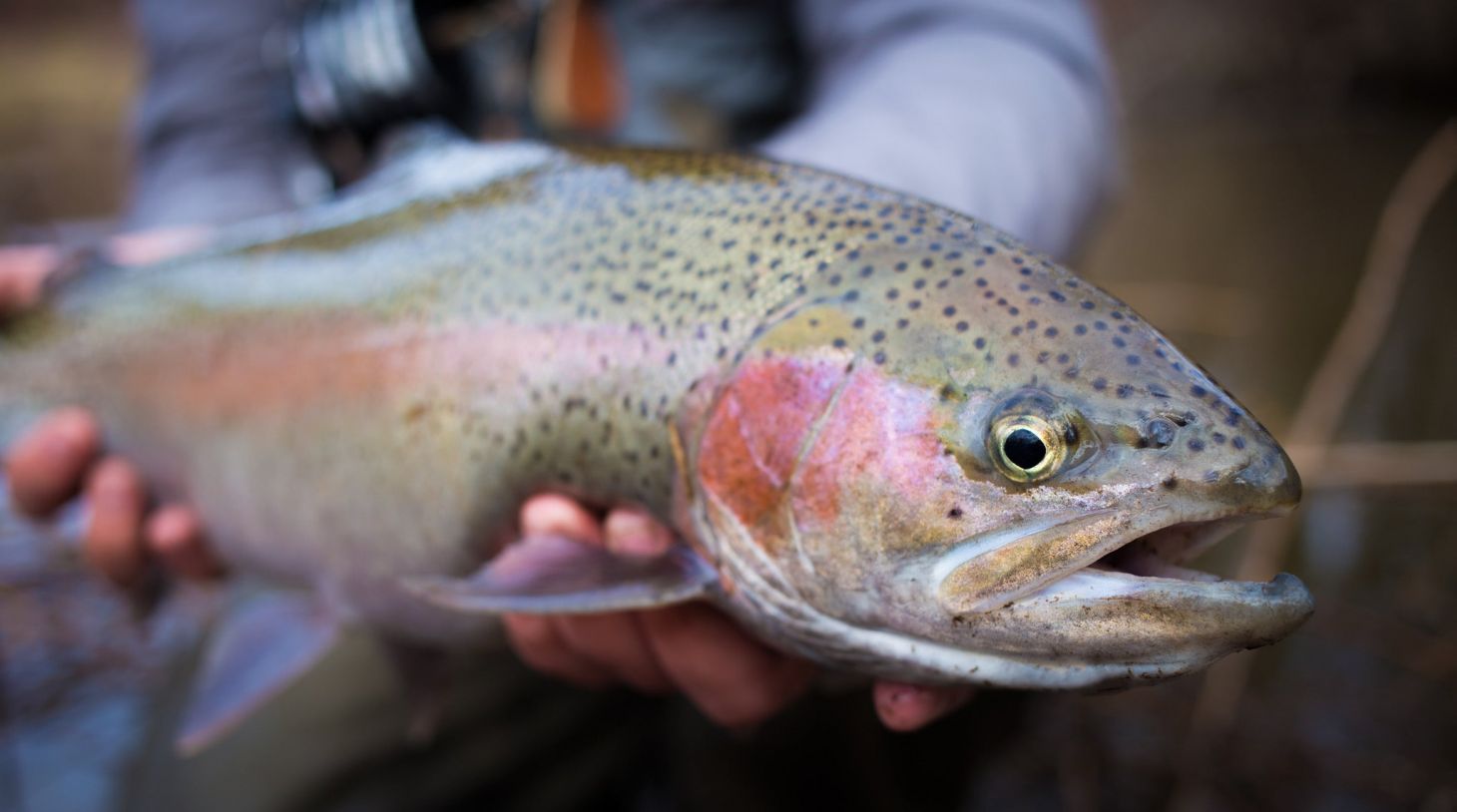
Drop-backs have been in the river for close to six months, and they’ve become accustomed to it and its food sources. Rather than fishing flashy attractor flies, which are typical in the fall, throw natural flies that imitate their food source. By “matching the hatch,” you will draw more strikes from fish keyed in on what the river has to offer. Patterns that imitate sculpins or gobies are my go-to for spring swinging. In the Great Lakes systems, gobies are a great protein source for hungry fish. Patterns that are olive or brown with a dense head effectively match the profile of a sculpin. Another great option is a leech fly. These can be as simple as a woolly bugger, but all variations will produce bites.
Those nymphing should focus on matching the spring bug life. Flies like stoneflies, pheasant tails, and caddis patterns offer a range of options depending on the river you are fishing. I usually fish a range of nymphs from size 12 to 8 with heavy hooks on 2X leader to withstand powerful runs and heavy currents. Depending on the river, the spring sucker run may coincide with drop-back season. Sucker spawn flies in a peach or cream color are an excellent choice as well.
5. Watch Water Temperatures
When it comes to drop-back fishing, timing is everything. Typically, the spring steelhead season runs from late March to May, with April being the hottest month. But every year, conditions change, and timing varies. The best way to time the bite is to look at water temperatures. The bite picks up as soon as water temperatures consistently reach 40 degrees. As it steadily warms into the high 40s and low 50s, steelhead start returning to the lake. This is the optimal time to catch drop-backs and lots of them.
The rise in water temperature seems to kick their metabolism into overdrive, and the ready-hungry fish can’t resist flies. As water temperatures reach 60 degrees, the run comes to an end. The last of the fish will make their way to their summering grounds, fatten up, and return in the fall to run the gauntlet again.
The Gear You Need For Spring Steelhead
For anglers swinging flies, a full spey rod from 12 to 13 feet in a six, seven, or eight-weight is typical. These rods can send casts across large rivers and effectively fish a range of flies. Pair this with a large arbor reel with a solid drag and a Skagit head. For nymph fishing, a 10-foot eight-weight is ideal. The added rod length makes casting and mending on large bodies of water much more manageable. A large arbor reel and aggressive taper fly line balance out this combo, allowing anglers to turn over large rigs and fight powerful fish.
If you find yourself bouncing between swinging flies and nymphing, a switch rod is the ultimate tool. These rods range between 11 feet and 11 feet 6 inches. A switch fly line can shoot across the river while also being easy to mend. My preferred method is to have separate spools of line: one with a Skagit line and one with a single-handed fly line. This allows you to get the most out of either technique, rather than relying on a single line to do it all.
content_freshwater-fishing,content_fishing,content_stories
THE 1871 CLUB

Recommended Products
Read the full article here