

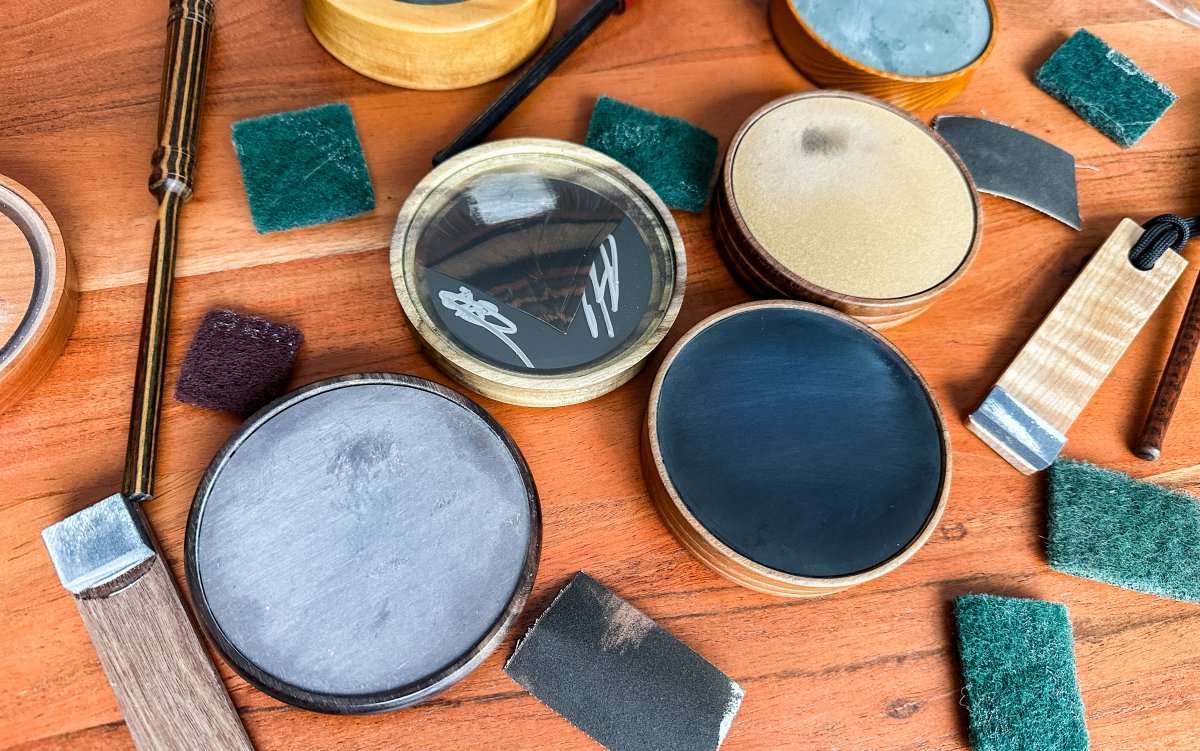
This year I was lucky enough to talk to a bona fide pot call expert, Dustin Jones, to get some secrets of the trade. Jones is an accomplished competition turkey caller, hunter, and call maker. Last year, he won the Grand National Calling Championship in the friction division and the DD Adams award (the award for the best pot call) at the NWTF convention. I also own a few of his calls and, for whatever it’s worth, they’re among the best I’ve heard. They are also exceptionally easy to run.
I’ll have a series of articles and a podcast from my talk with Jones. But one of the best tips he gave me is: how to condition a pot call. His advice isn’t just “rub some Scotch Brite on it.” He takes conditioning calls to the next level. With his conditioning techniques, he can make one call sound like multiple hens, adjust the level of rasp and pitch, or optimize a portion of the surface for soft talk.
How to Condition Slate, Glass, Aluminum, and Ceramic Pot Calls
Slate
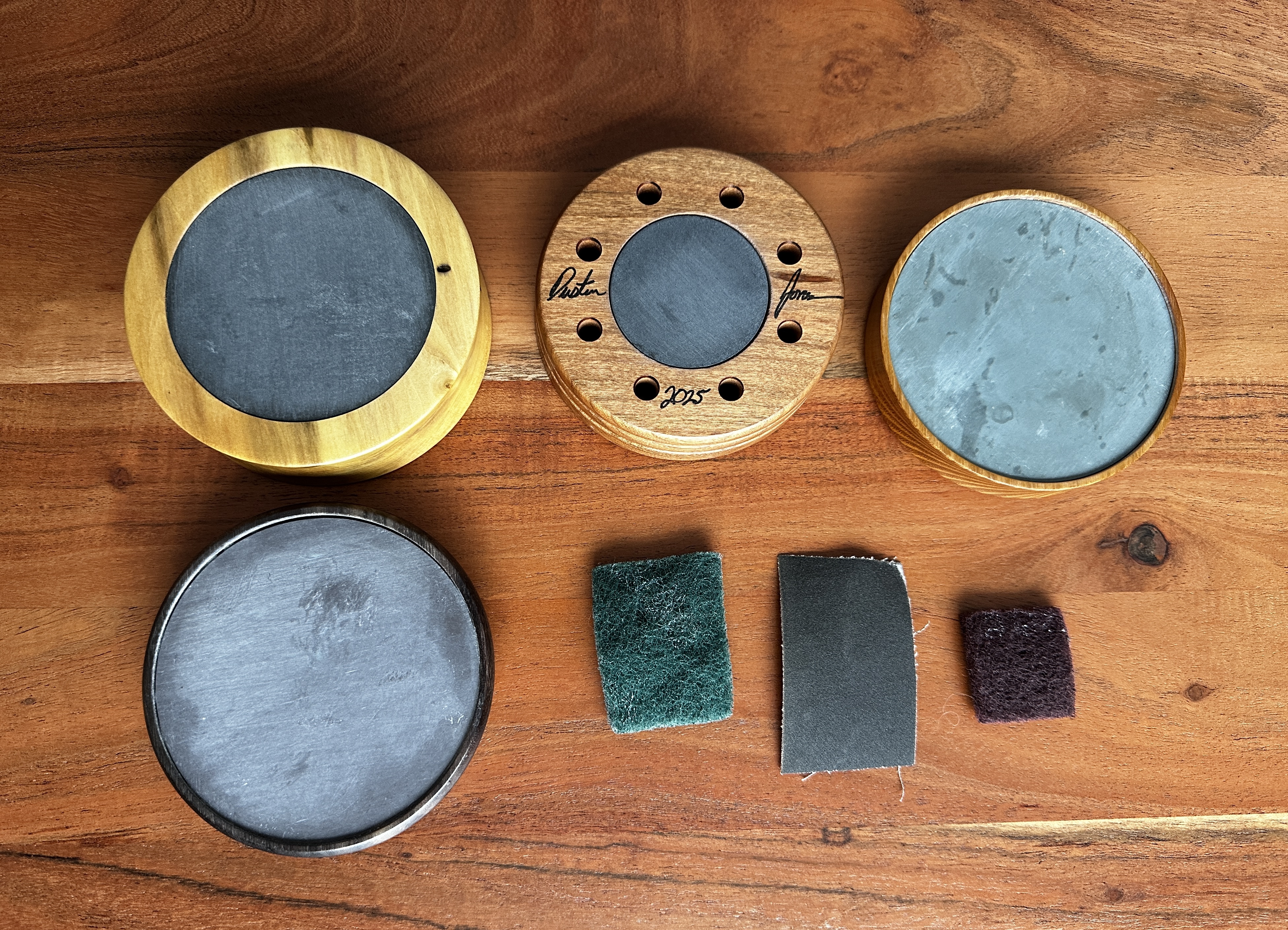
Best Abrasives to Use
Know the Type of Slate You Have
Slate comes in grey, black, green, red, and purple variants. Each has a slightly different sound, and it’s important to know what type of slate you have so you can choose the right abrasive for conditioning.
What Color Slate Is Best?
Jones’s go-to slate variety is black due to its consistent quality. He finds other colors of slate (grey, green, purple, red) are inconsistent. His observations sync up with my interview with Matt Van Cise, the winningest turkey caller of all time and a custom call maker, who said the black slate he is using now is the best he’s seen in a long time. So if you’re buying a new slate call this year a black slate is a safe bet.
Read Next: A Pot-Call Masterclass with Matt Van Cise, the Turkey Calling GOAT
Choosing an Abrasive
Grey slate is softer than the other colors and finer. Green Scotch-Brite is Jone’s recommendation for this type of slate.
To condition black, red, green, and purple slate, Jones likes red (maroon) Scotch Brite. “The black slate seems to be so hard that it (green Scotch Brite) just kind of buffs it,” he says. “But the red will scuff it up pretty good.” He also says 220-grit sandpaper will work well for black slate.
How to Condition Slate Calls
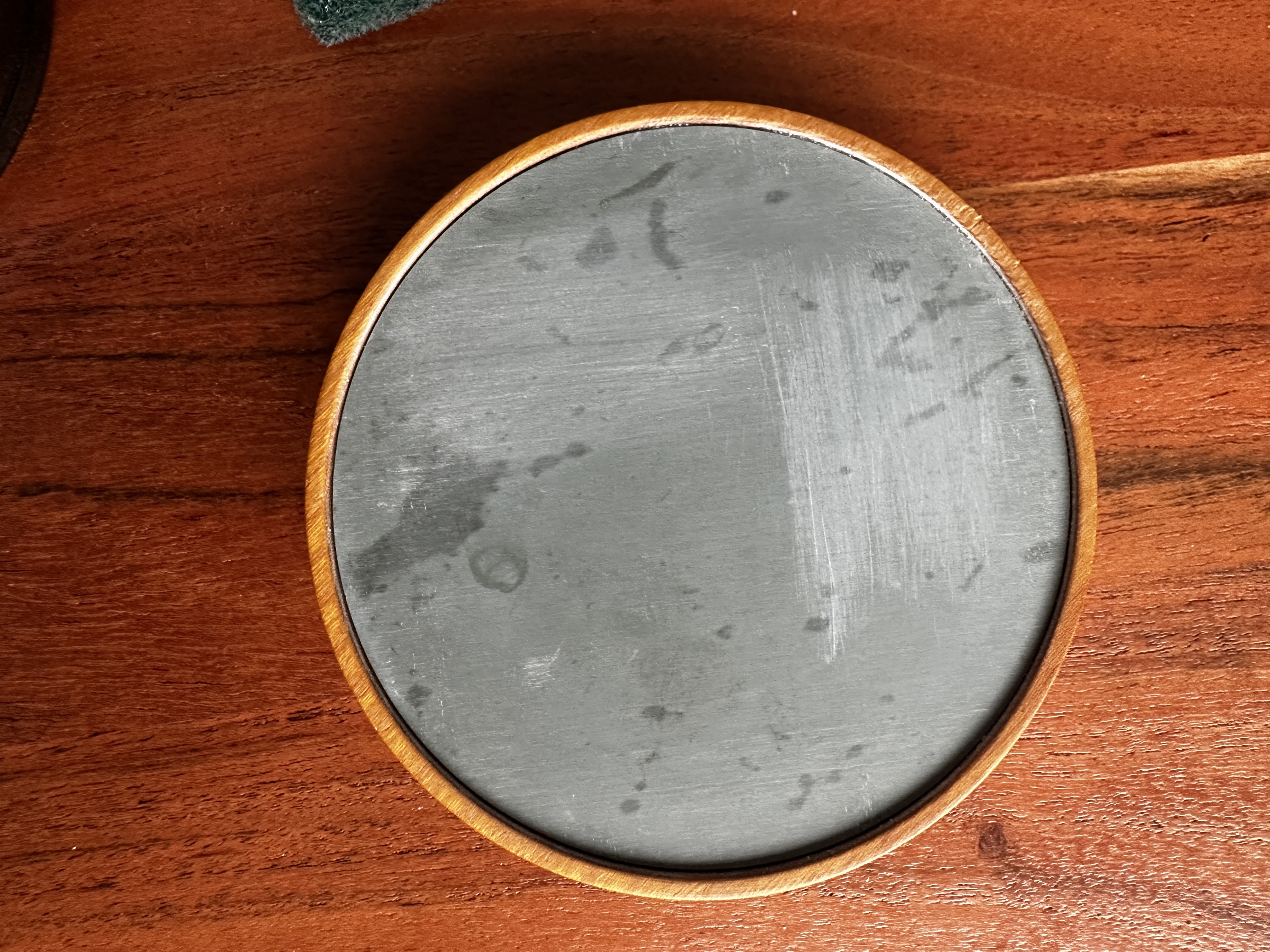
Read this section before you go sanding away, because Jones says how you condition a call can affect its pitch. He says going back and forth across your call’s surface will create a higher-pitched sound. If you sand in just one direction, you’ll get a raspier sound, and the call will grip your striker better.
With that knowledge, you can then set your call up with different pitches by conditioning one part of your call by going back and forth and the other by pulling strokes in one direction. You can also experiment with the abrasive to get different sounds. For example, using red Scotch-Brite in one area and 220-grit in another.
Aside from having multiple hens in one call, you can optimize a portion of your slate for tree talk or finishing a bird with soft talk. Jones recommends very lightly pulling the Scotch-Brite or 220-grit across the surface in one direction for soft clucks, purrs, and yelps.
Glass/Crystal
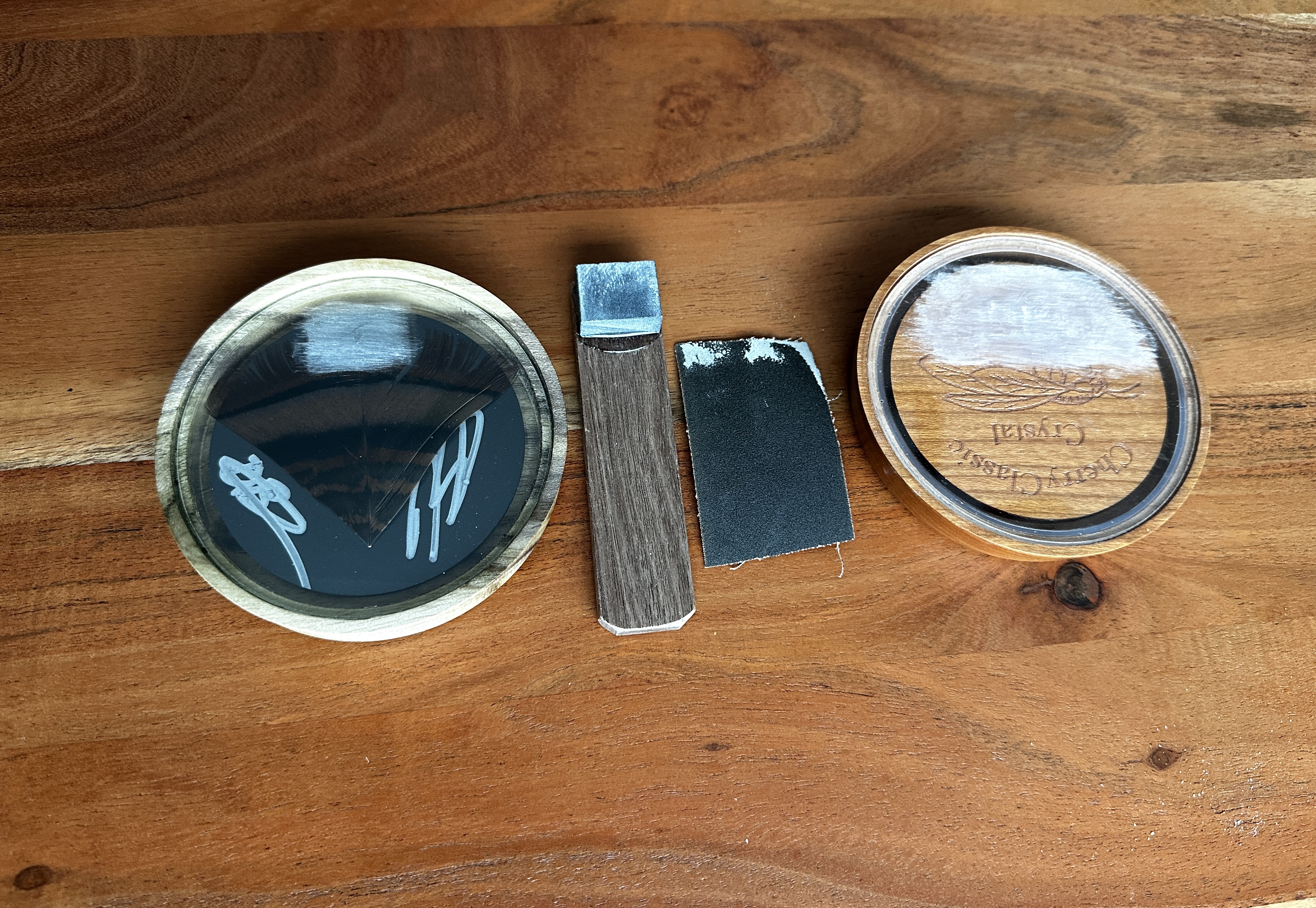
Best Abrasives to Use
Conditioning stones can be great for roughing up a glass or crystal playing surface. But Jones warns against using the corner of the stone or putting too much pressure in a small area. That can cause you to dig a divot in your glass, essentially ruining the sound quality.
Jones doesn’t prefer a stone for regular call maintenance. “A lot of people will use a stone. I’ll use a stone to break in a call,” he says. So when scratching up a new section of glass, he uses a stone. For regular maintenance, he switches to sandpaper.
“I use 120-grit sandpaper. And if I want a different, more raspier sound I’ll go to 100 grit or 80 grit,” he says. He stressed that he doesn’t sand the surface too aggressively — just enough to give his striker a good grip.
He sands back and forth with 120-grit sandpaper to get a clear front end on his yelp. Then he uses 80 or 100-grit sandpaper and sands in only one direction. He says this rougher section is excellent for cutting because your striker is less likely to slip on it. It will also produce a different sound to the yelp.
Read Next: Best Slate Calls
Aluminum
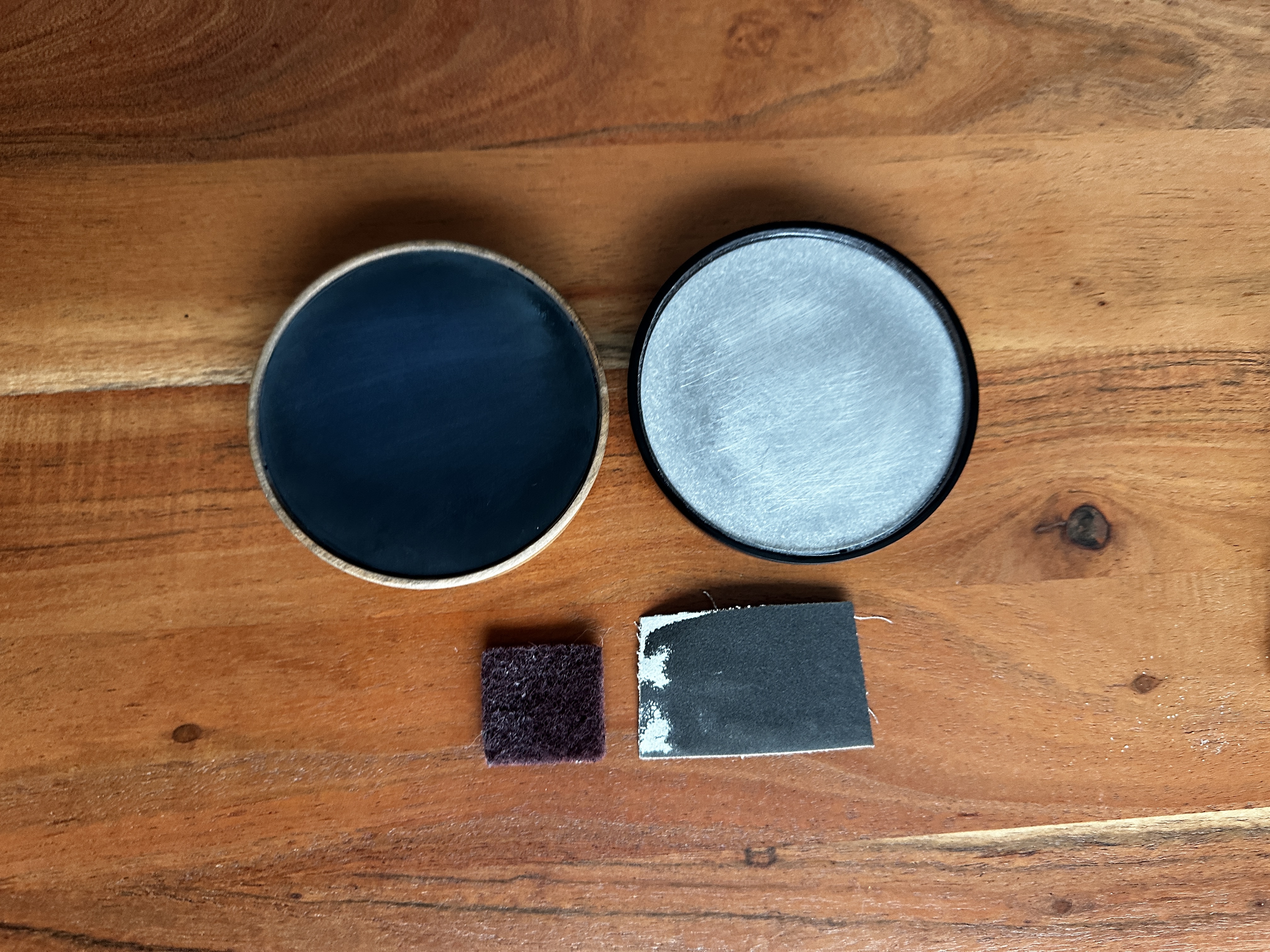
Best Abrasives to Use
With slate and glass, you’ll condition the call by creating parallel lines. But with aluminum, Jones has a completely different method.
Jones sands the call surface at two, intersecting 45-degree angles to make an arrow shape. Then, he sands across those to form an A shape.

Blackstone Custom Calls : Beyond the Basics Episode 1 (conditioning your pot style call)
Strikers seem to easily slip across aluminum, and it can become slick with use. Jones’ A-frame technique helps remedy that common problem with aluminum.
Pro Tip: It’s not uncommon to get a little condensation on your aluminum call first thing in the morning. Jones says if you find yourself with that dilemma, try keeping a handwarmer next to your call or use the heat from a lighter to dry it off.
Ceramic
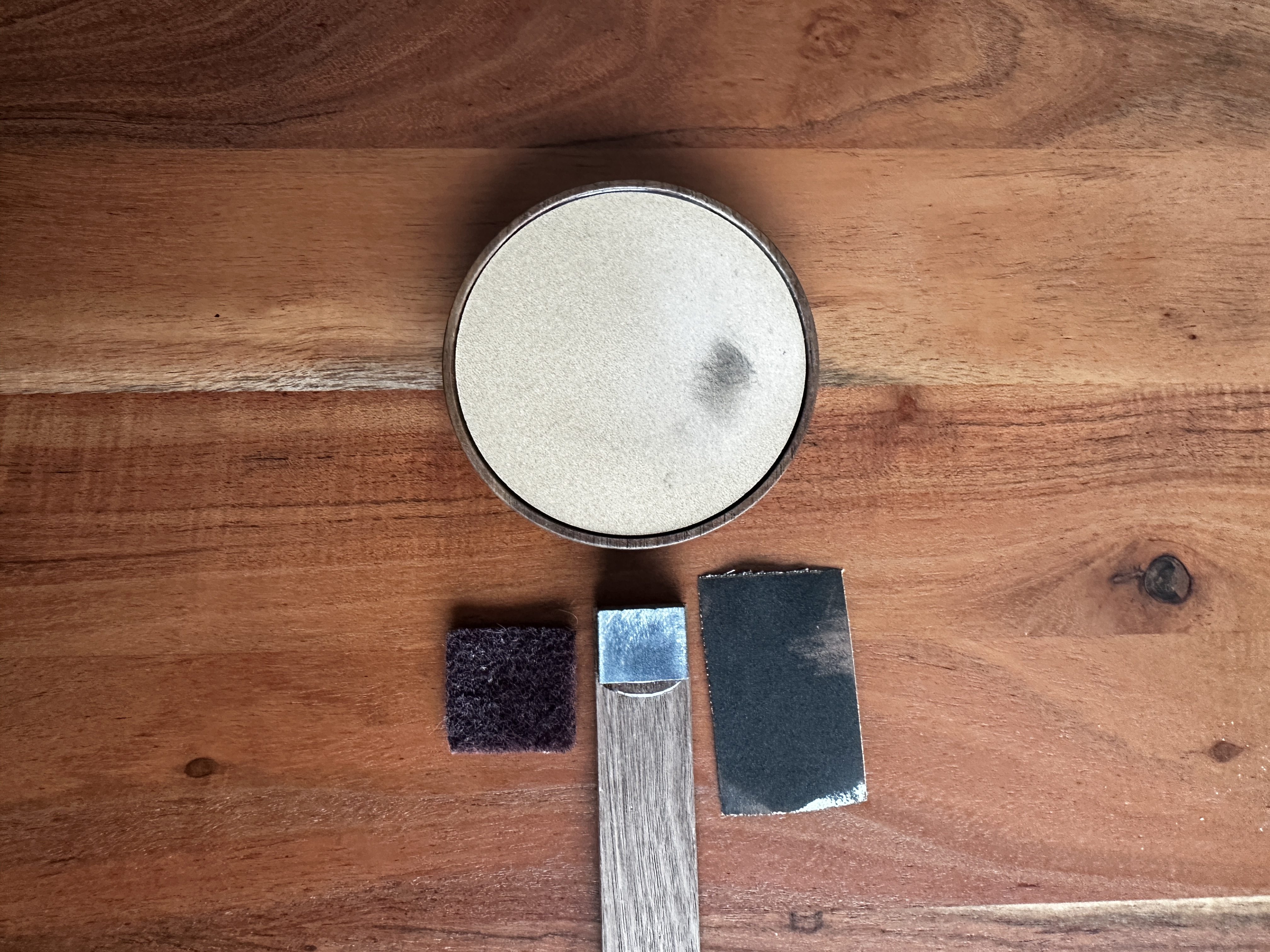
You can take the same principles for conditioning glass and slate calls and apply them to your ceramic calls. Jones uses red scotch brite for conditioning ceramic, but if the call needs more grip, he’ll go to 120 grit sandpaper.
Conditioning Your Striker

How to Condition a Striker
Strikers need to be conditioned just like pot call surfaces. And, not surprisingly, my method of rubbing scotch brite on it, isn’t the best way.
“A lot of people will use Scotch Brite to condition their striker,” Jones says. “Eventually, it’s just going to polish it.”
Jones uses worn-out 150-grit sandpaper. He places it in the meaty part of his palm and spins the striker tip on the paper with a little down pressure. Using your palm as a soft backing allows the sand paper to conform to the shape of your striker as you freshen it up.
Read the full article here