

As part of the USDA Forest Service Landscape Scale Restoration Grant, the Massachusetts NWTF State Chapter is partnering with the Massachusetts Department of Conservation and Recreation and additional partners to continue landscape-scale habitat restoration efforts throughout the Bay State.
The LSR grant also helped the state launch the Massachusetts Dynamic Forestry Initiative, a science-based, collaborative effort to actively manage forests in ways that improve habitat for wildlife while strengthening overall forest health. The initiative promotes sustainable forest management practices that create a diversity of forest conditions. Through partnerships with the Massachusetts DCR, MassWildlife, the Ruffed Grouse Society, Mount Grace Land Trust and other conservation organizations, the NWTF helps deliver landscape-level habitat improvements on public lands, support resilient forests, enhance hunting and other outdoor recreational opportunities and advance the goals of the NWTF’s Forests and Flocks initiative across Massachusetts. Currently, partners are managing about 2,000 acres of public and private forestland through the Massachusetts Dynamic Forestry Initiative, while also providing outreach and technical assistance to private woodlot owners in the Commonwealth.
“The USDA Forest Service Landscape Scale Restoration grant funds large, multi-year forest management projects that improve forest health across thousands of acres,” said Kaylee Szymanski, NWTF district biologist for New England. “For NWTF, this grant is important because it allows us to partner with state and private organizations to actively manage forests in ways that create high-quality wild turkey habitat, support a wide range of wildlife and deliver conservation at the scale these ecosystems require.”
As part of this effort, a 40,000-acre northern hardwood and spruce-fir forest block has been identified as a pilot area. The block is being managed to create a balance of forest and wildlife habitat conditions that supports connectivity for both plant and animal species.
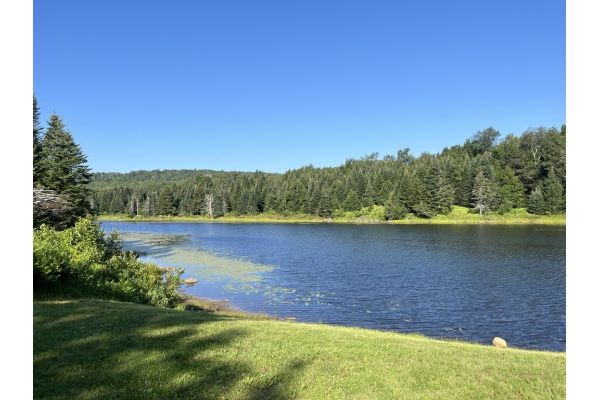
The first on-the-ground work within this pilot area was an apple and spruce tree release project in the Savoy Mountain State Forest that the Massachusetts NWTF State Chapter supported through the purchase of equipment and boots-on-the-ground volunteer.
The apple tree release in the Savoy Mountain State Forest is part of a three-year, 629-acre restoration area designed to increase and diversify soft mast species populations. This effort is especially critical for wildlife due to the extreme decline of American beech, which is a vital producer of nuts in northern hardwood forests. Beech decline is largely attributed to beech bark disease. Other portions of this project will be the removal of a Norway spruce plantation to improve the balance of forest stage class cover and restore the area to native tree species.
In the summer of 2026, foresters plan to conduct an invasive species removal to re-establish the area.
“We will begin forest improvement efforts at Savoy Mountain State Forest by preparing sites for larger-scale forest management,” Szymanski said. “Currently, the forest understory contains nonnative invasive species that must be removed before opening the canopy. Addressing these invasives first is critical, as it allows native, desirable species to establish and thrive without being outcompeted by aggressive nonnative plants.”
Read the full article here