
This article was originally published by G. Calder at The Exposé.
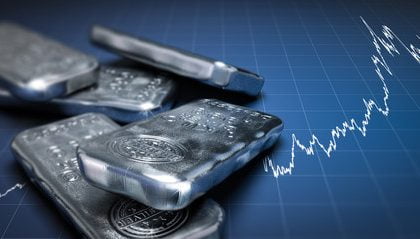
In January 2025, silver traded as low as $30 per ounce. Yesterday – just twelve months later – it surpassed $93, recording an all-time high. This isn’t a short-lived spike driven by speculation alone – its surge follows tightening physical supply, rising industrial demand, and growing geopolitical influence over critical materials. Its late 2025 rally – shooting from $45/oz on 28 October to $83 just two months later – initially looked like a short burst before dropping immediately after.
But since the New Year, the price run-up has continued, and momentum feels stronger than ever. So, what’s driving it, and what really happens if it keeps going up? Can the same structures that have kept silver subdued for decades still function if the demand for the physical metal continues to accelerate?
Silver – Where Industrial Demand Meets Supply Inelasticity
Silver behaves differently to gold because of its growing industrial need. Roughly half of annual silver demand comes from manufacturing, including electronics, solar panels, medical equipment, and EV batteries. Gold has long been able to sit in vaults indefinitely, whereas silver is actively consumed.
The main difference is that the silver supply is inelastic. Most silver is not mined on its own, but rather produced as a by-product of copper, zinc, and lead mining. When silver prices rise, miners can’t simply increase supply unless the base metal output increases too. This means supply responds slowly, if at all.
This creates a structural problem. Industrial demand keeps rising with electrification, digitisation, and energy transition projects, while supply remains largely fixed in the short and medium term. Unlike other commodities, silver can’t easily flood the market when prices rise. As we’re seeing now, such asymmetry means the price moves violently when demand pressure builds.
Can Silver Really Keep Going Up?
At around $90/oz, it’s already astronomically expensive when compared to prices in recent years. Yet many analysts argue that silver is still undervalued even at these record-high prices, given its function and scarcity.
The market has long been dominated by paper contracts rather than physical settlement. But if silver were priced purely on physical availability and industrial need, and free from futures-market distortions, its “real” price is often argued to be around $150/oz – some estimates put it even higher.
If silver really did move toward $150, the consequences would be immediate. Industrial users would face sharply higher input costs, compressing solar panel margins and forcing electronics manufacturers to attempt substitution and thrift – reducing silver per unit where possible. However, many applications simply cannot replace silver without performance loss.
As the price keeps rising, the market is quietly facing a new question: how much silver does the modern economy actually need – and at what price?
China’s Growing Leverage Over Silver
Now layered on top of supply constraints is geopolitics – particularly, China’s expanding control over the global supply of strategic materials. New export licensing rules introduced by Beijing on 2nd January 2026 have not banned silver exports outright, but they have made access conditional and less transparent.
China is deeply embedded in both silver refining and downstream manufacturing. More than half of the world’s supply flows through the country for one reason or another. So, now that controls have tightened, the rest of the world can expect more friction. The possibility of delayed or restricted exports has forced non-Chinese manufacturers to secure supplies earlier and stockpile more aggressively to avoid higher premiums.
This tactic is not unique to silver. China’s broader approach to rare earths and other strategic metals has also increased its geopolitical leverage. It has shifted bargaining power, raised regional price differentials, and reinforced the importance of physical access over “paper” silver and other key materials.
They Tried Suppressing It – and It Failed
As silver has risen, exchanges have repeatedly increased margin requirements. On paper, this is standard risk management: higher volatility requires more collateral. But in reality, these margin hikes disproportionately impact leveraged retail traders and smaller funds, forcing liquidation during rallies.
Meanwhile, large institutions with deep balance sheets can absorb these changes, while the smaller trader, retirement saver, or everyday investor cannot. This move flushes out the “little guy”, stabilises prices temporarily, and allows big players to recoup any losses from failed shorts.
This effectively amounts to suppression – protecting large “short” positions and maintaining order in a market where paper silver vastly exceeds physical supply. We covered this in more detail in an earlier article: Silver Price Crashed on Purpose (Again) – What Really Happened?
We’ve Seen It Before – Or Have We?
Silver has surged and been suppressed before. In 1980 and 2011, a dramatic squeeze led to a skyrocket in prices before regulatory intervention – via margin hikes – crashed it straight after.
But the current trend differs in a couple of key ways. This time, the price is not driven by a single speculative force, and it is not a hedge against a financial crisis. Instead, it’s unfolding alongside structural industrial demand, constrained supply, and geopolitical friction – all of which are different from before.
Of course, this does not guarantee permanence in the new sky-high price of silver. But it does mean that the rally appears rooted in fundamentals that did not exist in previous cycles, and this time, COMEX has been unable to stop it – so far.
What Happens Next?
Several signals will determine whether silver’s move continues, stalls, or reverses:
- Industrial demand trends, especially solar deployment and electronics production
- Physical market indicators such as regional price “premiums” and delivery restrictions
- Exchange actions, including further margin or contract changes (such as COMEX increasing margins further)
- China’s policy posture, particularly any expansion or bolstering of new export controls
- Substitution limits, revealing how much demand can realistically adapt to higher prices, and whether silver requirements in industry can be reduced
Final Thought
Silver’s rise from $30 to $90 is different from previous spikes. The metal’s re-emergence is not just a story about price – it’s forcing a reckoning between abstract “paper” markets and physical limitation. For decades, it has traded as though availability were theoretical and supply were elastic, but the past twelve months suggest otherwise. Wherever we go from here, it promises to be a bumpy ride.
Read the full article here