
Interior Secretary Doug Burgum is expected to announce today a major access initiative that will require that most public lands managed by the Department of the Interior are open to hunting and fishing access unless specifically closed by site managers and agency directors.
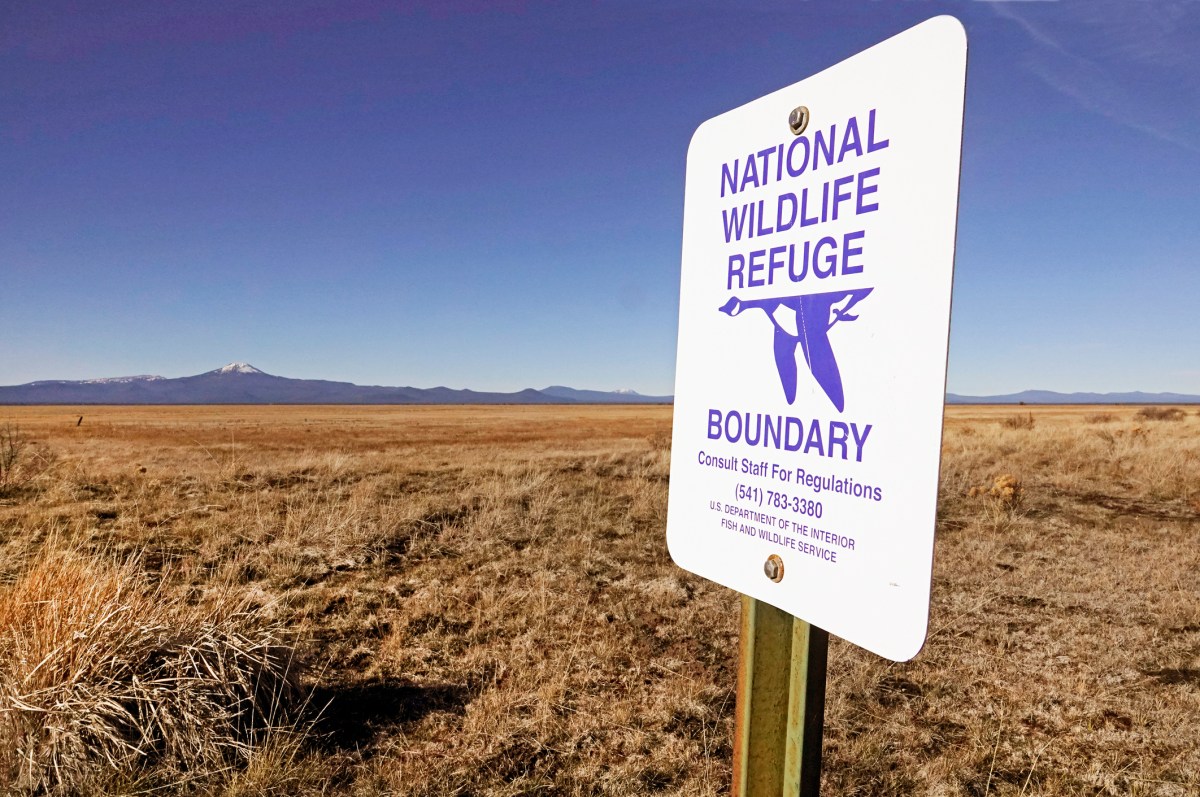
The initiative, conveyed through Secretarial Order 3447, will apply to the Bureau of Land Management, U.S. Fish and Wildlife Service refuges, Bureau of Reclamation properties, and some units of the National Park Service where hunting is currently allowed. It would not apply to those Park Service units such as Yellowstone and Yosemite that are permanently closed to hunting. Federal land managed by the Bureau of Indian Affairs inside reservations is expected to be unaffected by the order.
The intent of the order is to “open all appropriate Interior lands to hunting and fishing unless required otherwise by law, public safety, or resource protection,” noted a source close to the process who wasn’t authorized to speak to the media. “Think of it as ‘open-unless-closed’ to legal, regulated fishing and hunting allowed by adjacent state agencies.”
The aim of SO 3447, according to the source, is to “eliminate needless regulatory or administrative barriers, to expand opportunities, improve coordination with states, tribes, and territories, and to elevate any proposed reduction in access or conflict to agency directors.”
The order clarifies that agency directors within the DOI will have the final say on any proposed access restrictions or incompatibilities.
It is unclear how many acres the order will eventually open to new hunting and fishing opportunities. Most BLM lands are currently open to hunting and fishing. The Bureau of Reclamation operates many dams and reservoirs across the West that are open to fishing, and many national wildlife refuges allow both hunting and fishing, though some have property-specific restrictions.
The larger purpose of SO 3447 may be symbolic. The secretarial order that elevates hunting and fishing access is one of the few that addresses a major multiple use of Interior’s lands, recreational visitation. Of the 33 Secretarial Orders Burgum has issued since his nomination as Secretary of the Interior last January, 10 have codified some aspect of the Trump administration’s “energy dominance” agenda, another five have rescinded or relaxed federal regulations, and others have called for ending diversity, equity, and inclusion programs or revising public expressions of American history and site interpretation.
But today’s Secretarial Order acknowledges the popularity and economic impact of recreation on the Interior’s 480 million acres of public land. According to the department, recreational activities of all kinds “support a $1.2 trillion economic output, 5 million jobs around the country, and 2.3 percent of the U.S. gross domestic product.”
Hunters and anglers are not only keen recreational users of public lands, they’re a key constituency that rose in protest to last summer’s run-up to the federal budget reconciliation. Early versions of the “One Big Beautiful Bill” called for selling some federal lands in order to offset tax cuts. That effort, led by Utah Sen. Mike Lee, galvanized hunters and anglers in opposition to any sale or transfer of public lands to the private sector or to states. The land-sale language was struck from the House version of the budget bill after several Republican representatives broke ranks to oppose the provision. Today’s Secretarial Order seems to confirm the primacy of hunting and angling on those federal lands.
“Public lands managed by Interior were among the first achievements of the American conservation movement,” said another source who asked not to be named because they hadn’t seen a final version of the order. “Since then, many of these lands have been acquired and improved with funds paid for by hunters and anglers, so it’s gratifying to see those uses elevated in this order.”
From a practical sense, nothing will immediately change for hunters and anglers on the ground. But SO 3347 is expected to start an Interior-wide access directive that could be followed by agency guidelines that generally open national wildlife refuges under management of the U.S. Fish & Wildlife Service. USFWS Director Brian Nesvik told Outdoor Life last month that he has directed his staff to work toward rules that align refuge hunting and fishing rules with adjacent state rules. (Our full interview with Nesvik will run on the Outdoor Life Podcast tomorrow).
“I’ve asked our folks to identify those places [on refuges] where more hunting can be expanded and opened,” said Nesvik, who is testifying before a House committee later today on hunting and fishing access on Interior Department lands. “I want to align our regulations with the states because it doesn’t make sense for an angler or a hunter to have one set of rules on one side of the river and when they cross the river they get a different set of rules just because it’s managed by the Fish and Wildlife Service versus managed by the state or the BLM.”
Lead Ammo and Fishing Tackle
Today’s order also notes that lead ammunition and fishing tackle will not be restricted or prohibited on DOI lands, except in case of population-level effects on natural resources or inconsistencies with adjacent state or tribal rules. Current voluntary non-lead initiatives can continue, according to a draft of the order, but new initiatives will require “an evaluation of the effectiveness of the existing programs.”
“This is a tremendous first step toward improving the conservation value of public lands,” says Gray Thornton, president and CEO of the Wild Sheep Foundation, who had an early look at the secretarial order. “Until now hunting and fishing was improving only incrementally on public lands and sometimes going sideways. Annual ‘hunt-fish’ rules were always appreciated but we much prefer this approach to opening everything possible.”
Thornton noted that concerns about lead ammunition and fishing tackle have been “needlessly divisive” and applauded the continuance of voluntary incentive programs but not wholesale restrictions on traditional lead-based bullets and tackle.
Whether Secretarial Order 3447 will extend beyond the Trump administration is anyone’s guess. Secretarial Order 3362, signed by then-Interior secretary Ryan Zinke, confirmed Interior’s role in the conservation of big-game migration corridors and winter range. That SO, signed at the Western Hunting and Conservation Expo in 2018, is still in effect and continues to direct much of the funding and agency priorities that have benefited elk, mule deer, bighorn sheep, and other big-game species across the intermountain West.
Today’s secretarial order will be hailed by other conservation groups. Ariel Wiegard, vice president for government affairs of Pheasants Forever and Quail Forever noted that “our organization’s mission is to create and maintain access to high-quality upland habitat, and making national wildlife refuges and other Interior acres ‘open unless closed’ is a crucial step to secure the future of our hunting heritage.”
Read the full article here