

This article was originally published by Willow Tohi at Natural News.
-
- President Trump threatens a 5% tariff on Mexican imports unless Mexico releases water owed under a 1944 treaty.
-
- The dispute centers on an alleged shortfall of hundreds of thousands of acre-feet of Rio Grande water destined for Texas.
-
- Texas farmers face significant agricultural challenges due to the water shortage, impacting crops and livestock.
-
- The 1944 treaty governs shared water resources but lacks strict enforcement mechanisms for non-compliance.
-
- The confrontation raises questions about balancing trade policy, international agreements, and domestic agricultural needs.
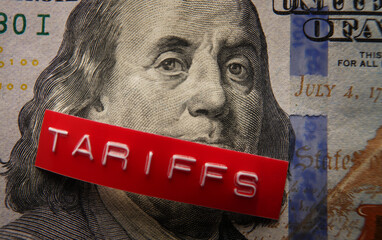
In a move that intertwines trade policy, agricultural security, and a decades-old international agreement, President Donald Trump has threatened to impose a 5% tariff on all imports from Mexico. The ultimatum, issued in early December 2025, is not over immigration or drug trafficking, but water. The president demands that Mexico immediately release hundreds of thousands of acre-feet of Rio Grande water owed to the United States under a 1944 treaty, citing severe harm to the Texas agricultural industry. This confrontation revives a perennial cross-border dispute, placing the vital needs of American farmers at the center of a high-stakes international negotiation.
The roots of the dispute: The 1944 Water Treaty
The current crisis is framed by the U.S.-Mexico Water Treaty of 1944, a complex pact designed to manage shared resources from the Colorado River and the Rio Grande. For the segment of the Rio Grande that forms the border, the treaty stipulates that Mexico must deliver to the United States a minimum average of 350,000 acre-feet of water per year from six specified Mexican tributaries, amounting to 1.75 million acre-feet over each five-year cycle. In return, the U.S. has obligations to Mexico from the Colorado River.
The system relies on a five-year accounting cycle, with a provision allowing for delays in delivery only in cases of “extraordinary drought”—a term the treaty leaves undefined. The cycle that concluded recently is at the heart of the dispute. U.S. officials contend that Mexico finished the period with a deficit of approximately 800,000 acre-feet, a claim supported by data from the International Boundary and Water Commission (IBWC) showing deliveries fell 42% short of the 1.75 million acre-feet obligation.
Agricultural impact: A matter of survival in Texas
For Texas farmers and ranchers, the treaty is not a historical document but a critical component of annual operational planning. The Lower Rio Grande Valley is a major producer of citrus, vegetables, cotton, and grain. Consistent, reliable water deliveries are essential for irrigation, livestock, and overall crop viability. Shortfalls translate directly into reduced yields, fallowed fields, and economic instability for agricultural communities.
The Trump administration has explicitly linked the water shortage to economic distress in the sector. In his statements, the president emphasized that the lack of water “undermines crop yields and livestock sustainability,” framing the tariff threat as a necessary defense of American farmers. This connection between natural resource compliance and economic consequence marks a significant escalation in how the U.S. enforces the treaty.
A history of leniency meets a new approach
Analysts note that the current deficit is not solely a product of recent drought but also of historical leniency and changing conditions. Population growth and agricultural development in northern Mexico have increased water demand on the Mexican side of the border. For years, the United States has at times accepted deferred payments during dry periods, establishing a pattern of flexibility.
The Trump administration represents a stark departure from this approach. Earlier in 2025, the U.S. took the unprecedented step of denying a Mexican request for Colorado River water diversions to Tijuana, explicitly citing Mexico’s own shortfalls on the Rio Grande. This hardline stance, culminating in the tariff threat, signals a willingness to leverage trade tools to enforce a natural resource agreement, moving the dispute from diplomatic channels into the realm of economic pressure.
Broader implications: Trade, security, and diplomacy
The threat of tariffs introduces a volatile new element into the U.S.-Mexico relationship, which is deeply integrated through the USMCA trade agreement. While the proposed 5% levy is framed as a remedy for the water dispute, it follows previous Trump administration tariffs on Mexican goods linked to other policy goals. This pattern raises questions about the use of trade measures as a multipurpose enforcement tool for a wide range of domestic and foreign policy objectives.
From a national security and economic perspective, advocates for affordable food and a resilient agricultural sector argue that water security is inseparable from food security. Inconsistent water supplies threaten to increase production costs and reduce domestic output, potentially making the U.S. more reliant on foreign food imports. The dispute thus touches on core issues of sovereignty, reliable supply chains, and the enforcement of international accords.
A test of treaties and tenacity
The standoff over the Rio Grande waters is more than a bilateral squabble; it is a test case for how nations reconcile treaty obligations with contemporary environmental and political realities. The outcome will set a precedent for whether economic coercion can succeed where decades of diplomacy have yielded mixed results. For Texas farmers, the resolution is urgently practical—their livelihoods hinge on the flow of water and the flow of diplomacy. As deadlines loom and reservoirs await replenishment, the dispute underscores a fundamental truth: in an arid region, water is not just a resource, but a powerful currency of statecraft.
Read the full article here