
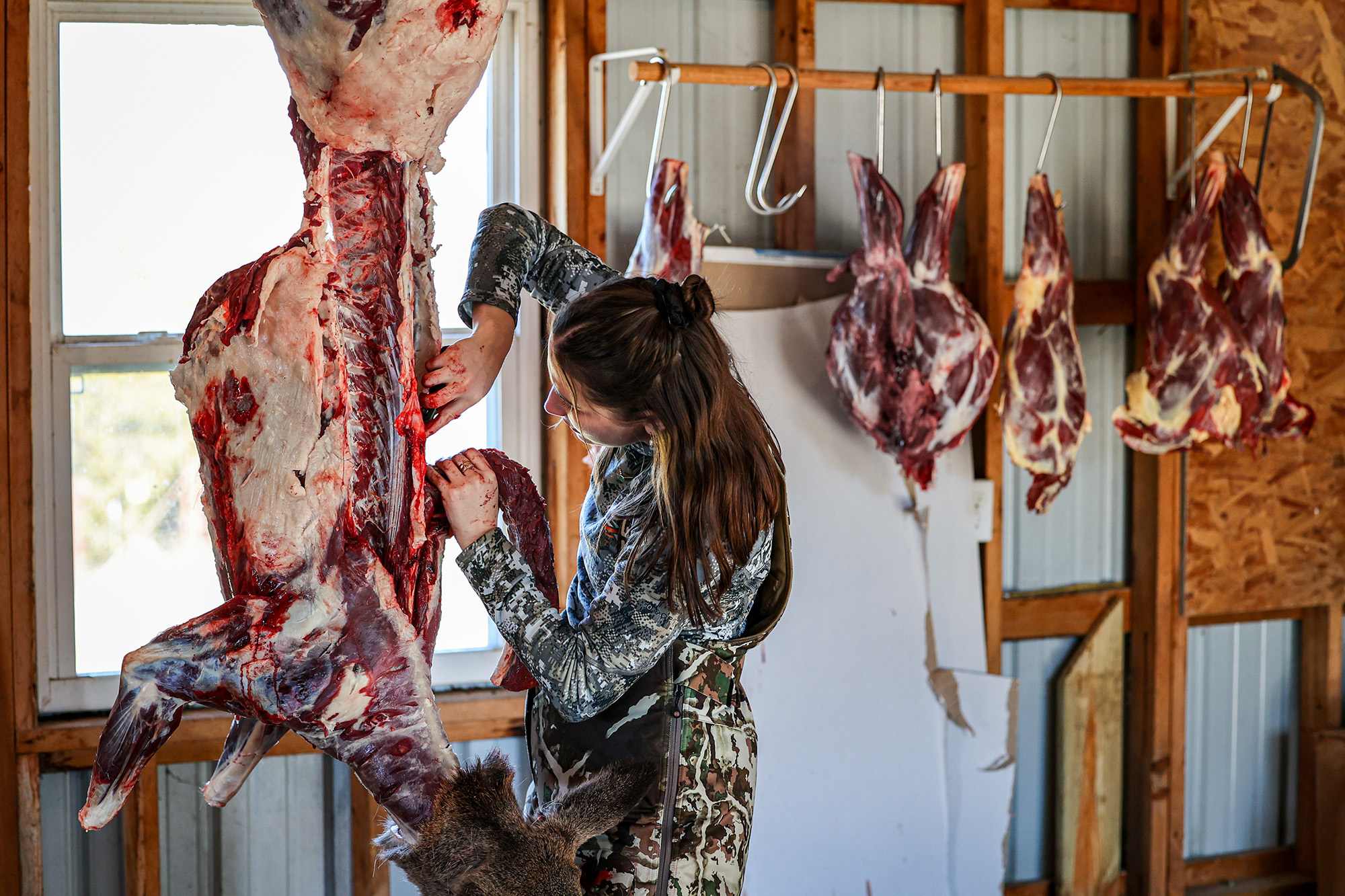
There are a lot of great wild game processors out there, but there are plenty of bad ones, too. With a shady butcher, you likely won’t get back your specific deer but rather a mishmash of all the venison that was processed at the same time. Or, even worse, you might get back much less meat than you expected. Processing your own game solves all these problems. It’s also free, except for the cost of cutting and packaging supplies.
When you get good at butchering big game, you’ll end up with much better results than any wild-game processor can provide, mostly because the meat will be processed and packaged precisely to your personal specifications. But there’s only one way to get good at butchering, and that’s to do a bunch of it each fall — and follow these tips.
Age Your Venison — or Don’t
Aging venison in a cool (approximately 32 to 40 degrees), dry place for several days can help break down muscle fibers and tenderize the meat. But not everyone has the time, setup, or interest to age venison quarters. Aging also causes a dried crust to form on the surface, which must be trimmed away and results in some waste.
“To each their own,” says Cheyne Matzenbacher, a former deer processor and current deer outreach specialist for the National Deer Association. He lives in Southern Missouri, where warmer temps in the early fall makes it difficult to safely hang venison outside for days. Instead, he wet-brines his meat for two days before packaging.
I stash venison quarters in my beer fridge for a few days before processing to remove excess moisture, and so I can butcher on my own schedule. My buddies hang skinned, whole deer in a walk-in cooler for up to two weeks before butchering. There’s no hard-and-fast rule, and if someone tells you there is? Don’t believe them. There are many ways to process venison. As long as you keep the meat cool and clean, it’ll turn out just fine. —NK
Trim Away All Bloodshot Meat
All DIY butchers want to save as much meat as possible. After all, this is one of the best reasons to process your own game. Even so, it’s better to aggressively trim away any meat that is bloodshot. Ultimately, you’re going to end up tossing this meat anyway, so it’s better to trim it from the start, rather than freezing it with good cuts and potentially tainting them. This also includes meat you intend to grind. Trying to save bloodshot meat by grinding it could mess up your entire batch. So if the cut is damaged and bloody, toss it. —AR
Decide How You’ll Cook Your Venison Before You Start Cutting
Whenever you drop off a deer at a professional processor, you’re asked a series of questions: Do you want roasts, steaks, ground venison, or a combination? How many roasts? How do you want your steaks cut? Ask yourself the same questions before you start butchering yourself. Think about how you’ll cook your venison so you can cut accordingly.
“If you’re going to grind it all up, you don’t have to worry about setting aside whole muscle cuts,” says Matzenbacher. “Hack that thing up, get the meat off the bone, and then grind it. Personally, I like steaks and a couple nice roasts, so I want to have each different muscle group separated and packed out and labeled to match.”
Even the best butchers end up with scraps. Designate a pile for pieces you’re not sure what to do with — often neck, rib, and shoulder meat. Larger scraps can be trimmed into stew meat, and anything left over can be ground for burger.
“Follow the muscle groups and let the tip of your knife guide you along the bones. When you’re pulling meat off the bone, you need a knife less than you think.” —NK
Use the Right Knives for the Job
See It
You can use almost any kitchen or hunting knife to butcher venison, but having a few specific knives on hand will help you make more precise cuts and save more meat. A small boning knife is ideal for slicing primal cuts off quarters and removing backstraps. A sharp, flexible fillet knife is what you want for trimming and peeling away silver skin. These more sensitive knives will help you feel bones and different tissues better while you’re working, ultimately, resulting in better cuts all around. Lastly, a solid chef’s knife is perfect for cutting steaks.
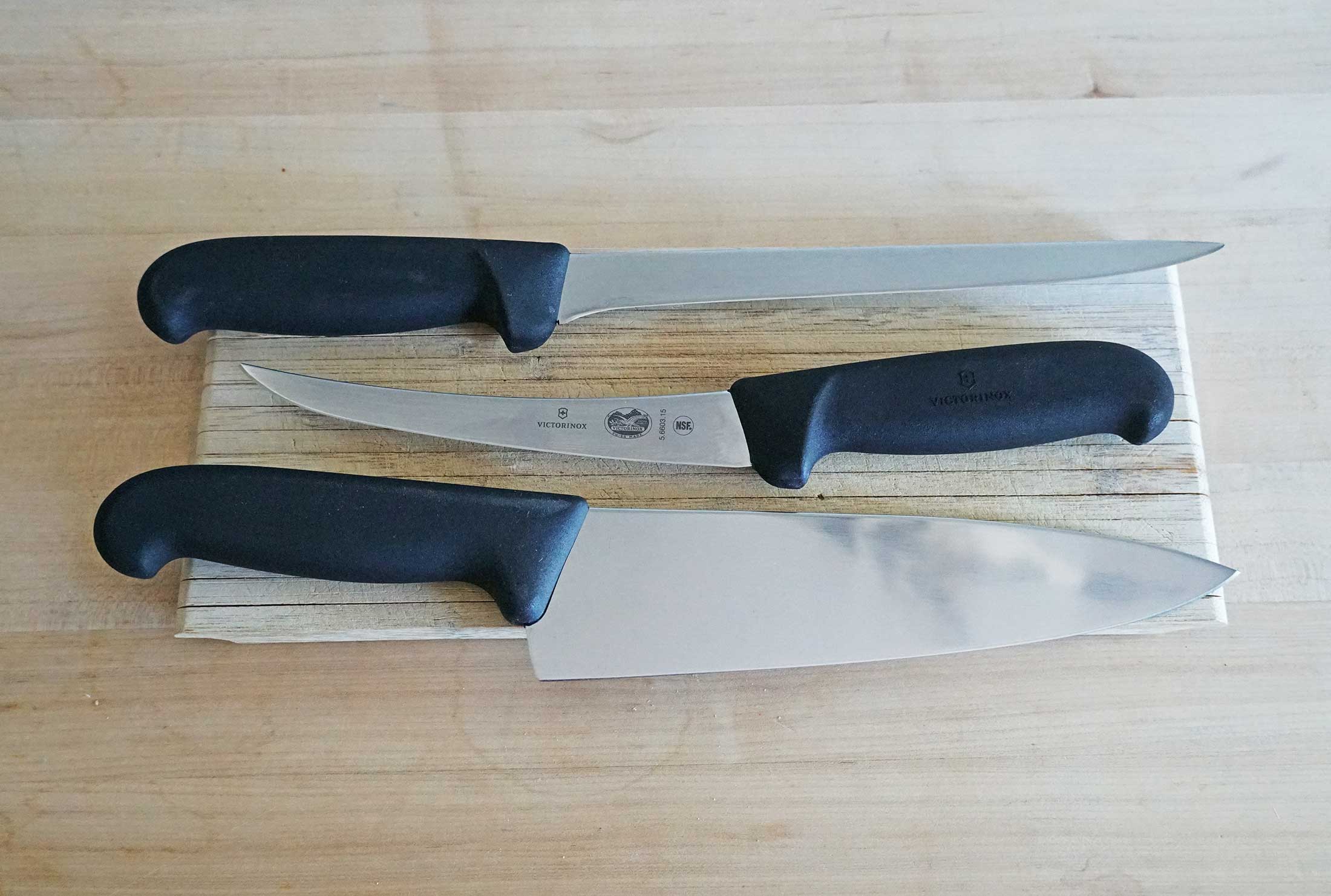
You don’t need ultra expensive knives, either. For example I’ll be using a little kit from Victorinox for butchering this fall and all the knives mentioned above are affordable, useful, and sharp. —AR
Keep a Clean Work Station
Once you get into the zone, it can be easy to just keep cutting and wrapping without paying much attention to your cutting board and working area. But one key to better-tasting venison is to keep the meat clean during the field dressing and butchering process. So take a little time to clean away grime and hair between quarters. You’ll be much happier when you thaw those perfectly clean steaks in a few months.
Have a Sharpener Handy
A dull knife is a dangerous knife. If you’re new to butchering, you’re more likely to dull your edge more quickly on hair and bone. Pull-through sharpeners are okay, but they’re not ideal. Matzenbacher recommends learning to use a handled sharpening steel, which is often faster and more effective. Check out our in-depth review of the best knife sharpeners. —NK
Wear Just One Kevlar Glove
“Know where your fingers are at all times,” says Matzenbacher. “The meat doesn’t matter. You’re not going to hurt it that badly. Venison is very forgiving, you could poke it with your knife tip and not know where you sliced it later.”
That’s why he recommends wearing a Kevlar glove on your non-dominant hand. It helps grip slippery venison and protects against errant cuts or slips with your knife. Food-grade Kevlar-woven gloves are lighter than chain mail gloves. You don’t need a glove on your knife hand, especially if your blade has a rubber grip.
“The glove does get soaked red from blood just from handling the meat, but it gives you a grip, especially because sometimes the venison can get a slimy film that you have to remove anyway. That glove gives you the ability to hang onto that quarter while deboning. And if you accidentally slip with that fillet knife, you’ll cut your glove — not your hand.” —NK
Process the Best Cuts First
Butchering venison takes most experienced hunters anywhere from an afternoon to a full day, so plan to break your butchering into a few sessions. It’s okay to tackle the task over a few days if you have a cool, clean place to store your quartered deer. Prioritize the prime cuts — backstraps and tenderloins — by trimming them and packaging them first. One of my buddies uses a fish skinner on his backstraps to cut away the silverskin, which works well, but requires an extra gadget.
“A cool little technique I learned at the processor is to cut down through the middle of a backstrap, silver-skin face-down, then turn your knife on its side,” says Matzenbacher. “Run that flexible blade right along the bottom to cut the silverskin cleanly off. It leaves you with a beautiful red cylinder of meat in one fell swoop, instead of having to go back and cut it off each steak.” —NK
Eat the Tenderloins First
This is a simple tip and an easy one to follow: Don’t freeze those delicate tenderloins. Just throw them right in the skillet or on the grill for a couple minutes and serve them up. There’s no sense in saving (and potentially forgetting about) this precious cut. —AR
Read Next: 9 Expert Field Dressing Tips That Will Make Gutting a Deer Much Easier
Final Thoughts
You’re going to make mistakes, and that’s okay. It also takes several seasons worth of breaking-down deer to get the hang of things, so the best way to stay sharp is to butcher several deer each fall until it becomes second nature.
“This is a forgiving process. You won’t know how to butcher until you try, and the more practice you get, the better you’ll get,” says Matzenbacher. “You’re not totally trying to clean it like a vulture. If you don’t get it perfect the first time, don’t worry about it.”
Read the full article here